Jon E. Grant – författare
407 kr
Läs direkt efter köp
2 077 kr
Skickas inom 5-8 vardagar
2 673 kr
Skickas inom 5-8 vardagar
1 137 kr
Läs direkt efter köp
577 kr
Skickas inom 5-8 vardagar
490 kr
Skickas inom 5-8 vardagar
422 kr
Läs direkt efter köp
349 kr
Läs direkt efter köp
2 559 kr
Läs direkt efter köp
858 kr
Skickas inom 5-8 vardagar
624 kr
Läs direkt efter köp
602 kr
Läs direkt efter köp
313 kr
Skickas inom 5-8 vardagar
179 kr
Skickas inom 7-10 vardagar
200 kr
Läs direkt efter köp
200 kr
Läs direkt efter köp
253 kr
Skickas inom 5-8 vardagar
1 210 kr
Skickas inom 5-8 vardagar
833 kr
Skickas inom 5-8 vardagar
927 kr
Skickas inom 5-8 vardagar
1 039 kr
Läs direkt efter köp
DSM-5® Guidebook: The Essential Companion to the Diagnostic and Statistical Manual of Mental Disorders, Fifth Edition is a user-friendly, supplementary guide for psychiatrists, psychologists, and other mental health practitioners who need to know how DSM-5® differs from its predecessor in terms of organizational structure, diagnostic categories, and the criteria themselves. While it does not replace the comprehensive and authoritative DSM-5®, it illuminates its content by teaching mental health professionals how to use the revised diagnostic criteria and by providing a practical context for its clinical use.
The book offers many valuable features, including:
An historical overview of the development of the DSM in general, and DSM-5® in particular, a progression that might be said to mirror the evolution of psychiatry as a whole. The material on the creation of DSM-5® includes coverage of dimensional assessment, reliability and field trials, and the controversies that arose during development of DSM-5®. An indispensable chapter on how to use DSM-5® that addresses coding, diagnostic certainty, the demise of the multiaxial system, and the key changes to each diagnostic category. Full coverage of the significant reorganization from DSM-IV-TR® to DSM-5®, which is designed to incorporate advances in neuroscience, brain imaging and genetics. Chapters were reordered to reflect scientific advances in the understanding of psychiatric disorders, and the presumed etiological and the pathophysiological relationships among them. Extensive coverage of the decision to integrate dimensional measures into DSM-5®, which may enhance the clinician''s ability to assess symptom variation and severity and aid in patient evaluation, treatment decisions, and outcome monitoring. The various measures are presented and their use discussed. Finally, as the authors were not part of the revision process, they offer a fresh, down-to-earth perspective that will resonate with clinicians by focusing on the changes that will most significantly impact clinicians'' professional lives.
DSM-5® Guidebook provides a roadmap to the many changes in this living document, DSM-5®, and will prove invaluable to psychiatrists, psychologists, psychiatric nurses, neurologists, social workers, and all who strive to understand mental illness as it is conceived today.
1 368 kr
Läs direkt efter köp
The first of its kind, this book reflects progress in a too-little explored corner of psychiatry to show that gender plays an integral role in mental health issues for men. Textbook of Men''s Mental Health provides clinicians with the information they need for understanding how certain disorders manifest differently in men -- and for recognizing how treatment responses in men differ from those in women. Multidisciplinary coverage in this groundbreaking guide draws from fields such as public health and substance abuse to create a well-rounded approach to addressing men''s specific mental health problems.
With contributions by today''s experts in men''s mental health, this work gathers the latest research about men''s psychiatric issues, from the difficulties in diagnosing male depression to strategies for engaging men in marital therapy. First addressing developmental issues specific to childhood, adolescence, and old age, the text then presents treatment options for an array of problems, from anxiety to sexual disorders to posttraumatic stress disorder. This volume then addresses psychosocial issues as they apply uniquely to men, such as fathering, marriage, aggression, and overcoming the stigma of mental health treatment -- as well as a chapter on how men''s ethnicity influences the effectiveness of therapy. Among the topics discussed are how men behave in intimate relationships with women -- and the mental health considerations unique to gay men psychiatric disorders more prevalent in men than women, such as substance abuse, antisocial personality, and conduct disorder up-to-date facts on male sexual functioning, covering erectile dysfunction, premature ejaculation, and male orgasmic disorder why disorders less common in men -- anxiety, depression, PTSD -- require different treatment than for women coverage of compulsive disorders seen in men both more frequently, such as pathological gambling and compulsive sexual behavior -- and less frequently, such as kleptomania and compulsive buying insight into how body image, a problem usually associated with women, has become a serious health issue for men, as evidenced by eating disorders, muscle dysmorphia, and steroid abuse
No previous text has addressed such a wide range of issues concerning men''s mental health, presented here in evidence-based coverage featuring case vignettes, key points, practice guidelines, and an extensive reference list in each chapter. Clinicians who wish to make more prudent decisions regarding the care of men with mental health issues will find this text indispensable to their practice -- and to the well-being of their male patients.
935 kr
Läs direkt efter köp
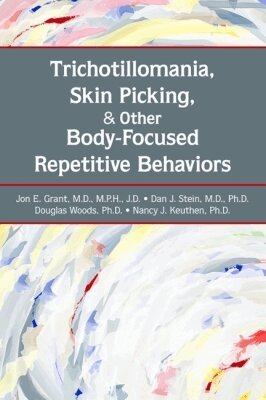
Underestimated, under-researched, and often poorly understood, the body-focused repetitive disorders nevertheless cause human suffering that is serious, persistent, and pervasive. These disorders can occur in both adults and children and manifest themselves as hair pulling (trichotillomania), pathologic skin picking, thumb sucking, and nail biting. Although these disorders are common, very few medical students and residents hear them addressed in lectures or know where to begin when confronted with a patient presenting with these behaviors. Trichotillomania, Skin Picking, and Other Body-Focused Repetitive Behaviors seeks to remedy this situation by synthesizing the latest research on body-focused repetitive disorders and presenting it in a systematic, easy-to-grasp manner.
Much has changed in the more than a decade since the last book on this topic was published. This new volume reflects the most current and substantive research into the etiology and symptoms of body-focused repetitive disorders and therapeutic options. Organized in logical fashion, it begins with a review of the clinical characteristics, moves on to diagnosis and evaluation, and concludes with a full review of treatment options. Special features include: Extensive material to help clinicians and patients understand the underlying purpose of engaging in these behaviors, which include, reducing tension, regulating strong emotion, and alleviating boredom. Separate chapters on adults and children, who may have a different presentation and a different set of treatment options. An additional chapter focuses on the role of the child patient''s family in the diagnosis and treatment of the disorder. Thorough coverage of the full range of treatments -- including psychotherapy, medication, and alternative treatments -- which provides the clinician with an evidence-based approach to treating patients. Discussion of the psychobiology of hair pulling and skin picking, which allows the reader to understand and contextualize the disorder from a neurological perspective and offers clues that may assist in optimizing treatment. A presentation style that is detailed enough for clinicians, yet accessible enough for a lay audience, including patients with the disorder and the families who seek to understand and support them.
Trichotillomania, Skin Picking, and Other Body-Focused Repetitive Behaviors fills a critical gap in the literature by addressing this common and frequently debilitating disorder in an utterly current, highly practical, and wholly compassionate manner.
606 kr
Skickas
745 kr
Läs direkt efter köp
Complete yet concise, Obsessive-Compulsive Personality Disorder provides an up-to-date analysis of this widespread, multi-faceted disorder. Estimated to be twice as common as any other personality disorder, OCPD is nevertheless both underrepresented in the literature and frequently misunderstood by clinicians and the patients who grapple with its effects. Misdiagnosis, failure to diagnose, and ignorance of treatment options are common. This text represents the collective contributions of some of the foremost authorities in the field under the leadership of editors who are determined to raise awareness and educate practitioners and patients alike about the phenomenology, neurobiology, and psychology of this disorder. The book begins with the history and epidemiology of the disorder before proceeding to the clinical features, which are presented using case examples. From there, the text addresses the developmental aspects of OCPD and then considers other related personality disorders that frequently co-occur with or may be mistaken for OCPD. Additional chapters address the developmental aspects of OCPD, the neurobiology and cognitive underpinnings of OCPD, and available treatment approaches.
The following coverage is especially noteworthy: Four chapters focus on common mental health disorders that can be difficult to differentiate from OCPD, with the most common misdiagnoses being obsessive-compulsive disorder and hoarding disorder. OCPD has also been linked with eating disorders, impulse disorders, and aggression, and the book helps the reader understand the relationship between and among these disorders. Gender and/or cultural factors may influence the presentation of psychiatric disorders, including OCPD, and the book explores the potentially heterogeneous etiology of the disorder and the danger of assuming that one size fits all in terms of treatment. Both psychotherapeutic and pharmacological treatment approaches are examined in detail, including cognitive-behavioral therapies (the rationale behind their use, estimated effectiveness, and limitations of current interventions) and the current state of drug treatment. OCPD can be trying for family members and others who care about the patient, and the book offers a chapter examining what loved ones can do to help, including how to recognize when a personality trait within the OCPD criteria rises to the level of a disorder. Although OCPD can be disabling, there can be positive aspects to having an obsessional personality, and the book discusses the situations under which these traits can be advantageous. Down-to-earth, clinically rich, and unique, Obsessive-Compulsive Personality Disorder will help clinicians navigate the thorny OCPD assessment, diagnosis, and treatment path while providing information and comfort to patients and their families.
749 kr
Skickas
935 kr
Läs direkt efter köp
Gambling Disorder: A Clinical Guide to Treatment is a systematic, eloquent, and exhaustive examination of the etiology, psychopathology, neurobiology, and treatment of the disorder, which was reclassified for DSM-5. Building on its 2004 predecessor, Pathological Gambling, which was groundbreaking for its era, the second edition has been thoroughly restructured and is designed to prepare clinicians to diagnose, treat, and—most important of all—understand their patients with the disorder. More common than previously supposed, gambling disorder is associated with decreased self-esteem, comorbid substance use disorders, financial and legal difficulties, relationship and family stress, and suicidality. Yet, many clinicians are unaware of the personal and social consequences of this disorder, as well as its implications for public health. Accordingly, the book provides a detailed look at the effects of gambling on societal, familial, and individual health and well-being and prepares clinicians to accurately assess their patients and provide effective treatments. As befits a field that has been the recent focus of so much innovative and promising research, the new edition boasts a fresh roster of contributors, each of whom bring special insight to their areas of expertise.
Noteworthy topics include: • Currently available screening and assessment instruments for diagnosing gambling disorder and monitoring symptom change are discussed in-depth, including psychometric properties, norms, administration methods, and scoring and interpretation of each instrument. • Online gambling and gambling-gaming convergence is considered in a new chapter, which explores the complex interplay between gambling and technology. Highlighted issues include the growth of interactive platforms, role of new player experiences and reward structures, tailoring of products to individuals, and integration into other online activities, such as gaming and social media.• Gender differences in epidemiology, phenomenology, psychiatric comorbidity, and biology have been identified among patients with gambling disorder, with important treatment implications. Similarly, older adults and young people can exhibit significant differences in behavior. These are explored in separate, clinically rich, chapters.• The always evolving field of gambling and criminal/legal issues is explored in a chapter on forensic issues in gambling, which examines the relationship of gambling disorder to antisocial personality disorder and domestic abuse, and looks at the interface between gambling and the legal system.• Tremendous advances in the treatment of gambling disorder have been made since the last edition, and these are reflected in comprehensive chapters on psychosocial and pharmacological treatments.
Full of expert clinical knowledge and cutting-edge research, Gambling Disorder: A Clinical Guide to Treatment is the clinician''s comprehensive guide to helping patients with gambling disorder find relief from this disabling disorder.
1 554 kr
Skickas inom 5-8 vardagar
1 955 kr
Läs direkt efter köp
The steady increase in individuals with substance use disorder requiring admission to the intensive care unit (ICU) has been an area of concern, leading to an increase in ICU utilization and costs related to both licit and illicit abuse of these drugs. Most recently, the COVID 19 pandemic has contributed to an increase in substance use and overdoses, with preliminary data suggesting an almost 30% increase in overdose deaths over the course of the pandemic. This increase in prevalence underscores the importance for the critical care practitioners to be knowledgeable about how substance use disorders impact the critically ill patient and understanding the epidemiology of substance use in critically ill patients.
Management of patients with substance use disorders is complicated by the associated intoxication and withdrawal syndromes, as well as by the physiologic changes that occur with chronic use that can cause, predispose patients to, and worsen the severity of many conditions. This makes it vital that critical care providers are adept at identifying and treating common intoxication and withdrawal syndromes, as well as proficient at treatment considerations owing to chronic use of such addictive substances.
This text provides a comprehensive, state-of-the-art review of the critical care implications of some of the commonly used addiction drugs and serves as a very useful resource for everyone involved in the care of critically ill patients impacted by substance use disorder. It provides a concise yet comprehensive summary of the status of the field that helps guide patient management and stimulate investigative efforts. All chapters are written by experts in their fields and include the most up to date scientific and clinical information.
1 112 kr
Skickas inom 10-15 vardagar