• Fri frakt över 249 kr
  • •
  • Snabba leveranser
  • •
  • Billiga böcker
Kundservice

Du är på sajten för privatpersoner.

Företag, bibliotek eller offentlig verksamhet?

Du handlar på classic.bokus.com, där alla dina funktioner finns intakta.
Till classic.bokus.com
Bokus logotyp. Gå till startsidan.
  • Erbjudanden
  • Nyheter
  • Student
  • Topplistor
  • Barn & ungdom
  • Bokus Play
  • E-böcker
  • Pocketböcker
  • Spel & pussel

10% rabatt på allt med kod NYSTART10 →

Sidfot

Mina sidor

    Hjälp

    • Kundservice
    • Vanliga frågor och svar
    • Frakt och leverans
    • Retur vid ångerrätt
    • Reklamera vara
    • Betalning
    • Köpvillkor
    • Allmänna villkor
    • Information om webbplatsens tillgänglighet

    Om Bokus

    • Om oss
    • Pressrum
    • För studenter
    • För företag
    • För bibliotek och offentlig verksamhet
    • För leverantörer
    • Hållbarhet

    Populärt

    • Aktuella erbjudanden
    • Presentkort
    • Studentlitteratur
    • Nya böcker
    • Topplistor
    • Signerade böcker
    • Engelska böcker

    Inspiration

    • Boktips
    • BookTok
    • Populära bokserier
    • Barnbokskaraktärer
    • Populära författare
    Logotyp för Bokus
    Följ oss på Facebook (extern länk)Följ oss på Instagram (extern länk)Följ oss på YouTube (extern länk)Följ oss på TikTok (extern länk)
    bokus @ CookiesAnpassa cookiesIntegritetspolicyKöpvillkor
    Till Citymail hemsida (extern länk)Till Budbee hemsida (extern länk)Till Postnord hemsida (extern länk)Till Schenker hemsida (extern länk)Till Early Bird hemsida (extern länk)Till Walleys hemsida (extern länk)
    1. Medicin
    2. Klinisk medicin och internmedicin
    3. Diagnostiska metoder

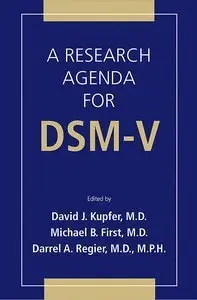
    Research Agenda for DSM V

    AvDavid J. Kupfer,Michael B. First

    Häftad, Engelska, 2002

    786 kr

    Beställningsvara. Skickas inom 7-10 vardagar. Fri frakt över 249 kr.

    Beskrivning

    In the ongoing quest to improve our psychiatric diagnostic system, we are now searching for new approaches to understanding the etiological and pathophysiological mechanisms that can improve the validity of our diagnoses and the consequent power of our preventive and treatment interventions - venturing beyond the current DSM paradigm and DSM-IV framework.This thought-provoking volume - produced as a partnership between the American Psychiatric Association, the National Institute of Mental Health, the National Institute on Alcohol Abuse and Alcoholism, and the National Institute on Drug Abuse - represents a far-reaching attempt to stimulate research and discussion in the field in preparation for the eventual start of the DSM-V process, still several years hence. The book ; Explores a variety of basic nomenclature issues, including the desirability of rating the quality and quantity of information available to support the different disorders in the DSM in order to indicate the disparity of empirical support across the diagnostic system.; Offers a neuroscience research agenda to guide development of a pathophysiologically based classification for DSM-V, which reviews genetic, brain imaging, postmortem, and animal model research and includes strategic insights for a new research agenda.; Presents highlights of recent progress in developmental neuroscience, genetics, psychology, psychopathology, and epidemiology, using a bioecological perspective to focus on the first two decades of life, when rapid changes in behavior, emotion and cognition occur.; Discusses how to address two important gaps in the current DSM-IV: (1) the categorical method of diagnosing personality disorders and their relationship with Axis I disorders, and (2) the limited provision for the diagnosis of relational disorders - suggesting a research agenda for personality disorders that considers replacing the current categorical approach with a dimensional classification of personality.; Reevaluates the relationship between mental disorders and disability, asserting that research into disability and impairment would benefit from the diagnosis of mental disorders be uncoupled from a requirement for impairment or disability to foster a more vigorous research agenda on the etiologies, courses, and treatment of mental disorders as well as disabilities and to avert unintended consequences of delayed diagnosis and treatment.; Examines the importance of culture in psychopathology and the main cultural variables at play in the diagnostic process, stating that training present and future professionals in the need to include cultural factors in the diagnostic process is a logical step in any attempt to develop comprehensive research programs in psychology, psychiatry, and related disciplines. This fascinating work, with contributions from an international group of research investigators, reaches into the core of psychiatry, providing invaluable background and insights for all psychology and psychiatry professionals - food for thought and further research that will be relevant for years to come.

    Produktinformation

    • Utgivningsdatum:2002-08-30
    • Mått:151 x 220 x 21 mm
    • Vikt:545 g
    • Format:Häftad
    • Språk:Engelska
    • Antal sidor:336
    • Förlag:American Psychiatric Association Publishing
    • ISBN:9780890422922

    Utforska kategorier

    • Diagnostiska metoder inom Medicin
    • Psykiatri inom Medicin

    Mer om författaren

    Michael B. First, M.D., is a Research Psychiatrist at the New York State Psychiatric Institute and Associate Professor of Clinical Psychiatry at Columbia University College of Physicians and Surgeons in New York, New York.David J. Kupfer, M.D., is Thomas Detre Professor and Chair of the Department of Psychiatry at Western Psychiatric Institute and Clinic at the University of Pittsburgh in Pittsburgh, Pennsylvania.Darrel Regier, M.D., M.P.H., is Executive Director of the American Psychiatric Institute for Research and Education and Director of the Division of Research at the American Psychiatric Association in Washington, D.C.

    Recensioner i media

    "By engaging an international cadre of research investigators in each of the proposed future diagnostic specific conferences, we hope to stimulate a cooperative research effort that can be supported by multiple national research funding sources. Likewise, by paying greater attention to the potential contribution of diverse research disciplines to clinical disease and disorder entities, even those defined by more transient but testable research criteria, we hope to accelerate the development of a research base that will be maximally informative for future revisions of the DSM and ICD classification systems for mental disorders." - From the Introduction

    Innehållsförteckning

    • ContributorsAcknowledgmentsIntroductionChapter 1. Basic Nomenclature Issues for DSM-VChapter 2. Neuroscience Research Agenda to Guide Development of a Pathophysiologically BasedClassification SystemChapter 3. Advances in Developmental Science and DSM-VChapter 4. Personality Disorders and Relational Disorders: A Research Agenda for Addressing Crucial Gaps in DSMChapter 5. Mental Disorders and Disability: Time to Reevaluate the Relationship?Chapter 6. Beyond the Funhouse Mirrors: Research Agenda on Culture and Psychiatric DiagnosisAppendix 6--1: Preliminary List of Suggested Areas and Topics of Research in Culture and Psychiatric DiagnosisIndex