Michael D. Shayler - Böcker
Visar alla böcker från författaren Michael D. Shayler. Handla med fri frakt och snabb leverans.
3 produkter
3 produkter
443 kr
Skickas inom 10-15 vardagar
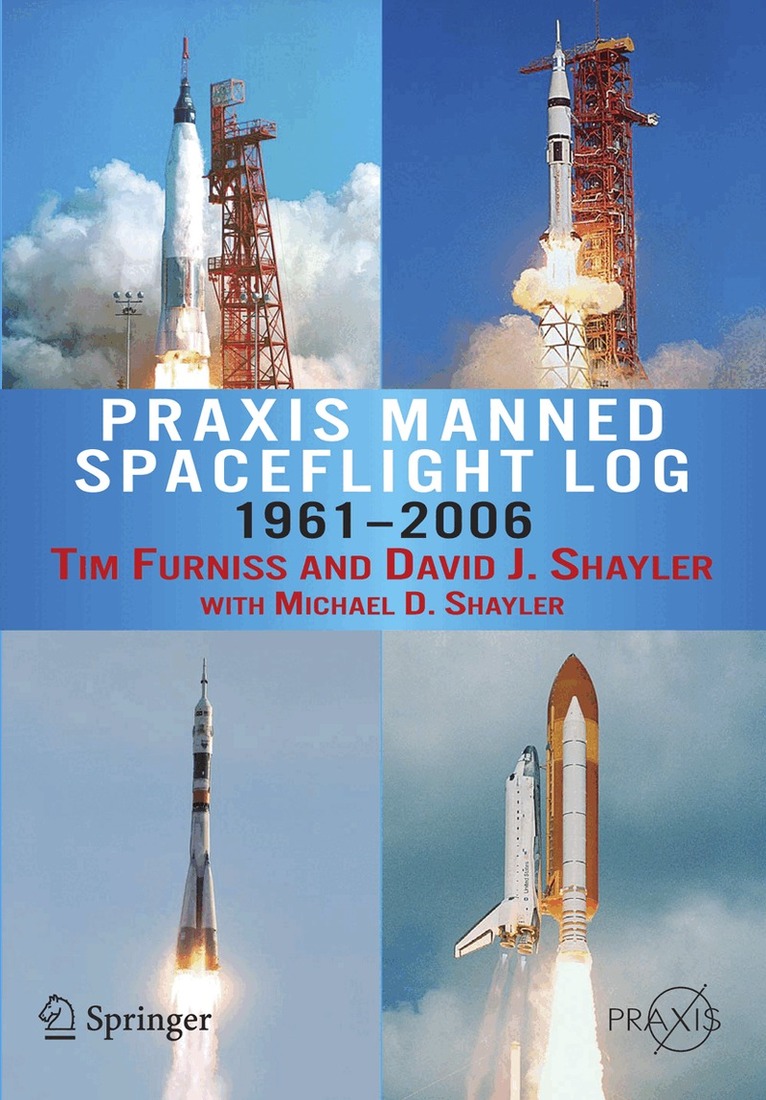
Praxis Log of Manned Spaceflight 1961-2006 will open with a section entitled: Quest for Space, which will provide an explanation of the methods employed to get in and out of orbit and brief overviews of the different international space programmes. It will be a complete chronological log of all attempted orbital manned spaceflights, including the X-15 "astroflights" of the 1960s that only achieved an altitude of c. 50 miles and the two 1961 Mercury and Redstone missions which were non-orbital. There will be an image depicting each manned spaceflight, and data boxes containing brief biographies of all the space travellers and basic flight data. The main text will be a narrative of each mission, its highlights and accomplishments, including those strange facts and humorous stories that are connected to every mission.By targeting publication in September 2006, the return to flight of the Shuttle, two more Soyuz TMA launches and, quite possibly, a second Chinese manned mission. The resulting book will be a handy reference to all manned spaceflights, the names astronauts and cosmonauts who flew on each mission, and their roles and accomplishments. Recent announcements of a return to the Moon and eventual manned flights to Mars, as new hardware and procedures are developed to support these long-range programs, emphasizes the case for future updates of this book.
483 kr
Skickas inom 10-15 vardagar
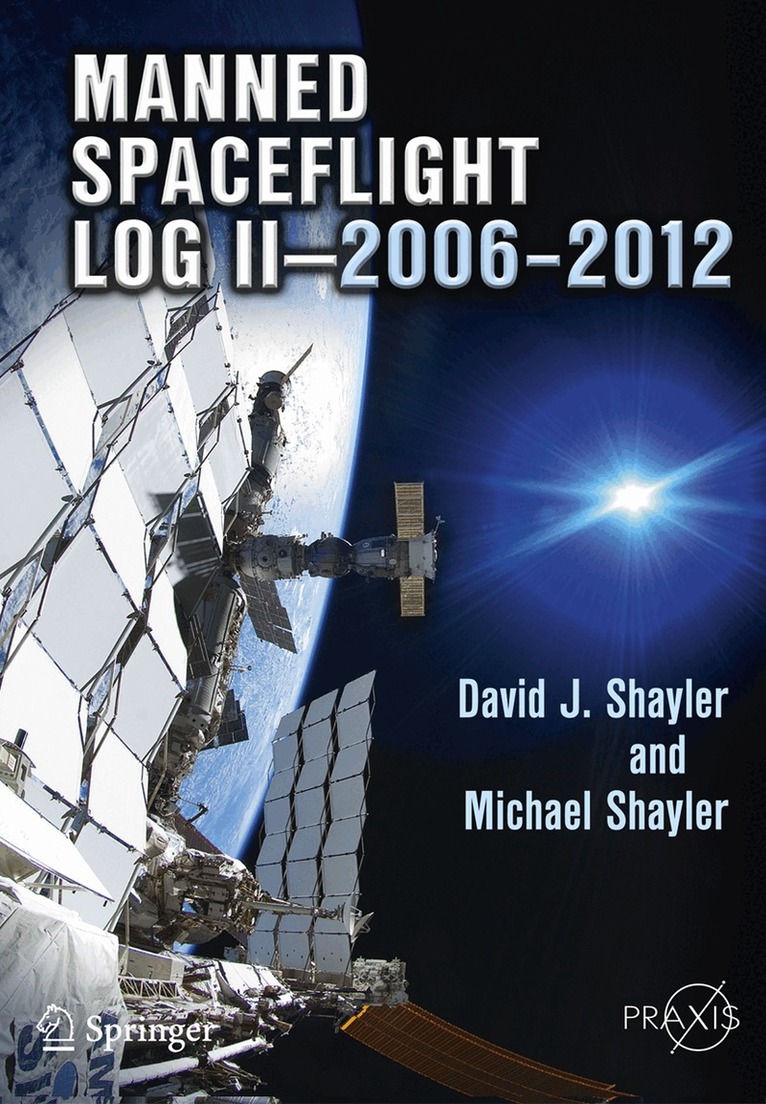
“Manned Spaceflight Log” discusses over 40 recent spaceflights from September 2006 through September 2012, a time of great change in human spaceflight history. Following on from “Praxis Manned Spaceflight Log 1961-2006,” the authors continue the story until the end of September 2012, with new chapters detailing the development and accomplishments of human spaceflight, expanded tables and additional photographs, many in color, throughout. The book opens with a new foreword by Colonel Alfred M. Worden, USAF Retired, NASA Astronaut and CMP of Apollo 15, which reflects on the changing history of human spaceflight and the prospects for future operations. The first chapter explains how human spaceflight has approached the different challenges of exploring space and provided the hardware to meet those challenges. This chapter also describes the various attempts to reach orbital flight and the often confusing distinction between ballistic, sub-orbital, and so-called ‘astro-flights’ of the X-15 rocket research aircraft program. Chapter 2 recalls key historic moments and missions across five decades of human spaceflight. Each decade has provided useful lessons for the next and a foundation for future achievement. The new mission entries are collected in the third section in chronological order. A review of the next steps in human spaceflight, including plans to occupy the International Space Station well into the 2020s and the growth of the Chinese manned space program including a large space station and planned base on the Moon, is discussed in Chapter 4. The tables provide a complete up-to-date overview of human spaceflight operations and experience from April 1961 to September 2012 and a selected chronology of important milestones from those years. Completing the book is a comprehensive bibliography that lists all the major Springer-Praxis human spaceflight titles and other important works that provide the reader with a resource to continuefurther research.
536 kr
Skickas inom 10-15 vardagar
MARSWALK ONE: First Steps on a New Planet addresses the question of why we should embark on a journey to Mars, documenting what the first human crew will do when they place their feet in the red dust of the planet. The book also addresses why we need to carry out these tasks and, more importantly, what a human crew could achieve that an automated mission could not. Understanding the clear benefits of sending a human crew to the surface of Mars, and how these benefits can be seen back on Earth, is the key to sustained long-term public and political support for the programme in terms of cash and commitment.The book accepts that the journey will be made, but does not specify precisely when. Flight time, and how to get to and from the planet are discussed briefly, to understand why the suggested duration spent at Mars is reasonable.The main objective of the work is to look at what science will be done on the surface – supported by orbital operations – and what hardware and technology will be employed to achieve the mission objectives. This analysis is drawn from previous experiences in manned and unmanned space programmes, including Apollo, Skylab, Salyut/Mir, Shuttle and ISS, Viking, Luna/Lunokhod, and recent Mars missions such as Pathfinder and Global Surveyor.In addition, new interviews with key personalities involved in planning Martian exploration, and discussions about current thoughts on what we need to accomplish on Mars when we get there, will provide a lively and thought provoking account that could generate fresh debate.When the decision is finally made to go to Mars, it will be made in the knowledge that most of the world knows why we are going and what benefits mankind will see for the effort. The authors’ primary objective is to begin this understanding.