Michael E. Goodich – författare
Visar alla böcker från författaren Michael E. Goodich. Handla med fri frakt och snabb leverans.
9 produkter
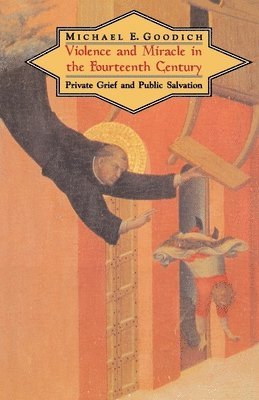
Violence and Miracle in the Fourteenth Century
Private Grief and Public Salvation
Häftad, 1995
264 kr
Lägg i varukorg
As war, pestilence and famine spread through Europe in the Middle Ages, so did reports of miracles, of hopeless victims wondrously saved from disaster. These "rescue miracles", recorded by over 10 14th-century cults, are the basis of Michael Goodich's account of the miraculous in everyday medieval …
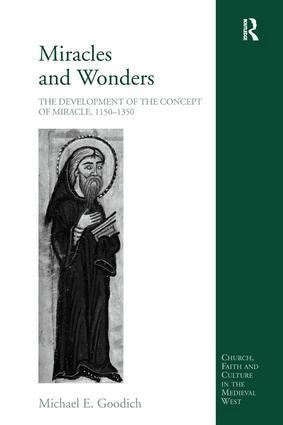
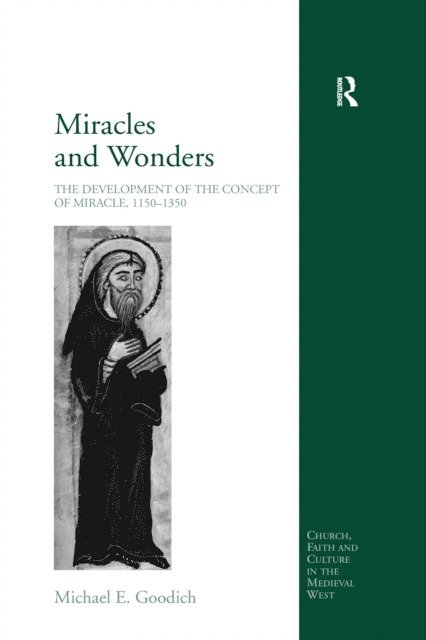
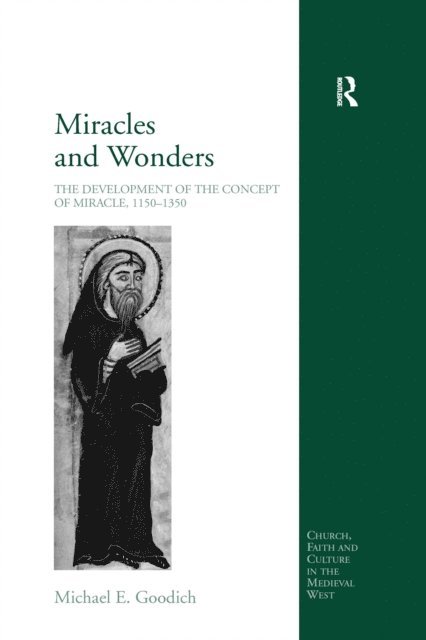
Miracles and Wonders
The Development of the Concept of Miracle, 1150-1350
Inbunden, 2007
2736 kr
Lägg i varukorg
Beginning in the late twelfth century, scholastic theologians such as William of Auvergne, Thomas Aquinas and Engelbert of Admont attempted to provide a rational foundation to the Christian belief in miracles, bolstered by the Aristotelian theory of natural law. Similarly in this period a tension …
Lives and Miracles of the Saints
Studies in Medieval Latin Hagiography
Inbunden, 2004
2096 kr
Lägg i varukorg
Hagiography is a rich source for our knowledge of many aspects of medieval culture and tradition. The lives and miracles of the saints may be read on several levels, both as an expression of the dominant ideology and as a reflection of long-term themes in medieval society. The essays in this volume …
Lives and Miracles of the Saints
Studies in Medieval Latin Hagiography
E-bok, 2024
1175 kr
Lägg i varukorg
Hagiography is a rich source for our knowledge of many aspects of medieval culture and tradition. The lives and miracles of the saints may be read on several levels, both as an expression of the dominant ideology and as a reflection of long-term themes in medieval society. The essays in this volume …
Lives and Miracles of the Saints
Studies in Medieval Latin Hagiography
E-bok, 2024
1150 kr
Lägg i varukorg
Hagiography is a rich source for our knowledge of many aspects of medieval culture and tradition. The lives and miracles of the saints may be read on several levels, both as an expression of the dominant ideology and as a reflection of long-term themes in medieval society. The essays in this volume …
Miracles and Wonders
The Development of the Concept of Miracle, 1150-1350
E-bok, 2017
813 kr
Lägg i varukorg
Beginning in the late twelfth century, scholastic theologians such as William of Auvergne, Thomas Aquinas and Engelbert of Admont attempted to provide a rational foundation to the Christian belief in miracles, bolstered by the Aristotelian theory of natural law. Similarly in this period a tension …
Miracles and Wonders
The Development of the Concept of Miracle, 1150-1350
E-bok, 2017
831 kr
Lägg i varukorg
Beginning in the late twelfth century, scholastic theologians such as William of Auvergne, Thomas Aquinas and Engelbert of Admont attempted to provide a rational foundation to the Christian belief in miracles, bolstered by the Aristotelian theory of natural law. Similarly in this period a tension …
Violence and Miracle in the Fourteenth Century
Private Grief and Public Salvation
Inbunden, 1995
744 kr
Tillfälligt slut
As war, pestilence and famine spread through Europe in the Middle Ages, so did reports of miracles, of hopeless victims wondrously saved from disaster. These "rescue miracles", recorded by over 100 14th-century cults, are the basis of Michael Goodich's account of the miraculous in everyday medieval …
From Birth to Old Age
The Human Life Cycle in Medieval Thought 1250-1350
Inbunden, 1989
737 kr
Tillfälligt slut