Michael Goodchild - Böcker
Visar alla böcker från författaren Michael Goodchild. Handla med fri frakt och snabb leverans.
6 produkter
6 produkter
826 kr
Skickas inom 10-15 vardagar
Advances in Geo-Spatial Information Science presents recent advances regarding fundamental issues of geo-spatial information science (space and time, spatial analysis, uncertainty modeling and geo-visualization), and new scientific and technological research initiatives for geo-spatial information science (such as spatial data mining, mobile data modeling, and location-based services). The book contains selected and revised papers presented at the joint International Conference on Theory, Data Handling and Modelling in GeoSpatial Information Science (Hong Kong, 26–28 May 2010), and brings together three related international academic communities: spatial information science, spatial data handling, and modeling geographic systems. Advances in Geo-Spatial Information Science will be of interest for academics and professionals interested in spatial information science, spatial data handling, and modeling of geographic systems.
2 118 kr
Skickas inom 10-15 vardagar
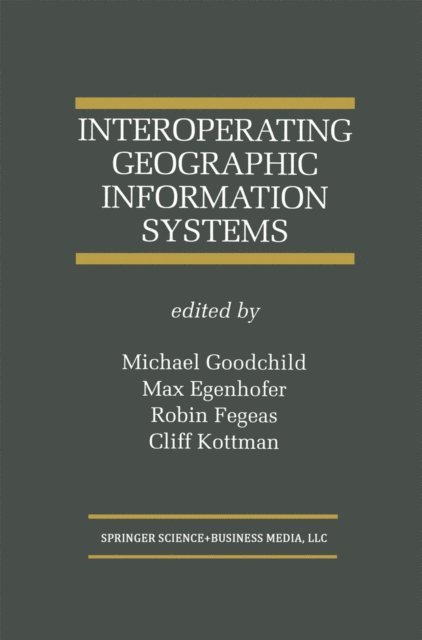
Geographic information systems have developed rapidly in the 1990s, and are now a major class of software, with applications that include infrastructure maintenance, resource management, agriculture, Earth science, and planning. But a lack of standards has led to a general inability for one GIS to interoperate with another. It is difficult for one GIS to share data with another, or for people trained on one system to adapt easily to the commands and user interface of another. Failure to interoperate is a problem at many levels, ranging from the purely technical to the semantic and the institutional. This text is about efforts to improve the ability of GISs to interoperate, and has been assembled through a collaboration between academic researchers and the software vendor community under the auspices of the US National Center for Geographic Information and Analysis and the Open GIS Consortium Inc. It includes chapters on the basic principles and the various conceptual frameworks that the research community has developed to think about the problem.Other chapters review a wide range of applications and the experiences of the authors in trying to achieve interoperability at a practical level. Interoperability opens enormous potential for new ways of using GIS and new mechanisms for exchanging data, and these are covered in chapters on information marketplaces, with special reference to geographic information. Institutional arrangements are also likely to be profoundly affected by the trend towards interoperable systems, and nowhere is the impact of interoperability more likely to cause fundamental change than in education, as educators address the needs of a new generation of GIS users with access to a new generation of tools. This book should be suitable as a secondary text for graduate level courses in computer science, geography, spatial databases, and interoperability and as a reference for researchers and practitioners in industry, commerce and government.
662 kr
Skickas inom 10-15 vardagar
Advances in Geo-Spatial Information Science presents recent advances regarding fundamental issues of geo-spatial information science (space and time, spatial analysis, uncertainty modeling and geo-visualization), and new scientific and technological research initiatives for geo-spatial information science (such as spatial data mining, mobile data modeling, and location-based services). The book contains selected and revised papers presented at the joint International Conference on Theory, Data Handling and Modelling in GeoSpatial Information Science (Hong Kong, 26–28 May 2010), and brings together three related international academic communities: spatial information science, spatial data handling, and modeling geographic systems. Advances in Geo-Spatial Information Science will be of interest for academics and professionals interested in spatial information science, spatial data handling, and modeling of geographic systems.
2 107 kr
Skickas inom 10-15 vardagar
Geographic information systems have developed rapidly in the past decade, and are now a major class of software, with applications that include infrastructure maintenance, resource management, agriculture, Earth science, and planning. But a lack of standards has led to a general inability for one GIS to interoperate with another. It is difficult for one GIS to share data with another, or for people trained on one system to adapt easily to the commands and user interface of another. Failure to interoperate is a problem at many levels, ranging from the purely technical to the semantic and the institutional. Interoperating Geographic Information Systems is about efforts to improve the ability of GISs to interoperate, and has been assembled through a collaboration between academic researchers and the software vendor community under the auspices of the US National Center for Geographic Information and Analysis and the Open GIS Consortium Inc. It includes chapters on the basic principles and the various conceptual frameworks that the research community has developed to think about the problem. Other chapters review a wide range of applications and the experiences of the authors in trying to achieve interoperability at a practical level. Interoperability opens enormous potential for new ways of using GIS and new mechanisms for exchanging data, and these are covered in chapters on information marketplaces, with special reference to geographic information. Institutional arrangements are also likely to be profoundly affected by the trend towards interoperable systems, and nowhere is the impact of interoperability more likely to cause fundamental change than in education, as educators address the needs of a new generation of GIS users with access to a new generation of tools. The book concludes with a series of chapters on education and institutional change. Interoperating Geographic Information Systems is suitable asa secondary text for graduate level courses in computer science, geography, spatial databases, and interoperability and as a reference for researchers and practitioners in industry, commerce and government.
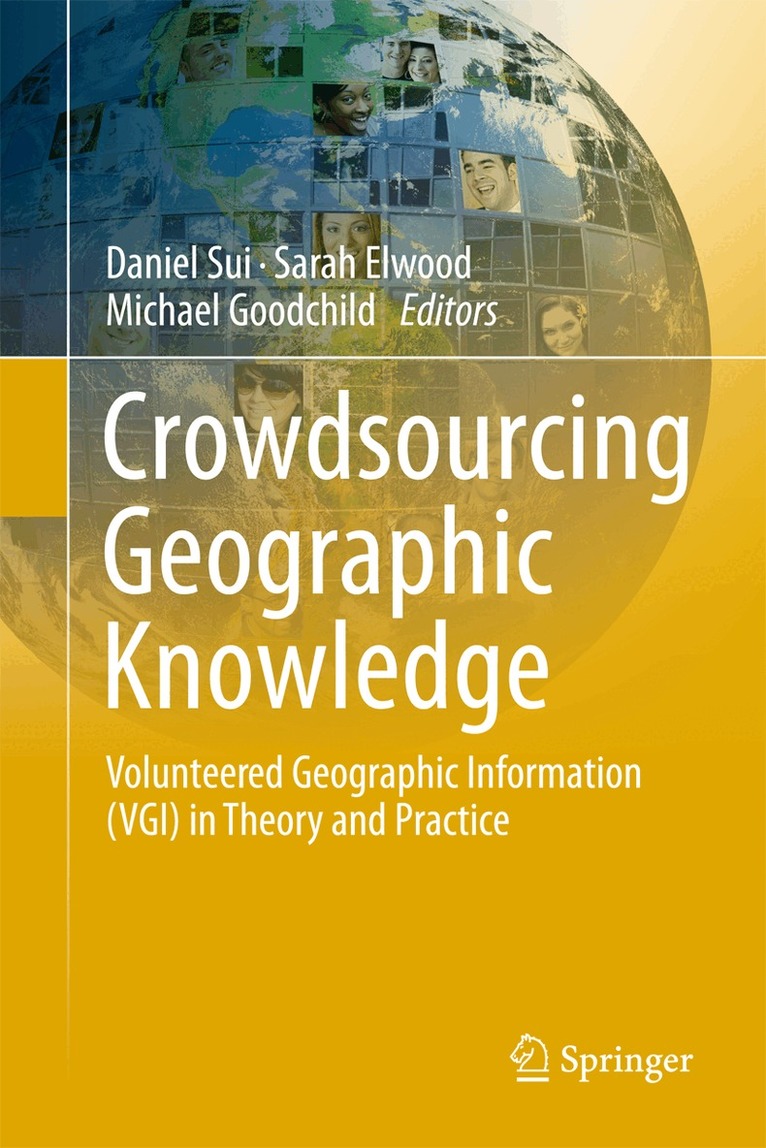
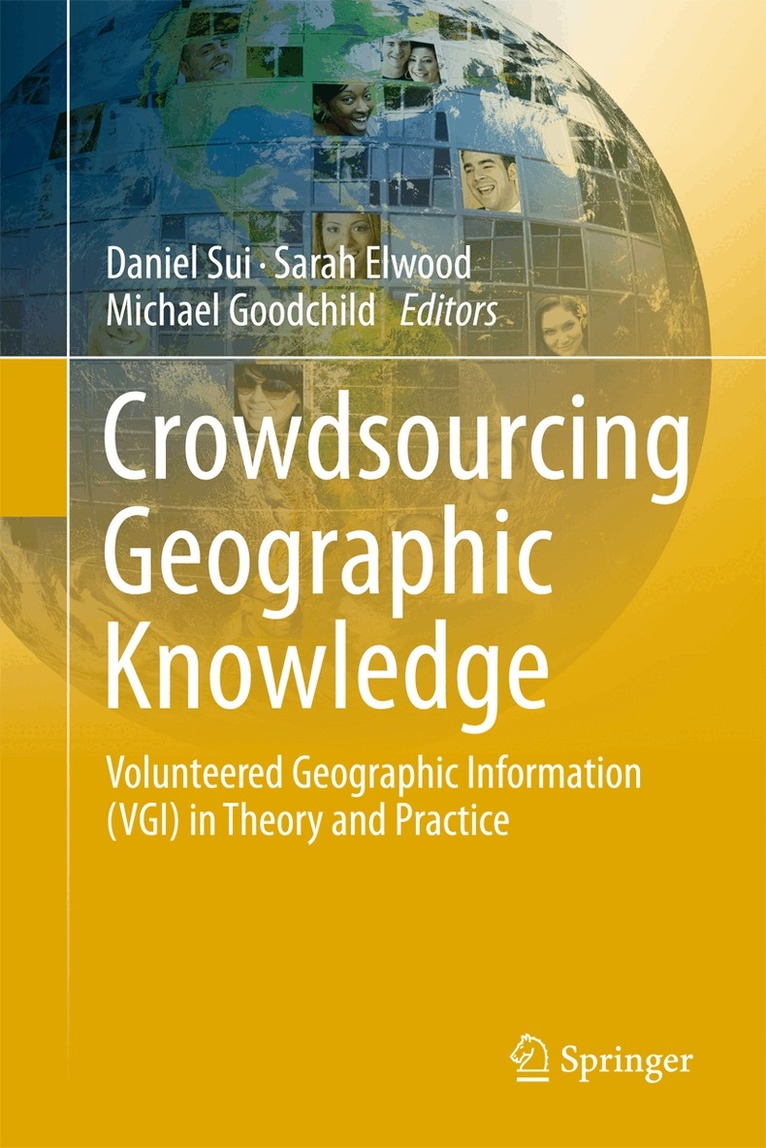
Crowdsourcing Geographic Knowledge
Volunteered Geographic Information (VGI) in Theory and Practice
Inbunden, Engelska, 2012
1 590 kr
Skickas inom 10-15 vardagar
The phenomenon of volunteered geographic information is part of a profound transformation in how geographic data, information, and knowledge are produced and circulated. By situating volunteered geographic information (VGI) in the context of big-data deluge and the data-intensive inquiry, the 20 chapters in this book explore both the theories and applications of crowdsourcing for geographic knowledge production with three sections focusing on 1). VGI, Public Participation, and Citizen Science; 2). Geographic Knowledge Production and Place Inference; and 3). Emerging Applications and New Challenges. This book argues that future progress in VGI research depends in large part on building strong linkages with diverse geographic scholarship. Contributors of this volume situate VGI research in geography’s core concerns with space and place, and offer several ways of addressing persistent challenges of quality assurance in VGI. This book positions VGI as part of a shift toward hybrid epistemologies, and potentially a fourth paradigm of data-intensive inquiry across the sciences. It also considers the implications of VGI and the exaflood for further time-space compression and new forms, degrees of digital inequality, the renewed importance of geography, and the role of crowdsourcing for geographic knowledge production.
Crowdsourcing Geographic Knowledge
Volunteered Geographic Information (VGI) in Theory and Practice
Häftad, Engelska, 2014
1 590 kr
Skickas inom 10-15 vardagar
The phenomenon of volunteered geographic information is part of a profound transformation in how geographic data, information, and knowledge are produced and circulated. By situating volunteered geographic information (VGI) in the context of big-data deluge and the data-intensive inquiry, the 20 chapters in this book explore both the theories and applications of crowdsourcing for geographic knowledge production with three sections focusing on 1). VGI, Public Participation, and Citizen Science; 2). Geographic Knowledge Production and Place Inference; and 3). Emerging Applications and New Challenges. This book argues that future progress in VGI research depends in large part on building strong linkages with diverse geographic scholarship. Contributors of this volume situate VGI research in geography’s core concerns with space and place, and offer several ways of addressing persistent challenges of quality assurance in VGI. This book positions VGI as part of a shift toward hybrid epistemologies, and potentially a fourth paradigm of data-intensive inquiry across the sciences. It also considers the implications of VGI and the exaflood for further time-space compression and new forms, degrees of digital inequality, the renewed importance of geography, and the role of crowdsourcing for geographic knowledge production.