Michael H. Lessnoff - Böcker
Visar alla böcker från författaren Michael H. Lessnoff. Handla med fri frakt och snabb leverans.
3 produkter
3 produkter
1 359 kr
Skickas inom 10-15 vardagar
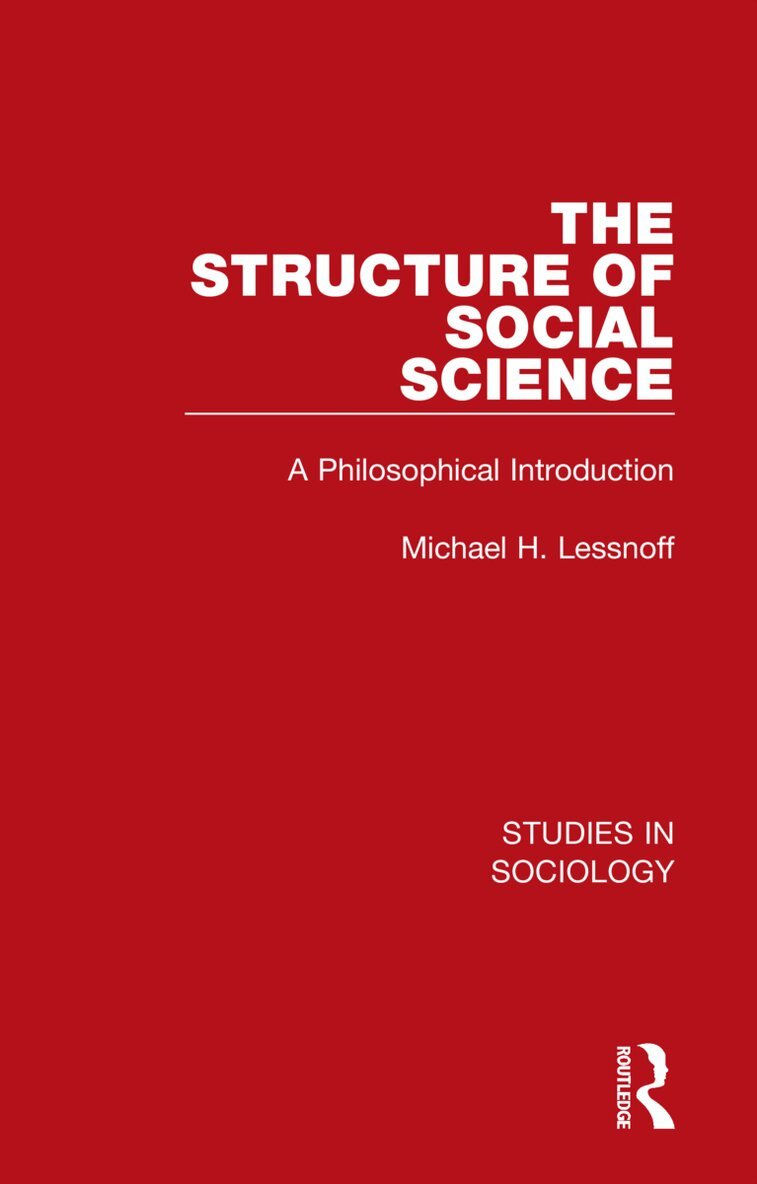
Originally published in 1974, this book provided a most useful introductory survey of all the major philosophical issues relating to the social sciences at the time. While it covers a remarkable amount of ground in a short space, it is never superficial, for its lucid and careful analysis does full justice to the complexities and controversies of the subject. Nor is it merely a survey, for, while putting all points of view with scrupulous fairness, the author never fails to make clear his own, and to support it with reasoned argument. The book’s basic framework is a comparison of physical and social science, and in this context the author examines the problems of the mental aspect of social life, general laws, the individual and the social, explanation, and the relation of fact to value. He is far from advocating (as is often done) the wholesale acceptance or rejection of the ‘physical science model’ in the social sciences – rather, he carefully considers the various elements of the model in relation to the nature of social life. A noteworthy feature of this book is the philosophical analysis of statistical correlations and tests of significance, which bulk so large in the practice of social scientists, yet are all too seldom discussed in books of this kind. Also of special interest is the penetrating and original analysis of functionalist explanation in social science. Students of the social sciences and of philosophy will find this an admirable introduction to an important aspect of their respective disciplines.
467 kr
Skickas inom 10-15 vardagar
Originally published in 1974, this book provided a most useful introductory survey of all the major philosophical issues relating to the social sciences at the time. While it covers a remarkable amount of ground in a short space, it is never superficial, for its lucid and careful analysis does full justice to the complexities and controversies of the subject. Nor is it merely a survey, for, while putting all points of view with scrupulous fairness, the author never fails to make clear his own, and to support it with reasoned argument. The book’s basic framework is a comparison of physical and social science, and in this context the author examines the problems of the mental aspect of social life, general laws, the individual and the social, explanation, and the relation of fact to value. He is far from advocating (as is often done) the wholesale acceptance or rejection of the ‘physical science model’ in the social sciences – rather, he carefully considers the various elements of the model in relation to the nature of social life. A noteworthy feature of this book is the philosophical analysis of statistical correlations and tests of significance, which bulk so large in the practice of social scientists, yet are all too seldom discussed in books of this kind. Also of special interest is the penetrating and original analysis of functionalist explanation in social science. Students of the social sciences and of philosophy will find this an admirable introduction to an important aspect of their respective disciplines.
SPIRIT OF CAPITALISM AND THE PROTESTANT ETHIC
An Enquiry into the Weber Thesis
Inbunden, Engelska, 1994
1 799 kr
Skickas inom 7-10 vardagar
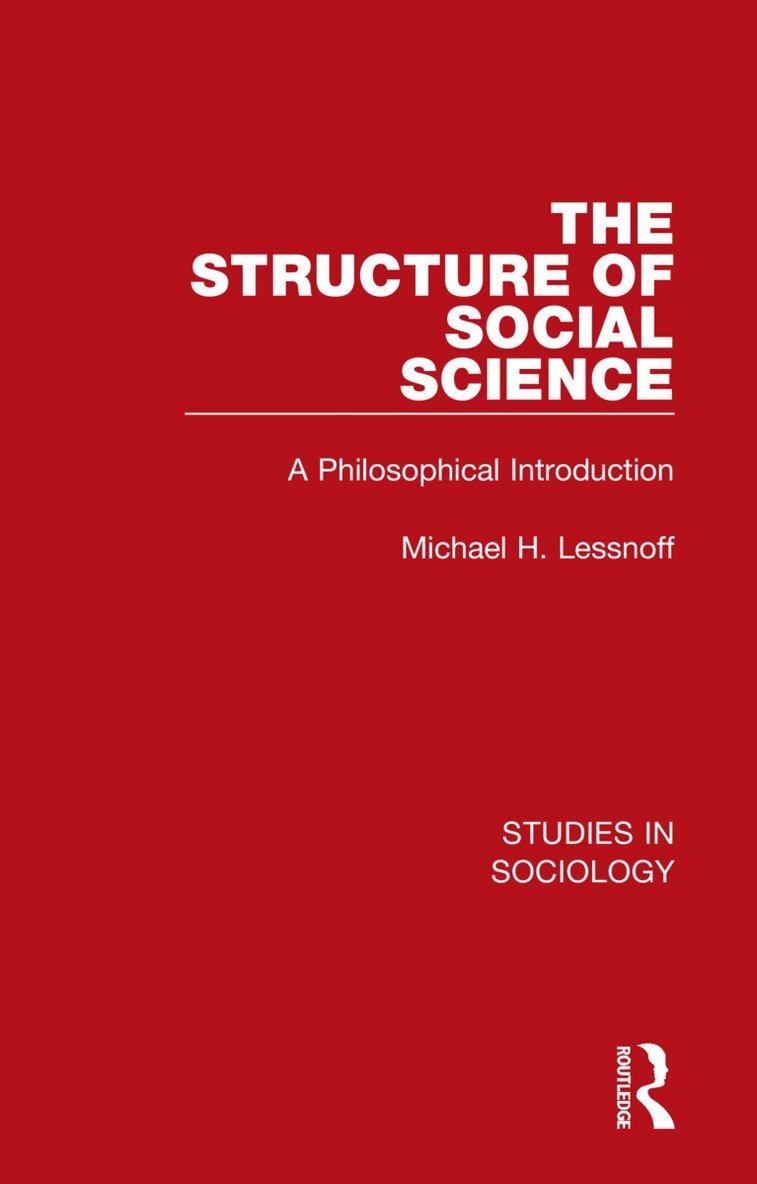
Max Weber, recognized as one of the world's most important sociologists, saw his life's work as nothing less than the comparative analysis of world civilizations. Above all, he was fascinated by the differing historical paths traced by Western civilization and the civilizations of the East. In his famous essay, The Protestant Ethic and the Spirit of Capitalism, he addressed the forces behind that dramatic and enormous transformation of human life and society known as the Industrial Revolution. Weber's thesis proposes a causal link between the forces of the 'protestant ethic' and the 'spirit of capitalism' that lay behind the Industrial Revolution.This important book offers a sophisticated analysis of Weber's key concepts and an in-depth study as to their formulation in the early modern period. Michael Lessnoff proposes an original and essential distinction between the protestant 'work' and 'profit' ethics and examines the logical relation between them. He looks at Adam Smith's work on the relation between morals and capitalism, comparing Smith's 'spirit of capitalism' to Weber's. Lessnoff also considers the significance of the 'protestant ethic' in the modern world. As one of the first books of its kind to offer a complex analysis of the Weber thesis and using a large body of previously neglected evidence, The Spirit of Capitalism and the Protestant Ethic will be welcomed by historians of religion and economics and by all sociologists.