Michael J. Hanmer - Böcker
Visar alla böcker från författaren Michael J. Hanmer. Handla med fri frakt och snabb leverans.
5 produkter
5 produkter
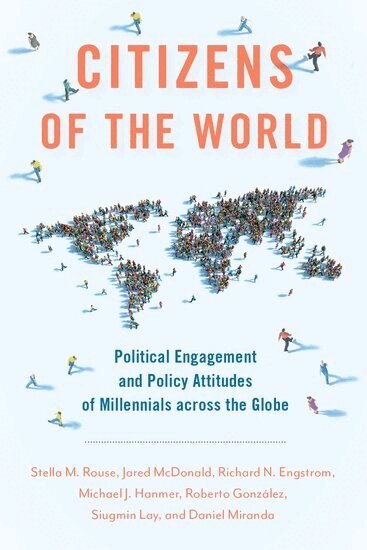
Citizens of the World
Political Engagement and Policy Attitudes of Millennials across the Globe
Inbunden, Engelska, 2022
1 200 kr
Skickas inom 7-10 vardagar
The Millennial Generation, those born between the early 1980s and the late 1990s, is the most educated, digitally connected, and globalized in the history of the world. Around the globe, this generation encompasses 1.8 billion people--a quarter of the world's population--and will soon produce a majority of the world's political, economic, and social leaders. Millennials grew up experiencing the terrorist attacks of September 11, the perpetual "war on terror", the global proliferation of the internet and smart phones, and the increased interconnectedness of people around the world. In many countries, Millennials' young adulthood has been marked by high rates of unemployment and underemployment that surpass those of their parents and grandparents, making them the first generation in the modern era to have higher rates of poverty than their predecessors at the same age. These factors afford a unique opportunity to explore how Millennial attitudes, compared to older adults, vary across different cultures, political settings, and economic circumstances. Citizens of the World examines the Millennial Generation from a comparative perspective, providing insight into the degree to which generational differences in political attitudes and behaviors transcend cultures and borders. The book looks at Millennial attitudes about family life, gender roles, institutions, politics, religion, lifestyle, and the future to better understand how or if governance will change under this generation and the degree of influence they currently wield in different countries. Key to this research is the finding that Millennials have developed a global identity that distinguishes them from older adults. Drawing on data from Australia, Chile, Mexico, New Zealand, South Africa, South Korea, the United Kingdom, and the United States, Citizens of the World shows how this global identity has developed and how it fuels Millennials' policy attitudes and willingness to engage in the political world.
Citizens of the World
Political Engagement and Policy Attitudes of Millennials across the Globe
Häftad, Engelska, 2022
301 kr
Skickas inom 5-8 vardagar
The Millennial Generation, those born between the early 1980s and the late 1990s, is the most educated, digitally connected, and globalized in the history of the world. Around the globe, this generation encompasses 1.8 billion people--a quarter of the world's population--and will soon produce a majority of the world's political, economic, and social leaders. Millennials grew up experiencing the terrorist attacks of September 11, the perpetual "war on terror", the global proliferation of the internet and smart phones, and the increased interconnectedness of people around the world. In many countries, Millennials' young adulthood has been marked by high rates of unemployment and underemployment that surpass those of their parents and grandparents, making them the first generation in the modern era to have higher rates of poverty than their predecessors at the same age. These factors afford a unique opportunity to explore how Millennial attitudes, compared to older adults, vary across different cultures, political settings, and economic circumstances. Citizens of the World examines the Millennial Generation from a comparative perspective, providing insight into the degree to which generational differences in political attitudes and behaviors transcend cultures and borders. The book looks at Millennial attitudes about family life, gender roles, institutions, politics, religion, lifestyle, and the future to better understand how or if governance will change under this generation and the degree of influence they currently wield in different countries. Key to this research is the finding that Millennials have developed a global identity that distinguishes them from older adults. Drawing on data from Australia, Chile, Mexico, New Zealand, South Africa, South Korea, the United Kingdom, and the United States, Citizens of the World shows how this global identity has developed and how it fuels Millennials' policy attitudes and willingness to engage in the political world.
745 kr
Skickas inom 7-10 vardagar
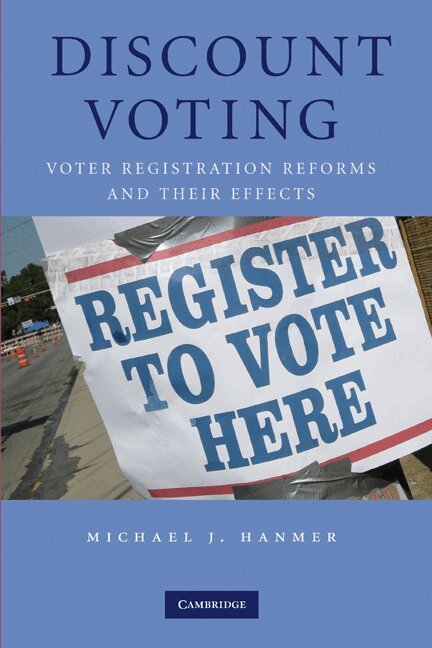
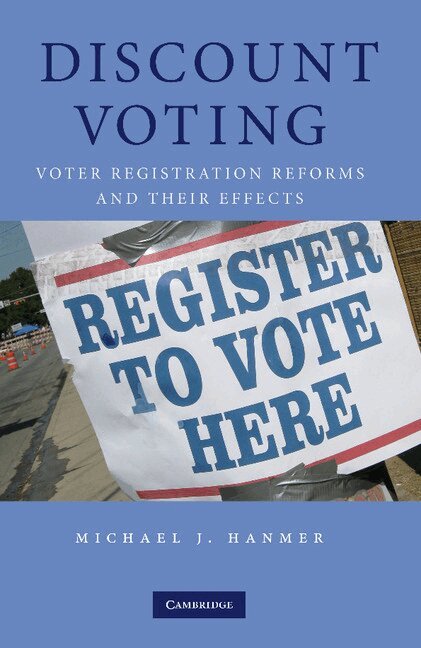
In the US, there is wide variation from state to state in the institutional arrangements - for example, registration laws - that structure the environment in which citizens decide whether to vote and parties decide whom to mobilize. This has important consequences for who gets elected and the policies they enact. In this book Michael Hanmer argues that to understand how these institutional arrangements affect outcomes, it is necessary to consider the interactions between social and political context and these laws. He tests this theory by examining how the factors that influence the adoption of a set of registration laws affect turnout, the composition of the electorate, and party strategies. His multi-method research design demonstrates that the effect of registration laws is not as profound as either reformers would hope or previous studies suggest, especially when reform is a response to federal legislation. He concludes by arguing for a shift in the approach to increasing turnout.
287 kr
Skickas inom 10-15 vardagar
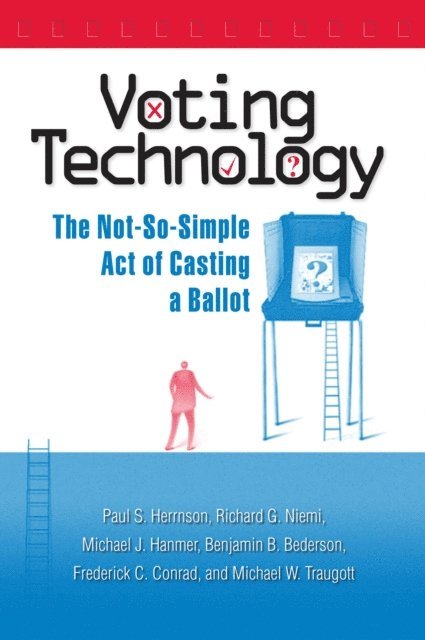
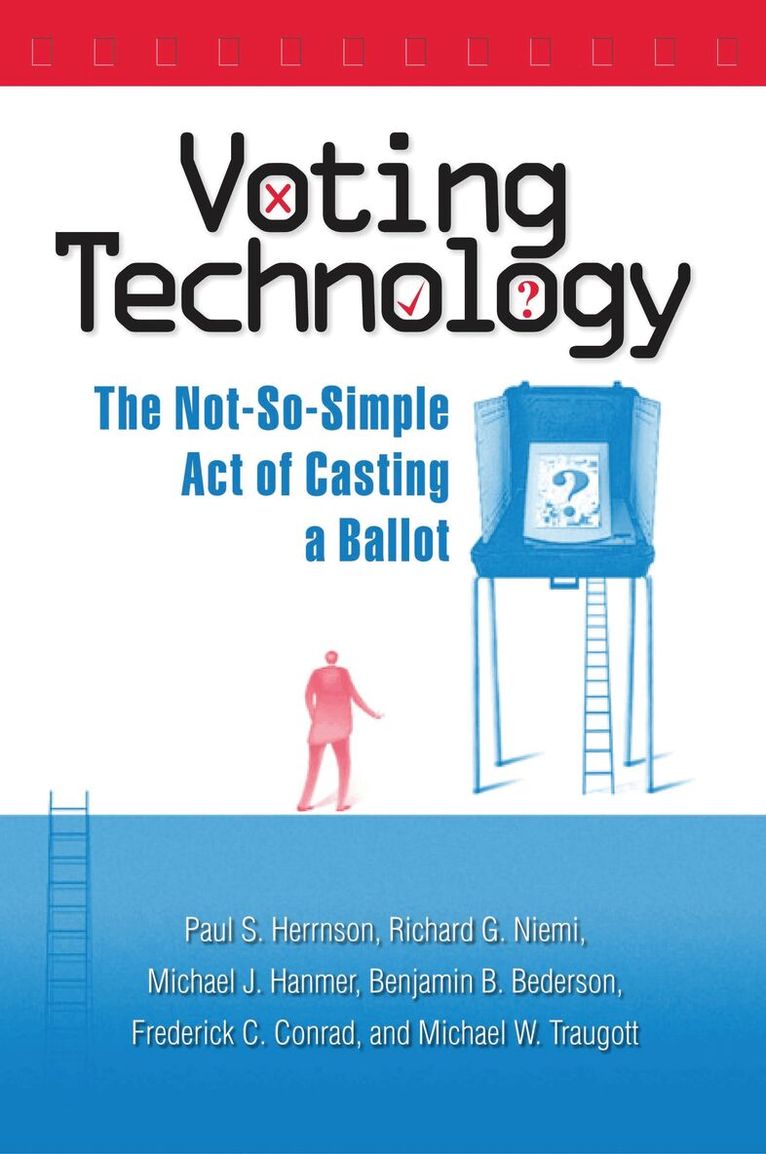
Voting difficulties hung over America's presidential election in 2000 like a dark cloud. Hanging chads, a butterfly ballot, and the Supreme Court remain the most vivid memories of that political donnybrook. Passage of 2002's Help America Vote Act sparked further interest in the physical process of casting a ballot, yet several recent contests still produced confusion at the polls. A solution to at least some of those problems may be found in new technology, but such innovations carry their own concerns and questions. V oting Technology is the first book to investigate in a scientific and authoritative manner how voters respond to the new equipment. The authorsan interdisciplinary group of experts in American elections, political behavior, human-computer interaction, and human factors psychologyassess five commercially available voting systems, each one representing a specific class based on shared design principles, as well as a prototype system not currently available. They evaluate the systems against different criteria (including ease of use, speed, and accuracy) using field experiments, laboratory experiments, and expert reviews. The results reveal the good and bad about the new systems, including specific features that contribute to clarity, confusion, or error. Going beyond the concern with spoiled ballots, they determine whether voters actually cast their ballots for the candidates they intended to support. They address fundamental questions of whether voters like and trust the equipment and whether the various systems are equally usable by all voters. Their research also opens up an entirely new line of inquiry by asking about the interaction between ballot format and voter behavior. The concluding chapter pulls together best practices that will guide manufacturers of voting systems, ballot designers, election officials, political observers, and of course, voters. In a political system based on free exercise of personal choice, the least w
394 kr
Skickas inom 7-10 vardagar
In the US, there is wide variation from state to state in the institutional arrangements - for example, registration laws - that structure the environment in which citizens decide whether to vote and parties decide whom to mobilize. This has important consequences for who gets elected and the policies they enact. In this book Michael Hanmer argues that to understand how these institutional arrangements affect outcomes, it is necessary to consider the interactions between social and political context and these laws. He tests this theory by examining how the factors that influence the adoption of a set of registration laws affect turnout, the composition of the electorate, and party strategies. His multi-method research design demonstrates that the effect of registration laws is not as profound as either reformers would hope or previous studies suggest, especially when reform is a response to federal legislation. He concludes by arguing for a shift in the approach to increasing turnout.