Michael J. Mcgandy - Böcker
Visar alla böcker från författaren Michael J. Mcgandy. Handla med fri frakt och snabb leverans.
4 produkter
4 produkter
299 kr
Skickas inom 5-8 vardagar
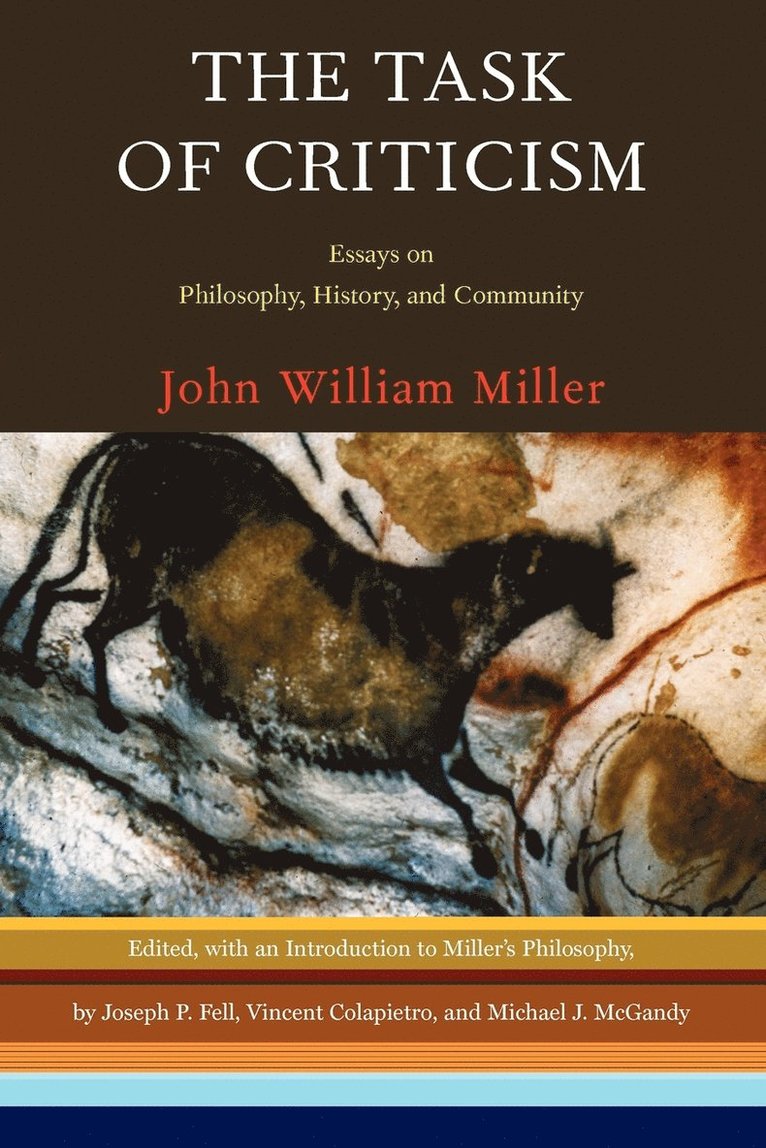
Erudite and eloquent, John William Miller's writing engages readers with his "earthy" treatment of basic philosophical questions. Designed as an introduction to a compelling historicist philosophy, this volume presents Miller's best and most representative essays in a single, authoritative edition. Miller (1895-1978) taught at Williams College, and he is well known for his extraordinary teaching (described in Masters: Portraits of Great Teachers). He was also a philosopher of the first rank, who arrived at a strikingly original reinterpretation of the history of philosophy and the perennial philosophical problems, especially dualism. Challenging the dogmatism and nihilism that mark so much of recent philosophy, Miller advocated a thoughtful and engaged approach to life—one that revitalizes philosophical activity, embraces history, and joins reflection with participation in a democratic community. The editors have selected twenty-nine essays and have composed succinct introductions to each. Joseph P. Fell has contributed a general introduction that places Miller's thought in context and exhibits the contemporary relevance of his philosophy.
1 057 kr
Tillfälligt slut
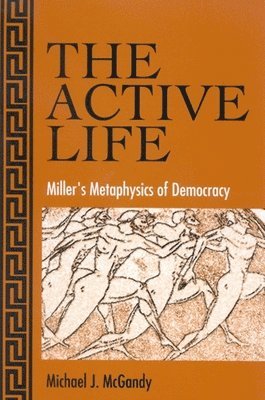
A sustained reflection on philosopher John William Miller and the metaphysical presuppositions and implications of democracy.The ancient antagonism between the active and the contemplative lives is taken up in this innovative and wide-ranging examination of John William Miller's effort to forge a metaphysics of democracy. The Active Life sheds new light on Miller's actualist philosophy-its scope, its systematic character, and its dialectical form. Michael J. McGandy persuasively sets Miller's actualism in the context of Hannah Arendt's understanding of the active life and skillfully presents actualism as a response to Whitman's challenge to craft a democratic form of metaphysics. McGandy concludes that Miller reveals how the philosophical and the political are inextricably connected, how there is no active life without the contemplative life, and that the contemplative life is founded in the active life.
382 kr
Tillfälligt slut
A sustained reflection on philosopher John William Miller and the metaphysical presuppositions and implications of democracy.The ancient antagonism between the active and the contemplative lives is taken up in this innovative and wide-ranging examination of John William Miller's effort to forge a metaphysics of democracy. The Active Life sheds new light on Miller's actualist philosophy-its scope, its systematic character, and its dialectical form. Michael J. McGandy persuasively sets Miller's actualism in the context of Hannah Arendt's understanding of the active life and skillfully presents actualism as a response to Whitman's challenge to craft a democratic form of metaphysics. McGandy concludes that Miller reveals how the philosophical and the political are inextricably connected, how there is no active life without the contemplative life, and that the contemplative life is founded in the active life.
1 276 kr
Skickas inom 10-15 vardagar
Joseph P. Fell proposes that the solution to the problem of nihilism is found in the common experience of persons and the everyday commitments that one makes to people, practices, and institutions. In his landmark 1979 book Heidegger and Sartre, and in his subsequent essays, Fell describes a quiet but radical reform in the philosophical tradition that speaks to perennial dilemmas of thought and pressing issues for action.Since Descartes, at least, we have been puzzled as to what we can know, how we should act, and what we should value. The skeptical influence of modern dualism—distilled in the mind-body problem at arose with the assertion “I think, therefore I am”—has shot through not just philosophy and psychology, but also society, politics, and culture. With dualism arose radical subjectivism and the concomitant problems of nihilism and alienation. The broad aim of phenomenology is to repair the rupture of self and world. Announced by Edmund Husserl and developed by Jean-Paul Sartre, Martin Heidegger, and John William Miller, who drew from the North American tradition, this is the project to which Fell has devoted more than a half century of reflection and technical elaboration.In this volume, an array of scholars consider, criticize, and cultivate Fell’s key contributions to the phenomenological project. Ranging from analyses of key texts in Fell’s phenomenology to probing examinations of his crucial philosophical presuppositions to the prospects for Fell’s call to find the solution to nihilism in everyday experience—these essays gather the work of the authors thinking with and through Fell’s key works on Sartre, Heidegger, and Miller. Also included are seminal statements from Fell on his pedagogical practice and his conception of philosophy.