Michael Kinter - Böcker
Visar alla böcker från författaren Michael Kinter. Handla med fri frakt och snabb leverans.
2 produkter
2 produkter
Del 2 - Wiley Series on Mass Spectrometry
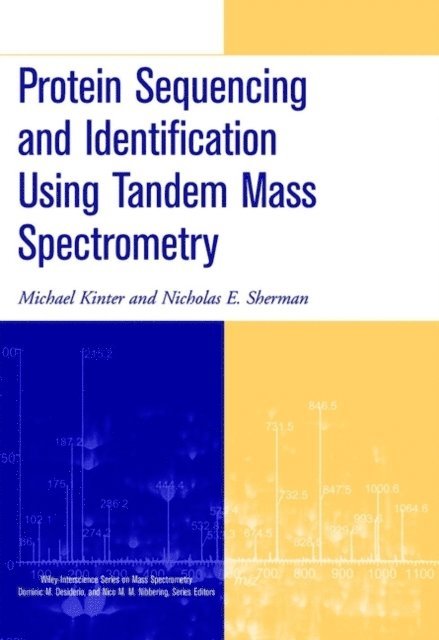
Protein Sequencing and Identification Using Tandem Mass Spectrometry
Inbunden, Engelska, 2000
2 065 kr
Skickas inom 7-10 vardagar
How to design, execute, and interpret experiments for protein sequencing using mass spectrometry The rapid expansion of searchable protein and DNA databases in recent years has triggered an explosive growth in the application of mass spectrometry to protein sequencing. This timely and authoritative book provides professionals and scientists in biotechnology research with complete coverage of procedures for analyzing protein sequences by mass spectrometry, including step-by-step guidelines for sample preparation, analysis, and data interpretation. Michael Kinter and Nicholas Sherman present their own high-quality, laboratory-tested protocols for the analysis of a wide variety of samples, demonstrating how to carry out specific experiments and obtain fast, reliable results with a 99% success rate. Readers will get sufficient experimental detail to apply in their own laboratories, learn about the proper selection and operation of instruments, and gain essential insight into the fundamental principles of mass spectrometry and protein sequencing. Coverage includes: * Peptide fragmentation and interpretation of product ion spectra* Basic polyacrylamide gel electrophoresis* Preparation of protein digests for sequencing experiments* Mass spectrometric analysis using capillary liquid chromatography* Techniques for protein identification by database searches* Characterization of modified peptides using tandem mass spectrometry And much more
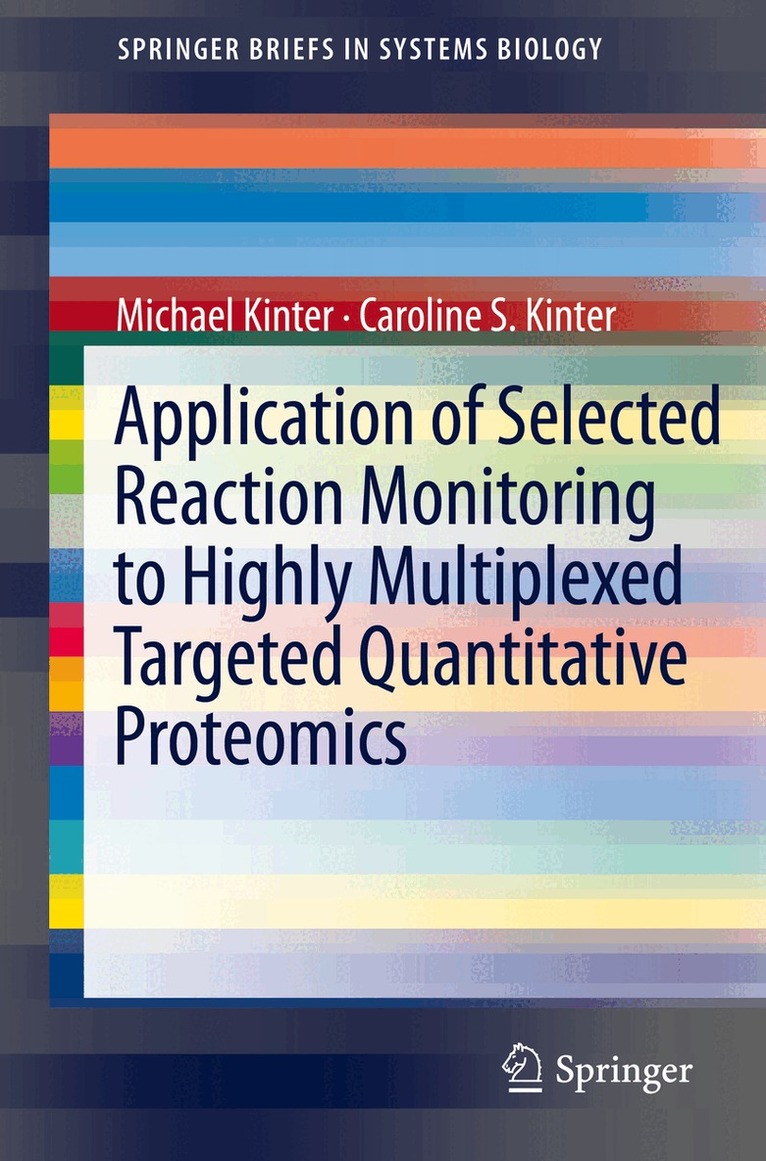
Application of Selected Reaction Monitoring to Highly Multiplexed Targeted Quantitative Proteomics
A Replacement for Western Blot Analysis
Häftad, Engelska, 2013
550 kr
Skickas inom 10-15 vardagar
A key experiment in biomedical research is monitoring the expression of different proteins in order to detect changes that occur in biological systems under different experimental conditions. The method that is most widely used is the Western blot analysis. While Western blot is a workhorse in laboratories studying protein expression and has several advantages, it also has a number of significant limitations. In particular, the method is semi-quantitative with limited dynamic range. Western blot focuses on a single protein per sample with only a small number of representative samples analyzed in an experiment. New quantitative tools have been needed for some time to at least supplement, & possibly replace, the Western blot. Mass spectrometric methods have begun to compete with Western blot for routine quantitative analyses of proteins. One of these methods is based on the tandem mass spectrometry technique of selected reaction monitoring (SRM), which is also called multiple reaction monitoring (MRM). Selected reaction monitoring is actually an older tandem mass spectrometry technique, first described in the late 70s, that is widely utilized in the quantitative analysis of small molecules like drugs & metabolites. The use of selected reaction monitoring for the quantitative analysis of proteins has a number of advantages. Most importantly, it is fundamentally quantitative with a wide dynamic range. The output of the analysis is a numerical result that can range over several orders of magnitude. Other advantages include sufficient specificity & sensitivity to detect low abundance proteins in complex mixtures. Finally, selected reaction monitoring can be multiplexed to allow the quantitative analysis of relatively large numbers of proteins in a single sample in a single experiment. This Brief will explain both the theoretical & experimental details of the selected reaction monitoring experiment as it is appliedto proteins.