Michael Mayerfeld Bell - Böcker
Visar alla böcker från författaren Michael Mayerfeld Bell. Handla med fri frakt och snabb leverans.
8 produkter
8 produkter
633 kr
Tillfälligt slut
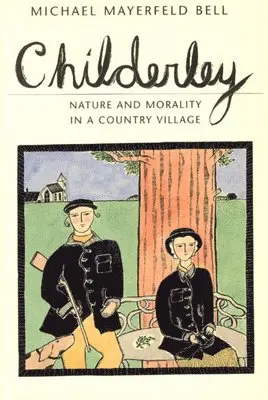
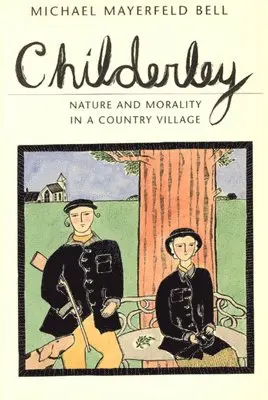
In Childerley, a small village two hours from London, stockbrokers and stock-keepers live side by side in thatched cottages, converted barns and modern homes. Why do these villagers find country living so compelling? Why, despite our urban lives, do so many of us strive for a home in the country, closer to nature? Michael Bell suggests that we are looking for a natural conscience: an unshakeable source of identity and moral value that is free from social interests - comfort and solace and a grounding of self in a world of conflict and change. During his interviews with over 100 of Childerley's 475 residents - both working-class and professional - Bell heard time and again of their desire to be "country people" and of their anxiety over their class identities. Even though they often knowingly participate in class discrimination themselves - and see their neighbours doing the same - most Childerleyans feel a deep moral ambivalence over class.Bell argues they find in class and its conflicts the restraints and workings of social interests and feel that by living "close to nature" they have an alternative: the identity of a "country person," a "villager that the natural consicence gives." Yet there are clear parallels between the ways in which the villagers conceive of nature and of social life, and Bell traces these parallels across Childerleyans' perspectives on class, gender and politics. Where conventional theories would suggest that what the villagers see as nature is a reflection of how they see society, and that the natural conscience must be a product of social interests, Bell argues that ideological processes are more complex. Childerleyans' understandings of society and of the natural conscience shape each other, says Bell, through a largely intuitive process he calls resonance. This book should be of interest to anyone who has ever lived in the countryside or considered doing so. It should also be of particular interest to scholars of British studies and the sociology of knowledge and culture, and to those who work on problems of environment, community, class and rural life.
298 kr
Skickas inom 7-10 vardagar
In Childerley, a small village two hours from London, stockbrokers and stock-keepers live side by side in thatched cottages, converted barns and modern homes. Why do these villagers find country living so compelling? Why, despite our urban lives, do so many of us strive for a home in the country, closer to nature? Michael Bell suggests that we are looking for a natural conscience: an unshakeable source of identity and moral value that is free from social interests - comfort and solace and a grounding of self in a world of conflict and change. During his interviews with over 100 of Childerley's 475 residents - both working-class and professional - Bell heard time and again of their desire to be "country people" and of their anxiety over their class identities. Even though they often knowingly participate in class discrimination themselves - and see their neighbours doing the same - most Childerleyans feel a deep moral ambivalence over class.Bell argues they find in class and its conflicts the restraints and workings of social interests and feel that by living "close to nature" they have an alternative: the identity of a "country person," a "villager that the natural conscience gives." Yet there are clear parallels between the ways in which the villagers conceive of nature and of social life, and Bell traces these parallels across Childerleyans' perspectives on class, gender and politics. Where conventional theories would suggest that what the villagers see as nature is a reflection of how they see society, and that the natural conscience must be a product of social interests, Bell argues that ideological processes are more complex. Childerleyans' understandings of society and of the natural conscience shape each other, says Bell, through a largely intuitive process he calls resonance. This book should be of interest to anyone who has ever lived in the countryside or considered doing so. It should also be of particular interest to scholars of British studies and the sociology of knowledge and culture, and to those who work on problems of environment, community, class and rural life.
Farming for Us All
Practical Agriculture and the Cultivation of Sustainability
Inbunden, Engelska, 2004
1 790 kr
Tillfälligt slut
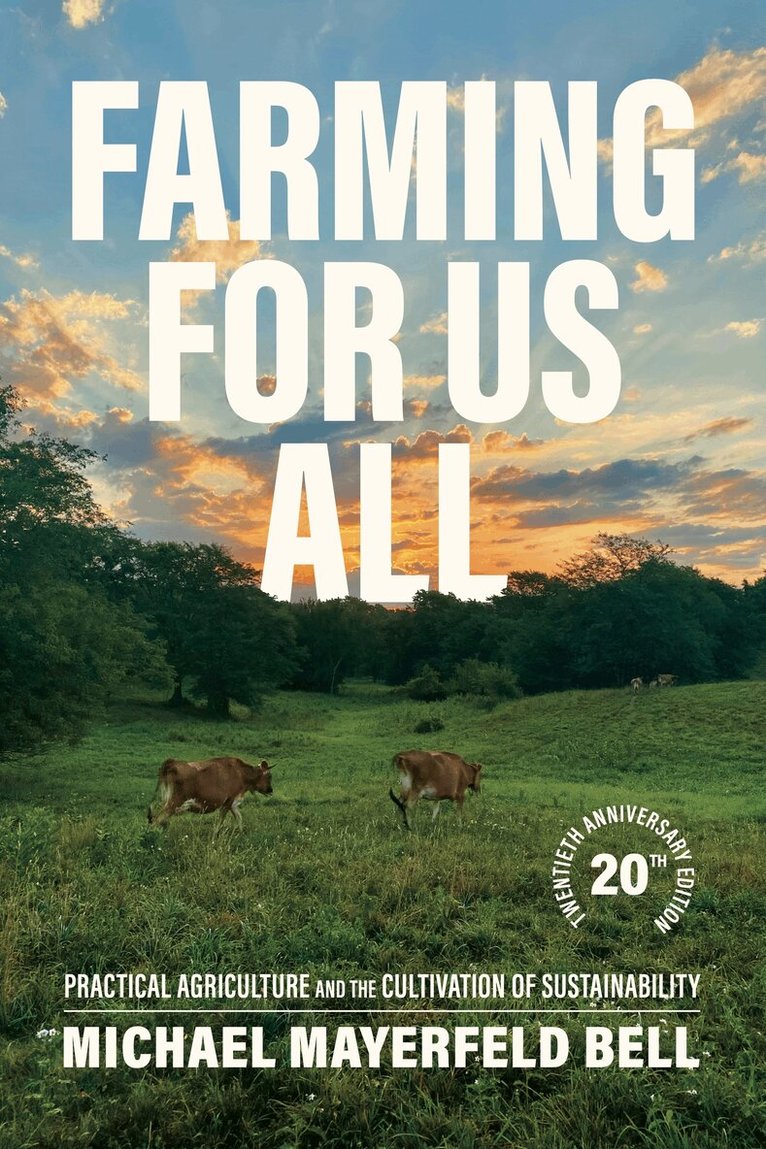
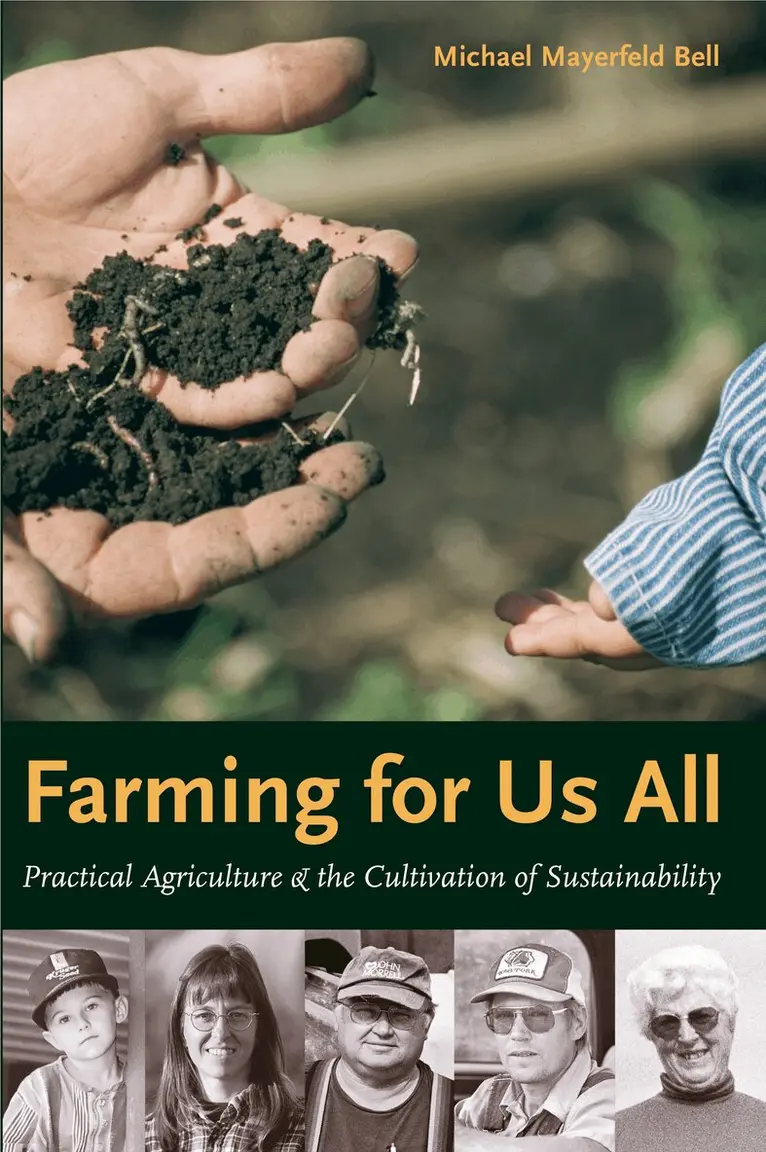
It is easy to feel overwhelmed and depressed by all the threats facing modern agriculture—threats to the environment, to the health and safety of our food, to the economic and cultural viability of farmers and rural communities. Hundreds of thousands of farmers leave their farms every year as the juggernaut of "big agriculture" plows across our rural landscape. But there are viable alternatives to big agriculture, as many farmers and others involved in agriculture, including consumers, are discovering. In Farming for Us All Michael Mayerfeld Bell offers crucial insight into the future of a viable sustainable agriculture movement in the United States. Based on interviews and years of close interaction with over 60 Iowa farm families, Bell answers two critical questions concerning sustainable agriculture: why some farmers are becoming sustainable farmers and why, as yet, most are not. The first part of the book describes how the structure of agriculture—that nexus of markets, regulations, subsidies, and technology—has created a situation in which farmers are paid to undermine their own economic and social security, as well as the security of the land. The second part explores why, nevertheless, most Iowa farmers carry on with these destructive practices. Farming is a pressured endeavor, and farmers find themselves relying on recipes of knowledge to get them through the latest crisis, with little opportunity to explore some other way—even if they think what they know how to do isn’t likely to work very well for them. You have to go with what you know. And yet some farmers resist the tide of big agriculture. In the third part of the book, Bell examines Iowa’s largest sustainable agriculture group, Practical Farmers of Iowa (PFI), and finds a new model of social relations at work. Members of PFI seek to create an agriculture that engages others—farmers, university researchers, government officials, and consumers alike—in a common conversation about what agriculture might look like, but without insisting that a common conversation requires a common vision. Instead, PFI members come to relish their differences as sources of learning and new ideas. Through dialogue, these PFI members seek to crossbreed knowledge, to create pragmatic knowledge that gets the crops to grow in ways that sustain families, communities, societies, economies, and environments. Herein lies the heart of the cultivation of practical agriculture, an agriculture that roots action in dialogue and dialogue in action, and thereby sustains them both. In an increasingly fractured and untrusting world, this is a cultivation worthy of all our interests.Farming for Us All gives us the opportunity to explore the possibilities for social, environmental, and economic change that practical, dialogic agriculture presents. It therefore represents an important step forward in our search for a viable sustainable agriculture in the United States.
509 kr
Skickas inom 7-10 vardagar
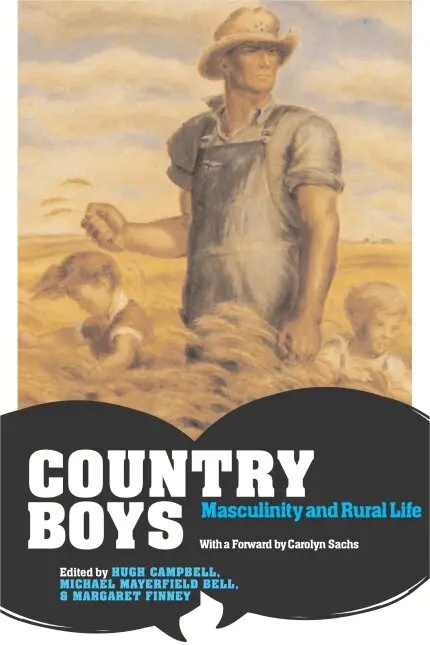
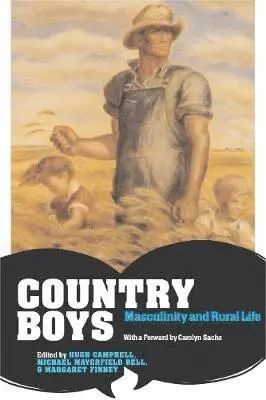
Rural masculinity is hardly a typical topic for a book. There is something unexpected, faintly disturbing, even humorous about investigating that which has long been seen and yet so often overlooked. But the ways in which we think about and socially organize masculinity are of great significance in the lives of both men and women. In Country Boys we also see that masculinity is no less significant in rural life than in urban life.The essays in this volume offer much-needed insight into the myths and stereotypes as well as the reality of the lives of rural men. Interdisciplinary in scope, the contributions investigate what it means to be a farming man, a logging man, or a boy growing up in a country town and how this impacts both men and women in city and country. Chapters cover not only the United States but also Europe, the United Kingdom, Australia, and New Zealand, giving the book an unusually broad scope.
247 kr
Skickas inom 7-10 vardagar
Climate change. Habitat loss. Soil erosion. Groundwater depletion. Toxins in our food. Inhumane treatment of farm animals. Increasing farm worker exploitation. Hunger and malnutrition in the midst of plenty. What will it take for farmers in the United States to embrace sustainable practices?Michael Mayerfeld Bell’s Farming for Us All first tackled this question twenty years ago, providing crucial insight into how the structure of US agriculture created this situation and exploring, by contrast, the practices of farmers who are working together to radically change how they think, learn, and grow. This updated edition of his now-classic work reflects on the lessons learned over the past two decades.Constrained by an oppressive nexus of markets, regulations, subsidies, and technology, farmers find themselves undermining their own economic and social security as well as the security of the land. Bell turns to Practical Farmers of Iowa (PFI), that state’s largest sustainable-agriculture group. He traces how PFI creates an agriculture that engages others—farmers, researchers, officials, and consumers—in a common conversation about what agriculture could look like. Through dialogue, PFI members crossbreed knowledge, discovering pragmatic solutions to help crops grow in ways that sustain families, communities, societies, economies, and environments.Farming for Us All makes the case that for sustainable farming to flourish, new social relations are as important to cultivate as new crops. This book is necessary—and hopeful—reading for anyone concerned about the present and future of food and farming.
3 446 kr
Skickas inom 11-20 vardagar
Bakhtin and the Human Sciences demonstrates the abundance of ideas Bakhtin's thought offers to the human sciences, and reconsiders him as a social thinker, not just a literary theorist. The contributors hail from many disciplines and their essays' implications extend into other fields in the human sciences. The volume emphasizes Bakhtin's work on dialogue, carnival, ethics and everyday life, as well as the relationship between Bakhtin's ideas and those of other important social theorists.
In a lively introduction Gardiner and Bell discuss Bakhtin's significance as a major intellectual figure and situate his ideas within current trends and developments in social theory.
1 105 kr
Skickas inom 3-6 vardagar
Bakhtin and the Human Sciences demonstrates the abundance of ideas Bakhtin's thought offers to the human sciences, and reconsiders him as a social thinker, not just a literary theorist. The contributors hail from many disciplines and their essays' implications extend into other fields in the human sciences. The volume emphasizes Bakhtin's work on dialogue, carnival, ethics and everyday life, as well as the relationship between Bakhtin's ideas and those of other important social theorists.
In a lively introduction Gardiner and Bell discuss Bakhtin's significance as a major intellectual figure and situate his ideas within current trends and developments in social theory.
1 857 kr
Skickas inom 5-8 vardagar
If there were ever a time for environmental sociology, it is now. As COVID-19 is spreading across our communities, our countries, our world, we have all become too familiar with maintaining that awful term of “social distance.” Yet there can be no true distance from that which is always with us and within us: our social ecology An Invitation to Environmental Sociology invites students to delve into this rapidly changing field. Written in a lively, engaging style, the authors cover a broad range of topics in environmental sociology with a personal passion rarely seen in sociology texts. The book's unique organization explores three different kinds of questions about interactions between humans and the natural world: the material, the ideal, and the practical. The Sixth Edition of this bestseller comprises 12 chapters instead of 13, making it easier to fit into the normal rhythm of a course. But the result is also an edition that is up-to-date and enriched with much newer material, while continuing to use an inviting tone that the title promises. Included with this title: The password-protected Instructor Resource Site (formally known as SAGE Edge) offers access to all text-specific resources, including a test bank and editable, chapter-specific PowerPoint® slides.