Michael R. Davey - Böcker
Visar alla böcker från författaren Michael R. Davey. Handla med fri frakt och snabb leverans.
17 produkter
17 produkter
1 117 kr
Skickas inom 7-10 vardagar
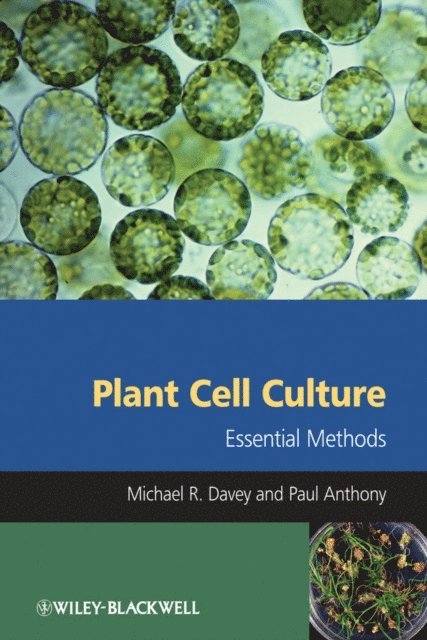
The ability to culture cells is fundamental for mass propagation and as a baseline for the genetic manipulation of plant nuclei and organelles. The introduction to Plant Cell Culture: Essential Methods provides a general background to plant cell culture, including basic principles, technologies and laboratory practices that underpin the more detailed techniques described in subsequent chapters. Whilst each chapter provides a background to the topic area and methodology, a crucial aspect is the provision of detailed protocols with emphasis on trouble shooting, describing common problems and detailed advice for their avoidance. Plant Cell Culture: Essential Methods provides the reader with a concise overview of these techniques, including micropropagation, mutagenesis, cryopreservation, genetic and plastid transformation and somatic cell technologies. This book will be an essential addition to any plant science laboratory's bookshelf. Highlights the best and most up-to-date techniques for working on plant cell cultureExplains clearly and precisely how to carry out selected techniques in addition to background information on the various approachesChapters are written by leading international authorities in the field and cover both well-known and new, tried and tested, methods for working in plant cell cultureAn essential laboratory manual for students and early-career researchers.
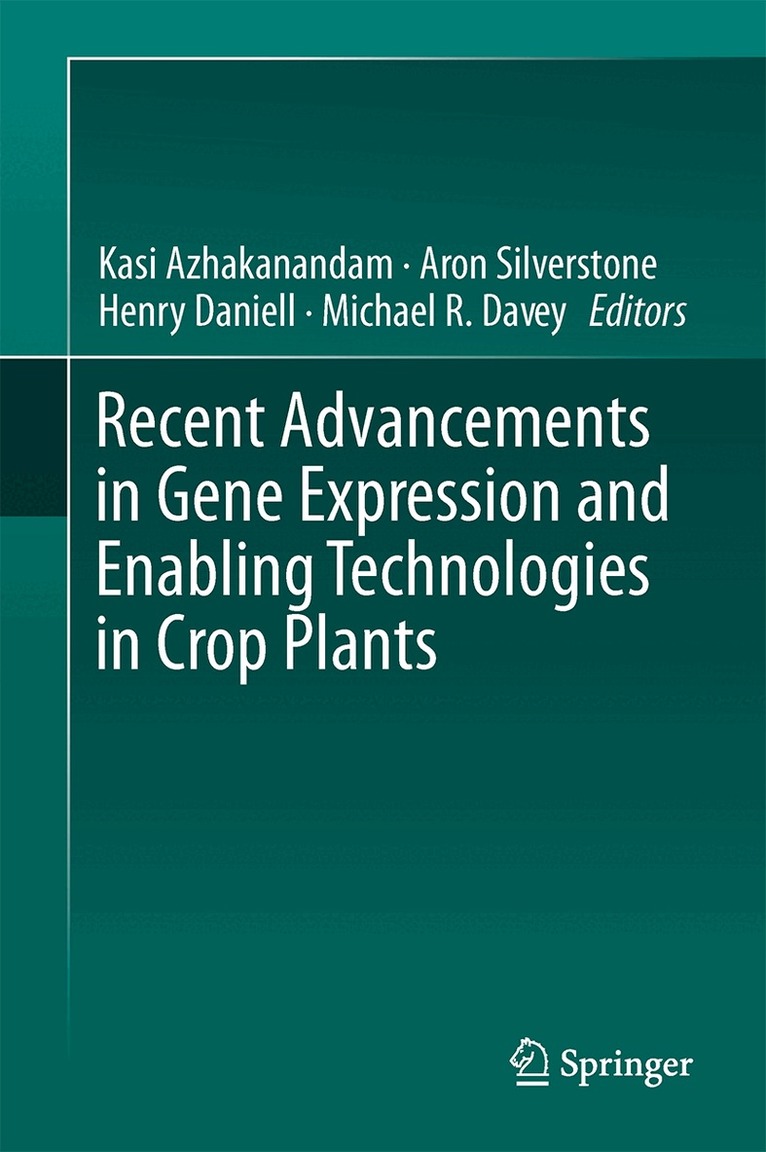
Recent Advancements in Gene Expression and Enabling Technologies in Crop Plants
Inbunden, Engelska, 2015
1 578 kr
Skickas inom 10-15 vardagar
Recent Advancements in Gene Expression and Enabling Technologies in Crop Plants
Häftad, Engelska, 2016
1 578 kr
Skickas inom 10-15 vardagar
In this book, authors who are experts in their fields describe current advances on commercial crops and key enabling technologies that will underpin future advances in biotechnology. They discuss state of the art discoveries as well as future challenges. Tremendous progress has been made in introducing novel genes and traits into plant genomes since the first creation of transgenic plants thirty years ago, and the first commercialization of genetically modified maize in 1996. Consequently, cultivation of biotech crops with useful traits has increased more than 100-fold from 1.7 million hectares in 1996 to over 175 million hectares globally in 2013. This achievement has been made possible by continued advances in understanding the basic molecular biology of regulatory sequences to modulate gene expression, enhancement of protein synthesis and new technologies for transformation of crop plants.This book has three sections that encompass knowledge on genetically modified (GM) food crops that are currently used by consumers, those that are anticipated to reach the market place in the near future and enabling technologies that will facilitate the development of next generation GM crops. Section I focuses only on genetically modified maize and soybean (3 chapters each), while Section II discusses the GM food crops rice, wheat, sorghum, vegetables and sugar cane. Section III covers exciting recent developments in several novel enabling technologies, including gene targeting, minichromosomes, and in planta transient expression systems.
2 101 kr
Skickas inom 10-15 vardagar
Genetic engineering is a powerful tool for crop improvement. Crop biotechnology before 2001 was reviewed in Transgenic Crops I-III, but recent advances in plant cell and molecular biology have prompted the need for new volumes.Transgenic Crops IV deals with cereals, vegetables, root crops, herbs and spices. Section I is an introductory chapter on the impact of plant biotechnology in agriculture. Section II focuses on cereals (rice, wheat, maize, rye, pearl millet, barley, oats), while Section III is directed to vegetable crops (tomato, cucumber, eggplant, lettuce, chickpea, common beans and cowpeas, carrot, radish). Root crops (potato, cassava, sweet potato, sugar beet) are included in Section IV, with herbs and spices (sweet and hot peppers, onion, garlic and related species, mint) in Section V.This volume is an invaluable reference for plant breeders, researchers and graduate students in the fields of plant biotechnology, agronomy, horticulture, genetics and both plant cell and molecular biology.
3 149 kr
Skickas inom 10-15 vardagar
Genetic engineering is a powerful tool for crop improvement. The status of crop biotechnology before 2001 was reviewed in Transgenic Crops I-III, but recent advances in plant cell and molecular biology have prompted the need for new volumes.Following Transgenic Crops IV (2007) dealing with cereals, vegetables, root crops, herbs and spices, this volume, Transgenic Crops V, is devoted to fruit, trees and beverage crops. Fruit crops targeted include banana, citrus, mango, papaya, pineapple, watermelon, avocado, grape, melon, apple, Prunus spp., strawberry, and kiwifruit, while trees include walnut, rubber, eucalyptus, tropical tree legumes, Casuarina glauca and conifers. The section on beverage crops reports studies on coffee, cacao, tea, and sugarcane.This volume is an invaluable reference for plant breeders, researchers and graduate students in the fields of plant biotechnology, agronomy, horticulture, forestry, genetics, and both plant cell and molecular biology.
3 149 kr
Skickas inom 10-15 vardagar
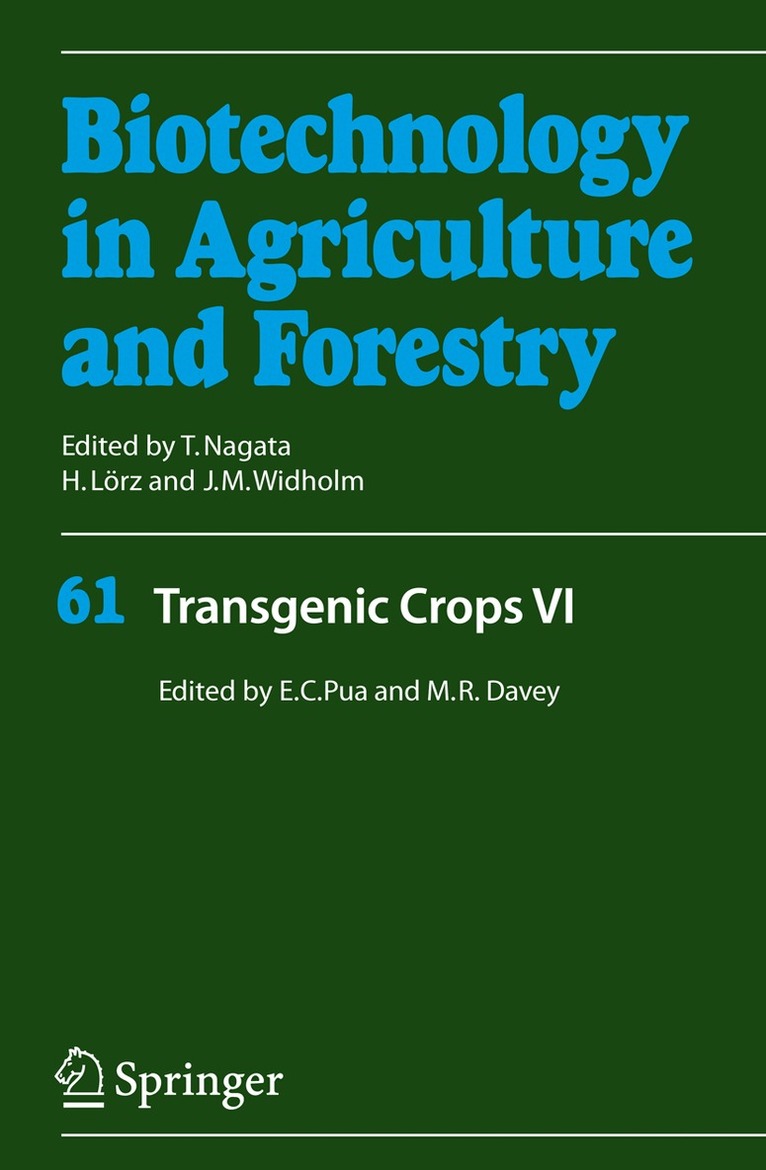
Genetic engineering is a powerful tool for crop improvement. The status of crop biotechnology before 2001 was reviewed in Transgenic Crops I-III, but recent advances in plant cell and molecular biology have prompted the need for new volumes. Following Transgenic Crops IV (2007) on cereals, vegetables, root crops, herbs, and spices, and Transgenic Crops V (2007) on fruits, trees, and beverage crops, this volume, Transgenic Crops VI, contains the following sections: Oils and Fibers, Medicinal Crops, Ornamental Crops, Forages and Grains, Regulatory and Intellectual Property of Genetically Manipulated Plants. It is an invaluable reference for plant breeders, researchers and graduate students in the fields of plant biotechnology, agronomy, horticulture, forestry, genetics, and both plant cell and molecular biology.
2 416 kr
Skickas inom 10-15 vardagar
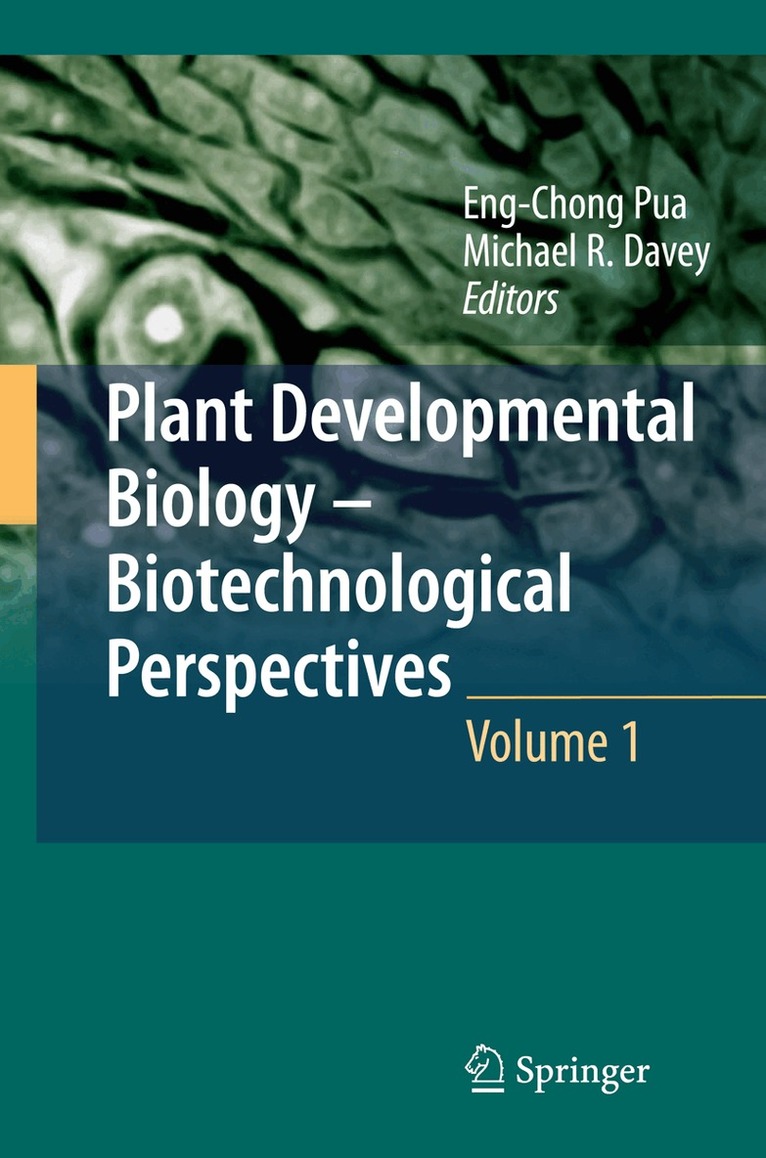
Many exciting discoveries in recent decades have contributed new knowledge to our understanding of the mechanisms that regulate various stages of plant growth and development. Such information, coupled with advances in cell and molecular biology, is fundamental to crop improvement using biotechnological approaches. Two volumes constitute the present work. The ?rst, comprising 22 chapters, commences with introductions relating to gene regulatory models for plant dev- opment and crop improvement, particularly the use of Arabidopsis as a model plant. These chapters are followed by speci?c topics that focus on different developmental aspects associated with vegetative and reproductive phases of the life cycle of a plant. Six chapters discuss vegetative growth and development. Their contents consider topics such as shoot branching, bud dormancy and growth, the devel- ment of roots, nodules and tubers, and senescence. The reproductive phase of plant development is in 14 chapters that present topics such as ?oral organ init- tion and the regulation of ?owering, the development of male and female gametes, pollen germination and tube growth, fertilization, fruit development and ripening, seed development, dormancy, germination, and apomixis. Male sterility and self-incompatibility are also discussed.
2 101 kr
Skickas inom 10-15 vardagar
Manyexcitingdiscoveriesinrecentdecadeshavecontributednewknowledgeto ourunderstandingofthemechanismsthatregulatevariousstagesofplantgrowth anddevelopment. Suchinformation,coupledwithadvancesincellandmolecular biology,isfundamentaltocropimprovementusingbiotechnologicalapproaches. Twovolumesconstitutethepresentwork. The?rst,comprising22chapters, commenceswithintroductionsrelatingtogeneregulatorymodelsforplantdev- opmentandcropimprovement,particularlytheuseofArabidopsisasamodelplant. Thesechaptersarefollowedbyspeci?ctopicsthatfocusondifferentdevelopmental aspectsassociatedwithvegetativeandreproductivephasesofthelifecycleofa plant. Six chapters discuss vegetative growth and development. Their contents considertopicssuchasshootbranching,buddormancyandgrowth,thedevel- ment of roots, nodules and tubers, and senescence. The reproductive phase of plantdevelopmentisin14chaptersthatpresenttopicssuchas?oralorganinit- tionandtheregulationof?owering,thedevelopmentofmaleandfemalegametes, pollengerminationandtubegrowth,fertilization,fruitdevelopmentandripening, seed development, dormancy, germination, and apomixis. Male sterility and self-incompatibilityarealsodiscussed.Volume2has20chapters,threeofwhichreviewrecentadvancesinsomatic embryogenesis,microsporeembryogenesisandsomaclonalvariation. Sevenofthe chapterstargetplantprocessesandtheirregulation,includingphotosynthatepartiti- ing,seedmaturationandseedstorageproteinbiosynthesis,theproductionandregu- tionoffattyacids,vitamins,alkaloidsand?owerpigments,and?owerscent. This secondbookalsocontainsfourchaptersonhormonalandenvironmentalsignaling (aminocompounds-containinglipids,auxin,cytokinin,andlight)intheregulationof plantdevelopment;othertopicsencompassthemoleculargeneticsofdevelopmental regulation,includingRNAsilencing,DNAmethylation,epigenetics,activationt- ging,homologousrecombination,andtheengineeringofsyntheticpromoters. Thesebookswillserveaskeyreferencesforadvancedstudentsandresearchers involved in a range of plant-orientated disciplines, including genetics, cell and molecularbiology,functionalgenomics,andbiotechnology. August2009 E-C. PuaandM. R. Davey v Contents PartI CellDifferentiationandDevelopmentInVitro 1 DevelopmentalBiologyofSomaticEmbryogenesis ...3 R. J. Rose,F. R. Mantiri,S. Kurdyukov,S-K. Chen,X-D. Wang, K. E. Nolan,andM. B. Sheahan 1. 1 Introduction ...3 1.2 BasicRequirementsforInVitroSE ...4 1. 3 ExplantandStemCellBiology ...5 1. 3. 1 Genotype ...5 1. 3. 2 ExplantCells ...6 1. 4 EarliestEventinEmbryogenesis-AsymmetricCellDivision ...8 1. 4. 1 CellWallinEstablishmentofPolarity,DivisionAsymmetry andCellFate ...8 1. 4. 2 DivisionAsymmetryintheInitiationofSE ...10 1. 4. 3 AsymmetricDivisionandtheSuspensorinSE ...10 1. 5 StressComponentintheInitiationofSE ...11 1. 5. 1 ReactiveOxygenSpecies ...11 1. 5. 2 Stress-RelatedHormoneSignalling ...12 1. 6 HormonesandtheInitiationofSE ...13 1. 7 InductionofSEbyOver-ExpressionofLeafyCotyledon TranscriptionFactorsandTheirRelationshiptoSEInductionand Repression-theGAConnection ...14 1. 8 ABA,StressandGA ...16 1. 9 SolubleSignalsandCell-CellInteractionsthatPromoteSEin SuspensionCultures ...16 1. 9. 1 SecretedProteinsthatIn?uenceSE ...16 1. 9. 2 AGPSignallinginSE:MechanismsandInteractionsBetween SignallingPathways ...17 1. 9. 3 Cell-AsymmetricCellDivision ...8 1. 4. 1 CellWallinEstablishmentofPolarity,DivisionAsymmetry andCellFate ...8 1. 4. 2 DivisionAsymmetryintheInitiationofSE ...10 1. 4. 3 AsymmetricDivisionandtheSuspensorinSE ...10 1. 5 StressComponentintheInitiationofSE ...11 1. 5.1 ReactiveOxygenSpecies ...11 1. 5. 2 Stress-RelatedHormoneSignalling ...12 1. 6 HormonesandtheInitiationofSE ...13 1. 7 InductionofSEbyOver-ExpressionofLeafyCotyledon TranscriptionFactorsandTheirRelationshiptoSEInductionand Repression-theGAConnection ...14 1. 8 ABA,StressandGA ...16 1. 9 SolubleSignalsandCell-CellInteractionsthatPromoteSEin SuspensionCultures ...16 1. 9. 1 SecretedProteinsthatIn?uenceSE ...16 1. 9. 2 AGPSignallinginSE:MechanismsandInteractionsBetween SignallingPathways ...17 1. 9. 3 Cell-Manyexcitingdiscoveriesinrecentdecadeshavecontributednewknowledgeto ourunderstandingofthemechanismsthatregulatevariousstagesofplantgrowth anddevelopment. Suchinformation,coupledwithadvancesincellandmolecular biology,isfundamentaltocropimprovementusingbiotechnologicalapproaches. Twovolumesconstitutethepresentwork. The?rst,comprising22chapters, commenceswithintroductionsrelatingtogeneregulatorymodelsforplantdev- opmentandcropimprovement,particularlytheuseofArabidopsisasamodelplant. Thesechaptersarefollowedbyspeci?ctopicsthatfocusondifferentdevelopmental aspectsassociatedwithvegetativeandreproductivephasesofthelifecycleofa plant.Six chapters discuss vegetative growth and development. Their contents considertopicssuchasshootbranching,buddormancyandgrowth,thedevel- ment of roots, nodules and tubers, and senescence. The reproductive phase of plantdevelopmentisin14chaptersthatpresenttopicssuchas?oralorganinit- tionandtheregulationof?owering,thedevelopmentofmaleandfemalegametes, pollengerminationandtubegrowth,fertilization,fruitdevelopmentandripening, seed development, dormancy, germination, and apomixis. Male sterility and self-incompatibilityarealsodiscussed. Volume2has20chapters,threeofwhichreviewrecentadvancesinsomatic embryogenesis,microsporeembryogenesisandsomaclonalvariation. Sevenofthe chapterstargetplantprocessesandtheirregulation,includingphotosynthatepartiti- ing,seedmaturationandseedstorageproteinbiosynthesis,theproductionandregu- tionoffattyacids,vitamins,alkaloidsand?owerpigments,and?owerscent.This secondbookalsocontainsfourchaptersonhormonalandenvironmentalsignaling (aminocompounds-containinglipids,auxin,cytokinin,andlight)intheregulationof plantdevelopment;othertopicsencompassthemoleculargeneticsofdevelopmental regulation,includingRNAsilencing,DNAmethylation,epigenetics,activationt- ging,homologousrecombination,andtheengineeringofsyntheticpromoters. Thesebookswillserveaskeyreferencesforadvancedstudentsandresearchers involved in a range of plant-orientated disciplines, including genetics, cell and molecularbiology,functionalgenomics,andbiotechnology. August2009 E-C. PuaandM. R. Davey v Contents PartI CellDifferentiationandDevelopmentInVitro 1 DevelopmentalBiologyofSomaticEmbryogenesis ...3 R. J. Rose,F. R. Mantiri,S. Kurdyukov,S-K. Chen,X-D. Wang, K. E. Nolan,andM. B. Sheahan 1. 1 Introduction ...3 1. 2 BasicRequirementsforInVitroSE ...4 1. 3 ExplantandStemCellBiology ...5 1. 3. 1 Genotype ...5 1. 3. 2 ExplantCells ...6 1. 4 EarliestEventinEmbryogenesis-AsymmetricCellDivision ...8 1. 4. 1 CellWallinEstablishmentofPolarity,DivisionAsymmetry andCellFate ...8 1. 4. 2 DivisionAsymmetryintheInitiationofSE ...10 1. 4. 3 AsymmetricDivisionandtheSuspensorinSE ...10 1.5 StressComponentintheInitiationofSE ...11 1. 5. 1 ReactiveOxygenSpecies ...11 1. 5. 2 Stress-RelatedHormoneSignalling ...12 1. 6 HormonesandtheInitiationofSE ...13 1. 7 InductionofSEbyOver-ExpressionofLeafyCotyledon TranscriptionFactorsandTheirRelationshiptoSEInductionand Repression-theGAConnection ...14 1. 8 ABA,StressandGA ...16 1. 9 SolubleSignalsandCell-CellInteractionsthatPromoteSEin SuspensionCultures ...16 1. 9. 1 SecretedProteinsthatIn?uenceSE ...16 1. 9. 2 AGPSignallinginSE:MechanismsandInteractionsBetween SignallingPathways ...17 1. 9. 3 Cell-CellInteractionandRelevancetoSEinSuspension Cultures ...18 vii viii Contents 1. 10 DevelopmentProgramAfterSEInduction ...19 1. 11 ConcludingRemarksandaModelBasedonStudiesin Medicagotruncatula ...19 1. 12 SEandBiotechnology ...20 References ...21 2 MicrosporeEmbryogenesis ...27 A. Olmedilla 2. 1 Introduction ...27 2. 2 DiscoveryoftheProductionofHaploidsbyAntherCulture ...29 2. 3 StrategiesfortheInductionofMicrosporeEmbryogenesis ...29 2. 4 In?uenceofDifferentFactorsinMicrosporeEmbryogenesis ...30 2. 4. 1 Genotype ...30 2. 4. 2 DonorPlantPhysiology ...31 2. 4. 3 StageofPollenDevelopment ...
2 101 kr
Skickas inom 10-15 vardagar
Genetic engineering is a powerful tool for crop improvement. Crop biotechnology before 2001 was reviewed in Transgenic Crops I-III, but recent advances in plant cell and molecular biology have prompted the need for new volumes.Transgenic Crops IV deals with cereals, vegetables, root crops, herbs and spices. Section I is an introductory chapter on the impact of plant biotechnology in agriculture. Section II focuses on cereals (rice, wheat, maize, rye, pearl millet, barley, oats), while Section III is directed to vegetable crops (tomato, cucumber, eggplant, lettuce, chickpea, common beans and cowpeas, carrot, radish). Root crops (potato, cassava, sweet potato, sugar beet) are included in Section IV, with herbs and spices (sweet and hot peppers, onion, garlic and related species, mint) in Section V.This volume is an invaluable reference for plant breeders, researchers and graduate students in the fields of plant biotechnology, agronomy, horticulture, genetics and both plant cell and molecular biology.
3 149 kr
Skickas inom 10-15 vardagar
Genetic engineering is a powerful tool for crop improvement. The status of crop biotechnology before 2001 was reviewed in Transgenic Crops I-III, but recent advances in plant cell and molecular biology have prompted the need for new volumes.Following Transgenic Crops IV (2007) dealing with cereals, vegetables, root crops, herbs and spices, this volume, Transgenic Crops V, is devoted to fruit, trees and beverage crops. Fruit crops targeted include banana, citrus, mango, papaya, pineapple, watermelon, avocado, grape, melon, apple, Prunus spp., strawberry, and kiwifruit, while trees include walnut, rubber, eucalyptus, tropical tree legumes, Casuarina glauca and conifers. The section on beverage crops reports studies on coffee, cacao, tea, and sugarcane.This volume is an invaluable reference for plant breeders, researchers and graduate students in the fields of plant biotechnology, agronomy, horticulture, forestry, genetics, and both plant cell and molecular biology.
3 149 kr
Skickas inom 10-15 vardagar
Genetic engineering is a powerful tool for crop improvement. The status of crop biotechnology before 2001 was reviewed in Transgenic Crops I-III, but recent advances in plant cell and molecular biology have prompted the need for new volumes. Following Transgenic Crops IV (2007) on cereals, vegetables, root crops, herbs, and spices, and Transgenic Crops V (2007) on fruits, trees, and beverage crops, this volume, Transgenic Crops VI, contains the following sections: Oils and Fibers, Medicinal Crops, Ornamental Crops, Forages and Grains, Regulatory and Intellectual Property of Genetically Manipulated Plants. It is an invaluable reference for plant breeders, researchers and graduate students in the fields of plant biotechnology, agronomy, horticulture, forestry, genetics, and both plant cell and molecular biology.
2 101 kr
Skickas inom 10-15 vardagar
Manyexcitingdiscoveriesinrecentdecadeshavecontributednewknowledgeto ourunderstandingofthemechanismsthatregulatevariousstagesofplantgrowth anddevelopment. Suchinformation,coupledwithadvancesincellandmolecular biology,isfundamentaltocropimprovementusingbiotechnologicalapproaches. Twovolumesconstitutethepresentwork. The?rst,comprising22chapters, commenceswithintroductionsrelatingtogeneregulatorymodelsforplantdev- opmentandcropimprovement,particularlytheuseofArabidopsisasamodelplant. Thesechaptersarefollowedbyspeci?ctopicsthatfocusondifferentdevelopmental aspectsassociatedwithvegetativeandreproductivephasesofthelifecycleofa plant. Six chapters discuss vegetative growth and development. Their contents considertopicssuchasshootbranching,buddormancyandgrowth,thedevel- ment of roots, nodules and tubers, and senescence. The reproductive phase of plantdevelopmentisin14chaptersthatpresenttopicssuchas?oralorganinit- tionandtheregulationof?owering,thedevelopmentofmaleandfemalegametes, pollengerminationandtubegrowth,fertilization,fruitdevelopmentandripening, seed development, dormancy, germination, and apomixis. Male sterility and self-incompatibilityarealsodiscussed.Volume2has20chapters,threeofwhichreviewrecentadvancesinsomatic embryogenesis,microsporeembryogenesisandsomaclonalvariation. Sevenofthe chapterstargetplantprocessesandtheirregulation,includingphotosynthatepartiti- ing,seedmaturationandseedstorageproteinbiosynthesis,theproductionandregu- tionoffattyacids,vitamins,alkaloidsand?owerpigments,and?owerscent. This secondbookalsocontainsfourchaptersonhormonalandenvironmentalsignaling (aminocompounds-containinglipids,auxin,cytokinin,andlight)intheregulationof plantdevelopment;othertopicsencompassthemoleculargeneticsofdevelopmental regulation,includingRNAsilencing,DNAmethylation,epigenetics,activationt- ging,homologousrecombination,andtheengineeringofsyntheticpromoters. Thesebookswillserveaskeyreferencesforadvancedstudentsandresearchers involved in a range of plant-orientated disciplines, including genetics, cell and molecularbiology,functionalgenomics,andbiotechnology. August2009 E-C. PuaandM. R. Davey v Contents PartI CellDifferentiationandDevelopmentInVitro 1 DevelopmentalBiologyofSomaticEmbryogenesis ...3 R. J. Rose,F. R. Mantiri,S. Kurdyukov,S-K. Chen,X-D. Wang, K. E. Nolan,andM. B. Sheahan 1. 1 Introduction ...3 1.2 BasicRequirementsforInVitroSE ...4 1. 3 ExplantandStemCellBiology ...5 1. 3. 1 Genotype ...5 1. 3. 2 ExplantCells ...6 1. 4 EarliestEventinEmbryogenesis-AsymmetricCellDivision ...8 1. 4. 1 CellWallinEstablishmentofPolarity,DivisionAsymmetry andCellFate ...8 1. 4. 2 DivisionAsymmetryintheInitiationofSE ...10 1. 4. 3 AsymmetricDivisionandtheSuspensorinSE ...10 1. 5 StressComponentintheInitiationofSE ...11 1. 5. 1 ReactiveOxygenSpecies ...11 1. 5. 2 Stress-RelatedHormoneSignalling ...12 1. 6 HormonesandtheInitiationofSE ...13 1. 7 InductionofSEbyOver-ExpressionofLeafyCotyledon TranscriptionFactorsandTheirRelationshiptoSEInductionand Repression-theGAConnection ...14 1. 8 ABA,StressandGA ...16 1. 9 SolubleSignalsandCell-CellInteractionsthatPromoteSEin SuspensionCultures ...16 1. 9. 1 SecretedProteinsthatIn?uenceSE ...16 1. 9. 2 AGPSignallinginSE:MechanismsandInteractionsBetween SignallingPathways ...17 1. 9. 3 Cell-AsymmetricCellDivision ...8 1. 4. 1 CellWallinEstablishmentofPolarity,DivisionAsymmetry andCellFate ...8 1. 4. 2 DivisionAsymmetryintheInitiationofSE ...10 1. 4. 3 AsymmetricDivisionandtheSuspensorinSE ...10 1. 5 StressComponentintheInitiationofSE ...11 1. 5.1 ReactiveOxygenSpecies ...11 1. 5. 2 Stress-RelatedHormoneSignalling ...12 1. 6 HormonesandtheInitiationofSE ...13 1. 7 InductionofSEbyOver-ExpressionofLeafyCotyledon TranscriptionFactorsandTheirRelationshiptoSEInductionand Repression-theGAConnection ...14 1. 8 ABA,StressandGA ...16 1. 9 SolubleSignalsandCell-CellInteractionsthatPromoteSEin SuspensionCultures ...16 1. 9. 1 SecretedProteinsthatIn?uenceSE ...16 1. 9. 2 AGPSignallinginSE:MechanismsandInteractionsBetween SignallingPathways ...17 1. 9. 3 Cell-Manyexcitingdiscoveriesinrecentdecadeshavecontributednewknowledgeto ourunderstandingofthemechanismsthatregulatevariousstagesofplantgrowth anddevelopment. Suchinformation,coupledwithadvancesincellandmolecular biology,isfundamentaltocropimprovementusingbiotechnologicalapproaches. Twovolumesconstitutethepresentwork. The?rst,comprising22chapters, commenceswithintroductionsrelatingtogeneregulatorymodelsforplantdev- opmentandcropimprovement,particularlytheuseofArabidopsisasamodelplant. Thesechaptersarefollowedbyspeci?ctopicsthatfocusondifferentdevelopmental aspectsassociatedwithvegetativeandreproductivephasesofthelifecycleofa plant.Six chapters discuss vegetative growth and development. Their contents considertopicssuchasshootbranching,buddormancyandgrowth,thedevel- ment of roots, nodules and tubers, and senescence. The reproductive phase of plantdevelopmentisin14chaptersthatpresenttopicssuchas?oralorganinit- tionandtheregulationof?owering,thedevelopmentofmaleandfemalegametes, pollengerminationandtubegrowth,fertilization,fruitdevelopmentandripening, seed development, dormancy, germination, and apomixis. Male sterility and self-incompatibilityarealsodiscussed. Volume2has20chapters,threeofwhichreviewrecentadvancesinsomatic embryogenesis,microsporeembryogenesisandsomaclonalvariation. Sevenofthe chapterstargetplantprocessesandtheirregulation,includingphotosynthatepartiti- ing,seedmaturationandseedstorageproteinbiosynthesis,theproductionandregu- tionoffattyacids,vitamins,alkaloidsand?owerpigments,and?owerscent.This secondbookalsocontainsfourchaptersonhormonalandenvironmentalsignaling (aminocompounds-containinglipids,auxin,cytokinin,andlight)intheregulationof plantdevelopment;othertopicsencompassthemoleculargeneticsofdevelopmental regulation,includingRNAsilencing,DNAmethylation,epigenetics,activationt- ging,homologousrecombination,andtheengineeringofsyntheticpromoters. Thesebookswillserveaskeyreferencesforadvancedstudentsandresearchers involved in a range of plant-orientated disciplines, including genetics, cell and molecularbiology,functionalgenomics,andbiotechnology. August2009 E-C. PuaandM. R. Davey v Contents PartI CellDifferentiationandDevelopmentInVitro 1 DevelopmentalBiologyofSomaticEmbryogenesis ...3 R. J. Rose,F. R. Mantiri,S. Kurdyukov,S-K. Chen,X-D. Wang, K. E. Nolan,andM. B. Sheahan 1. 1 Introduction ...3 1. 2 BasicRequirementsforInVitroSE ...4 1. 3 ExplantandStemCellBiology ...5 1. 3. 1 Genotype ...5 1. 3. 2 ExplantCells ...6 1. 4 EarliestEventinEmbryogenesis-AsymmetricCellDivision ...8 1. 4. 1 CellWallinEstablishmentofPolarity,DivisionAsymmetry andCellFate ...8 1. 4. 2 DivisionAsymmetryintheInitiationofSE ...10 1. 4. 3 AsymmetricDivisionandtheSuspensorinSE ...10 1.5 StressComponentintheInitiationofSE ...11 1. 5. 1 ReactiveOxygenSpecies ...11 1. 5. 2 Stress-RelatedHormoneSignalling ...12 1. 6 HormonesandtheInitiationofSE ...13 1. 7 InductionofSEbyOver-ExpressionofLeafyCotyledon TranscriptionFactorsandTheirRelationshiptoSEInductionand Repression-theGAConnection ...14 1. 8 ABA,StressandGA ...16 1. 9 SolubleSignalsandCell-CellInteractionsthatPromoteSEin SuspensionCultures ...16 1. 9. 1 SecretedProteinsthatIn?uenceSE ...16 1. 9. 2 AGPSignallinginSE:MechanismsandInteractionsBetween SignallingPathways ...17 1. 9. 3 Cell-CellInteractionandRelevancetoSEinSuspension Cultures ...18 vii viii Contents 1. 10 DevelopmentProgramAfterSEInduction ...19 1. 11 ConcludingRemarksandaModelBasedonStudiesin Medicagotruncatula ...19 1. 12 SEandBiotechnology ...20 References ...21 2 MicrosporeEmbryogenesis ...27 A. Olmedilla 2. 1 Introduction ...27 2. 2 DiscoveryoftheProductionofHaploidsbyAntherCulture ...29 2. 3 StrategiesfortheInductionofMicrosporeEmbryogenesis ...29 2. 4 In?uenceofDifferentFactorsinMicrosporeEmbryogenesis ...30 2. 4. 1 Genotype ...30 2. 4. 2 DonorPlantPhysiology ...31 2. 4. 3 StageofPollenDevelopment ...
1 578 kr
Skickas inom 10-15 vardagar
The Gentianaceae - Volume 1: Characterization and Ecology
1 064 kr
Skickas inom 10-15 vardagar
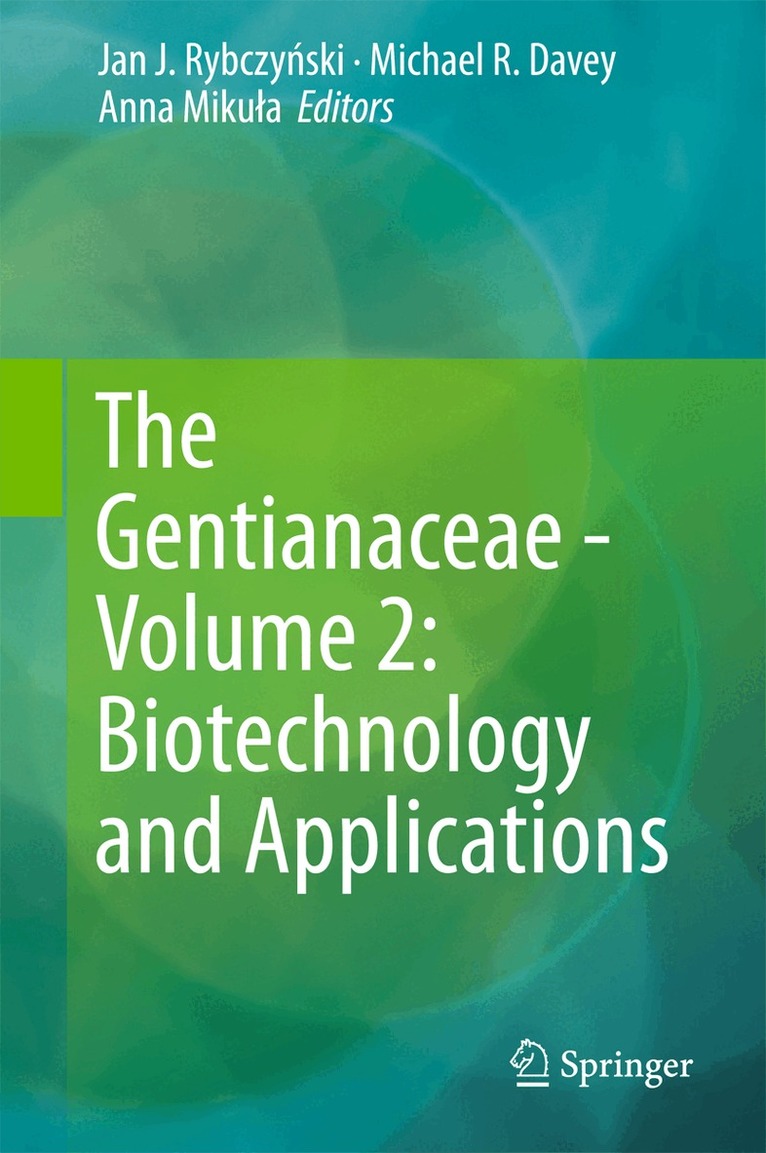
This book, the second of two volumes on the Gentianaceae, is devoted to aspects of biotechnology and their applications. It consists of 18 chapters and covers micropropagation by means of organogenesis or somatic embryogenesis, and single cell manipulation of various species belonging to the horticultural genera Blakstonia, Centaurium, Gentiana, Gentianalla and Swertia. Furthermore, the application of somatic cell hybridization, haploidization and genetic variation arising from tissue and organ culture for the production of plants with new horticultural traits, such as new flower colors or sizes, or with special pharmaceutical values, is treated in detail. Also discussed are molecular markers that facilitate breeding and cultivar identification, the preservation of genetic resources by cryopreservation, the postharvest physiology of cut Gentian flowers and potted plants, and different analytical methods for the evaluation of Gentians as sources of secondary metabolites, such as xanthones and flavonoids, secoiridoids and C-glucoflavonoids, and their positive impacts on human health.This volume as well as the companion book The Gentianaceae – Volume 1: Characterization and Ecology will serve as key reference works for scientists and students in the fields of botany, plant breeding, biotechnology and horticulture, as well as professional gardeners.
2 416 kr
Skickas inom 10-15 vardagar
The reproductive phase of plant development is in 14 chapters that present topics such as ?oral organ init- tion and the regulation of ?owering, the development of male and female gametes, pollen germination and tube growth, fertilization, fruit development and ripening, seed development, dormancy, germination, and apomixis.
1 064 kr
Skickas inom 10-15 vardagar
This book, the second of two volumes on the Gentianaceae, is devoted to aspects of biotechnology and their applications. It consists of 18 chapters and covers micropropagation by means of organogenesis or somatic embryogenesis, and single cell manipulation of various species belonging to the horticultural genera Blakstonia, Centaurium, Gentiana, Gentianalla and Swertia. Furthermore, the application of somatic cell hybridization, haploidization and genetic variation arising from tissue and organ culture for the production of plants with new horticultural traits, such as new flower colors or sizes, or with special pharmaceutical values, is treated in detail. Also discussed are molecular markers that facilitate breeding and cultivar identification, the preservation of genetic resources by cryopreservation, the postharvest physiology of cut Gentian flowers and potted plants, and different analytical methods for the evaluation of Gentians as sources of secondary metabolites, such as xanthones and flavonoids, secoiridoids and C-glucoflavonoids, and their positive impacts on human health.This volume as well as the companion book The Gentianaceae – Volume 1: Characterization and Ecology will serve as key reference works for scientists and students in the fields of botany, plant breeding, biotechnology and horticulture, as well as professional gardeners.
1 578 kr
Skickas inom 10-15 vardagar
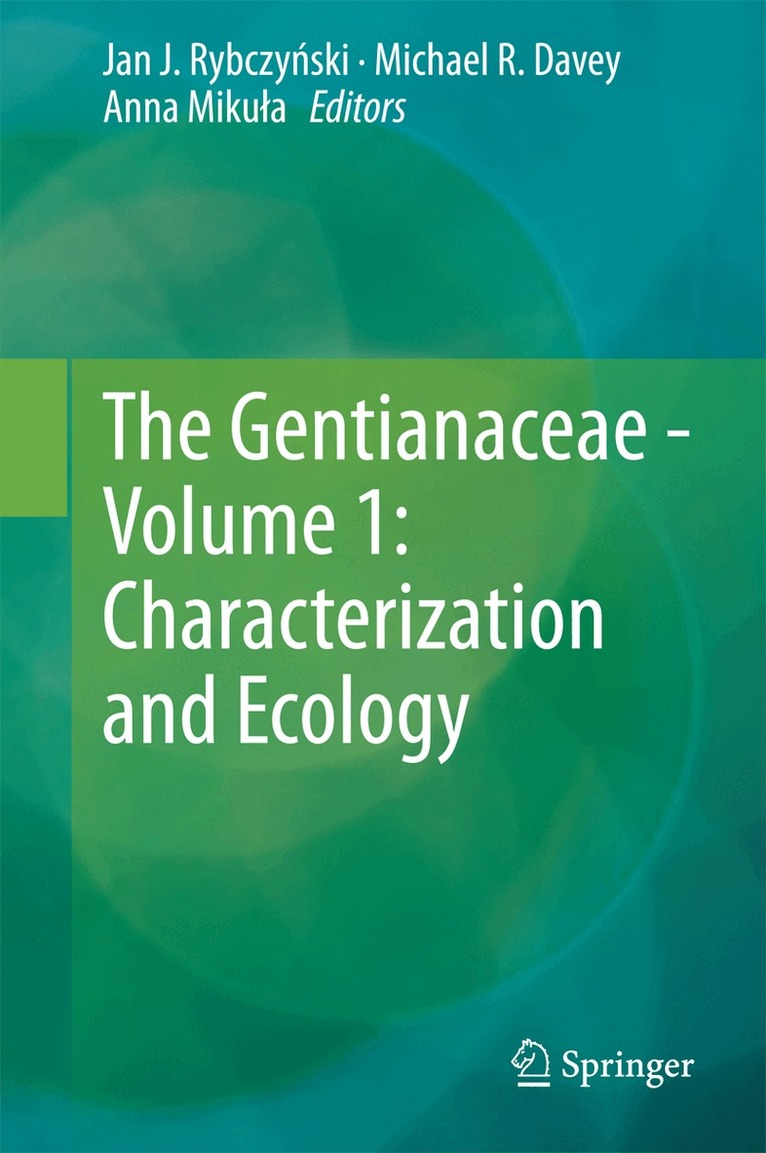
This is the first of two volumes on Gentianaceae. Comprising twelve chapters, it centres upon the characterization and ecology of Gentianaceae worldwide, with emphasis on the application of molecular and cytological approaches in relation to taxonomy. The first three chapters consider the classification of the family and review the advances in research since the earlier revision published in 2002, which resulted in the reclassification of some plants and the naming of new genera. The next chapter provides the most comprehensive report to date of the systematics of South American Neotropical woody Gentians. Other reviews include details of the Gentianaceae in Eastern Europe. The key biochemical steps that result in the diversity of Gentian flower colors, the cytology of European species and an historical account of the importance of Gentians in herbal medicines are also covered. Furthermore, an analysis of gene expression in overwintering buds is presented, discussing several aspects of plant taxonomy, phenotypic characteristics, phylogeography and pedigree. Two contributions highlight the importance of Gentians in India, and the last chapter presents evidence for the importance of Glomeromycota in developing arbuscular mycorrhizal associations with the roots of Gentians.This volume provides the basis for the biotechnological approaches that are considered in the companion book The Gentianaceae – Volume 2: Biotechnology and Applications.