Eng Chong Pua - Böcker
Visar alla böcker från författaren Eng Chong Pua. Handla med fri frakt och snabb leverans.
12 produkter
12 produkter
2 101 kr
Skickas inom 10-15 vardagar
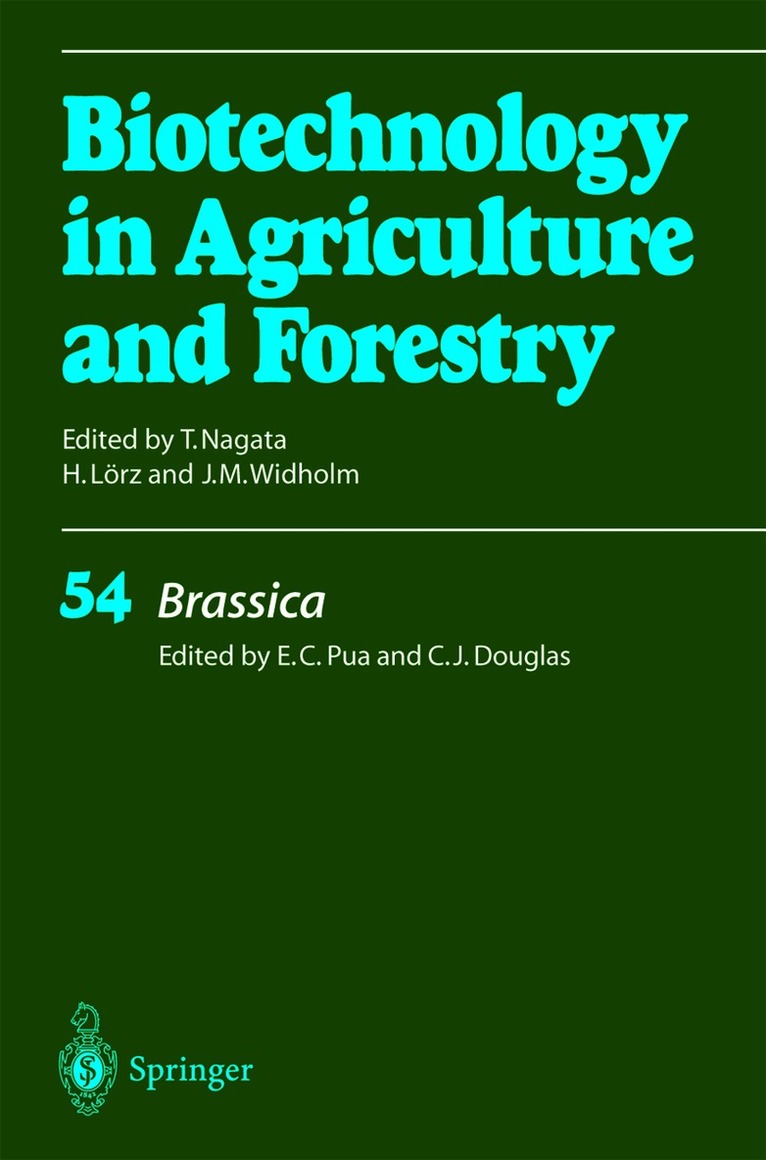
Recent advances in plant cell and molecular biology have opened new avenues for the improvement of crop plants in the genus "Brassica" - oilseeds and vegetables of worldwide economic importance. This volume reviews advances in various areas of "Brassica" biotechnology. It covers the use of rapid-cycle brassicas, tissue culture and gene transfer, molecular genetics, biotic and abiotic stress resistance, and molecular farming. Contributors are world-leading international "Brassica" researchers. The volume is an invaluable reference for plant breeders, researchers and graduate students in the fields of plant biotechnology, agronomy, horticulture, genetics, and cell and molecular biology.
2 101 kr
Skickas inom 10-15 vardagar
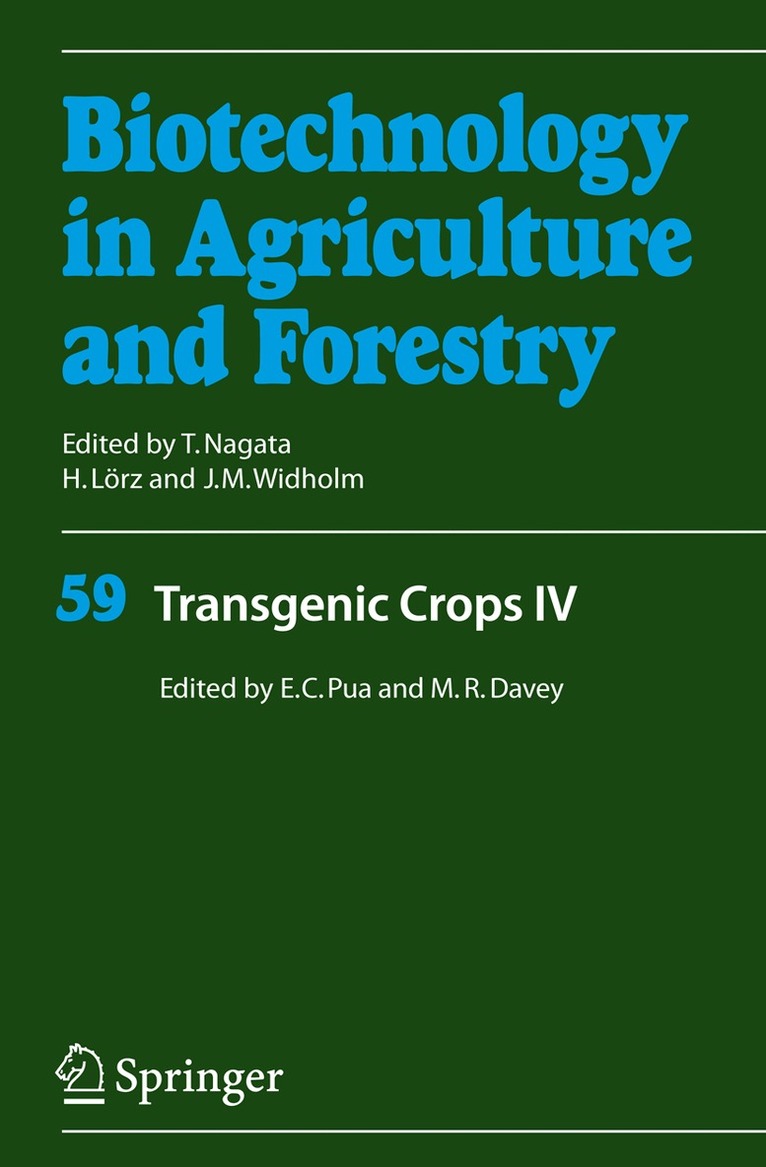
Genetic engineering is a powerful tool for crop improvement. Crop biotechnology before 2001 was reviewed in Transgenic Crops I-III, but recent advances in plant cell and molecular biology have prompted the need for new volumes.Transgenic Crops IV deals with cereals, vegetables, root crops, herbs and spices. Section I is an introductory chapter on the impact of plant biotechnology in agriculture. Section II focuses on cereals (rice, wheat, maize, rye, pearl millet, barley, oats), while Section III is directed to vegetable crops (tomato, cucumber, eggplant, lettuce, chickpea, common beans and cowpeas, carrot, radish). Root crops (potato, cassava, sweet potato, sugar beet) are included in Section IV, with herbs and spices (sweet and hot peppers, onion, garlic and related species, mint) in Section V.This volume is an invaluable reference for plant breeders, researchers and graduate students in the fields of plant biotechnology, agronomy, horticulture, genetics and both plant cell and molecular biology.
3 149 kr
Skickas inom 10-15 vardagar
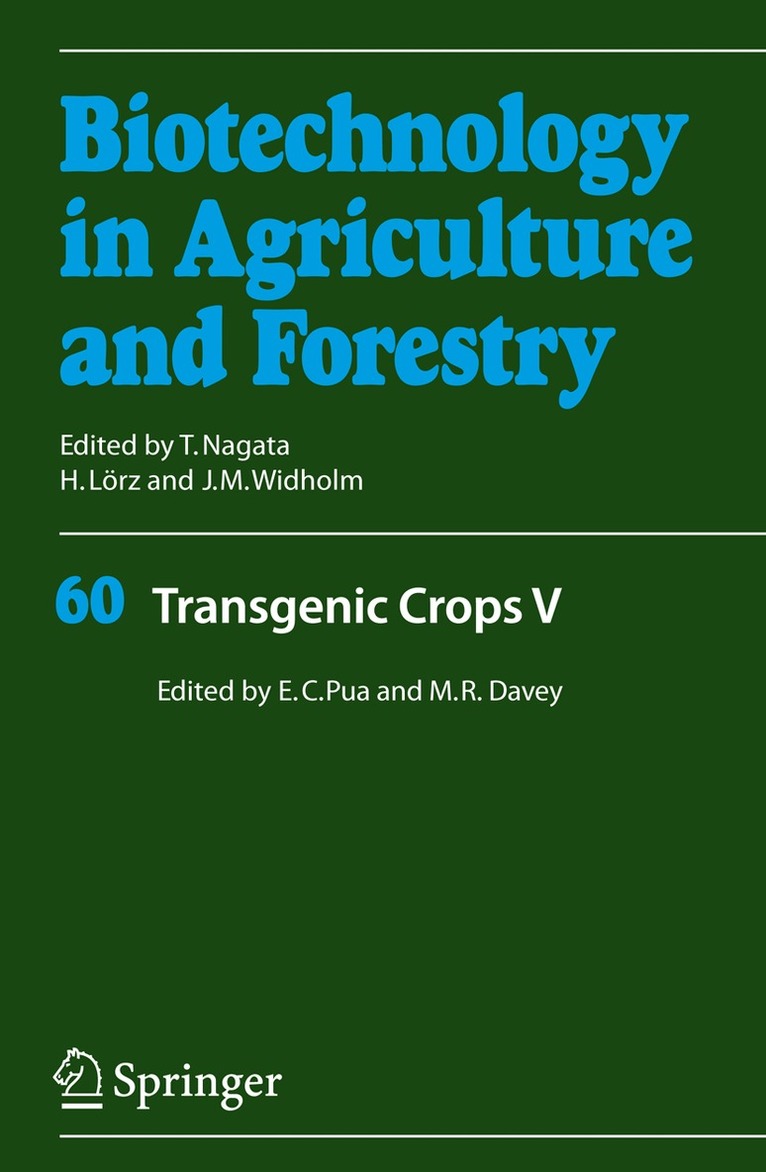
Genetic engineering is a powerful tool for crop improvement. The status of crop biotechnology before 2001 was reviewed in Transgenic Crops I-III, but recent advances in plant cell and molecular biology have prompted the need for new volumes.Following Transgenic Crops IV (2007) dealing with cereals, vegetables, root crops, herbs and spices, this volume, Transgenic Crops V, is devoted to fruit, trees and beverage crops. Fruit crops targeted include banana, citrus, mango, papaya, pineapple, watermelon, avocado, grape, melon, apple, Prunus spp., strawberry, and kiwifruit, while trees include walnut, rubber, eucalyptus, tropical tree legumes, Casuarina glauca and conifers. The section on beverage crops reports studies on coffee, cacao, tea, and sugarcane.This volume is an invaluable reference for plant breeders, researchers and graduate students in the fields of plant biotechnology, agronomy, horticulture, forestry, genetics, and both plant cell and molecular biology.
3 149 kr
Skickas inom 10-15 vardagar
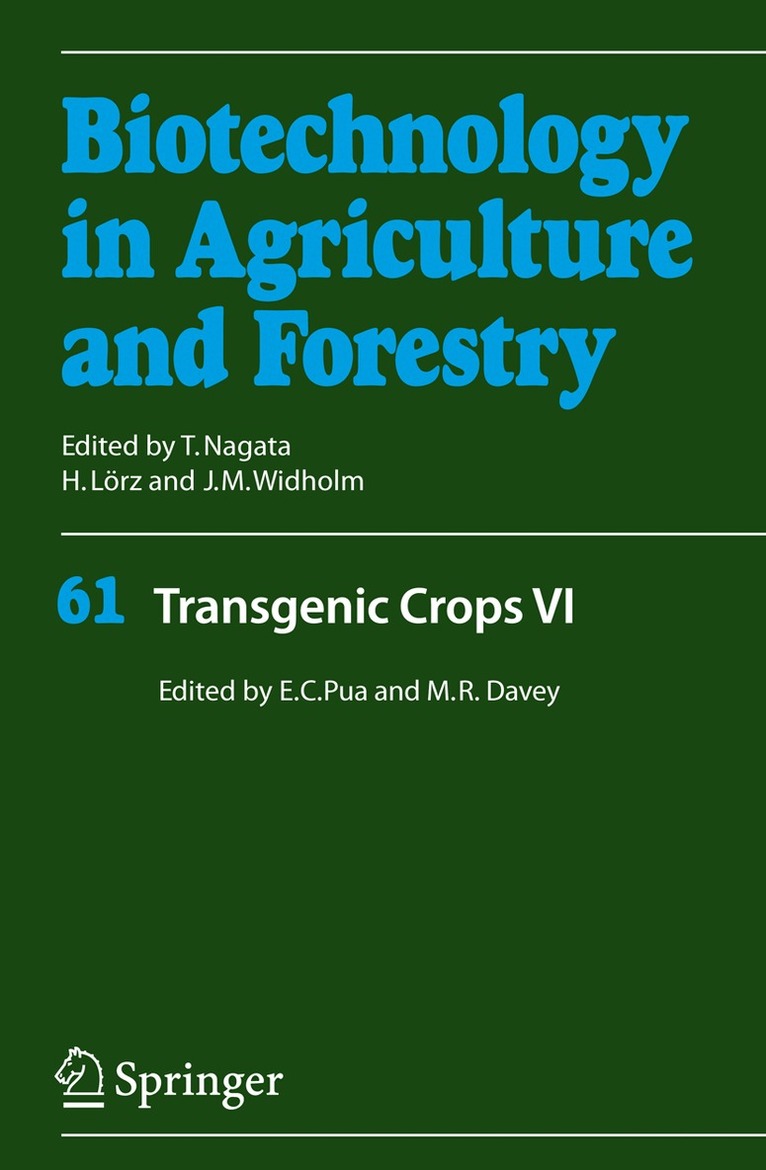
Genetic engineering is a powerful tool for crop improvement. The status of crop biotechnology before 2001 was reviewed in Transgenic Crops I-III, but recent advances in plant cell and molecular biology have prompted the need for new volumes. Following Transgenic Crops IV (2007) on cereals, vegetables, root crops, herbs, and spices, and Transgenic Crops V (2007) on fruits, trees, and beverage crops, this volume, Transgenic Crops VI, contains the following sections: Oils and Fibers, Medicinal Crops, Ornamental Crops, Forages and Grains, Regulatory and Intellectual Property of Genetically Manipulated Plants. It is an invaluable reference for plant breeders, researchers and graduate students in the fields of plant biotechnology, agronomy, horticulture, forestry, genetics, and both plant cell and molecular biology.
2 416 kr
Skickas inom 10-15 vardagar
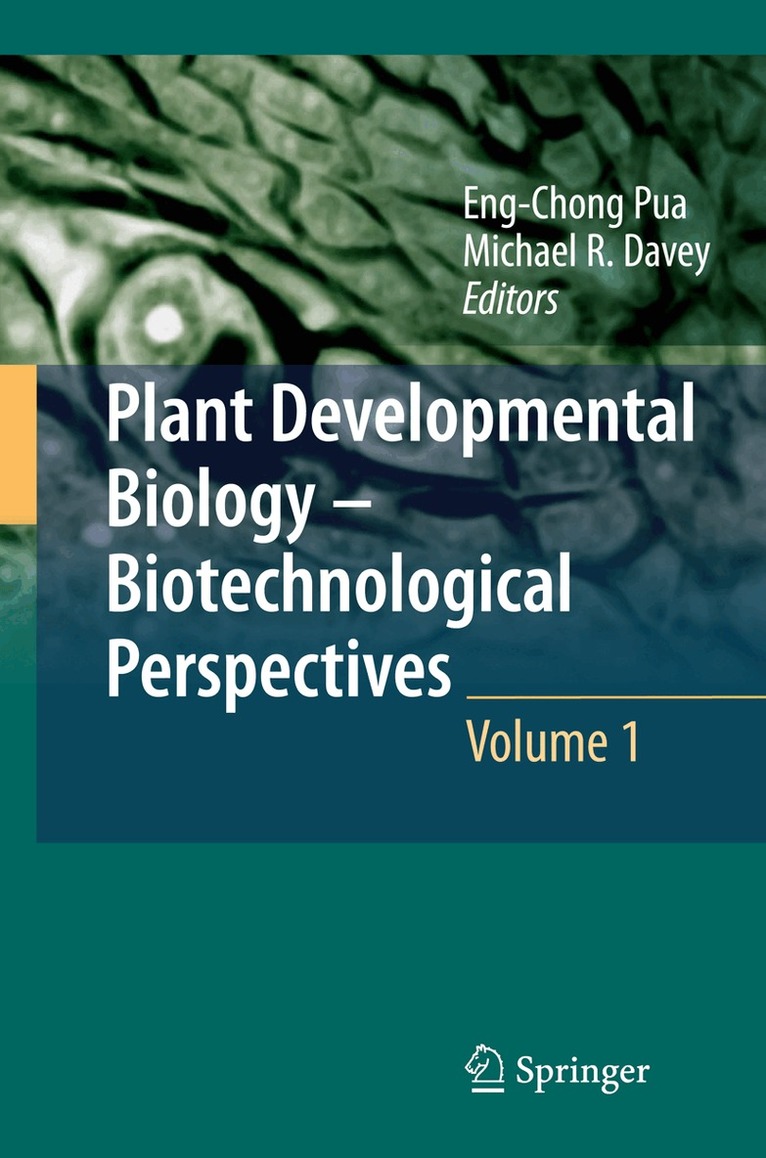
Many exciting discoveries in recent decades have contributed new knowledge to our understanding of the mechanisms that regulate various stages of plant growth and development. Such information, coupled with advances in cell and molecular biology, is fundamental to crop improvement using biotechnological approaches. Two volumes constitute the present work. The ?rst, comprising 22 chapters, commences with introductions relating to gene regulatory models for plant dev- opment and crop improvement, particularly the use of Arabidopsis as a model plant. These chapters are followed by speci?c topics that focus on different developmental aspects associated with vegetative and reproductive phases of the life cycle of a plant. Six chapters discuss vegetative growth and development. Their contents consider topics such as shoot branching, bud dormancy and growth, the devel- ment of roots, nodules and tubers, and senescence. The reproductive phase of plant development is in 14 chapters that present topics such as ?oral organ init- tion and the regulation of ?owering, the development of male and female gametes, pollen germination and tube growth, fertilization, fruit development and ripening, seed development, dormancy, germination, and apomixis. Male sterility and self-incompatibility are also discussed.
2 101 kr
Skickas inom 10-15 vardagar
Manyexcitingdiscoveriesinrecentdecadeshavecontributednewknowledgeto ourunderstandingofthemechanismsthatregulatevariousstagesofplantgrowth anddevelopment. Suchinformation,coupledwithadvancesincellandmolecular biology,isfundamentaltocropimprovementusingbiotechnologicalapproaches. Twovolumesconstitutethepresentwork. The?rst,comprising22chapters, commenceswithintroductionsrelatingtogeneregulatorymodelsforplantdev- opmentandcropimprovement,particularlytheuseofArabidopsisasamodelplant. Thesechaptersarefollowedbyspeci?ctopicsthatfocusondifferentdevelopmental aspectsassociatedwithvegetativeandreproductivephasesofthelifecycleofa plant. Six chapters discuss vegetative growth and development. Their contents considertopicssuchasshootbranching,buddormancyandgrowth,thedevel- ment of roots, nodules and tubers, and senescence. The reproductive phase of plantdevelopmentisin14chaptersthatpresenttopicssuchas?oralorganinit- tionandtheregulationof?owering,thedevelopmentofmaleandfemalegametes, pollengerminationandtubegrowth,fertilization,fruitdevelopmentandripening, seed development, dormancy, germination, and apomixis. Male sterility and self-incompatibilityarealsodiscussed.Volume2has20chapters,threeofwhichreviewrecentadvancesinsomatic embryogenesis,microsporeembryogenesisandsomaclonalvariation. Sevenofthe chapterstargetplantprocessesandtheirregulation,includingphotosynthatepartiti- ing,seedmaturationandseedstorageproteinbiosynthesis,theproductionandregu- tionoffattyacids,vitamins,alkaloidsand?owerpigments,and?owerscent. This secondbookalsocontainsfourchaptersonhormonalandenvironmentalsignaling (aminocompounds-containinglipids,auxin,cytokinin,andlight)intheregulationof plantdevelopment;othertopicsencompassthemoleculargeneticsofdevelopmental regulation,includingRNAsilencing,DNAmethylation,epigenetics,activationt- ging,homologousrecombination,andtheengineeringofsyntheticpromoters. Thesebookswillserveaskeyreferencesforadvancedstudentsandresearchers involved in a range of plant-orientated disciplines, including genetics, cell and molecularbiology,functionalgenomics,andbiotechnology. August2009 E-C. PuaandM. R. Davey v Contents PartI CellDifferentiationandDevelopmentInVitro 1 DevelopmentalBiologyofSomaticEmbryogenesis ...3 R. J. Rose,F. R. Mantiri,S. Kurdyukov,S-K. Chen,X-D. Wang, K. E. Nolan,andM. B. Sheahan 1. 1 Introduction ...3 1.2 BasicRequirementsforInVitroSE ...4 1. 3 ExplantandStemCellBiology ...5 1. 3. 1 Genotype ...5 1. 3. 2 ExplantCells ...6 1. 4 EarliestEventinEmbryogenesis-AsymmetricCellDivision ...8 1. 4. 1 CellWallinEstablishmentofPolarity,DivisionAsymmetry andCellFate ...8 1. 4. 2 DivisionAsymmetryintheInitiationofSE ...10 1. 4. 3 AsymmetricDivisionandtheSuspensorinSE ...10 1. 5 StressComponentintheInitiationofSE ...11 1. 5. 1 ReactiveOxygenSpecies ...11 1. 5. 2 Stress-RelatedHormoneSignalling ...12 1. 6 HormonesandtheInitiationofSE ...13 1. 7 InductionofSEbyOver-ExpressionofLeafyCotyledon TranscriptionFactorsandTheirRelationshiptoSEInductionand Repression-theGAConnection ...14 1. 8 ABA,StressandGA ...16 1. 9 SolubleSignalsandCell-CellInteractionsthatPromoteSEin SuspensionCultures ...16 1. 9. 1 SecretedProteinsthatIn?uenceSE ...16 1. 9. 2 AGPSignallinginSE:MechanismsandInteractionsBetween SignallingPathways ...17 1. 9. 3 Cell-AsymmetricCellDivision ...8 1. 4. 1 CellWallinEstablishmentofPolarity,DivisionAsymmetry andCellFate ...8 1. 4. 2 DivisionAsymmetryintheInitiationofSE ...10 1. 4. 3 AsymmetricDivisionandtheSuspensorinSE ...10 1. 5 StressComponentintheInitiationofSE ...11 1. 5.1 ReactiveOxygenSpecies ...11 1. 5. 2 Stress-RelatedHormoneSignalling ...12 1. 6 HormonesandtheInitiationofSE ...13 1. 7 InductionofSEbyOver-ExpressionofLeafyCotyledon TranscriptionFactorsandTheirRelationshiptoSEInductionand Repression-theGAConnection ...14 1. 8 ABA,StressandGA ...16 1. 9 SolubleSignalsandCell-CellInteractionsthatPromoteSEin SuspensionCultures ...16 1. 9. 1 SecretedProteinsthatIn?uenceSE ...16 1. 9. 2 AGPSignallinginSE:MechanismsandInteractionsBetween SignallingPathways ...17 1. 9. 3 Cell-Manyexcitingdiscoveriesinrecentdecadeshavecontributednewknowledgeto ourunderstandingofthemechanismsthatregulatevariousstagesofplantgrowth anddevelopment. Suchinformation,coupledwithadvancesincellandmolecular biology,isfundamentaltocropimprovementusingbiotechnologicalapproaches. Twovolumesconstitutethepresentwork. The?rst,comprising22chapters, commenceswithintroductionsrelatingtogeneregulatorymodelsforplantdev- opmentandcropimprovement,particularlytheuseofArabidopsisasamodelplant. Thesechaptersarefollowedbyspeci?ctopicsthatfocusondifferentdevelopmental aspectsassociatedwithvegetativeandreproductivephasesofthelifecycleofa plant.Six chapters discuss vegetative growth and development. Their contents considertopicssuchasshootbranching,buddormancyandgrowth,thedevel- ment of roots, nodules and tubers, and senescence. The reproductive phase of plantdevelopmentisin14chaptersthatpresenttopicssuchas?oralorganinit- tionandtheregulationof?owering,thedevelopmentofmaleandfemalegametes, pollengerminationandtubegrowth,fertilization,fruitdevelopmentandripening, seed development, dormancy, germination, and apomixis. Male sterility and self-incompatibilityarealsodiscussed. Volume2has20chapters,threeofwhichreviewrecentadvancesinsomatic embryogenesis,microsporeembryogenesisandsomaclonalvariation. Sevenofthe chapterstargetplantprocessesandtheirregulation,includingphotosynthatepartiti- ing,seedmaturationandseedstorageproteinbiosynthesis,theproductionandregu- tionoffattyacids,vitamins,alkaloidsand?owerpigments,and?owerscent.This secondbookalsocontainsfourchaptersonhormonalandenvironmentalsignaling (aminocompounds-containinglipids,auxin,cytokinin,andlight)intheregulationof plantdevelopment;othertopicsencompassthemoleculargeneticsofdevelopmental regulation,includingRNAsilencing,DNAmethylation,epigenetics,activationt- ging,homologousrecombination,andtheengineeringofsyntheticpromoters. Thesebookswillserveaskeyreferencesforadvancedstudentsandresearchers involved in a range of plant-orientated disciplines, including genetics, cell and molecularbiology,functionalgenomics,andbiotechnology. August2009 E-C. PuaandM. R. Davey v Contents PartI CellDifferentiationandDevelopmentInVitro 1 DevelopmentalBiologyofSomaticEmbryogenesis ...3 R. J. Rose,F. R. Mantiri,S. Kurdyukov,S-K. Chen,X-D. Wang, K. E. Nolan,andM. B. Sheahan 1. 1 Introduction ...3 1. 2 BasicRequirementsforInVitroSE ...4 1. 3 ExplantandStemCellBiology ...5 1. 3. 1 Genotype ...5 1. 3. 2 ExplantCells ...6 1. 4 EarliestEventinEmbryogenesis-AsymmetricCellDivision ...8 1. 4. 1 CellWallinEstablishmentofPolarity,DivisionAsymmetry andCellFate ...8 1. 4. 2 DivisionAsymmetryintheInitiationofSE ...10 1. 4. 3 AsymmetricDivisionandtheSuspensorinSE ...10 1.5 StressComponentintheInitiationofSE ...11 1. 5. 1 ReactiveOxygenSpecies ...11 1. 5. 2 Stress-RelatedHormoneSignalling ...12 1. 6 HormonesandtheInitiationofSE ...13 1. 7 InductionofSEbyOver-ExpressionofLeafyCotyledon TranscriptionFactorsandTheirRelationshiptoSEInductionand Repression-theGAConnection ...14 1. 8 ABA,StressandGA ...16 1. 9 SolubleSignalsandCell-CellInteractionsthatPromoteSEin SuspensionCultures ...16 1. 9. 1 SecretedProteinsthatIn?uenceSE ...16 1. 9. 2 AGPSignallinginSE:MechanismsandInteractionsBetween SignallingPathways ...17 1. 9. 3 Cell-CellInteractionandRelevancetoSEinSuspension Cultures ...18 vii viii Contents 1. 10 DevelopmentProgramAfterSEInduction ...19 1. 11 ConcludingRemarksandaModelBasedonStudiesin Medicagotruncatula ...19 1. 12 SEandBiotechnology ...20 References ...21 2 MicrosporeEmbryogenesis ...27 A. Olmedilla 2. 1 Introduction ...27 2. 2 DiscoveryoftheProductionofHaploidsbyAntherCulture ...29 2. 3 StrategiesfortheInductionofMicrosporeEmbryogenesis ...29 2. 4 In?uenceofDifferentFactorsinMicrosporeEmbryogenesis ...30 2. 4. 1 Genotype ...30 2. 4. 2 DonorPlantPhysiology ...31 2. 4. 3 StageofPollenDevelopment ...
2 101 kr
Skickas inom 10-15 vardagar
Recent advances in plant cell and molecular biology have opened new avenues for the improvement of crop plants in the genus "Brassica" - oilseeds and vegetables of worldwide economic importance. This volume reviews advances in various areas of "Brassica" biotechnology. It covers the use of rapid-cycle brassicas, tissue culture and gene transfer, molecular genetics, biotic and abiotic stress resistance, and molecular farming. Contributors are world-leading international "Brassica" researchers. The volume is an invaluable reference for plant breeders, researchers and graduate students in the fields of plant biotechnology, agronomy, horticulture, genetics, and cell and molecular biology.
2 101 kr
Skickas inom 10-15 vardagar
Genetic engineering is a powerful tool for crop improvement. Crop biotechnology before 2001 was reviewed in Transgenic Crops I-III, but recent advances in plant cell and molecular biology have prompted the need for new volumes.Transgenic Crops IV deals with cereals, vegetables, root crops, herbs and spices. Section I is an introductory chapter on the impact of plant biotechnology in agriculture. Section II focuses on cereals (rice, wheat, maize, rye, pearl millet, barley, oats), while Section III is directed to vegetable crops (tomato, cucumber, eggplant, lettuce, chickpea, common beans and cowpeas, carrot, radish). Root crops (potato, cassava, sweet potato, sugar beet) are included in Section IV, with herbs and spices (sweet and hot peppers, onion, garlic and related species, mint) in Section V.This volume is an invaluable reference for plant breeders, researchers and graduate students in the fields of plant biotechnology, agronomy, horticulture, genetics and both plant cell and molecular biology.
3 149 kr
Skickas inom 10-15 vardagar
Genetic engineering is a powerful tool for crop improvement. The status of crop biotechnology before 2001 was reviewed in Transgenic Crops I-III, but recent advances in plant cell and molecular biology have prompted the need for new volumes.Following Transgenic Crops IV (2007) dealing with cereals, vegetables, root crops, herbs and spices, this volume, Transgenic Crops V, is devoted to fruit, trees and beverage crops. Fruit crops targeted include banana, citrus, mango, papaya, pineapple, watermelon, avocado, grape, melon, apple, Prunus spp., strawberry, and kiwifruit, while trees include walnut, rubber, eucalyptus, tropical tree legumes, Casuarina glauca and conifers. The section on beverage crops reports studies on coffee, cacao, tea, and sugarcane.This volume is an invaluable reference for plant breeders, researchers and graduate students in the fields of plant biotechnology, agronomy, horticulture, forestry, genetics, and both plant cell and molecular biology.
3 149 kr
Skickas inom 10-15 vardagar
Genetic engineering is a powerful tool for crop improvement. The status of crop biotechnology before 2001 was reviewed in Transgenic Crops I-III, but recent advances in plant cell and molecular biology have prompted the need for new volumes. Following Transgenic Crops IV (2007) on cereals, vegetables, root crops, herbs, and spices, and Transgenic Crops V (2007) on fruits, trees, and beverage crops, this volume, Transgenic Crops VI, contains the following sections: Oils and Fibers, Medicinal Crops, Ornamental Crops, Forages and Grains, Regulatory and Intellectual Property of Genetically Manipulated Plants. It is an invaluable reference for plant breeders, researchers and graduate students in the fields of plant biotechnology, agronomy, horticulture, forestry, genetics, and both plant cell and molecular biology.
2 101 kr
Skickas inom 10-15 vardagar
Manyexcitingdiscoveriesinrecentdecadeshavecontributednewknowledgeto ourunderstandingofthemechanismsthatregulatevariousstagesofplantgrowth anddevelopment. Suchinformation,coupledwithadvancesincellandmolecular biology,isfundamentaltocropimprovementusingbiotechnologicalapproaches. Twovolumesconstitutethepresentwork. The?rst,comprising22chapters, commenceswithintroductionsrelatingtogeneregulatorymodelsforplantdev- opmentandcropimprovement,particularlytheuseofArabidopsisasamodelplant. Thesechaptersarefollowedbyspeci?ctopicsthatfocusondifferentdevelopmental aspectsassociatedwithvegetativeandreproductivephasesofthelifecycleofa plant. Six chapters discuss vegetative growth and development. Their contents considertopicssuchasshootbranching,buddormancyandgrowth,thedevel- ment of roots, nodules and tubers, and senescence. The reproductive phase of plantdevelopmentisin14chaptersthatpresenttopicssuchas?oralorganinit- tionandtheregulationof?owering,thedevelopmentofmaleandfemalegametes, pollengerminationandtubegrowth,fertilization,fruitdevelopmentandripening, seed development, dormancy, germination, and apomixis. Male sterility and self-incompatibilityarealsodiscussed.Volume2has20chapters,threeofwhichreviewrecentadvancesinsomatic embryogenesis,microsporeembryogenesisandsomaclonalvariation. Sevenofthe chapterstargetplantprocessesandtheirregulation,includingphotosynthatepartiti- ing,seedmaturationandseedstorageproteinbiosynthesis,theproductionandregu- tionoffattyacids,vitamins,alkaloidsand?owerpigments,and?owerscent. This secondbookalsocontainsfourchaptersonhormonalandenvironmentalsignaling (aminocompounds-containinglipids,auxin,cytokinin,andlight)intheregulationof plantdevelopment;othertopicsencompassthemoleculargeneticsofdevelopmental regulation,includingRNAsilencing,DNAmethylation,epigenetics,activationt- ging,homologousrecombination,andtheengineeringofsyntheticpromoters. Thesebookswillserveaskeyreferencesforadvancedstudentsandresearchers involved in a range of plant-orientated disciplines, including genetics, cell and molecularbiology,functionalgenomics,andbiotechnology. August2009 E-C. PuaandM. R. Davey v Contents PartI CellDifferentiationandDevelopmentInVitro 1 DevelopmentalBiologyofSomaticEmbryogenesis ...3 R. J. Rose,F. R. Mantiri,S. Kurdyukov,S-K. Chen,X-D. Wang, K. E. Nolan,andM. B. Sheahan 1. 1 Introduction ...3 1.2 BasicRequirementsforInVitroSE ...4 1. 3 ExplantandStemCellBiology ...5 1. 3. 1 Genotype ...5 1. 3. 2 ExplantCells ...6 1. 4 EarliestEventinEmbryogenesis-AsymmetricCellDivision ...8 1. 4. 1 CellWallinEstablishmentofPolarity,DivisionAsymmetry andCellFate ...8 1. 4. 2 DivisionAsymmetryintheInitiationofSE ...10 1. 4. 3 AsymmetricDivisionandtheSuspensorinSE ...10 1. 5 StressComponentintheInitiationofSE ...11 1. 5. 1 ReactiveOxygenSpecies ...11 1. 5. 2 Stress-RelatedHormoneSignalling ...12 1. 6 HormonesandtheInitiationofSE ...13 1. 7 InductionofSEbyOver-ExpressionofLeafyCotyledon TranscriptionFactorsandTheirRelationshiptoSEInductionand Repression-theGAConnection ...14 1. 8 ABA,StressandGA ...16 1. 9 SolubleSignalsandCell-CellInteractionsthatPromoteSEin SuspensionCultures ...16 1. 9. 1 SecretedProteinsthatIn?uenceSE ...16 1. 9. 2 AGPSignallinginSE:MechanismsandInteractionsBetween SignallingPathways ...17 1. 9. 3 Cell-AsymmetricCellDivision ...8 1. 4. 1 CellWallinEstablishmentofPolarity,DivisionAsymmetry andCellFate ...8 1. 4. 2 DivisionAsymmetryintheInitiationofSE ...10 1. 4. 3 AsymmetricDivisionandtheSuspensorinSE ...10 1. 5 StressComponentintheInitiationofSE ...11 1. 5.1 ReactiveOxygenSpecies ...11 1. 5. 2 Stress-RelatedHormoneSignalling ...12 1. 6 HormonesandtheInitiationofSE ...13 1. 7 InductionofSEbyOver-ExpressionofLeafyCotyledon TranscriptionFactorsandTheirRelationshiptoSEInductionand Repression-theGAConnection ...14 1. 8 ABA,StressandGA ...16 1. 9 SolubleSignalsandCell-CellInteractionsthatPromoteSEin SuspensionCultures ...16 1. 9. 1 SecretedProteinsthatIn?uenceSE ...16 1. 9. 2 AGPSignallinginSE:MechanismsandInteractionsBetween SignallingPathways ...17 1. 9. 3 Cell-Manyexcitingdiscoveriesinrecentdecadeshavecontributednewknowledgeto ourunderstandingofthemechanismsthatregulatevariousstagesofplantgrowth anddevelopment. Suchinformation,coupledwithadvancesincellandmolecular biology,isfundamentaltocropimprovementusingbiotechnologicalapproaches. Twovolumesconstitutethepresentwork. The?rst,comprising22chapters, commenceswithintroductionsrelatingtogeneregulatorymodelsforplantdev- opmentandcropimprovement,particularlytheuseofArabidopsisasamodelplant. Thesechaptersarefollowedbyspeci?ctopicsthatfocusondifferentdevelopmental aspectsassociatedwithvegetativeandreproductivephasesofthelifecycleofa plant.Six chapters discuss vegetative growth and development. Their contents considertopicssuchasshootbranching,buddormancyandgrowth,thedevel- ment of roots, nodules and tubers, and senescence. The reproductive phase of plantdevelopmentisin14chaptersthatpresenttopicssuchas?oralorganinit- tionandtheregulationof?owering,thedevelopmentofmaleandfemalegametes, pollengerminationandtubegrowth,fertilization,fruitdevelopmentandripening, seed development, dormancy, germination, and apomixis. Male sterility and self-incompatibilityarealsodiscussed. Volume2has20chapters,threeofwhichreviewrecentadvancesinsomatic embryogenesis,microsporeembryogenesisandsomaclonalvariation. Sevenofthe chapterstargetplantprocessesandtheirregulation,includingphotosynthatepartiti- ing,seedmaturationandseedstorageproteinbiosynthesis,theproductionandregu- tionoffattyacids,vitamins,alkaloidsand?owerpigments,and?owerscent.This secondbookalsocontainsfourchaptersonhormonalandenvironmentalsignaling (aminocompounds-containinglipids,auxin,cytokinin,andlight)intheregulationof plantdevelopment;othertopicsencompassthemoleculargeneticsofdevelopmental regulation,includingRNAsilencing,DNAmethylation,epigenetics,activationt- ging,homologousrecombination,andtheengineeringofsyntheticpromoters. Thesebookswillserveaskeyreferencesforadvancedstudentsandresearchers involved in a range of plant-orientated disciplines, including genetics, cell and molecularbiology,functionalgenomics,andbiotechnology. August2009 E-C. PuaandM. R. Davey v Contents PartI CellDifferentiationandDevelopmentInVitro 1 DevelopmentalBiologyofSomaticEmbryogenesis ...3 R. J. Rose,F. R. Mantiri,S. Kurdyukov,S-K. Chen,X-D. Wang, K. E. Nolan,andM. B. Sheahan 1. 1 Introduction ...3 1. 2 BasicRequirementsforInVitroSE ...4 1. 3 ExplantandStemCellBiology ...5 1. 3. 1 Genotype ...5 1. 3. 2 ExplantCells ...6 1. 4 EarliestEventinEmbryogenesis-AsymmetricCellDivision ...8 1. 4. 1 CellWallinEstablishmentofPolarity,DivisionAsymmetry andCellFate ...8 1. 4. 2 DivisionAsymmetryintheInitiationofSE ...10 1. 4. 3 AsymmetricDivisionandtheSuspensorinSE ...10 1.5 StressComponentintheInitiationofSE ...11 1. 5. 1 ReactiveOxygenSpecies ...11 1. 5. 2 Stress-RelatedHormoneSignalling ...12 1. 6 HormonesandtheInitiationofSE ...13 1. 7 InductionofSEbyOver-ExpressionofLeafyCotyledon TranscriptionFactorsandTheirRelationshiptoSEInductionand Repression-theGAConnection ...14 1. 8 ABA,StressandGA ...16 1. 9 SolubleSignalsandCell-CellInteractionsthatPromoteSEin SuspensionCultures ...16 1. 9. 1 SecretedProteinsthatIn?uenceSE ...16 1. 9. 2 AGPSignallinginSE:MechanismsandInteractionsBetween SignallingPathways ...17 1. 9. 3 Cell-CellInteractionandRelevancetoSEinSuspension Cultures ...18 vii viii Contents 1. 10 DevelopmentProgramAfterSEInduction ...19 1. 11 ConcludingRemarksandaModelBasedonStudiesin Medicagotruncatula ...19 1. 12 SEandBiotechnology ...20 References ...21 2 MicrosporeEmbryogenesis ...27 A. Olmedilla 2. 1 Introduction ...27 2. 2 DiscoveryoftheProductionofHaploidsbyAntherCulture ...29 2. 3 StrategiesfortheInductionofMicrosporeEmbryogenesis ...29 2. 4 In?uenceofDifferentFactorsinMicrosporeEmbryogenesis ...30 2. 4. 1 Genotype ...30 2. 4. 2 DonorPlantPhysiology ...31 2. 4. 3 StageofPollenDevelopment ...
2 416 kr
Skickas inom 10-15 vardagar
The reproductive phase of plant development is in 14 chapters that present topics such as ?oral organ init- tion and the regulation of ?owering, the development of male and female gametes, pollen germination and tube growth, fertilization, fruit development and ripening, seed development, dormancy, germination, and apomixis.