Michael R. Gottfredson - Böcker
Visar alla böcker från författaren Michael R. Gottfredson. Handla med fri frakt och snabb leverans.
6 produkter
6 produkter
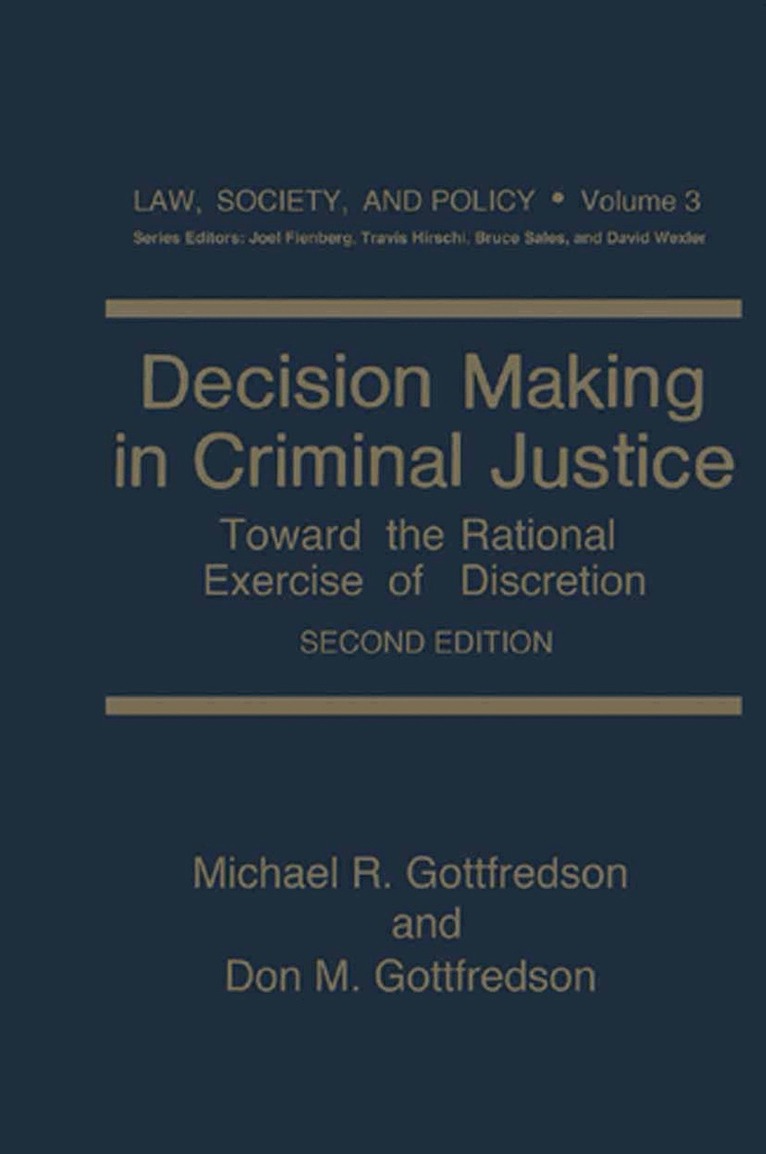
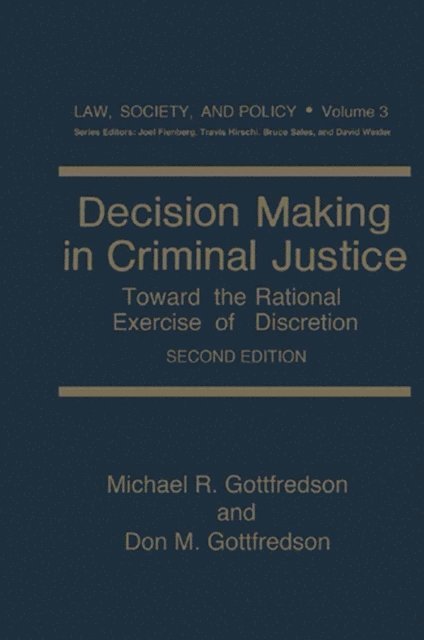
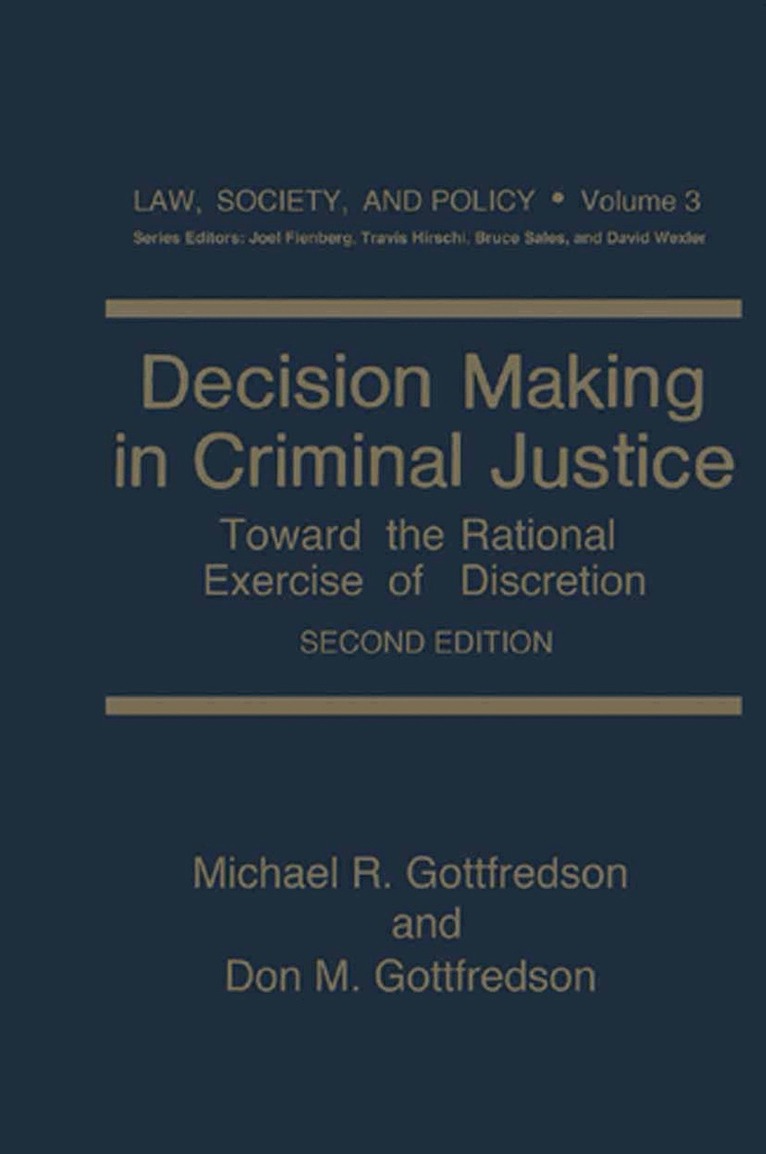
Decision Making in Criminal Justice
Toward the Rational Exercise of Discretion
Inbunden, Engelska, 1987
1 891 kr
Skickas inom 10-15 vardagar
The study of decisions in the criminal justice process provides a useful focus for the examination of many fundamental aspects of criminal jus tice. These decisions are not always highly visible. They are made, or dinarily, within wide areas of discretion. The aims of the decisions are not always clear, and, indeed, the principal objectives of these decisions are often the subject of much debate. Usually they are not guided by explicit decision policies. Often the participants are unable to verbalize the basis for the selection of decision alternatives. Adequate information for the decisions is usually unavailable. Rarely can the decisions be demonstrated to be rational. By a rationaldecision we mean "that decision among those possible for the decisionmaker which, in the light of the information available, maximizes the probability of the achievement of the purpose of the decisionmaker in that specific and particular case" (Wilkins, 1974a: 70; also 1969). This definition, which stems from statistical decision theory, points to three fundamental characteristics of decisions. First, it is as sumed that a choice of possible decisions (or, more precisely, of possible alternatives) is available. If only one choice is possible, there is no de cision problem, and the question of rationality does not arise. Usually, of course, there will be a choice, even if the alternative is to decide not to decide-a choice that, of course, often has profound consequences.
2 088 kr
Skickas inom 10-15 vardagar
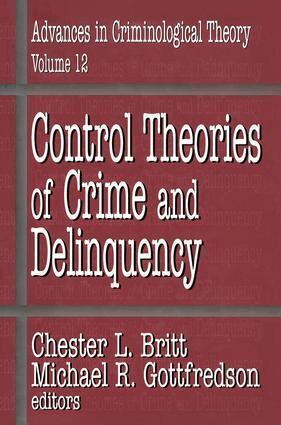
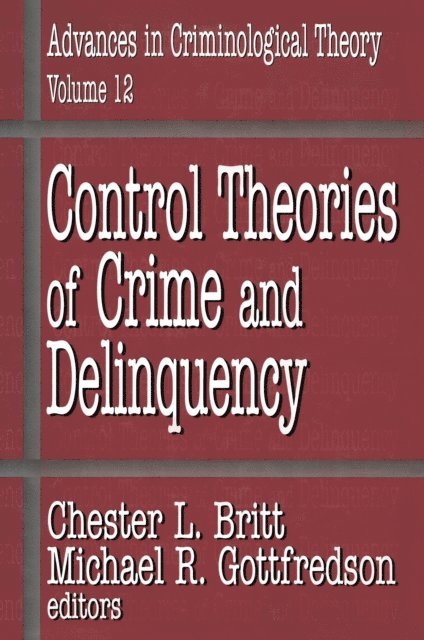
For the past twenty to thirty years, control theories of crime have been at the center of theoretical development in criminology. Key to the control theory perspective is the notion that crime is an inherently individual act, and its explanation requires that we focus on the characteristics of individuals who commit crimes. Consequently, control theory focuses on such issues as self-control and social control.The contributions to this volume explicate and extend the application of control theory. It is divided into three general areas. Part 1 focuses on key assumptions and components of control theories. Contributors discuss the notion of learning, or socialization, in the context of control theory and the effects that families, peers, and the criminal justice system have on self-control, social ties, and criminal behavior. Part 2 applies control theory to areas typically assumed to be out of the domain of self-control theory and social control theory, such as gender differences in crime, domestic violence, and group crime. Considering control theory's emphasis on explaining individual criminal acts, these chapters suggest an interesting area of development by highlighting the possibility that differences in crime across or within groups may begin with individual characteristics and then making inferences about groups and group processes.Part 3 approaches the explanation of crime cross-nationally and at the macro-level. Although the authors take different approaches, they all illustrate that a theory of crime does not require culture-specific elements in order to be a valid cross-cultural explanation. Contributors to this volume include: Robert Agnew, Todd Armstrong, Leana Allen Bouffard, Augustine Brannigan, Chester Britt, Barbara Costello, Maja Dekovic, Matt DeLisi, Michael Gottfredson, Henriette Haas, Kelly H. Hardwick, Travis Hirschi, Marianne Junger, Martin Killias, Helen Mederer, Kevin Thompson, and Alexander Vazsonyi.
323 kr
Skickas inom 7-10 vardagar
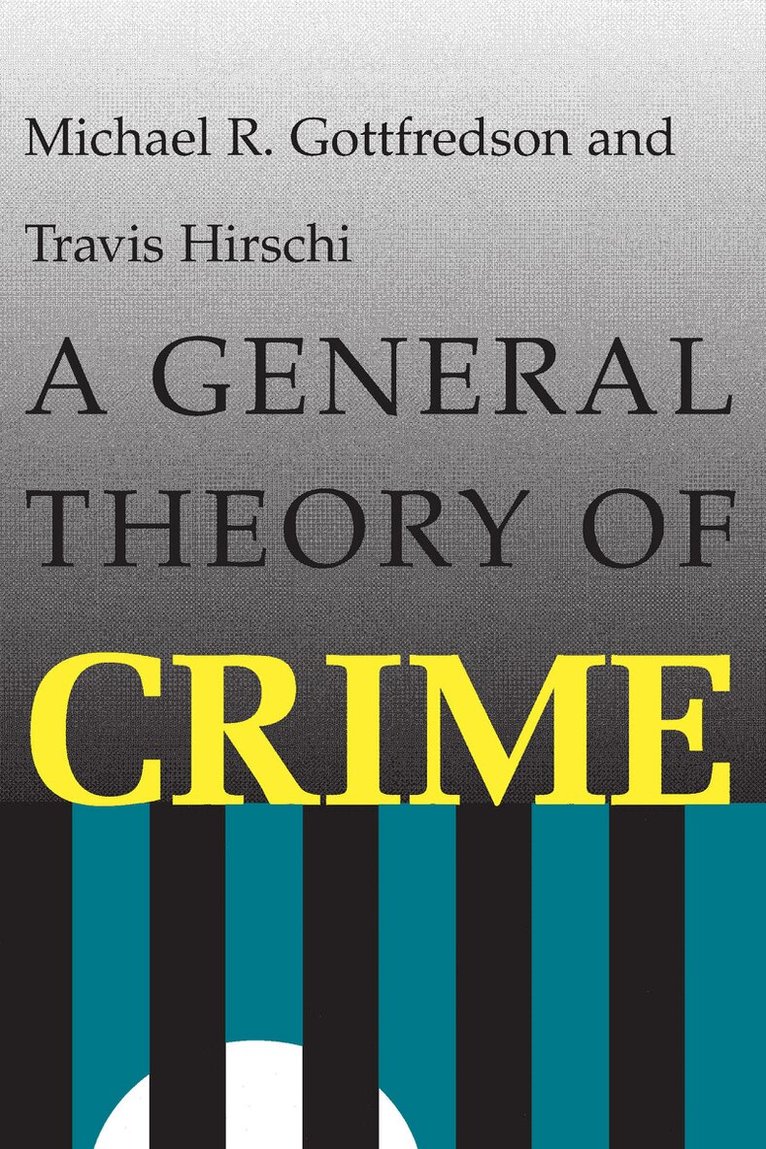
By articulating a general theory of crime and related behavior, the authors present a new and comprehensive statement of what the criminological enterprise should be about. They argue that prevalent academic criminology—whether sociological, psychological, biological, or economic—has been unable to provide believable explanations of criminal behavior.The long-discarded classical tradition in criminology was based on choice and free will, and saw crime as the natural consequence of unrestrained human tendencies to seek pleasure and to avoid pain. It concerned itself with the nature of crime and paid little attention to the criminal. The scientific, or disciplinary, tradition is based on causation and determinism, and has dominated twentieth-century criminology. It concerns itself with the nature of the criminal and pays little attention to the crime itself. Though the two traditions are considered incompatible, this book brings classical and modern criminology together by requiring that their conceptions be consistent with each other and with the results of research.The authors explore the essential nature of crime, finding that scientific and popular conceptions of crime are misleading, and they assess the truth of disciplinary claims about crime, concluding that such claims are contrary to the nature of crime and, interestingly enough, to the data produced by the disciplines themselves. They then put forward their own theory of crime, which asserts that the essential element of criminality is the absence of self-control. Persons with high self-control consider the long-term consequences of their behavior; those with low self-control do not. Such control is learned, usually early in life, and once learned, is highly resistant to change. In the remainder of the book, the authors apply their theory to the persistent problems of criminology. Why are men, adolescents, and minorities more likely than their counterparts to commit criminal acts? What is the role of the school in the causation of delinquincy? To what extent could crime be reduced by providing meaningful work? Why do some societies have much lower crime rates than others? Does white-collar crime require its own theory? Is there such a thing as organized crime? In all cases, the theory forces fundamental reconsideration of the conventional wisdom of academians and crimina justic practitioners. The authors conclude by exploring the implications of the theory for the future study and control of crime.
671 kr
Skickas inom 10-15 vardagar
For the past twenty to thirty years, control theories of crime have been at the center of theoretical development in criminology. Key to the control theory perspective is the notion that crime is an inherently individual act, and its explanation requires that we focus on the characteristics of individuals who commit crimes. Consequently, control theory focuses on such issues as self-control and social control.The contributions to this volume explicate and extend the application of control theory. It is divided into three general areas. Part 1 focuses on key assumptions and components of control theories. Contributors discuss the notion of learning, or socialization, in the context of control theory and the effects that families, peers, and the criminal justice system have on self-control, social ties, and criminal behavior. Part 2 applies control theory to areas typically assumed to be out of the domain of self-control theory and social control theory, such as gender differences in crime, domestic violence, and group crime. Considering control theory's emphasis on explaining individual criminal acts, these chapters suggest an interesting area of development by highlighting the possibility that differences in crime across or within groups may begin with individual characteristics and then making inferences about groups and group processes.Part 3 approaches the explanation of crime cross-nationally and at the macro-level. Although the authors take different approaches, they all illustrate that a theory of crime does not require culture-specific elements in order to be a valid cross-cultural explanation. Contributors to this volume include: Robert Agnew, Todd Armstrong, Leana Allen Bouffard, Augustine Brannigan, Chester Britt, Barbara Costello, Maja Dekovic, Matt DeLisi, Michael Gottfredson, Henriette Haas, Kelly H. Hardwick, Travis Hirschi, Marianne Junger, Martin Killias, Helen Mederer, Kevin Thompson, and Alexander Vazsonyi.
520 kr
Skickas inom 10-15 vardagar
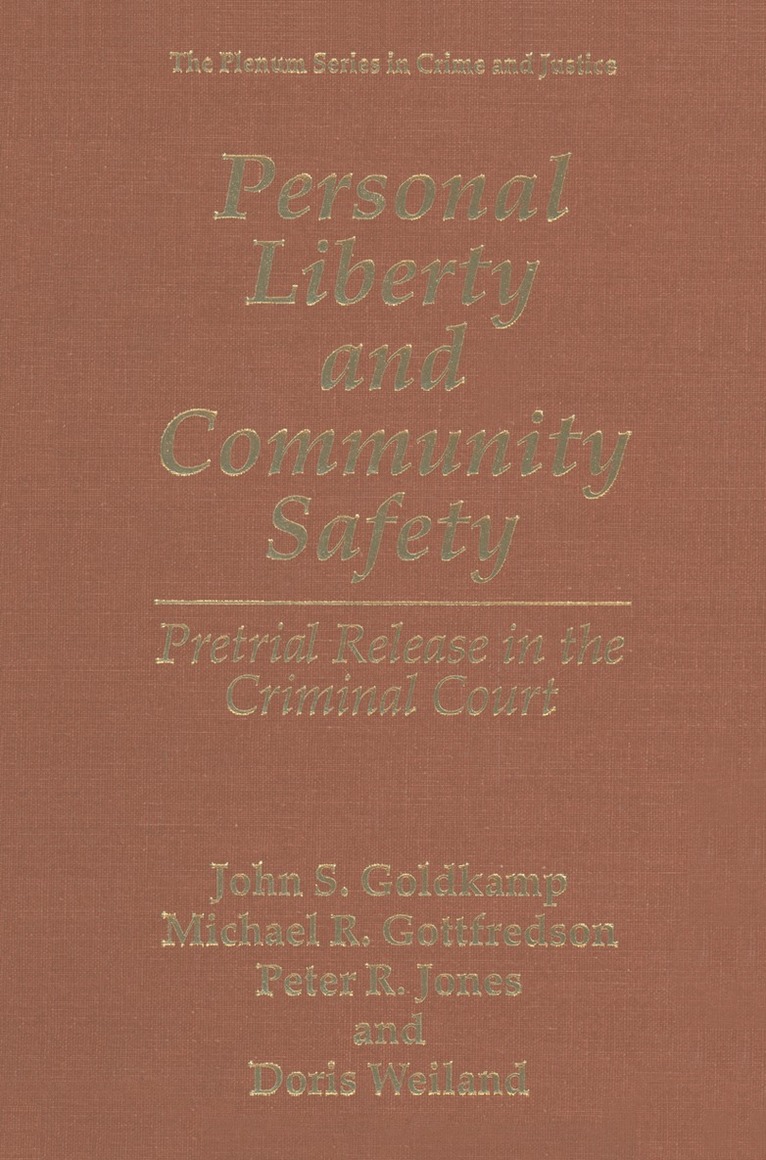
In this enlightening study, the authors implement a unique research approach to offer a greater understanding of policy reform of pretrial release and detention practices in the criminal courts in Boston, Miami, and Phoenix.
1 682 kr
Skickas inom 10-15 vardagar
The study of decisions in the criminal justice process provides a useful focus for the examination of many fundamental aspects of criminal jus tice. These decisions are not always highly visible. They are made, or dinarily, within wide areas of discretion. The aims of the decisions are not always clear, and, indeed, the principal objectives of these decisions are often the subject of much debate. Usually they are not guided by explicit decision policies. Often the participants are unable to verbalize the basis for the selection of decision alternatives. Adequate information for the decisions is usually unavailable. Rarely can the decisions be demonstrated to be rational. By a rationaldecision we mean "that decision among those possible for the decisionmaker which, in the light of the information available, maximizes the probability of the achievement of the purpose of the decisionmaker in that specific and particular case" (Wilkins, 1974a: 70; also 1969). This definition, which stems from statistical decision theory, points to three fundamental characteristics of decisions. First, it is as sumed that a choice of possible decisions (or, more precisely, of possible alternatives) is available. If only one choice is possible, there is no de cision problem, and the question of rationality does not arise. Usually, of course, there will be a choice, even if the alternative is to decide not to decide-a choice that, of course, often has profound consequences.