Michael Vaughan - Böcker
Visar alla böcker från författaren Michael Vaughan. Handla med fri frakt och snabb leverans.
4 produkter
4 produkter
360 kr
Skickas inom 7-10 vardagar
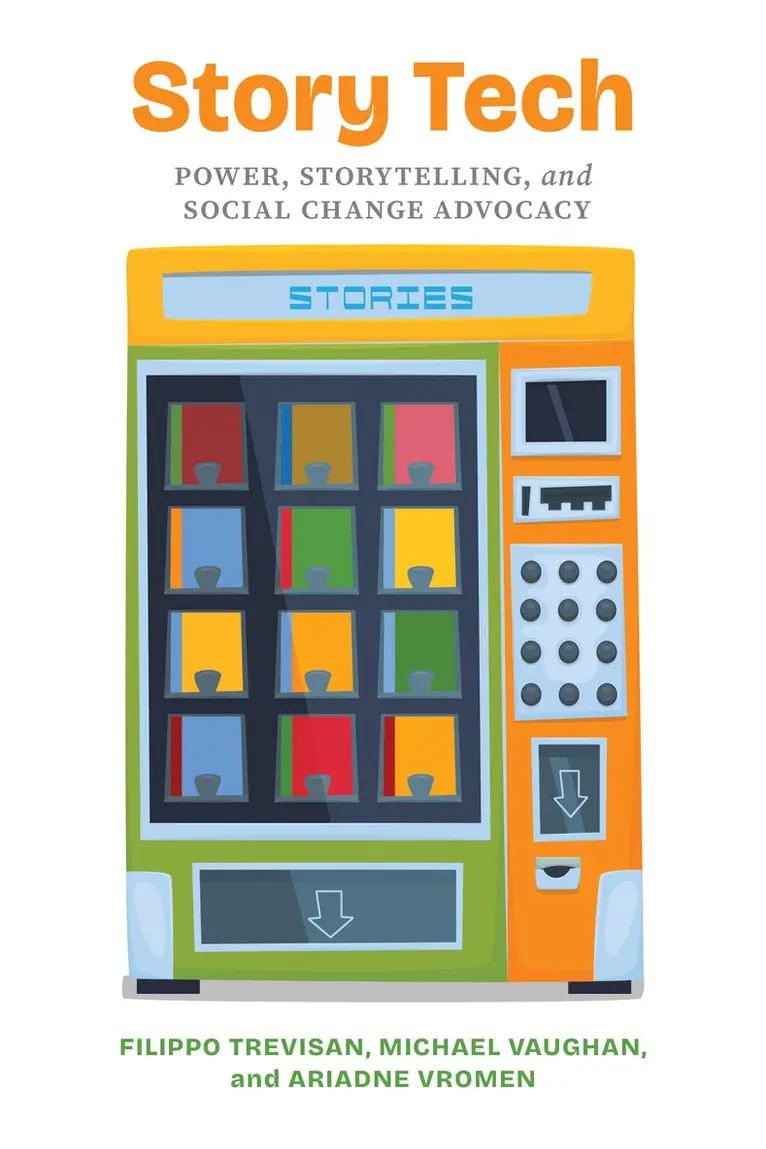
Personal stories have the power to stir the heart, compel us to act, and spark social change. While advocacy organizations have long used storytelling in campaigns, the role technology plays has increased. Today, invitations to “share your story” are widespread on advocacy organizations and political campaign websites, calls to action, and social media pages. But what happens after one clicks “share”? And how does this affect which voices we hear—and which we don’t—in public discourse?Story Tech explores the increasingly influential impact of technologies—such as databases, algorithms, and digital story banks—that are usually invisible to the public. It shows that hidden “story tech” enables political organizations to treat stories as data that can be queried for storylines and used to intervene in news and information cycles in real time. In particular, the authors review successful story-centered campaigns that helped change dominant narratives on disability rights, marriage equality, and essential workers’ rights in the United States and Australia. They compare the use of storytelling advocacy across different types of organizations including volunteer grassroots groups, large national advocacy coalitions, and trade unions, and examine how trends differ for storytellers, organizers, and their technology partners. As political stories shift to being “on demand,” they reshape power relationships in key public debates in ways that produce moments of tension as well as positive narrative change. Story Tech examines these trends and illustrates how storytelling success can—and should—be achieved in conjunction with personal dignity, privacy, and empowerment for storytellers and their communities, particularly marginalized ones.
994 kr
Skickas inom 7-10 vardagar
Personal stories have the power to stir the heart, compel us to act, and spark social change. While advocacy organizations have long used storytelling in campaigns, the role technology plays has increased. Today, invitations to “share your story” are widespread on advocacy organizations and political campaign websites, calls to action, and social media pages. But what happens after one clicks “share”? And how does this affect which voices we hear—and which we don’t—in public discourse?Story Tech explores the increasingly influential impact of technologies—such as databases, algorithms, and digital story banks—that are usually invisible to the public. It shows that hidden “story tech” enables political organizations to treat stories as data that can be queried for storylines and used to intervene in news and information cycles in real time. In particular, the authors review successful story-centered campaigns that helped change dominant narratives on disability rights, marriage equality, and essential workers’ rights in the United States and Australia. They compare the use of storytelling advocacy across different types of organizations including volunteer grassroots groups, large national advocacy coalitions, and trade unions, and examine how trends differ for storytellers, organizers, and their technology partners. As political stories shift to being “on demand,” they reshape power relationships in key public debates in ways that produce moments of tension as well as positive narrative change. Story Tech examines these trends and illustrates how storytelling success can—and should—be achieved in conjunction with personal dignity, privacy, and empowerment for storytellers and their communities, particularly marginalized ones.
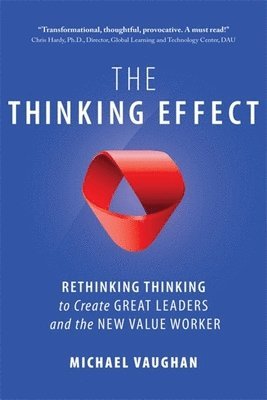
Thinking Effect
Rethinking Thinking to Create Great Leaders and the New Value Worker
Häftad, Engelska, 2013
203 kr
Skickas inom 7-10 vardagar
In a rapidly changing world there is an increasing need for critical, creative, and systems thinking. These abilities, though, are only gained through a virtuous circle of trying, reflecting, learning, and trying again; despite this, most organizations are still trying to develop these skills through linear approaches. The Thinking Effect by Michael Vaughan redefines smart thinking and effective learning - teaching how rather than what to think. Vaughan has spent his career teaching smart thinking to Fortune 500 companies and government agencies around the globe. By adopting this new thinking, leaders will learn how to develop "neural leadership" - understanding and engaging with the psychology of their team - while employees at all levels will learn how to: develop patterns of thought that differentiate top performers from those who merely do their jobs, increase productivity, improve problem-solving, and influence profitability, and become Value Workers who generate value for growth and a sustainable future. The Thinking Effect offers learning solutions, individual practices, and real-world applications to help companies break free from institutional processes that hinder fresh and innovative thought. The result is an engaged, valuable workforce that rethinks established practices - and thinking itself.
482 kr
Skickas inom 10-15 vardagar
This book focuses on online petitioning and crowdfunding platforms to demonstrate the everyday impact that digital communications have had on contemporary citizen participation. In doing do, the book argues that crowdsourced participation has become normalised and institutionalised into the everyday repertoires of citizens and their organisations. Within the digitally-enabled shift in individual acts of participation, creating, signing and sharing online petitions and micro-donations have become a focal point because of the clear evolution from their offline and online counterparts.To illustrate their arguments the authors use an original nationally representative survey on acts of political engagement, undertaken with Australian citizens. Additionally, through detailed interviews and analysis of their web presence they show how advocacy organisations use online petitions within their repertoire of strategic actions. Lastly, they analyse the kinds of policy issues that mobilise citizens on crowdsourcing platforms, based on a unique dataset of 17,000 petitions from the popular non-government platform, Change.org. They contrast these mass public concerns with the policy agenda of the government of the day to show there is a disjuncture and general lack of responsiveness to this form of citizen expression.