Filippo Trevisan - Böcker
Visar alla böcker från författaren Filippo Trevisan. Handla med fri frakt och snabb leverans.
5 produkter
5 produkter
671 kr
Skickas inom 10-15 vardagar
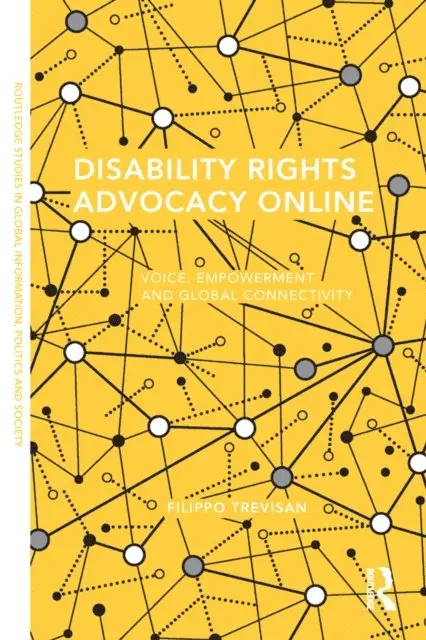
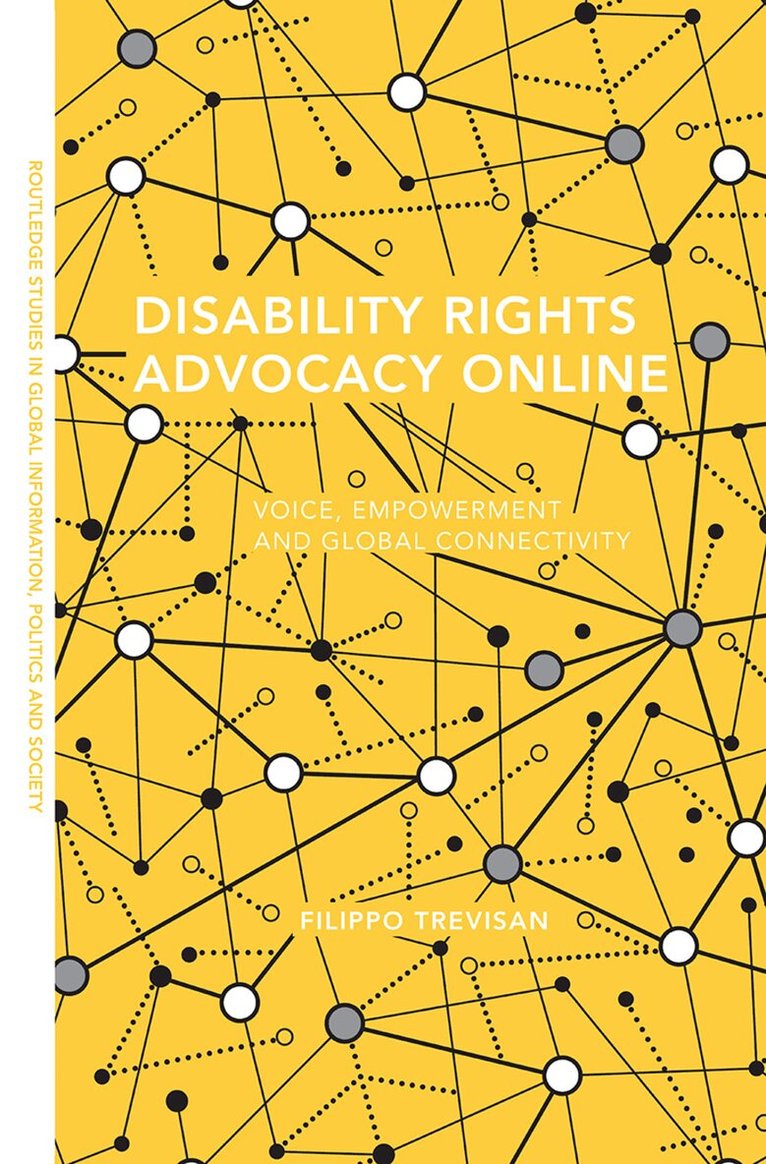
Disability rights advocates in the United Kingdom and the United States recently embraced new media technologies in unexpected and innovative ways. This book sheds light on this process of renewal and asks whether the digitalisation of disability rights advocacy can help re-configure political participation into a more inclusive experience for disabled Internet users, enhancing their stakes in democratic citizenship. Through the examination of social media content, Web link analysis, and interviews with leading figures in grassroots groups on both sides of the Atlantic, Filippo Trevisan reveals the profound impact that the Internet has had on disability advocacy in the wake of the austerity agenda that followed the 2008 global financial crisis. In Britain, a new, tech-savvy generation of young disabled self-advocates has emerged from this process. The role of social media platforms such as Facebook in helping politically inexperienced users make sense of complex policy changes through the use of personal stories is discussed also. In addition, this book explains why British disability advocates adopted more innovative and participatory strategies compared to their American counterparts when faced with similar policy crises. This book reviews the implications of this unexpected digital transformation for the structure of the disability rights movement, its leadership, and the opportunity for disabled citizens to participate fully in democratic politics vis-à-vis persisting Web access and accessibility barriers. An original perspective on the relationship between disability and the Internet, and an indispensable read for scholars wishing to contextualize and enrich their knowledge on digital disability rights campaigns vis-à-vis the broader ecology of policymaking.
360 kr
Skickas inom 7-10 vardagar
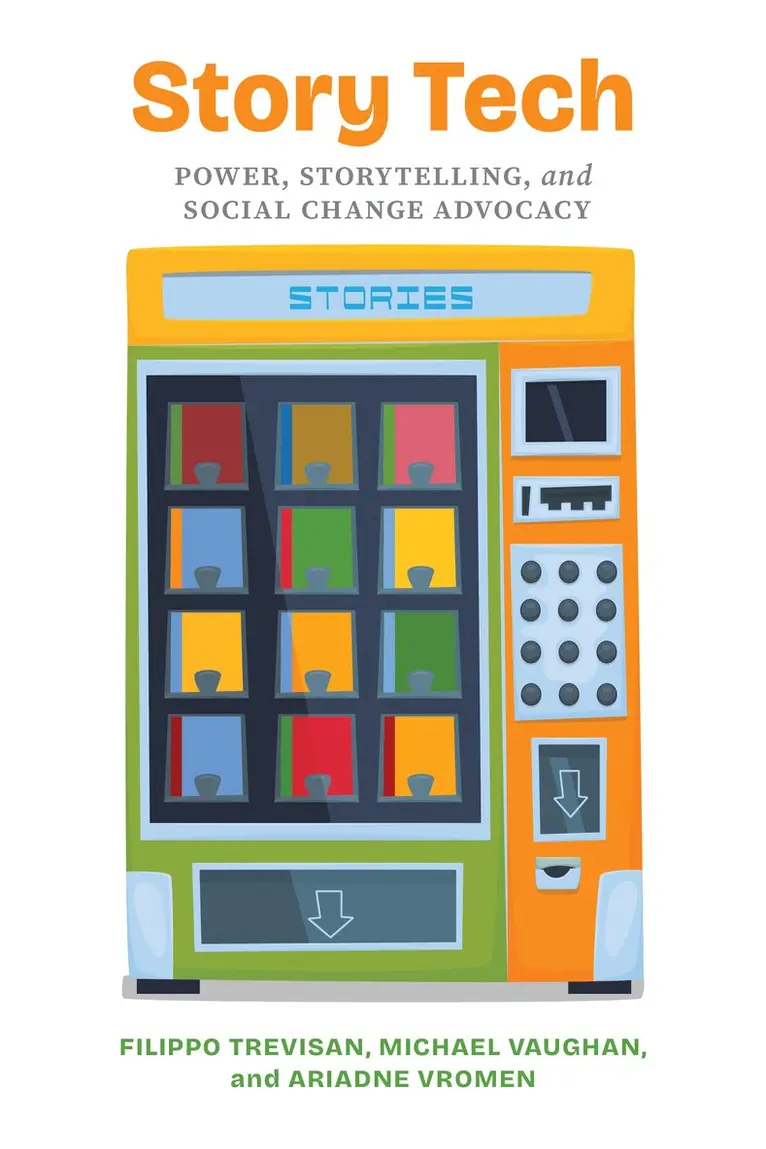
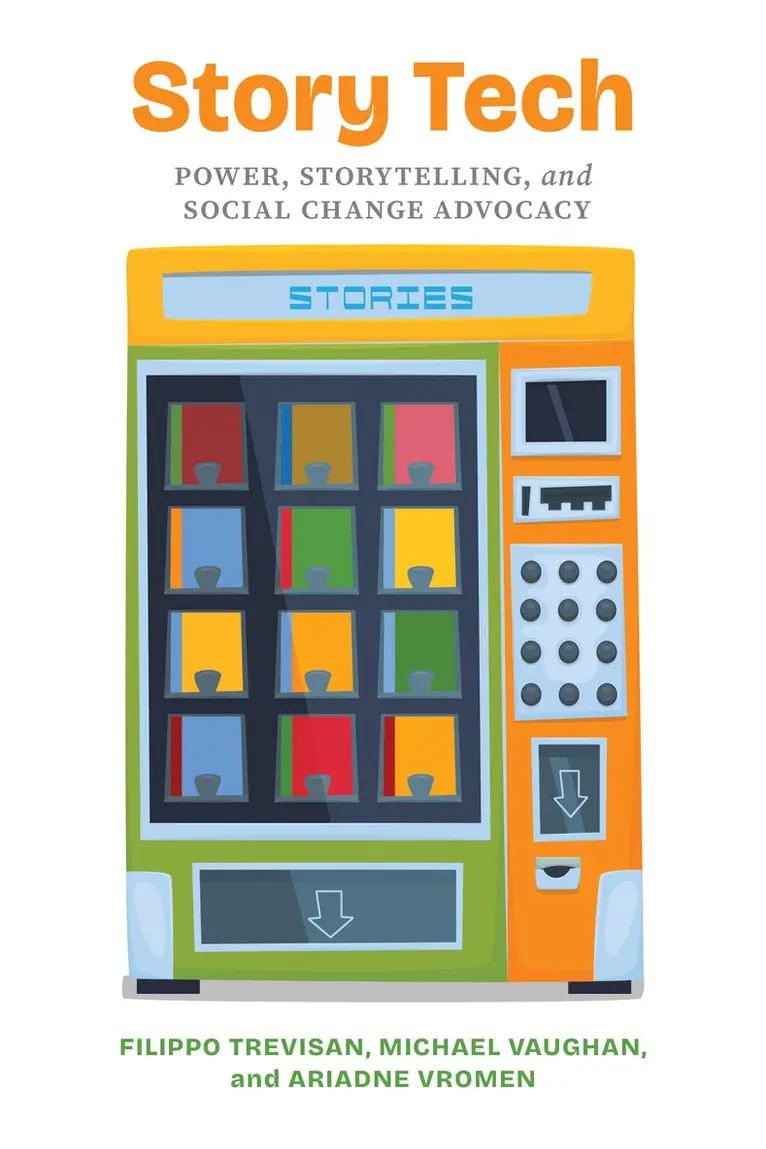
Personal stories have the power to stir the heart, compel us to act, and spark social change. While advocacy organizations have long used storytelling in campaigns, the role technology plays has increased. Today, invitations to “share your story” are widespread on advocacy organizations and political campaign websites, calls to action, and social media pages. But what happens after one clicks “share”? And how does this affect which voices we hear—and which we don’t—in public discourse?Story Tech explores the increasingly influential impact of technologies—such as databases, algorithms, and digital story banks—that are usually invisible to the public. It shows that hidden “story tech” enables political organizations to treat stories as data that can be queried for storylines and used to intervene in news and information cycles in real time. In particular, the authors review successful story-centered campaigns that helped change dominant narratives on disability rights, marriage equality, and essential workers’ rights in the United States and Australia. They compare the use of storytelling advocacy across different types of organizations including volunteer grassroots groups, large national advocacy coalitions, and trade unions, and examine how trends differ for storytellers, organizers, and their technology partners. As political stories shift to being “on demand,” they reshape power relationships in key public debates in ways that produce moments of tension as well as positive narrative change. Story Tech examines these trends and illustrates how storytelling success can—and should—be achieved in conjunction with personal dignity, privacy, and empowerment for storytellers and their communities, particularly marginalized ones.
994 kr
Skickas inom 7-10 vardagar
Personal stories have the power to stir the heart, compel us to act, and spark social change. While advocacy organizations have long used storytelling in campaigns, the role technology plays has increased. Today, invitations to “share your story” are widespread on advocacy organizations and political campaign websites, calls to action, and social media pages. But what happens after one clicks “share”? And how does this affect which voices we hear—and which we don’t—in public discourse?Story Tech explores the increasingly influential impact of technologies—such as databases, algorithms, and digital story banks—that are usually invisible to the public. It shows that hidden “story tech” enables political organizations to treat stories as data that can be queried for storylines and used to intervene in news and information cycles in real time. In particular, the authors review successful story-centered campaigns that helped change dominant narratives on disability rights, marriage equality, and essential workers’ rights in the United States and Australia. They compare the use of storytelling advocacy across different types of organizations including volunteer grassroots groups, large national advocacy coalitions, and trade unions, and examine how trends differ for storytellers, organizers, and their technology partners. As political stories shift to being “on demand,” they reshape power relationships in key public debates in ways that produce moments of tension as well as positive narrative change. Story Tech examines these trends and illustrates how storytelling success can—and should—be achieved in conjunction with personal dignity, privacy, and empowerment for storytellers and their communities, particularly marginalized ones.
3 109 kr
Skickas inom 10-15 vardagar
The Routledge Handbook of Political Campaigning provides an essential, global, and timely overview of current realities, as well as anticipating the trajectory and evolution of campaigning in the coming years.Offering a comprehensive analysis, the handbook is structured into seven thematic sections, including the campaign environment; rhetoric and persuasion; campaign strategies; campaign tactics and platform affordances; news and journalism; citizens and voters; and civil society. The chapters within each section reflect on the latest societal, technological, and cultural developments and their impact on campaigning, on democratic culture within societies, and on the roles that campaigns might play in both facilitating and impeding political engagement. Key trends and innovations are examined alongside case studies and examples from a range of nations and political contexts. Issues around trust and representation are further reflected in a focus on the wider campaigning environment and the rise in importance of grassroots and pressure groups, social movements, and movements that coalesce within digital environments.The Routledge Handbook of Political Campaigning is an essential resource for scholars, students, and practitioners in political communication, media and communication, elections and voting behavior, digital media, journalism, social movements, strategic communication, social media, and more broadly to democracy, sociology, and public policy.
2 155 kr
Skickas inom 10-15 vardagar
Disability rights advocates in the United Kingdom and the United States recently embraced new media technologies in unexpected and innovative ways. This book sheds light on this process of renewal and asks whether the digitalisation of disability rights advocacy can help re-configure political participation into a more inclusive experience for disabled Internet users, enhancing their stakes in democratic citizenship. Through the examination of social media content, Web link analysis, and interviews with leading figures in grassroots groups on both sides of the Atlantic, Filippo Trevisan reveals the profound impact that the Internet has had on disability advocacy in the wake of the austerity agenda that followed the 2008 global financial crisis. In Britain, a new, tech-savvy generation of young disabled self-advocates has emerged from this process. The role of social media platforms such as Facebook in helping politically inexperienced users make sense of complex policy changes through the use of personal stories is discussed also. In addition, this book explains why British disability advocates adopted more innovative and participatory strategies compared to their American counterparts when faced with similar policy crises. This book reviews the implications of this unexpected digital transformation for the structure of the disability rights movement, its leadership, and the opportunity for disabled citizens to participate fully in democratic politics vis-à-vis persisting Web access and accessibility barriers. An original perspective on the relationship between disability and the Internet, and an indispensable read for scholars wishing to contextualize and enrich their knowledge on digital disability rights campaigns vis-à-vis the broader ecology of policymaking.