Michal Galedek - Böcker
Visar alla böcker från författaren Michal Galedek. Handla med fri frakt och snabb leverans.
2 produkter
2 produkter
Del 36 - Legal History Library
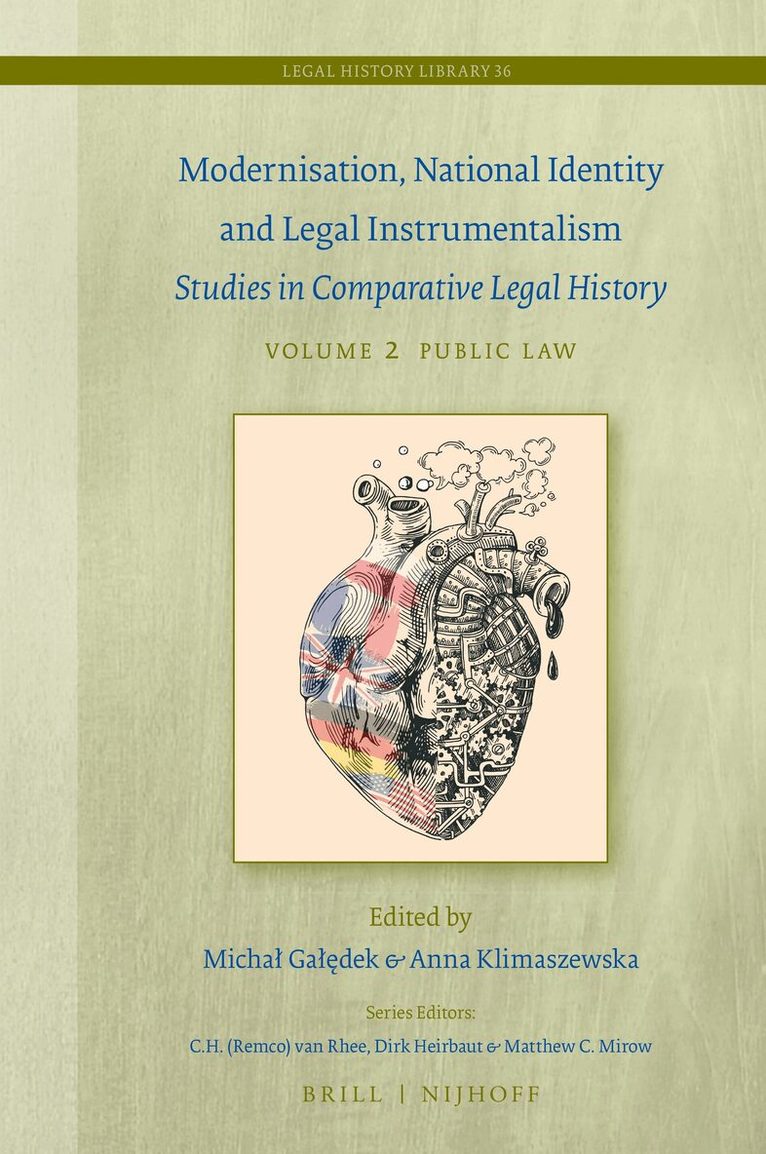
Modernisation, National Identity and Legal Instrumentalism (Vol. II: Public Law)
Studies in Comparative Legal History
Inbunden, Engelska, 2019
1 853 kr
Skickas inom 5-8 vardagar
The driving force of the dynamic development of world legal history in the past few centuries, with the dominance of the West, was clearly the demands of modernisation – transforming existing reality into what is seen as modern. The need for modernisation, determining the development of modern law, however, clashed with the need to preserve cultural identity rooted in national traditions. With selected examples of different legal institutions, countries and periods, the authors of the essays in the two volumes Modernisation, National Identity and Legal Instrumentalism: Studies in Comparative Legal History, vol. I: Private Law and Modernisation, National Identity and Legal Instrumentalism: Studies in Comparative Legal History, vol. II: Public Law seek to explain the nature of this problem.Contributors are Judit Beke-Martos, Jiří Brňovják, Marjorie Carvalho de Souza, Michał Gałędek, Imre Képessy, Ivan Kosnica, Simon Lavis, Maja Maciejewska-Szałas, Tadeusz Maciejewski, Thomas Mohr, Balázs Pálvölgyi, and Marek Starý.
Del 44 - Legal History Library
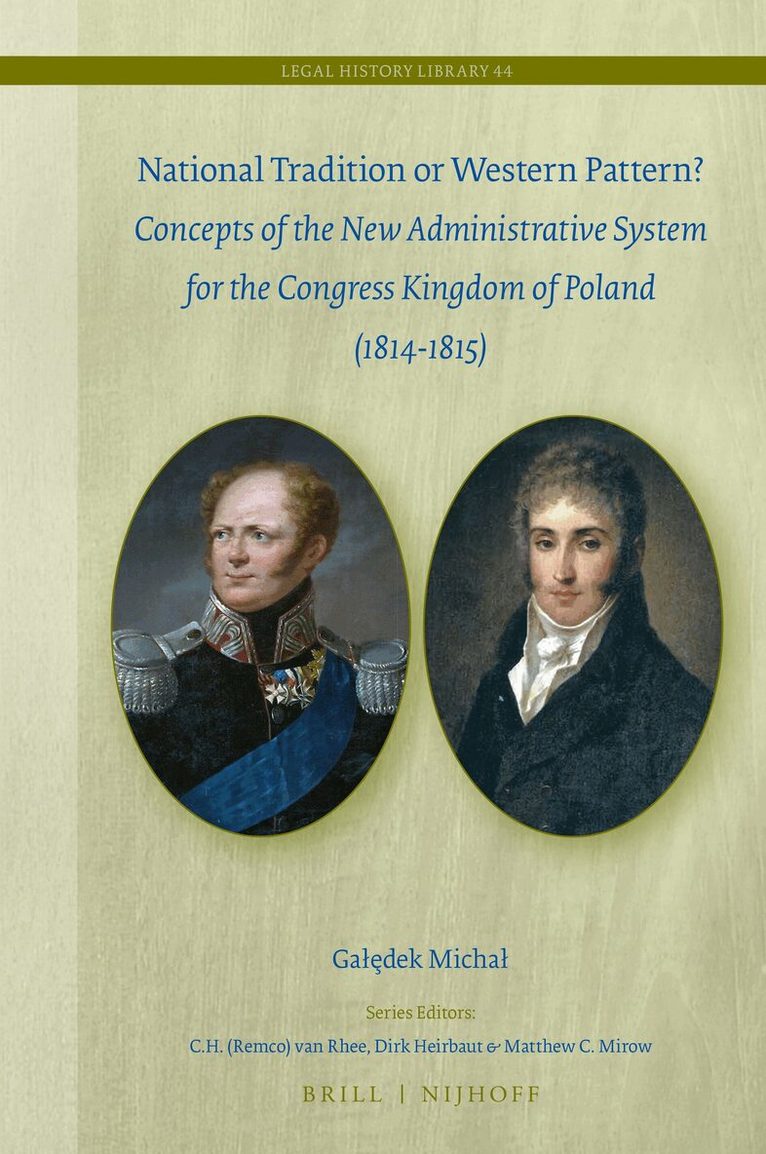
National Tradition or Western Pattern?
Concepts of New Administrative System for the Congress Kingdom of Poland (1814-1815)
Inbunden, Engelska, 2020
1 849 kr
Skickas inom 5-8 vardagar
In the history of the development of Polish law and administration, the short period of the constitutional Duchy of Warsaw, and next of the Kingdom of Poland, was a special time. This is because it was the only moment in the 19th century when the Polish elites gained an opportunity to concentrate their efforts on the organization of the modern state machinery. This book presents the process of restructuring the administrative structures following the collapse of the Napoleonic Duchy of Warsaw and before the establishment of the Kingdom of Poland in 1815. The author focuses on the approach of the Polish elites to the nascent modern state, increasing importance of administration within it and to the young Polish bureaucrats.