Michele Rivkin-Fish – författare
Visar alla böcker från författaren Michele Rivkin-Fish. Handla med fri frakt och snabb leverans.
3 produkter
3 produkter
296 kr
Skickas inom 10-15 vardagar
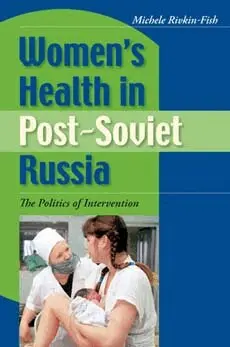
"An unparalleled study of a transforming and privatizing Russian health care system, of the promises and perils of prescriptive programs for change, that points to the areas that need change in the change-makers themselves. . . . part of a larger story about the inherent dangers of current neoliberal economic transformations of fragile post-socialist social welfare arrangements. . . . "Rivkin-Fish takes the reader into a new understanding of the fragile and tense relations between state and market transitions, and into the deep and largely silent struggle for gender and health equity in Russia." —Adriana Petryna, author of Life Exposed: Biological Citizens after ChernobylIn the first decade after the collapse of the Soviet Union, deteriorating public health indicators such as below-replacement fertility and high rates of sexually transmitted diseases, abortions, birth traumas, and maternal mortality raised acute anxieties about Russia's future. This study documents the efforts of global and local experts, and ordinary Russian women in St. Petersburg, to explain Russia's maternal health problems and devise reforms to solve them. Examining both official health projects and informal daily practices, Michele Rivkin-Fish draws ethnographic and theoretical insights about the contested processes of interpreting and managing neo-liberal transitions in Russia and explores the challenges of bringing anthropological insights to public health interventions for women's empowerment.
Unmaking Russia’s Abortion Culture
Family Planning and the Struggle for a Liberal Biopolitics
Häftad, Engelska, 2024
572 kr
Skickas inom 5-8 vardagar
As the predominant form of birth control in Soviet society, abortion reflected key paradoxes of state socialism: women held formal equality but lacked basic needs such as contraceptives. With market reforms, Russians enjoyed new access to Western contraceptives and new pressures to postpone childbearing until economically self-sufficient. But habits of family planning did not emerge automatically—they required extensive physician retraining, public education, and cultural transformation. In Unmaking Russia’s Abortion Culture,Rivkin-Fish examines the creative strategies of Russians who promoted family planning in place of routine abortion. Rather than emphasizing individual rights, they explained family planning’s benefits to the nation—its potential to strengthen families and prevent the secondary sterility that resulted when women underwent repeat, poor quality abortions. Still, fierce debates about abortion and contraceptives erupted as declining fertility was framed as threatening Russia’s demographic sovereignty.Although Russian family planners embraced a culturally meaningful liberalism that would rationalize public policy and re-enchant relations, nationalist opponents cast family planning as suspicious for its association with the individualistic, "child-free" West. This book tells the story of how Russian family planners developed culturally salient frameworks to promote the acceptability of contraceptives and help end routine abortion. It also documents how nationalist campaigns for higher fertility worked to de-fund family planning and ultimately dismantle its institutions. By tracing these processes, Unmaking Russia’s Abortion Culture demonstrates the central importance of reproductive politics in the struggle for liberalizing social change that preceded Russia’s 2022 descent into war, repression, and global marginalization.
Unmaking Russia’s Abortion Culture
Family Planning and the Struggle for a Liberal Biopolitics
Inbunden, Engelska, 2024
1 757 kr
Skickas inom 5-8 vardagar
As the predominant form of birth control in Soviet society, abortion reflected key paradoxes of state socialism: women held formal equality but lacked basic needs such as contraceptives. With market reforms, Russians enjoyed new access to Western contraceptives and new pressures to postpone childbearing until economically self-sufficient. But habits of family planning did not emerge automatically—they required extensive physician retraining, public education, and cultural transformation. In Unmaking Russia’s Abortion Culture,Rivkin-Fish examines the creative strategies of Russians who promoted family planning in place of routine abortion. Rather than emphasizing individual rights, they explained family planning’s benefits to the nation—its potential to strengthen families and prevent the secondary sterility that resulted when women underwent repeat, poor quality abortions. Still, fierce debates about abortion and contraceptives erupted as declining fertility was framed as threatening Russia’s demographic sovereignty.Although Russian family planners embraced a culturally meaningful liberalism that would rationalize public policy and re-enchant relations, nationalist opponents cast family planning as suspicious for its association with the individualistic, "child-free" West. This book tells the story of how Russian family planners developed culturally salient frameworks to promote the acceptability of contraceptives and help end routine abortion. It also documents how nationalist campaigns for higher fertility worked to de-fund family planning and ultimately dismantle its institutions. By tracing these processes, Unmaking Russia’s Abortion Culture demonstrates the central importance of reproductive politics in the struggle for liberalizing social change that preceded Russia’s 2022 descent into war, repression, and global marginalization.