Michelle D. Commander - Böcker
Visar alla böcker från författaren Michelle D. Commander. Handla med fri frakt och snabb leverans.
8 produkter
8 produkter
The People's House: The Power and Presence of African Americans in the White House
Häftad, Engelska, 2027
275 kr
Kommande
1 521 kr
Skickas inom 7-10 vardagar
In Afro-Atlantic Flight Michelle D. Commander traces how post-civil rights Black American artists, intellectuals, and travelers envision literal and figurative flight back to Africa as a means by which to heal the dispossession caused by the slave trade. Through ethnographic, historical, literary, and filmic analyses, Commander shows the ways that cultural producers such as Octavia Butler, Thomas Allen Harris, and Saidiya Hartman engage with speculative thought about slavery, the spiritual realm, and Africa, thereby structuring the imaginary that propels future return flights. She goes on to examine Black Americans’ cultural heritage tourism in and migration to Ghana; Bahia, Brazil; and various sites of slavery in the US South to interrogate the ways that a cadre of actors produces “Africa” and contests master narratives. Compellingly, these material flights do not always satisfy Black Americans’ individualistic desires for homecoming and liberation, leading Commander to focus on the revolutionary possibilities inherent in psychic speculative returns and to argue for the development of a Pan-Africanist stance that works to more effectively address the contemporary resonances of slavery that exist across the Afro-Atlantic.
372 kr
Skickas inom 7-10 vardagar
In Afro-Atlantic Flight Michelle D. Commander traces how post-civil rights Black American artists, intellectuals, and travelers envision literal and figurative flight back to Africa as a means by which to heal the dispossession caused by the slave trade. Through ethnographic, historical, literary, and filmic analyses, Commander shows the ways that cultural producers such as Octavia Butler, Thomas Allen Harris, and Saidiya Hartman engage with speculative thought about slavery, the spiritual realm, and Africa, thereby structuring the imaginary that propels future return flights. She goes on to examine Black Americans’ cultural heritage tourism in and migration to Ghana; Bahia, Brazil; and various sites of slavery in the US South to interrogate the ways that a cadre of actors produces “Africa” and contests master narratives. Compellingly, these material flights do not always satisfy Black Americans’ individualistic desires for homecoming and liberation, leading Commander to focus on the revolutionary possibilities inherent in psychic speculative returns and to argue for the development of a Pan-Africanist stance that works to more effectively address the contemporary resonances of slavery that exist across the Afro-Atlantic.
431 kr
Skickas inom 7-10 vardagar
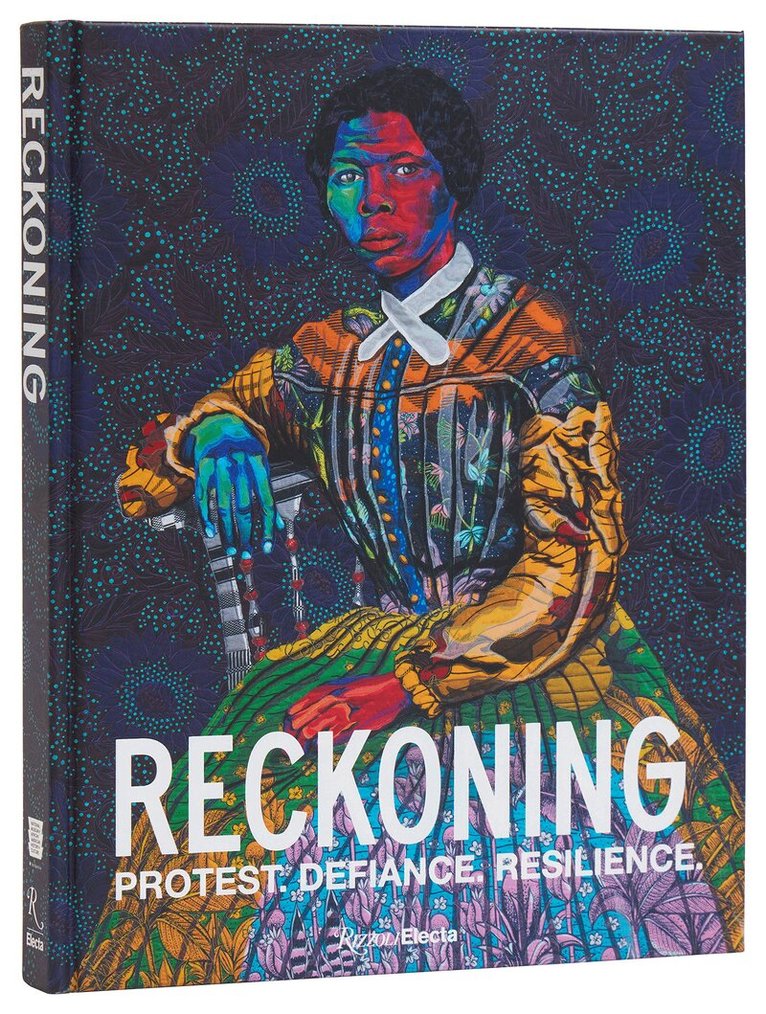
Reckoning: Protest. Defiance. Resilience showcases the potent role of visual art in African American history. Featuring Black artists working in a range of media, from photography to sculpture to painting--including Jean-Michel Basquiat, Sheila Pree Bright, Bisa Butler, Shaun Leonard, David Hammons, to name just a few the book considers art that exemplifies resilience in times of conflict, as well as the ritual of creation, and the defiant pleasure of healing. Reckoning explores the ongoing struggles Black Americans have faced in their pursuit to enjoy the fundamental rights and freedoms promised in the Constitution to citizens of the United States. Drawn from the museum s permanent collection, the featured works respond to the dual crises of Covid-19 and systemic racism that shaped 2020, a period that has been called one of reckoning, as the world witnessed the killing of George Floyd, Breonna Taylor, and other African Americans, leading to some of the largest protests in US history. Exploring the journey from defiance to acceptance, from racial violence to cultural resilience, grief to hope, this book emphasizes the interconnectedness of art, American history, and African American history and speaks to the critical moment of collective reckoning we are experiencing as a nation.
607 kr
Kommande
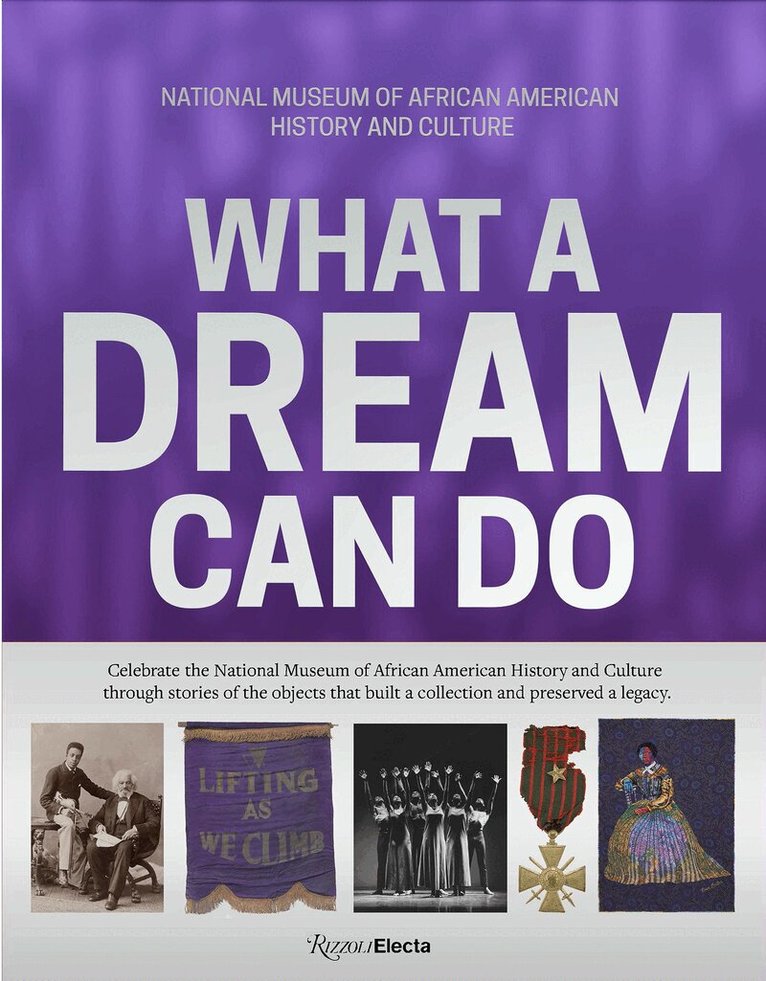
At the National Museum of African American History and Culture s dedication ceremony in 2016, civil rights activist and venerated congressman John Lewis proclaimed, 'Oh, say! What a dream can do!' This volume, published to celebrate the Museum s tenth anniversary, captures that vision through stories told by those collecting and caring for the objects. From the historically profound, such as the miraculous recovery and resurrection of a WWII era plane used to train Tuskegee Airmen; to the searingly poignant personal keepsakes belonging to the famed abolitionist Harriet Tubman, whose family carefully preserved them for generations. The breadth of the collection is extraordinary, spanning visual art, photography, film, and historical artifacts from the seventeenth century to the present. Each object carries its own story and distinctive journey, reflecting the collaboration, care, and commitment required to bring this national museum to life. Other incredible highlights include the Johnson Publishing Company s famed Ebony Test Kitchen, Chuck Berry s red Cadillac, and Radio Raheem s iconic boombox from Spike Lee s 1989 film Do the Right Thing. These powerful stories of community, connection, resilience, and remembrance reflect the nation s story and demonstrate, in enduring and profound ways, what a dream can do.
456 kr
Skickas inom 7-10 vardagar
This beautifully packaged volume, with two paper stocks and colorful edge stain, considers the trajectory of abstraction and interrogates what it means to be a Black abstract artist in the United States. The book features a wide range of artistic output, from historical artists such as Sam Gilliam, Alma Thomas, Ed Clark, Jennie C. Jones, and Jack Whitten to contemporary voices including Rashid Johnson, Julie Mehretu, Simone Leigh, and Theaster Gates. Music serves as a source of inspiration for visual improvisation, and the book considers the use of music and sound, particularly jazz and blues, as part of the creative process. The book looks at the connection between traditional artisans such as quilters, potters, and West African mask makers to Black ancestral legacies. And finally, the volume examines the history of gender and gender discrimination against women artists.
361 kr
Skickas
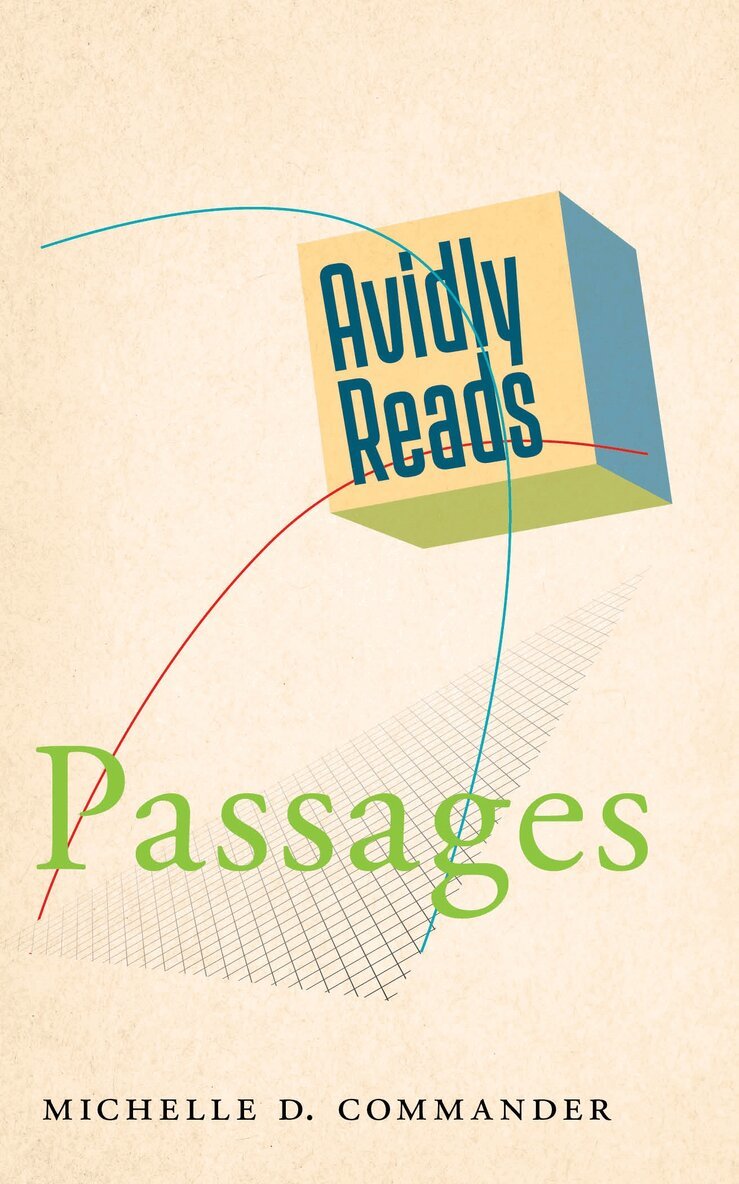
"What is the value of Black life in America?"In Avidly Reads Passages, Michelle D. Commander plies four freighted modes of travel—the slave ship, train, automobile, and bus—to map the mobility of her ancestors over the past five centuries. In the process, she refreshes the conventional American travel narrative by telling an urgent story about how history shapes what moves us, as well as what prevents so many Black Americans from moving or being moved. Anchored in her maternal kin's long history on and alongside plantations in rural South Carolina, Commander explores her family members' ability and inability to navigate safely through space, time, and emotion, detailing how Black lives were shaped by the actual vehicles that promised an escape from the confines of American racism, yet nearly always failed to deliver on those promises. Using personal and public archives, Avidly Reads Passages unfolds distinct histories of transatlantic slavery ships, the possibilities presented by rail lines in the Reconstruction South, the fateful legacies of school busing, and the ways that Black Americans attempted to negotiate their automobility, including through the use of road and travel compendiums such as Travelguide and The Negro Motorist Green Book. In order to understand the intricacies of slavery and its aftermath, Commander began her exploration with the hope of engaging with the difficult evidences and stubborn gaps in her family's genealogy; what she produced is a biting and elegiac reflection on working-class life in the Black South. Commander demonstrates that the forms of intimidation, brutality, surveillance, and restriction used to control Black mobility have merely evolved since slavery, marking Black life writ large in America, with neither the passage of time nor the passage of laws assuring true and adequate racial progress. Despite this bleak observation, Commander catalogs and celebrates, through affecting stories about her beloved South Carolina community, the compelling strivings of Southern Black people to survive by holding on firmly to family, and their faith that new worlds could be imagined, created, and traveled to someday.Part of the Avidly Reads series, this slim book gives us a new way of looking at American culture. With the singular blend of personal reflection and cultural criticism featured in the series, Avidly Reads Passages offers a unique lens through which to capture the intricacies of Black life.
183 kr
Skickas inom 7-10 vardagar
"What is the value of Black life in America?"In Avidly Reads Passages, Michelle D. Commander plies four freighted modes of travel—the slave ship, train, automobile, and bus—to map the mobility of her ancestors over the past five centuries. In the process, she refreshes the conventional American travel narrative by telling an urgent story about how history shapes what moves us, as well as what prevents so many Black Americans from moving or being moved. Anchored in her maternal kin's long history on and alongside plantations in rural South Carolina, Commander explores her family members' ability and inability to navigate safely through space, time, and emotion, detailing how Black lives were shaped by the actual vehicles that promised an escape from the confines of American racism, yet nearly always failed to deliver on those promises. Using personal and public archives, Avidly Reads Passages unfolds distinct histories of transatlantic slavery ships, the possibilities presented by rail lines in the Reconstruction South, the fateful legacies of school busing, and the ways that Black Americans attempted to negotiate their automobility, including through the use of road and travel compendiums such as Travelguide and The Negro Motorist Green Book. In order to understand the intricacies of slavery and its aftermath, Commander began her exploration with the hope of engaging with the difficult evidences and stubborn gaps in her family's genealogy; what she produced is a biting and elegiac reflection on working-class life in the Black South. Commander demonstrates that the forms of intimidation, brutality, surveillance, and restriction used to control Black mobility have merely evolved since slavery, marking Black life writ large in America, with neither the passage of time nor the passage of laws assuring true and adequate racial progress. Despite this bleak observation, Commander catalogs and celebrates, through affecting stories about her beloved South Carolina community, the compelling strivings of Southern Black people to survive by holding on firmly to family, and their faith that new worlds could be imagined, created, and traveled to someday.Part of the Avidly Reads series, this slim book gives us a new way of looking at American culture. With the singular blend of personal reflection and cultural criticism featured in the series, Avidly Reads Passages offers a unique lens through which to capture the intricacies of Black life.