Michelle Lynn Kahn – Författare
Visar alla böcker från författaren Michelle Lynn Kahn. Handla med fri frakt och snabb leverans.
4 produkter
4 produkter
414 kr
Skickas inom 7-10 vardagar
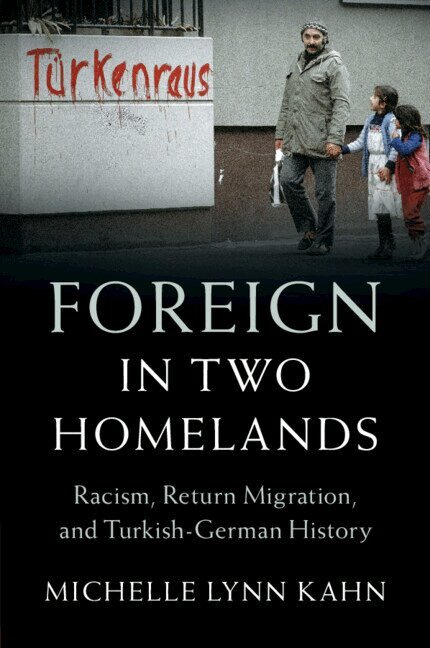
What happens when migrants are rejected by the host society that first invited them? How do they return to a homeland that considers them outsiders? Foreign in Two Homelands explores the transnational history of Turkish migrants, Germany's largest ethnic minority, who arrived as 'guest-workers' (Gastarbeiter) between 1961 and 1973. By the 1980s, amid rising racism, neo-Nazis and ordinary Germans blamed Turks for unemployment, criticized their Muslim faith, and argued they could never integrate. In 1983, policymakers enacted a controversial law: paying Turks to leave. Thus commenced one of modern Europe's largest and fastest waves of remigration: within one year, 15% of the migrants-250,000 men, women, and children-returned to Turkey. Their homeland, however, ostracized them as culturally estranged 'Germanized Turks' (Almancı). Through archival research and oral history interviews in both countries and languages, Michelle Lynn Kahn highlights migrants' personal stories and reveals how many felt foreign in two homelands. This title is also available as Open Access on Cambridge Core.
Foreign in Two Homelands
Racism, Return Migration, and Turkish-German History
Inbunden, Engelska, 2024
1 363 kr
Skickas inom 7-10 vardagar
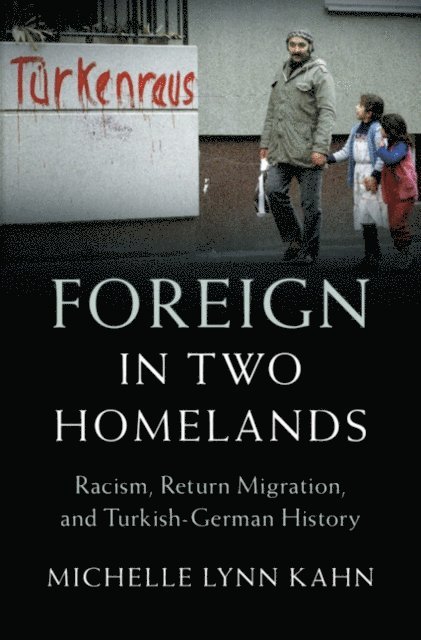
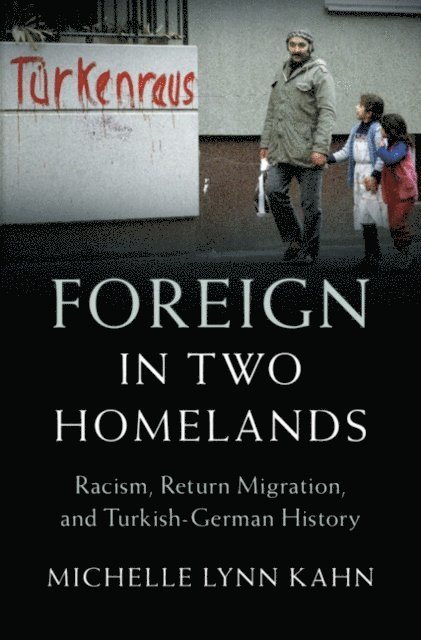
What happens when migrants are rejected by the host society that first invited them? How do they return to a homeland that considers them outsiders? Foreign in Two Homelands explores the transnational history of Turkish migrants, Germany's largest ethnic minority, who arrived as 'guest-workers' (Gastarbeiter) between 1961 and 1973. By the 1980s, amid rising racism, neo-Nazis and ordinary Germans blamed Turks for unemployment, criticized their Muslim faith, and argued they could never integrate. In 1983, policymakers enacted a controversial law: paying Turks to leave. Thus commenced one of modern Europe's largest and fastest waves of remigration: within one year, 15% of the migrants—250,000 men, women, and children—returned to Turkey. Their homeland, however, ostracized them as culturally estranged 'Germanized Turks' (Almancı). Through archival research and oral history interviews in both countries and languages, Michelle Lynn Kahn highlights migrants' personal stories and reveals how many felt foreign in two homelands. This title is also available as Open Access on Cambridge Core.
1 626 kr
Kommande
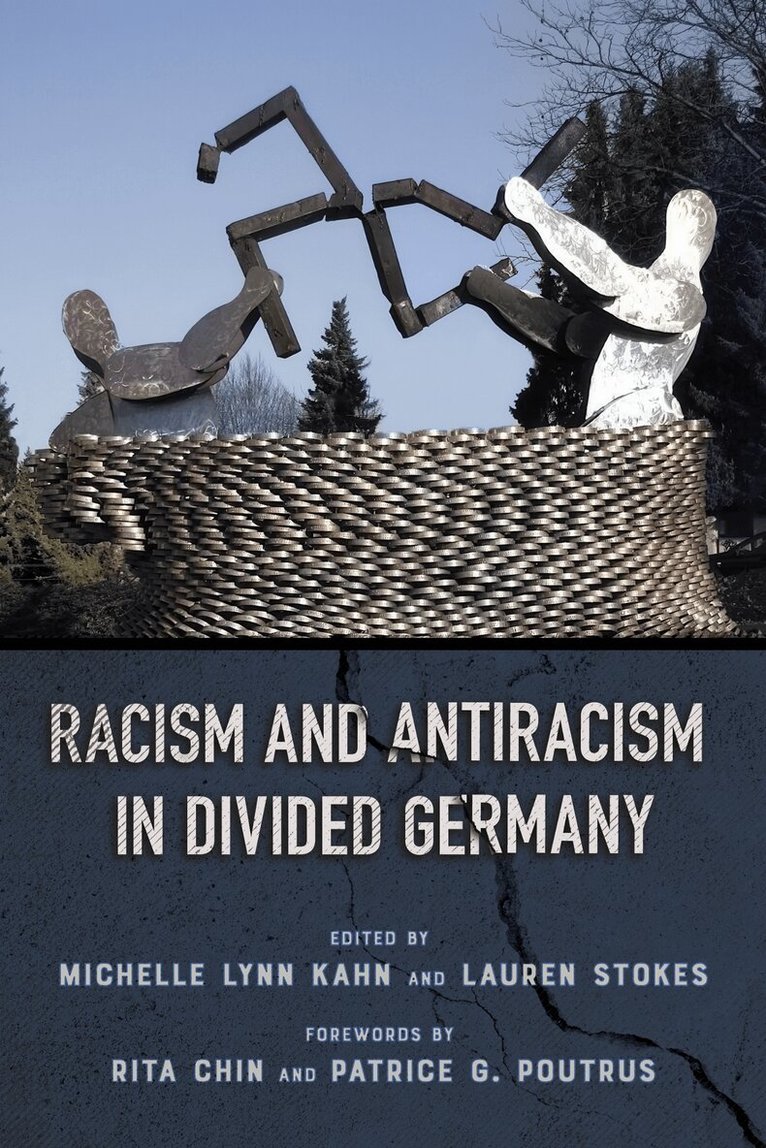
Racism and Antiracism in Divided Germany addresses how racism expresses itself and what it means to be antiracist by tracing the history of racism and antiracist activism in East, West, and unified Germany. As far-right extremism surges in Germany today, Germans from across the political spectrum are increasingly grappling with the presence of racism in a country that is still coming to terms with its Nazi past. However, these public discussions are not always historically informed, and racism in Germany is often dismissed as a fringe phenomenon rather than part of mainstream society.The contributions in this volume juxtapose the experiences of multiple racialized groups to collectively show how racism, rightwing extremism, and antiforeigner violence have long been embedded in the center of both East and West German society. Germany's unification in the 1990s produced a deadly collision of two distinct yet overlapping cultures of racism that persists today. The volume also highlights Germany's long overlooked history of antiracist activism, providing historical lessons on how to combat racism today.Contributors: Rita Chin, Christopher Ewing, Sheer Ganor, Daniela Gress, Christopher A. Molnar, Paige Newhouse, Jannis Panagiotidis, Hans-Christian Petersen, Patrice G. Poutrus, Thomas Prennig, Bill Sharman, Brian Van Wyck, Johanna M. Wetzel
370 kr
Kommande
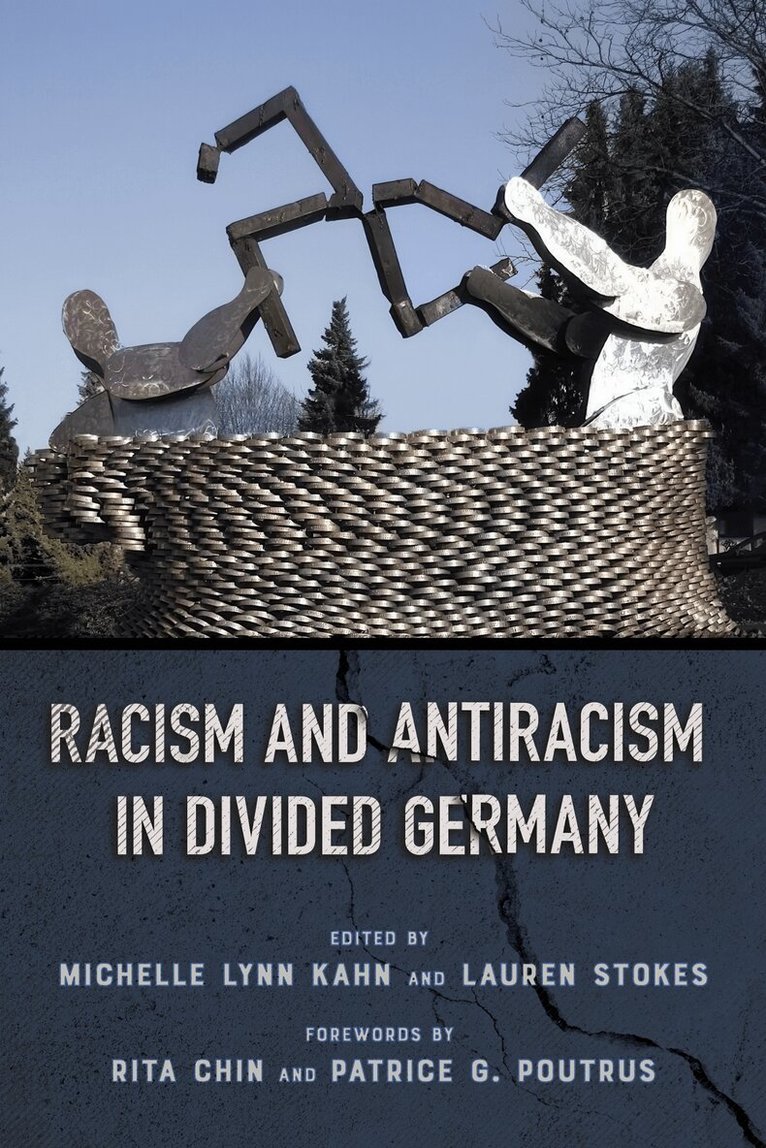
Racism and Antiracism in Divided Germany addresses how racism expresses itself and what it means to be antiracist by tracing the history of racism and antiracist activism in East, West, and unified Germany. As far-right extremism surges in Germany today, Germans from across the political spectrum are increasingly grappling with the presence of racism in a country that is still coming to terms with its Nazi past. However, these public discussions are not always historically informed, and racism in Germany is often dismissed as a fringe phenomenon rather than part of mainstream society.The contributions in this volume juxtapose the experiences of multiple racialized groups to collectively show how racism, rightwing extremism, and antiforeigner violence have long been embedded in the center of both East and West German society. Germany's unification in the 1990s produced a deadly collision of two distinct yet overlapping cultures of racism that persists today. The volume also highlights Germany's long overlooked history of antiracist activism, providing historical lessons on how to combat racism today.Contributors: Rita Chin, Christopher Ewing, Sheer Ganor, Daniela Gress, Christopher A. Molnar, Paige Newhouse, Jannis Panagiotidis, Hans-Christian Petersen, Patrice G. Poutrus, Thomas Prennig, Bill Sharman, Brian Van Wyck, Johanna M. Wetzel