Michelle M. Dowd - Böcker
Visar alla böcker från författaren Michelle M. Dowd. Handla med fri frakt och snabb leverans.
14 produkter
14 produkter
760 kr
Kommande
What did work mean to Shakespeare? And what does it mean to work in Shakespeare's plays? Work was a quintessential part of early modern society, as it is today. But the meanings attached to different forms of work were changing in important ways during the sixteenth and seventeenth centuries in England. Developments such as the enclosure movement, the growth of venture capitalism, and the diversification of the wage-labour market transformed England's labour economy and helped reshape the everyday lives of men and women in both rural and urban communities. These socio-economic shifts had a direct effect on the professional theatres of Shakespeare's day. The world of work, including the people at all social levels who performed it, was vital to Shakespeare's drama, both because the theatre was a highly successful business enterprise in its own right and because work significantly influences the plots, language, and structures of Shakespeare's plays throughout his career. Shakespeare and Work introduces readers to the rich working world of Shakespeare's plays. Opening chapters provide an overview of working conditions in Shakespeare's England and in the theatre and discuss Shakespeare's own practices as a working playwright. Subsequent chapters examine a range of plays from multiple genres, including Twelfth Night, Othello, The Tempest, Titus Andronicus, Love's Labour's Lost, Macbeth, The Winter's Tale, 2 Henry VI, and A Midsummer Night's Dream, and consider several types of work that are either staged directly (such as service) or, more frequently, alluded to (such as agricultural work). Offering an accessible and wide-ranging account of how Shakespeare engaged with the working world around him, Shakespeare and Work demonstrates that we can come to a richer understanding of Shakespeare's dramatic output and cultural legacy if we attend to how the everyday world of work shapes both the action and the language of his plays.
264 kr
Kommande
What did work mean to Shakespeare? And what does it mean to work in Shakespeare's plays? Work was a quintessential part of early modern society, as it is today. But the meanings attached to different forms of work were changing in important ways during the sixteenth and seventeenth centuries in England. Developments such as the enclosure movement, the growth of venture capitalism, and the diversification of the wage-labour market transformed England's labour economy and helped reshape the everyday lives of men and women in both rural and urban communities. These socio-economic shifts had a direct effect on the professional theatres of Shakespeare's day. The world of work, including the people at all social levels who performed it, was vital to Shakespeare's drama, both because the theatre was a highly successful business enterprise in its own right and because work significantly influences the plots, language, and structures of Shakespeare's plays throughout his career. Shakespeare and Work introduces readers to the rich working world of Shakespeare's plays. Opening chapters provide an overview of working conditions in Shakespeare's England and in the theatre and discuss Shakespeare's own practices as a working playwright. Subsequent chapters examine a range of plays from multiple genres, including Twelfth Night, Othello, The Tempest, Titus Andronicus, Love's Labour's Lost, Macbeth, The Winter's Tale, 2 Henry VI, and A Midsummer Night's Dream, and consider several types of work that are either staged directly (such as service) or, more frequently, alluded to (such as agricultural work). Offering an accessible and wide-ranging account of how Shakespeare engaged with the working world around him, Shakespeare and Work demonstrates that we can come to a richer understanding of Shakespeare's dramatic output and cultural legacy if we attend to how the everyday world of work shapes both the action and the language of his plays.
1 208 kr
Skickas inom 5-8 vardagar
Early Modern Women's Writing and the Future of Literary History demonstrates that a full accounting of early modern women's literary and creative activities is necessary to the future of literary studies writ large. Despite benefiting from a rich body of scholarship and diverse critical practices, early modern women's writing is still treated as an optional or secondary component of Renaissance literary studies as a whole. In this book, Dodds and Dowd offer a state-of-the-field assessment of the critical and theoretical debates that have resulted in this state of affairs in order to advance specific visions for the future. Dodds and Dowd examine how perennial questions about authorship, canon, and literary value have historically influenced scholarship on early modern women's writing and its place within literary studies. Early modern women's writing has been perceived as belated, out of sync with dominant critical trends. Dodds and Dowd show the belatedness of early modern women's writing to be a "happy accident" that positions women's writing as a resource for the renewal of literary history. In both the classroom and in scholarship, early modern women's writing shows the way forward for the field, whether in the revitalization of formalist approaches to literature through an alliance with feminism or in the integration of newer critical methodologies such as premodern critical race studies. This book demonstrates that a feminist literary history that places women's writing at its center is essential to the future of English Renaissance literary studies. There is, in other words, no history of English Renaissance literature without women writers.
2 478 kr
Skickas inom 10-15 vardagar
By taking account of the ways in which early modern women made use of formal and generic structures to constitute themselves in writing, the essays collected here interrogate the discursive contours of gendered identity in sixteenth- and seventeenth-century England. The contributors explore how generic choice, mixture, and revision influence narrative constructions of the female self in early modern England. Collectively they situate women's life writings within the broader textual culture of early modern England while maintaining a focus on the particular rhetorical devices and narrative structures that comprise individual texts. Reconsidering women's life writing in light of recent critical trends-most notably historical formalism-this volume produces both new readings of early modern texts (such as Margaret Cavendish's autobiography and the diary of Anne Clifford) and a new understanding of the complex relationships between literary forms and early modern women's 'selves'. This volume engages with new critical methods to make innovative connections between canonical and non-canonical writing; in so doing, it helps to shape the future of scholarship on early modern women.
551 kr
Skickas inom 7-10 vardagar
1 431 kr
Skickas inom 7-10 vardagar
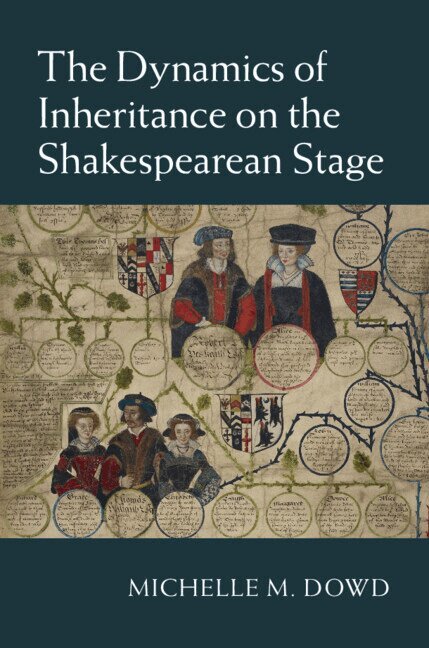
Early modern England's system of patrilineal inheritance, in which the eldest son inherited his father's estate and title, was one of the most significant forces affecting social order in the period. Demonstrating that early modern theatre played a unique and vital role in shaping how inheritance was understood, Michelle M. Dowd explores some of the common contingencies that troubled this system: marriage and remarriage, misbehaving male heirs, and families with only daughters. Shakespearean drama helped question and reimagine inheritance practices, making room for new formulations of gendered authority, family structure, and wealth transfer. Through close readings of canonical and non-canonical plays by Shakespeare, Webster, Jonson, and others, Dowd pays particular attention to the significance of space in early modern inheritance and the historical relationship between dramatic form and the patrilineal economy. Her book will interest researchers and students of early modern drama, Shakespeare, gender studies, and socio-economic history.
493 kr
Skickas inom 7-10 vardagar
Early modern England's system of patrilineal inheritance, in which the eldest son inherited his father's estate and title, was one of the most significant forces affecting social order in the period. Demonstrating that early modern theatre played a unique and vital role in shaping how inheritance was understood, Michelle M. Dowd explores some of the common contingencies that troubled this system: marriage and remarriage, misbehaving male heirs, and families with only daughters. Shakespearean drama helped question and reimagine inheritance practices, making room for new formulations of gendered authority, family structure, and wealth transfer. Through close readings of canonical and non-canonical plays by Shakespeare, Webster, Jonson, and others, Dowd pays particular attention to the significance of space in early modern inheritance and the historical relationship between dramatic form and the patrilineal economy. Her book will interest researchers and students of early modern drama, Shakespeare, gender studies, and socio-economic history.
943 kr
Skickas inom 10-15 vardagar
Working Subjects in Early Modern English Drama investigates the ways in which work became a subject of inquiry on the early modern stage and the processes by which the drama began to forge new connections between labor and subjectivity in the period. The essays assembled here address fascinating and hitherto unexplored questions raised by the subject of labor as it was taken up in the drama of the period: How were laboring bodies and the goods they produced, marketed and consumed represented onstage through speech, action, gesture, costumes and properties? How did plays participate in shaping the identities that situated laboring subjects within the social hierarchy? In what ways did the drama engage with contemporary discourses (social, political, economic, religious, etc.) that defined the cultural meanings of work? How did players and playwrights define their own status with respect to the shifting boundaries between high status/low status, legitimate/illegitimate, profitable/unprofitable, skilled/unskilled, formal/informal, male/female, free/bound, paid/unpaid forms of work? Merchants, usurers, clothworkers, cooks, confectioners, shopkeepers, shoemakers, sheepshearers, shipbuilders, sailors, perfumers, players, magicians, servants and slaves are among the many workers examined in this collection. Offering compelling new readings of both canonical and lesser-known plays in a broad range of genres (including history plays, comedies, tragedies, tragi-comedies, travel plays and civic pageants), this collection considers how early modern drama actively participated in a burgeoning, proto-capitalist economy by staging England's newly diverse workforce and exploring the subject of work itself.
881 kr
Skickas inom 10-15 vardagar
By taking account of the ways in which early modern women made use of formal and generic structures to constitute themselves in writing, the essays collected here interrogate the discursive contours of gendered identity in sixteenth- and seventeenth-century England. The contributors explore how generic choice, mixture, and revision influence narrative constructions of the female self in early modern England. Collectively they situate women's life writings within the broader textual culture of early modern England while maintaining a focus on the particular rhetorical devices and narrative structures that comprise individual texts. Reconsidering women's life writing in light of recent critical trends-most notably historical formalism-this volume produces both new readings of early modern texts (such as Margaret Cavendish's autobiography and the diary of Anne Clifford) and a new understanding of the complex relationships between literary forms and early modern women's 'selves'. This volume engages with new critical methods to make innovative connections between canonical and non-canonical writing; in so doing, it helps to shape the future of scholarship on early modern women.
373 kr
Skickas inom 10-15 vardagar
Dowd investigates literature's engagement with the gendered conflicts of early modern England by examining the narratives that seventeenth-century dramatists created to describe the lives of working women.
Arden Handbook of Shakespeare and Early Modern Drama
Perspectives on Culture, Performance and Identity
Inbunden, Engelska, 2023
2 108 kr
Skickas inom 10-15 vardagar
How does our understanding of early modern performance, culture and identity change when we decentre Shakespeare? And how might a more inclusive approach to early modern drama help enable students to discuss a range of issues, including race and gender, in more productive ways?Underpinned by these questions, this collection offers a wide-ranging, authoritative guide to research on drama in Shakespeare’s England, mapping the variety of approaches to the context and work of Shakespeare and his contemporaries. By paying attention to repertory, performance in and beyond playhouses, modes of performance, and lost and less-studied plays, the handbook reshapes our critical narratives about early modern drama. Chapters explore early modern drama through a range of cultural contexts and approaches, from material culture and emotion studies to early modern race work and new directions in disability and trans studies, as well as contemporary performance. Running through the collection is a shared focus on contemporary concerns, with contributors exploring how race, religion, environment, gender and sexuality animate 16th- and 17th-century drama and, crucially, the questions we bring to our study, teaching and research of it. The volume includes a ground-breaking assessment of the chronology of early modern drama, a survey of resources and an annotated bibliography to assist researchers as they pursue their own avenues of inquiry. Combining original research with an account of the current state of play, The Arden Handbook of Shakespeare and Early Modern Drama will be an invaluable resource both for experienced scholars and for those beginning work in the field.
Arden Handbook of Shakespeare and Early Modern Drama
Perspectives on Culture, Performance and Identity
Häftad, Engelska, 2024
643 kr
Skickas inom 7-10 vardagar
How does our understanding of early modern performance, culture and identity change when we decentre Shakespeare? And how might a more inclusive approach to early modern drama help enable students to discuss a range of issues, including race and gender, in more productive ways?Underpinned by these questions, this collection offers a wide-ranging, authoritative guide to research on drama in Shakespeare’s England, mapping the variety of approaches to the context and work of Shakespeare and his contemporaries. By paying attention to repertory, performance in and beyond playhouses, modes of performance, and lost and less-studied plays, the handbook reshapes our critical narratives about early modern drama. Chapters explore early modern drama through a range of cultural contexts and approaches, from material culture and emotion studies to early modern race work and new directions in disability and trans studies, as well as contemporary performance. Running through the collection is a shared focus on contemporary concerns, with contributors exploring how race, religion, environment, gender and sexuality animate 16th- and 17th-century drama and, crucially, the questions we bring to our study, teaching and research of it. The volume includes a ground-breaking assessment of the chronology of early modern drama, a survey of resources and an annotated bibliography to assist researchers as they pursue their own avenues of inquiry.Combining original research with an account of the current state of play, The Arden Handbook of Shakespeare and Early Modern Drama is an invaluable resource both for experienced scholars and for those beginning work in the field.
2 632 kr
Skickas inom 10-15 vardagar
Working Subjects in Early Modern English Drama investigates the ways in which work became a subject of inquiry on the early modern stage and the processes by which the drama began to forge new connections between labor and subjectivity in the period. The essays assembled here address fascinating and hitherto unexplored questions raised by the subject of labor as it was taken up in the drama of the period: How were laboring bodies and the goods they produced, marketed and consumed represented onstage through speech, action, gesture, costumes and properties? How did plays participate in shaping the identities that situated laboring subjects within the social hierarchy? In what ways did the drama engage with contemporary discourses (social, political, economic, religious, etc.) that defined the cultural meanings of work? How did players and playwrights define their own status with respect to the shifting boundaries between high status/low status, legitimate/illegitimate, profitable/unprofitable, skilled/unskilled, formal/informal, male/female, free/bound, paid/unpaid forms of work? Merchants, usurers, clothworkers, cooks, confectioners, shopkeepers, shoemakers, sheepshearers, shipbuilders, sailors, perfumers, players, magicians, servants and slaves are among the many workers examined in this collection. Offering compelling new readings of both canonical and lesser-known plays in a broad range of genres (including history plays, comedies, tragedies, tragi-comedies, travel plays and civic pageants), this collection considers how early modern drama actively participated in a burgeoning, proto-capitalist economy by staging England's newly diverse workforce and exploring the subject of work itself.
Feminist Formalism and Early Modern Women's Writing
Readings, Conversations, Pedagogies
Inbunden, Engelska, 2022
744 kr
Skickas inom 10-15 vardagar
Feminist Formalism and Early Modern Women’s Writing reexamines the relationship between gender and form in early modern women’s writing in essays that elaborate the specific literary strategies of women writers, that examine women’s debts to and appropriations of different literary genres, and that offer practical suggestions for the teaching of women’s texts in several different contexts. Contributors explore the possibility of feminist formalism, a methodology that both attends to the structural, rhetorical, and other formal techniques of a given text and takes gender as a central category of analysis. This collection contends that feminist formalism is a useful tool for scholars of the early modern period and for literary studies more broadly because it marries the traditional questions of formalism-including questions of style, genre, and literary history-with the political and cultural concerns of feminist inquiry.Contributors reposition works by important women writers-such as Margaret Cavendish, Hester Pulter, Mary Wroth, and Katherine Philips-as central to the development of English literary tradition. By examining a variety of texts written by women, including recipes, emblems, exchanges, and poetry, Feminist Formalism and Early Modern Women’s Writing contributes to existing scholarship on early modern women’s writing while extending it in new and important directions.