Mikael Adolphson – författare
Visar alla böcker från författaren Mikael Adolphson. Handla med fri frakt och snabb leverans.
2 produkter
2 produkter
331 kr
Skickas inom 10-15 vardagar
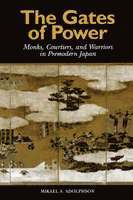
The political influences of temples in pre-modern Japan, most clearly manifested in divine demonstrations - where rowdy monks and shrine servants brought holy symbols to the capital to exert pressure on courtiers - has traditionally been condemned and is poorly understood. In his examination of this intriguing aspect of mediaeval Japan, the author employs a wide range of sources to argue that religious protest was a symptom of political factionalism and capital rather than its cause. It is his contention that religious violence can be traced primarily to attempts by secular leaders to re-arrange religious and political hierarchies to their own advantage, thereby leaving disfavoured religious institutions to fend for their accustomed rights and status. In this context, divine demonstrations became the preferred negotiating tool for monastic complexities. For almost three centuries, such strategies allowed a handful of elite temples to sustain and defend the old style of rulership. By acknowledging temples and monks as legitimate co-rulers, this text provides a synthesis of Japanese rulership from the late Heian (794-1185) to the early Muromachi (1336-1573) eras, offering a comprehensive analysis that brings together the spheres of art, religion, ideas and politics in mediaeval Japan.
329 kr
Skickas inom 5-8 vardagar
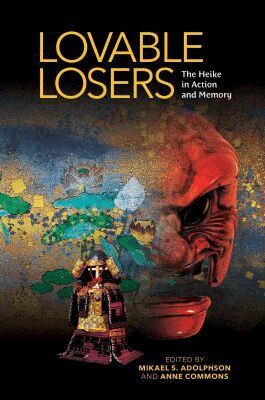
Lovable Losers is the first substantial piece of English-language scholarship to examine the actions and the memorization of the Heike (Ise Taira), a family of aristocratic warriors whose resounding defeat at the hands of the Seiwa Genji in 1185 resulted in their iconic status as tragic losers. The Tale of the Heike and the many other works derived from it set in place the depiction of the Heike as failed upstart aristocrats whose spectacular downfall was due to neglect of their warrior heritage and the villainy of the family head, Taira no Kiyomori. Lovable Losers aims to contextualize and deconstruct representations of the Heike not only to show how such representations were created in specific contexts in response to specific needs, but also to demonstrate that the representations themselves came to create and sustain a particular kind of culture. Drawing on the expertise of scholars in a variety of disciplines, this volume explores the Heike in their own time and their depiction as cultural figures in the centuries that followed. Their portrayal in literature and the arts spans more than eight hundred years and a wide range of genres and media, including no plays, picture scrolls, early modern comic books, novels, and film. In texts from the sixteenth to twentieth centuries, the Heike serve as catalysts for miracles and vectors for subtle criticisms of the Tokugawa government. Over time Kiyomori became an emblem of postwar democracy and economic progress; today he is a powerful symbol of modern citizens' dissatisfaction with politics.The Heike’s ambiguous moral standing allowed them to be reimagined, reconstructed, and repurposed by different authors in different contexts, as both heroes and villains. Rather than assuming their failure, Lovable Losers repositions the Heike within the larger phenomenon of the Genpei War and its aftermath, demonstrating how they took advantage of their station as nobles and warriors. The new research it presents seeks to transcend categorization and blur the lines between different approaches to the Heike to give a well-rounded depiction of a family who has played a defining role in Japanese culture in action, in memory, and somewhere in between.