Mildred Mortimer - Böcker
Visar alla böcker från författaren Mildred Mortimer. Handla med fri frakt och snabb leverans.
5 produkter
5 produkter
233 kr
Skickas inom 7-10 vardagar
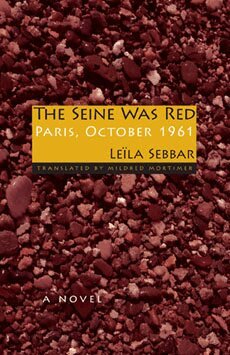
Leïla Sebbar's novel recounts an event in French history that has been hidden for many years. Toward the end of the Algerian war, the FLN, an Algerian nationalist party, organized a demonstration in Paris to oppose a curfew imposed upon Algerians in France. About 30,000 Algerians gathered peacefully, but the protest was brutally suppressed by the Paris police. Between 50 and 200 Algerians were killed and their bodies were thrown into the Seine. This incident provides the background for a more intimate look into the history of violence between France and Algeria. Following three young protagonists—one French, one Algerian, and one French national of Algerian descent—Sebbar takes readers on a journey of discovery and comprehension. Mildred Mortimer's impressive translation conveys the power of Sebbar's words in English and allows English-speaking readers an opportunity to understand the complex relationship between past and present, metropole and colony, immigrant and citizen, that lies at the heart of this acclaimed novel.
Writing from the Hearth
Public, Domestic, and Imaginative Space in Francophone Women's Fiction of Africa and the Caribbean
Inbunden, Engelska, 2007
1 544 kr
Skickas inom 10-15 vardagar
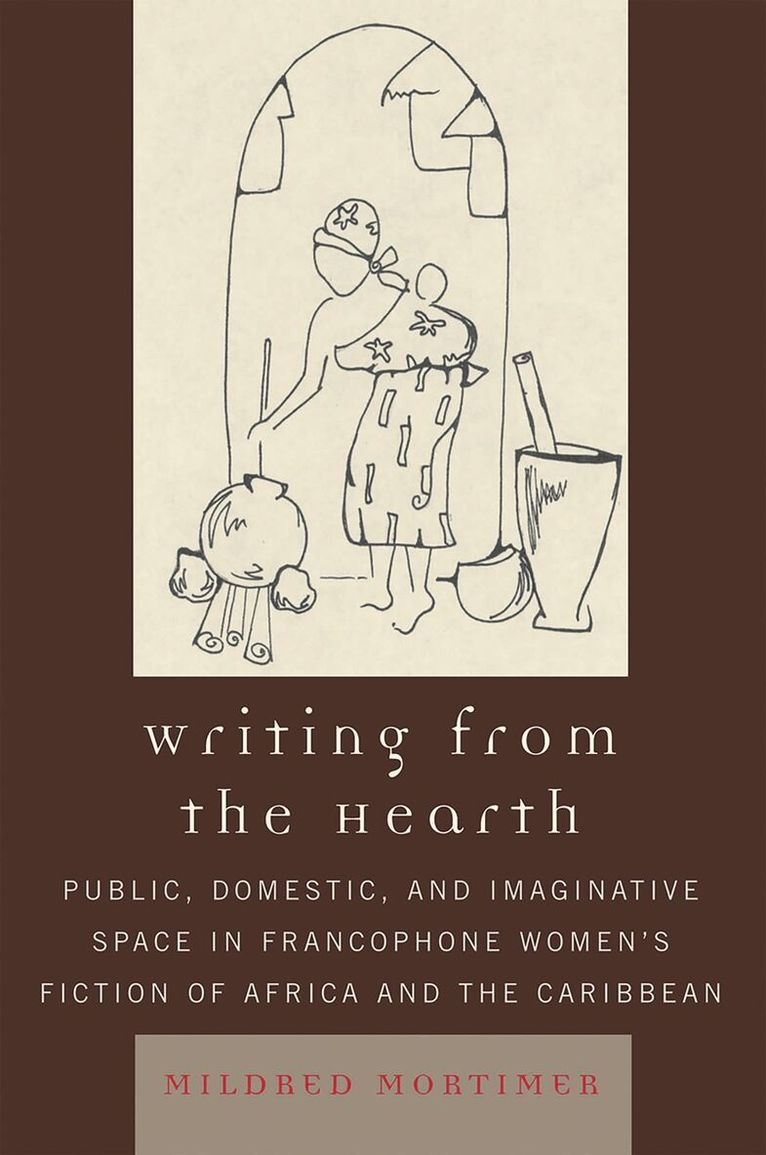
If space is important in the realm of imagination and a key theme in feminist theory, cross-cultural studies of social maps reveal that men and women's spatial experiences differ; women rarely control physical or social space directly. Positing the thesis that women's writing of Francophone Africa and the Caribbean offers important perspectives on the relationship of gender to space,Writing from the Hearth proposes close readings of Francophone women writers of Africa (Aoua KZita, Mariama B%, Ken Bugul, Calixthe Beyala, and Aminata Sow Fall) and the Caribbean (Marie Chauvet, Simon Schwarz-Bart, Maryse CondZ, and Edwidge Danticat). As critical readings of postcolonial African and Caribbean literature show that tropes of confinement appear frequently in female-authored texts_where home is often depicted as a place of alienation_this critical study examines ambiguities associated with domestic space as enclosure as it explores the relationship between the female protagonist and the inner and outer spaces of her world: domestic, imaginative, and public space. Writing from the Hearth probes the hypothesis that the female protagonist can move toward empowerment by entering public space from which she has been excluded by indigenous patriarchs and European colonizers and by establishing a new relationship to domestic space or securing a liberating alternative space within it. Flexible and multipurpose, alternative space is a place of possibilities that can function as a refuge for meditation, recollection, or fantasy, an antechamber for action, and a site of resistance and performance. Here, by telling the tale, writing the creative work, a woman can affirm her sense of self.
Writing from the Hearth
Public, Domestic, and Imaginative Space in Francophone Women's Fiction of Africa and the Caribbean
Häftad, Engelska, 2007
776 kr
Skickas inom 10-15 vardagar
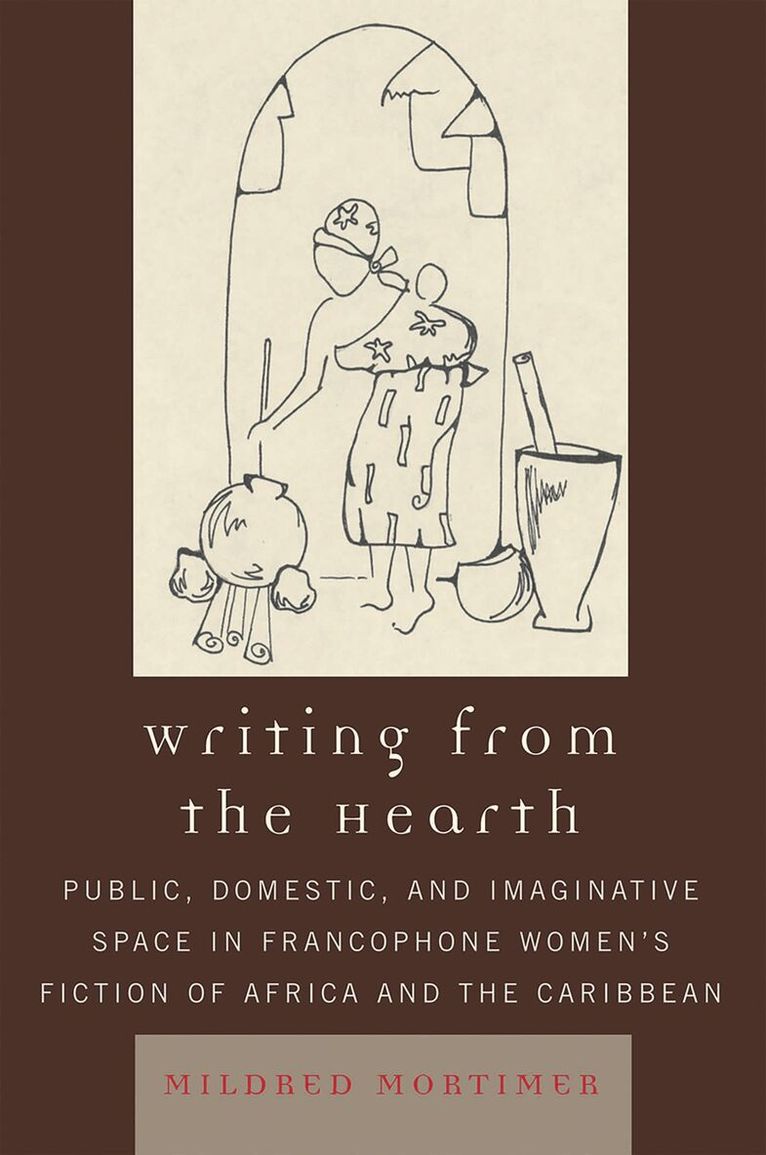
If space is important in the realm of imagination and a key theme in feminist theory, cross-cultural studies of social maps reveal that men and women's spatial experiences differ; women rarely control physical or social space directly. Positing the thesis that women's writing of Francophone Africa and the Caribbean offers important perspectives on the relationship of gender to space,Writing from the Hearth proposes close readings of Francophone women writers of Africa (Aoua KZita, Mariama B%, Ken Bugul, Calixthe Beyala, and Aminata Sow Fall) and the Caribbean (Marie Chauvet, Simon Schwarz-Bart, Maryse CondZ, and Edwidge Danticat). As critical readings of postcolonial African and Caribbean literature show that tropes of confinement appear frequently in female-authored texts_where home is often depicted as a place of alienation_this critical study examines ambiguities associated with domestic space as enclosure as it explores the relationship between the female protagonist and the inner and outer spaces of her world: domestic, imaginative, and public space. Writing from the Hearth probes the hypothesis that the female protagonist can move toward empowerment by entering public space from which she has been excluded by indigenous patriarchs and European colonizers and by establishing a new relationship to domestic space or securing a liberating alternative space within it. Flexible and multipurpose, alternative space is a place of possibilities that can function as a refuge for meditation, recollection, or fantasy, an antechamber for action, and a site of resistance and performance. Here, by telling the tale, writing the creative work, a woman can affirm her sense of self.
847 kr
Skickas inom 10-15 vardagar
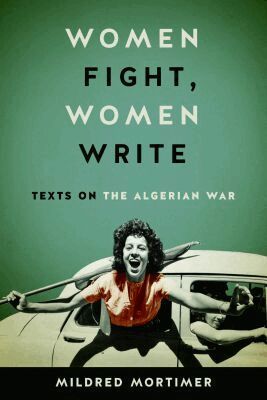
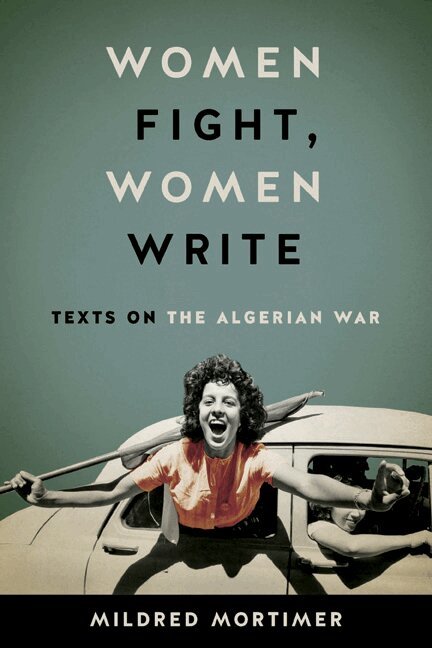
Today, the ""fight to write""—the struggle to become the legitimate chronicler of one's own story—is being waged and won by women across mediums and borders. But such battles of authorship extend well beyond a single cultural moment.In her gripping study of unsung female narratives of the Algerian War, Mildred Mortimer excavates and explores the role of women's individual and collective memory in recording events of the violent anticolonial conflict. Presenting close readings of published works spanning five decades—from Assia Djebar's 1962 Children of the New World to Zohra Drif's 2014 Inside the Battle of Algiers: Memoir of a Woman Freedom Fighter— Women Fight, Women Write traces stylistic and material transformations in Algerian women's writings as it reveals evolving attitudes toward memory, trauma, historical objectivity, and women's political empowerment. Refuting the stale binary of men in battle, women at home, these testimonial texts let women lay claim to the Algerian War story as participants and also as chroniclers through fiction, historical studies, and memoir.Algeria's patriarchal norms long kept women from speaking publicly about private matters, silencing their experiences of the war. Still, the conflict has ceaselessly sparked creative work. The country's dark decade of violent struggle between the Algerian army and Islamist fundamentalists in the 1990s brought the liberation struggle back into focus, inspiring and emboldening many more women to defiantly write. Women Fight, Women Write advances the broken silence, illuminating its vital historical revisions and literary innovations.
404 kr
Skickas inom 10-15 vardagar
Today, the ""fight to write""—the struggle to become the legitimate chronicler of one's own story—is being waged and won by women across mediums and borders. But such battles of authorship extend well beyond a single cultural moment.In her gripping study of unsung female narratives of the Algerian War, Mildred Mortimer excavates and explores the role of women's individual and collective memory in recording events of the violent anticolonial conflict. Presenting close readings of published works spanning five decades—from Assia Djebar's 1962 Children of the New World to Zohra Drif's 2014 Inside the Battle of Algiers: Memoir of a Woman Freedom Fighter— Women Fight, Women Write traces stylistic and material transformations in Algerian women's writings as it reveals evolving attitudes toward memory, trauma, historical objectivity, and women's political empowerment. Refuting the stale binary of men in battle, women at home, these testimonial texts let women lay claim to the Algerian War story as participants and also as chroniclers through fiction, historical studies, and memoir.Algeria's patriarchal norms long kept women from speaking publicly about private matters, silencing their experiences of the war. Still, the conflict has ceaselessly sparked creative work. The country's dark decade of violent struggle between the Algerian army and Islamist fundamentalists in the 1990s brought the liberation struggle back into focus, inspiring and emboldening many more women to defiantly write. Women Fight, Women Write advances the broken silence, illuminating its vital historical revisions and literary innovations.