
MiloA! Vec – författare
Visar alla böcker från författaren MiloA! Vec. Handla med fri frakt och snabb leverans.
3 produkter
3 produkter
E-bok
PDF, Engelska, 20151 280 kr
Läs direkt efter köp
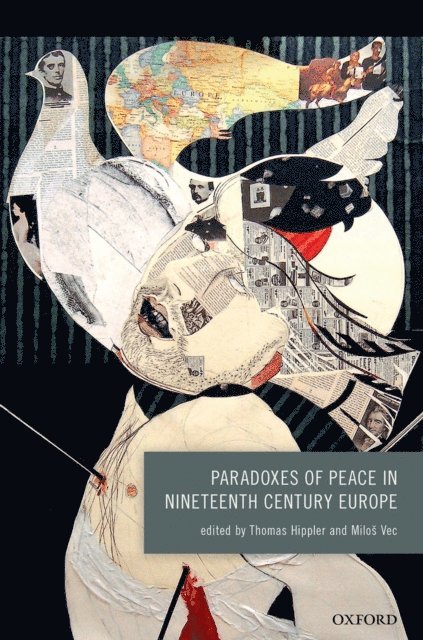
''Peace'' is often simplistically assumed to be war''s opposite, and as such is not examined closely or critically idealized in the literature of peace studies, its crucial role in the justification of war is often overlooked. Starting from a critical view that the value of ''restoring peace'' or ''keeping peace'' is, and has been, regularly used as a pretext for military intervention, this book traces the conceptual history of peace in nineteenth century legal andpolitical practice. It explores the role of the value of peace in shaping the public rhetoric and legitimizing action in general international relations, international law, international trade, colonialism, and armed conflict. Departing from the assumption that there is no peace as such, nor can there be, itexamines the contradictory visions of peace that arise from conflict.These conflicting and antagonistic visions of peace are each linked to a set of motivations and interests as well as to a certain vision of legitimacy within the international realm. Each of them inevitably conveys the image of a specific enemy that has to be crushed in order to peace being installed. This book highlights the contradictions and paradoxes in nineteenth century discourses and practices of peace, particularly in Europe.
E-bok
Engelska, 20151 280 kr
Läs direkt efter köp
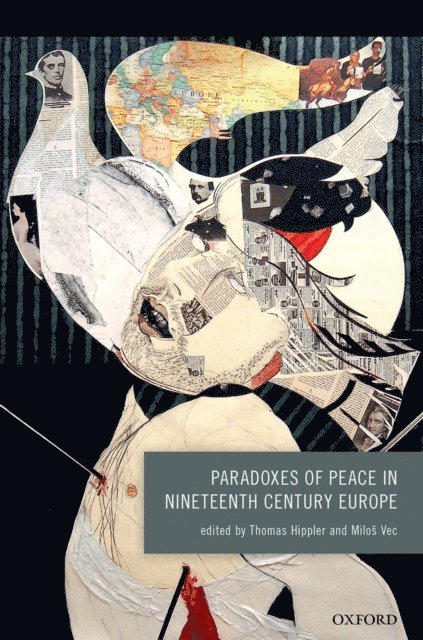
''Peace'' is often simplistically assumed to be war''s opposite, and as such is not examined closely or critically idealized in the literature of peace studies, its crucial role in the justification of war is often overlooked. Starting from a critical view that the value of ''restoring peace'' or ''keeping peace'' is, and has been, regularly used as a pretext for military intervention, this book traces the conceptual history of peace in nineteenth century legal andpolitical practice. It explores the role of the value of peace in shaping the public rhetoric and legitimizing action in general international relations, international law, international trade, colonialism, and armed conflict. Departing from the assumption that there is no peace as such, nor can there be, itexamines the contradictory visions of peace that arise from conflict.These conflicting and antagonistic visions of peace are each linked to a set of motivations and interests as well as to a certain vision of legitimacy within the international realm. Each of them inevitably conveys the image of a specific enemy that has to be crushed in order to peace being installed. This book highlights the contradictions and paradoxes in nineteenth century discourses and practices of peace, particularly in Europe.
E-bok
Engelska, 20161 132 kr
Läs direkt efter köp
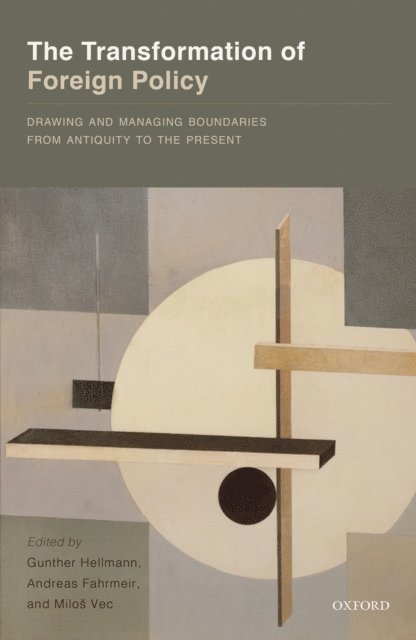
The study of foreign policy is usually concerned with the interaction of states, and thus with governance structures which emerged either with the so-called ''Westphalian system'' or in the course of the 18th century: diplomacy and international law. As a result, examining foreign policy in earlier periods involves conceptual and terminological difficulties, which echo current debates on ''post-national'' foreign policy actors like the European Union or global cities.This volume argues that a novel understanding of what constitutes foreign policy may offer a way out of this problem. It considers foreign policy as the outcome of processes that make some boundaries different from others, and set those that separate communities in an internal space apart from thosethat mark foreignness. The creation of such boundaries, which can be observed at all times, designates specific actors - which can be, but do not have to be, ''states'' - as capable of engaging in foreign policy. As such boundaries are likely to be contested, they are unlikely to provide either a single or a simple distinction between ''insides'' and ''outsides''. In this view, multiple layers of foreign-policy actors with different characteristics appear less as a modern development and more as aperennial aspect of foreign policy. In a broad perspective stretching from early Greek polities to present-day global cities, the volume offers a theoretical and empirical presentation of this concept by political scientists, jurists, and historians.