Mira Burri – författare
Visar alla böcker från författaren Mira Burri. Handla med fri frakt och snabb leverans.
13 produkter
Trade Governance in the Digital Age
World Trade Forum
Häftad, 2015
703 kr
Lägg i varukorg
The development of new digital technologies has resulted in significant transformations in daily life, from the arrival of online shopping to more fundamental changes in the ways we work and communicate. Many of these changes raise questions that transcend market access and liberalisation, and …
Big Data and Global Trade Law
Av Mira Burri
Häftad, 2024
424 kr
Lägg i varukorg
This collection explores the relevance of global trade law for data, big data and cross-border data flows. Contributing authors from different disciplines including law, economics and political science analyze developments at the World Trade Organization and in preferential trade venues by asking …
Big Data and Global Trade Law
Av Mira Burri
Inbunden, 2021
1648 kr
Lägg i varukorg
This collection explores the relevance of global trade law for data, big data and cross-border data flows. Contributing authors from different disciplines including law, economics and political science analyze developments at the World Trade Organization and in preferential trade venues by asking …
Big Data and Global Trade Law
Av Mira Burri
E-bok, 2021
411 kr
Lägg i varukorg
This collection explores the relevance of global trade law for data, big data and cross-border data flows. Contributing authors from different disciplines including law, economics and political science analyze developments at the World Trade Organization and in preferential trade venues by asking …
Big Data and Global Trade Law
Av Mira Burri
E-bok, 2021
420 kr
Lägg i varukorg
This collection explores the relevance of global trade law for data, big data and cross-border data flows. Contributing authors from different disciplines including law, economics and political science analyze developments at the World Trade Organization and in preferential trade venues by asking …
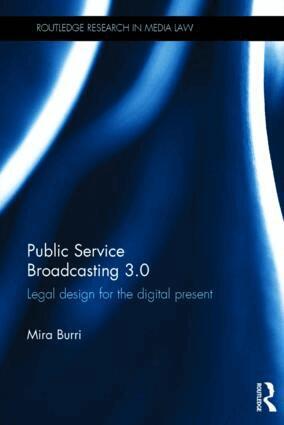
Public Service Broadcasting 3.0
Legal Design for the Digital Present
Av Mira Burri
Inbunden, 2015
2309 kr
Lägg i varukorg
The digital media environment is characterized by an abundance and diversity of content, a multiplicity of platforms, new modes of content production, distribution and access, and changed patterns of consumer and business behaviour. This has challenged the traditional model of public service …
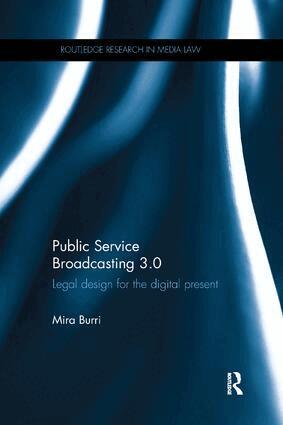
Public Service Broadcasting 3.0
Legal Design for the Digital Present
Av Mira Burri
Häftad, 2017
930 kr
Lägg i varukorg
The digital media environment is characterized by an abundance and diversity of content, a multiplicity of platforms, new modes of content production, distribution and access, and changed patterns of consumer and business behaviour. This has challenged the traditional model of public service …
Public Service Broadcasting 3.0
Legal Design for the Digital Present
Av Mira Burri
E-bok, 2015
1099 kr
Lägg i varukorg
The digital media environment is characterized by an abundance and diversity of content, a multiplicity of platforms, new modes of content production, distribution and access, and changed patterns of consumer and business behaviour. This has challenged the traditional model of public service …
Public Service Broadcasting 3.0
Legal Design for the Digital Present
Av Mira Burri
E-bok, 2015
1099 kr
Lägg i varukorg
The digital media environment is characterized by an abundance and diversity of content, a multiplicity of platforms, new modes of content production, distribution and access, and changed patterns of consumer and business behaviour. This has challenged the traditional model of public service …
Classification of Services in the Digital Economy
Inbunden, 2012
1006 kr
Lägg i varukorg
The classification of services in the digital economy proves critical for doing business, but it appears to be a particularly complex regulatory matter that is based upon a manifold set of issues. In the context of the General Agreement on Trade in Services (GATS), when the services classification …
Classification of Services in the Digital Economy
E-bok, 2012
1342 kr
Lägg i varukorg
The classification of services in the digital economy proves critical for doing business, but it appears to be a particularly complex regulatory matter that is based upon a manifold set of issues. In the context of the General Agreement on Trade in Services (GATS), when the services classification …
Classification of Services in the Digital Economy
Häftad, 2014
1006 kr
Lägg i varukorg
The classification of services in the digital economy proves critical for doing business, but it appears to be a particularly complex regulatory matter that is based upon a manifold set of issues. In the context of the General Agreement on Trade in Services (GATS), when the services classification …
Trade Governance in the Digital Age
World Trade Forum
Inbunden, 2012
1013 kr
Tillfälligt slut
The development of new digital technologies has resulted in significant transformations in daily life, from the arrival of online shopping to more fundamental changes in the ways we work and communicate. Many of these changes raise questions that transcend market access and liberalisation, and …