Mitja Kovac – författare
Visar alla böcker från författaren Mitja Kovac. Handla med fri frakt och snabb leverans.
6 produkter
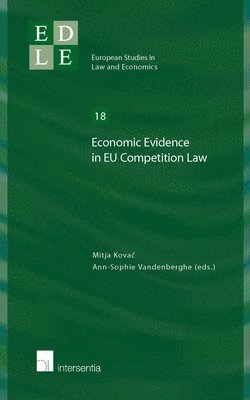
Economic Evidence in EU Competition Law
Av Mitja Kovac, Ann-Sophie Vandenberghe
Häftad, 2016
1423 kr
Lägg i varukorg
The use of economic theory and economic evidence in competition cases, their appropriate interpretation, meaning, impact, usefulness and validity are among the most challenging issues that judges and legal practitioners are facing in their daily decision-making. Notorious questions of, for example, …
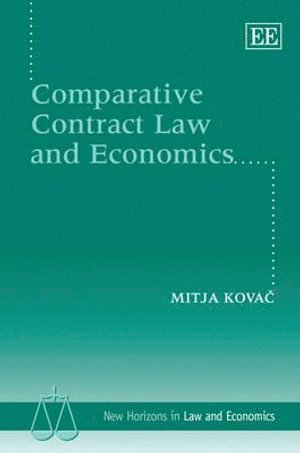
Comparative Contract Law and Economics
Av Mitja Kovač
Inbunden, 2011
2186 kr
Lägg i varukorg
Comparative Contract Law and Economics provides a deeper understanding of the similarities and differences between the legal systems of France, England, the US and Germany in terms of contract law. The application of the economically inspired optimal model rule as a uniform term of comparison …
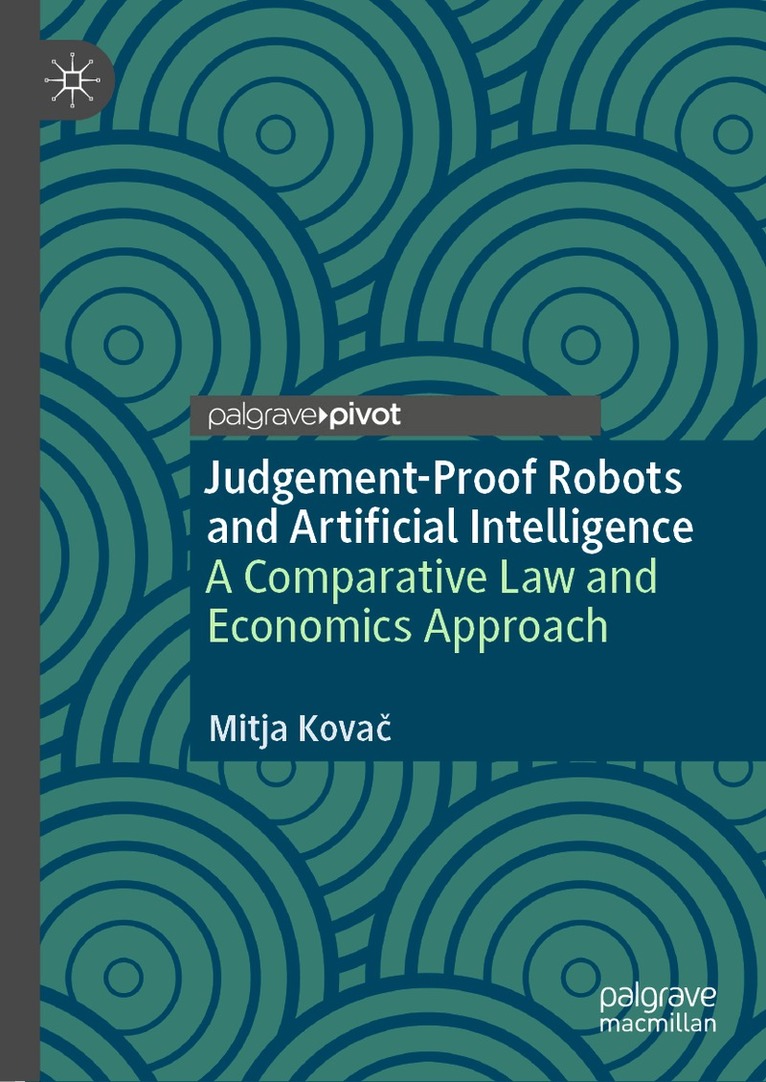
Judgement-Proof Robots and Artificial Intelligence
A Comparative Law and Economics Approach
Av Mitja Kovač
Inbunden, 2020
657 kr
Lägg i varukorg
This book addresses the role of public policy in regulating the autonomous artificial intelligence and related civil liability for damage caused by the robots (and any form of artificial intelligence). It is a very timely book, focusing on the consequences of judgment proofness of autonomous …
Judgement-Proof Robots and Artificial Intelligence
A Comparative Law and Economics Approach
Av Mitja Kovac
E-bok, 2020
825 kr
Lägg i varukorg
This book addresses the role of public policy in regulating the autonomous artificial intelligence and related civil liability for damage caused by the robots (and any form of artificial intelligence). It is a very timely book, focusing on the consequences of judgment proofness of autonomous …
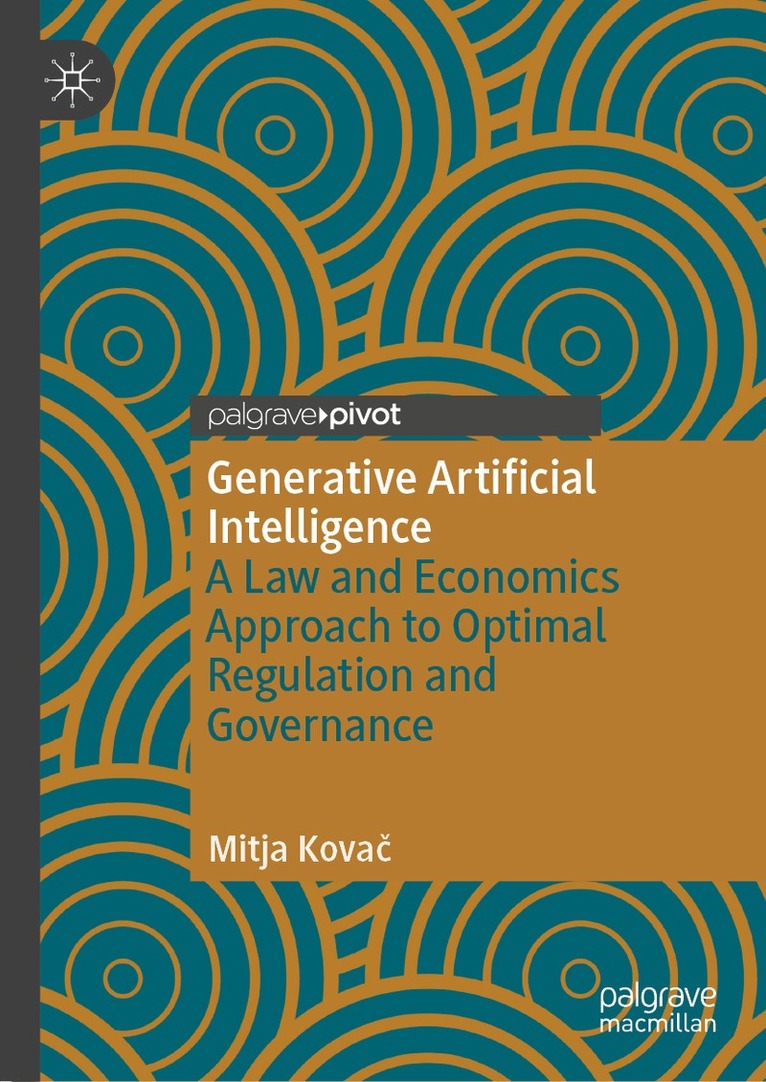
Generative Artificial Intelligence
A Law and Economics Approach to Optimal Regulation and Governance
Av Mitja Kovač
Inbunden, 2025
457 kr
Lägg i varukorg
This book takes a comparative law and economics approach to explore the role of public and private actors in regulating generative artificial intelligence. The book provides an introduction and context for the creation of new generative AI technologies, now understood to be the chief goal of the …
Generative Artificial Intelligence
A Law and Economics Approach to Optimal Regulation and Governance
Av Mitja Kovac
E-bok, 2025
600 kr
Lägg i varukorg
This book takes a comparative law and economics approach to explore the role of public and private actors in regulating generative artificial intelligence. The book provides an introduction and context for the creation of new generative AI technologies, now understood to be the chief goal of the …