M.K. Schenk – författare
Visar alla böcker från författaren M.K. Schenk. Handla med fri frakt och snabb leverans.
6 produkter
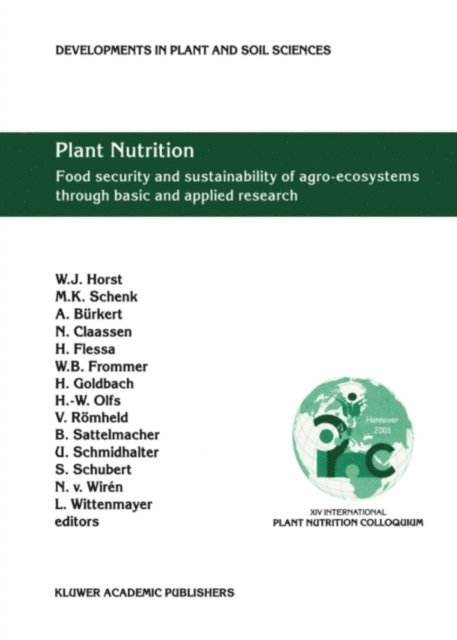
Plant Nutrition
Food security and sustainability of agro-ecosystems through basic and applied research
Av L. Wittenmayer, N. von Wiren m. fl.
E-bok, 2006
3978 kr
Lägg i varukorg
The world’s population is expected to reach 8 billion by 2025 and most of this growth in population will occur in developing countries. To feed the world with such a marked increase in population, a great improvement in food production must be achieved particularly in these countries. To meet this …
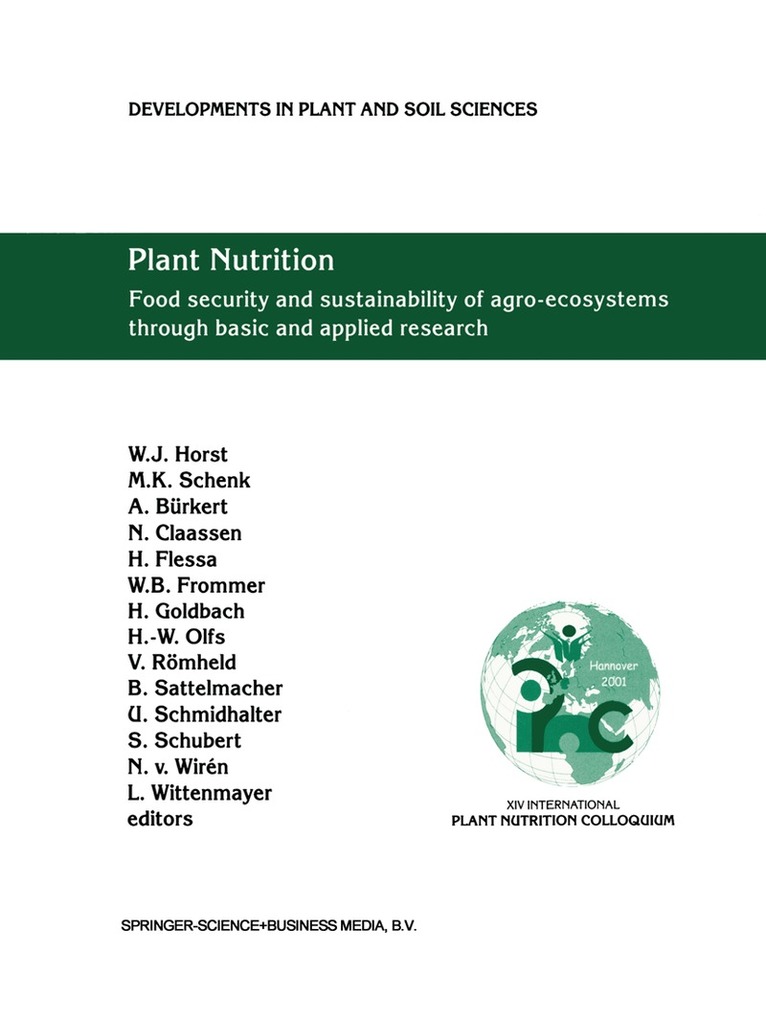
Plant Nutrition
Food security and sustainability of agro-ecosystems through basic and applied research
Av Walter Horst, M.K. Schenk m. fl.
Inbunden, 2001
3267 kr
Lägg i varukorg
The International Plant Nutrition Colloquium in Hannover was the 14th in a series that started in 1954. Hannover was also selected as the venue of the 7th Colloquium held 27 years ago, in September 1974, under the presidency of J. Wehrmann. This volume is a compilation of extended abstracts of all …
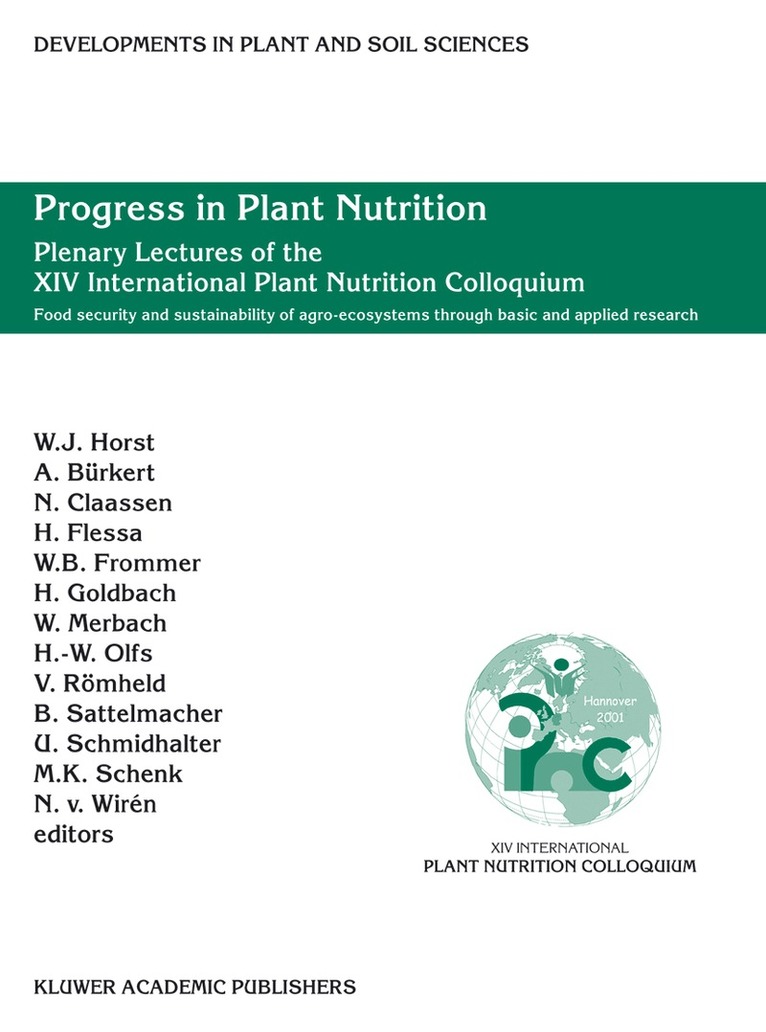
Progress in Plant Nutrition: Plenary Lectures of the XIV International Plant Nutrition Colloquium
Food security and sustainability of agro-ecosystems through basic and applied research
Av Walter Horst, A. Bürkert m. fl.
Inbunden, 2002
1094 kr
Lägg i varukorg
The International Plant Nutrition Colloquium in Hannover was the 14th in a series that started in 1954. This volume is a compilation of the plenary lectures presented at this Colloquium. These papers include two lectures which address the role of plant nutrition in the sustainability of …
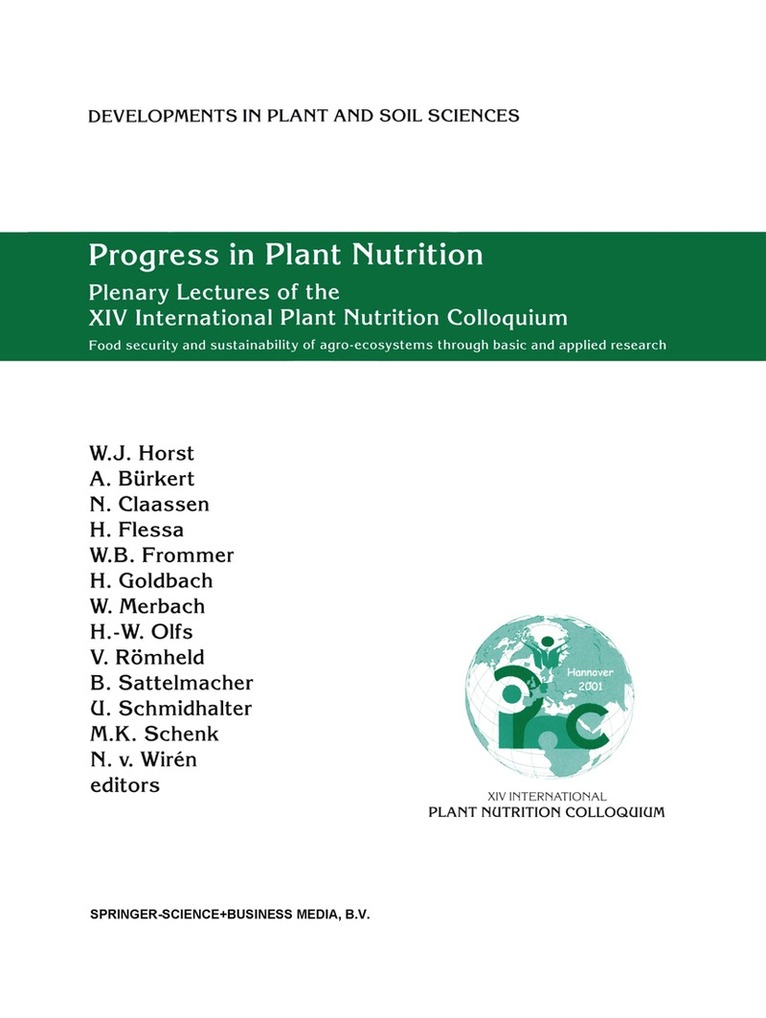
Progress in Plant Nutrition: Plenary Lectures of the XIV International Plant Nutrition Colloquium
Food security and sustainability of agro-ecosystems through basic and applied research
Av Walter Horst, A. Bürkert m. fl.
Häftad, 2010
1094 kr
Lägg i varukorg
These papers include two lectures which address the role of Plant Nutrition in the sustainability of agro-ecosystems and the production of enough high quality food to feed the growing world population. Recent advances in Plant Nutrition are reviewed in the 11 papers presented in each of the …
Progress in Plant Nutrition: Plenary Lectures of the XIV International Plant Nutrition Colloquium
Food security and sustainability of agro-ecosystems through basic and applied research
Av N. von Wiren, M.K. Schenk m. fl.
E-bok, 2013
1459 kr
Lägg i varukorg
These papers include two lectures which address the role of Plant Nutrition in the sustainability of agro-ecosystems and the production of enough high quality food to feed the growing world population. Recent advances in Plant Nutrition are reviewed in the 11 papers presented in each of the …
Plant Nutrition
Food security and sustainability of agro-ecosystems through basic and applied research
Av Walter Horst, M.K. Schenk m. fl.
Häftad, 2014
3267 kr
Lägg i varukorg
The world’s population is expected to reach 8 billion by 2025 and most of this growth in population will occur in developing countries. To feed the world with such a marked increase in population, a great improvement in food production must be achieved particularly in these countries. To meet this …