Mohammed Ismail Iqbal - Böcker
Visar alla böcker från författaren Mohammed Ismail Iqbal. Handla med fri frakt och snabb leverans.
5 produkter
5 produkter
Oil Well Production Mechanism
Training Manual on Well Production Operations for Non-production Engineers (Oil and Gas Production Operations)
Inbunden, Engelska, 2025
1 562 kr
Skickas inom 10-15 vardagar
This is a comprehensive guide to the intricacies of the oil and gas industry, focusing specifically on production processes. Written by industry experts, the book offers valuable insights into the technical aspects, environmental considerations, and economic factors associated with oil and gas exploration and extraction.Main topics covered:Introduction to the oil and gas industry: The book overviews the industry, including its historical background, global significance, and key players.Basic reservoir concepts: It explores the techniques and technologies used to identify potential oil and gas reserves, assess their commercial viability, and estimate their production potential.Well completion and construction, intervention: The book delves into the various well completion processes, methodologies, construction and well intervention techniques, and reasons. This section focuses on completing the drilled wells and initiating production. It covers completion techniques, wellbore stimulation, artificial lift methods, and production optimization.Emerging technologies and future trends: It highlights the latest advancements in drilling and production technologies, such as directional drilling, hydraulic fracturing, and digitalization. It also discusses the industry's prospects and challenges.Oil Well Production Mechanism serves as a valuable resource for professionals, students, and enthusiasts seeking a comprehensive understanding of the oil and gas industry's production processes. It combines technical knowledge with practical insights, making it an essential read for anyone involved or interested in this dynamic field.
588 kr
Skickas inom 10-15 vardagar
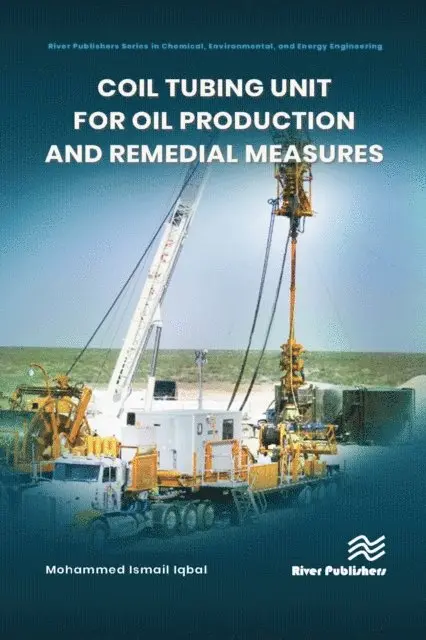
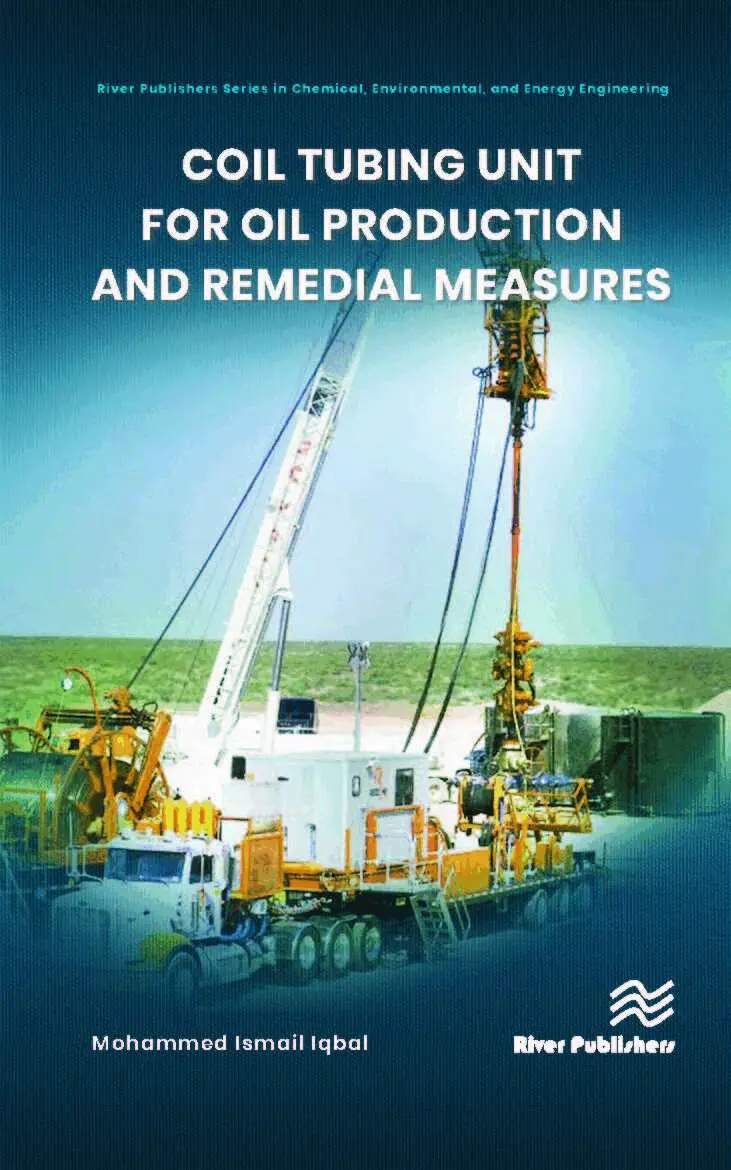
Well activation is one of the most important aspects in the oil and gas industries and nitrogen gas is predominately used. The gas, being light, is sent down the producing reservoir which will enhance the production or improve the flow of crude oil. In addition to the methods used to increase production there are several problems like sand production and water production from the producing wells.Sand production occurs when the destabilizing stresses at the formation face exceed the strength of the natural arching tendencies and/or grain-to-grain cementation strength. Ideally, during oil production, the formation should be porous, permeable and well consolidated through which hydrocarbons can easily flow into the production wells. But sometimes, especially during production from unconsolidated sandstone reservoirs, the produced hydrocarbons may also carry large amounts of sand into the well bore and sand entering production wells is one of the oldest problems faced by oil companies and one of the toughest to solve. These unconsolidated formations may not restrain grain movement, and produce sand along with the fluids especially at high rates.Water production is also a problem that many reservoir or production engineers face in day-to-day life. As engineers we should be able to decide whether water control solutions should be applied or not. The excess production of water is caused by the depletion of the reservoir and simply sweeps away most of the oil that the reservoir can produce.This book gives an information how well activation using nitrogen is carried out, and how sand control and water control issues can be resolved.
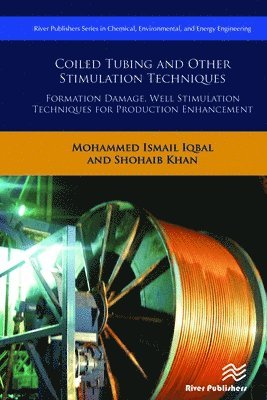
Coiled Tubing and Other Stimulation Techniques
Formation Damage, Well Stimulation Techniques for Production Enhancement
Häftad, Engelska, 2024
588 kr
Skickas inom 10-15 vardagar
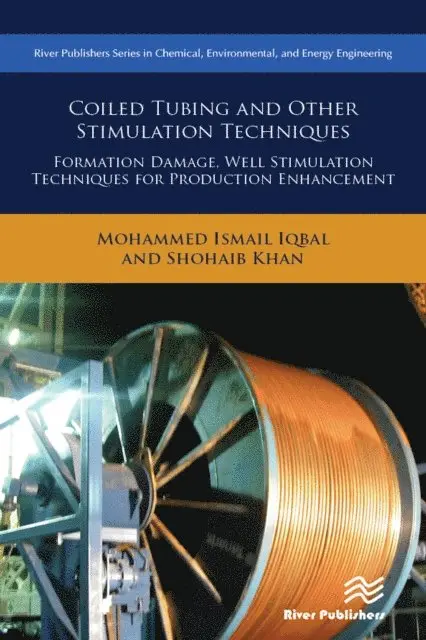
Good engineers never stop looking for opportunities to improve the performance of their production systems. Performance enhancement methods are always carefully examined, and production data is analyzed in order to identify determining factors affecting performance.The two main activities of the production engineer in the petroleum and related industries are reservoir stimulation and artificial lift. The classic solution to maximizing a well's productivity is to stimulate it. The basis for selecting stimulation candidates should be a review of the well's actual and theoretical IPR. Low permeability wells often need fracturing on initial completion. In low permeability zones, additional post stimulation production can be significant to the economics, however, the production engineer needs to make management aware of the true long term potential or else overly optimistic projections can easily be made.The main purpose of stimulation is to enhance the property value by the faster delivery of the petroleum fluid and/or to increase ultimate economic recovery. The aim of reservoir stimulation is to bypass near-wellbore damage and return a well to its “natural” productivity / injectivity, to extend a conductive path deep into a formation and thus increase productivity beyond the natural level and to produce hydrocarbon from tight formation.The importance of reservoir stimulation is increasing due to following reasons: • Hydrocarbon fields in their mid-life• Production in these fields are in declining trend• The thrust area: Enhancement of productionHence, to improve productivity of the well matrix stimulation and hydraulic fracturing are intended to remedy, or even improve, the natural connection of the wellbore with the reservoir, which could delay the need for artificial lift.This book presents procedures taken in the Oil & Gas Industry for identifying well problems, and it suggests means of solving problems with the help of the Coil Tube unit which is used for improving well productivity and techniques like Acidizing and Hydraulic Fracturing.
Coiled Tubing and Other Stimulation Techniques
Formation Damage, Well Stimulation Techniques for Production Enhancement
Inbunden, Engelska, 2019
1 319 kr
Skickas inom 10-15 vardagar
Good engineers never stop looking for opportunities to improve the performance of their production systems. Performance enhancement methods are always carefully examined, and production data is analyzed in order to identify determining factors affecting performance.The two main activities of the production engineer in the petroleum and related industries are reservoir stimulation and artificial lift. The classic solution to maximizing a well's productivity is to stimulate it. The basis for selecting stimulation candidates should be a review of the well's actual and theoretical IPR. Low permeability wells often need fracturing on initial completion. In low permeability zones, additional post stimulation production can be significant to the economics, however, the production engineer needs to make management aware of the true long term potential or else overly optimistic projections can easily be made.The main purpose of stimulation is to enhance the property value by the faster delivery of the petroleum fluid and/or to increase ultimate economic recovery. The aim of reservoir stimulation is to bypass near-wellbore damage and return a well to its “natural” productivity / injectivity, to extend a conductive path deep into a formation and thus increase productivity beyond the natural level and to produce hydrocarbon from tight formation.The importance of reservoir stimulation is increasing due to following reasons: •Hydrocarbon fields in their mid-life•Production in these fields are in declining trend•The thrust area: Enhancement of productionHence, to improve productivity of the well matrix stimulation and hydraulic fracturing are intended to remedy, or even improve, the natural connection of the wellbore with the reservoir, which could delay the need for artificial lift.This book presents procedures taken in the Oil & Gas Industry for identifying well problems, and it suggests means of solving problems with the help of the Coil Tube unit which is used for improving well productivity and techniques like Acidizing and Hydraulic Fracturing.
1 319 kr
Skickas inom 10-15 vardagar
•Mechanical methods•Chemical methods•Combination methodsDescription / back cover text:Well activation is one of the most important aspects in the oil and gas industries and nitrogen gas is predominately used. The gas, being light, is sent down the producing reservoir which will enhance the production or improve the flow of crude oil. In addition to the methods used to increase production there are several problems like sand production and water production from the producing wells. Sand production occurs when the destabilizing stresses at the formation face exceed the strength of the natural arching tendencies and/or grain-to-grain cementation strength. Ideally, during oil production, the formation should be porous, permeable and well consolidated through which hydrocarbons can easily flow into the production wells. But sometimes, especially during production from unconsolidated sandstone reservoirs, the produced hydrocarbons may also carry large amounts of sand into the well bore and sand entering production wells is one of the oldest problems faced by oil companies and one of the toughest to solve. These unconsolidated formations may not restrain grain movement, and produce sand along with the fluids especially at high rates.Water production is also a problem that many reservoir or production engineers face in day-to-day life. As engineers we should be able to decide whether water control solutions should be applied or not. The excess production of water is caused by the depletion of the reservoir and simply sweeps away most of the oil that the reservoir can produce.This book gives an information how well activation using nitrogen is carried out, and how sand control and water control issues can be resolved.