Mona Oraby - Böcker
Visar alla böcker från författaren Mona Oraby. Handla med fri frakt och snabb leverans.
4 produkter
4 produkter
851 kr
Skickas inom 7-10 vardagar
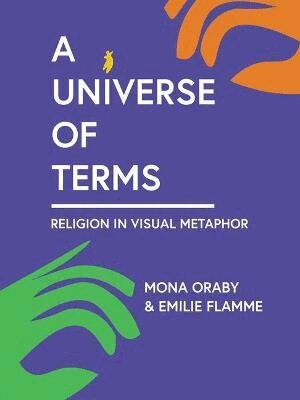
How can we foster a more inclusive, responsible, and communicative future? What if illustrated scholarship is one way to get there? Organized around eight terms in the study of religion, the groundbreaking, multifaceted book A Universe of Terms: Religion in Visual Metaphor combines text and image to examine the human as both catalyst of crisis and principal agent for its mitigation. Mona Oraby and Emilie Flamme—a professor and an illustrator—were spurred to create an alternative form for scholarly communication, one that stages conversations between thinkers who likely would not all find themselves in the same room. This graphic nonfiction book acknowledges the significance of certain terms to the social sciences and the humanities, narrates their limitations, and shows why we need a structure and style for thinking them otherwise. It further urges the iterative rethinking of any new terms this exercise yields. Through its unique visual lexicon, A Universe of Terms explores religious media in postcolonial and secular contexts, performances of religious feeling, the political economy of religion, sacred presence, and human striving amid social inequality and climate change. Beautifully illustrated and inspired by a range of media from graphic novels to podcasts, A Universe of Terms is a visual experiment, one that invites readers to think again and anew about how the visual is integral to thought. Indiana University Press is proud to present an open access edition of this work: https://publish.iupress.indiana.edu/projects/universe-of-terms/resource/a-universe-of-terms. (This book is intended to be viewed as a double-page layout. For optimal viewing, we recommend opening the document in Adobe Acrobat Reader. If opening the document in a different program, adjust your settings to allow for double-page viewing.)
297 kr
Skickas inom 7-10 vardagar
How can we foster a more inclusive, responsible, and communicative future? What if illustrated scholarship is one way to get there? Organized around eight terms in the study of religion, the groundbreaking, multifaceted book A Universe of Terms: Religion in Visual Metaphor combines text and image to examine the human as both catalyst of crisis and principal agent for its mitigation. Mona Oraby and Emilie Flamme—a professor and an illustrator—were spurred to create an alternative form for scholarly communication, one that stages conversations between thinkers who likely would not all find themselves in the same room. This graphic nonfiction book acknowledges the significance of certain terms to the social sciences and the humanities, narrates their limitations, and shows why we need a structure and style for thinking them otherwise. It further urges the iterative rethinking of any new terms this exercise yields. Through its unique visual lexicon, A Universe of Terms explores religious media in postcolonial and secular contexts, performances of religious feeling, the political economy of religion, sacred presence, and human striving amid social inequality and climate change. Beautifully illustrated and inspired by a range of media from graphic novels to podcasts, A Universe of Terms is a visual experiment, one that invites readers to think again and anew about how the visual is integral to thought. Indiana University Press is proud to present an open access edition of this work: https://publish.iupress.indiana.edu/projects/universe-of-terms/resource/a-universe-of-terms. (This book is intended to be viewed as a double-page layout. For optimal viewing, we recommend opening the document in Adobe Acrobat Reader. If opening the document in a different program, adjust your settings to allow for double-page viewing.)
260 kr
Skickas inom 7-10 vardagar
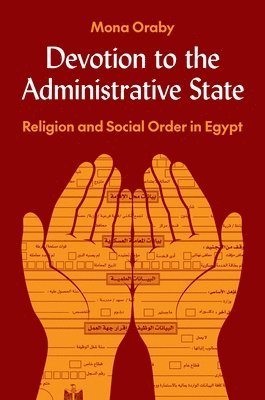
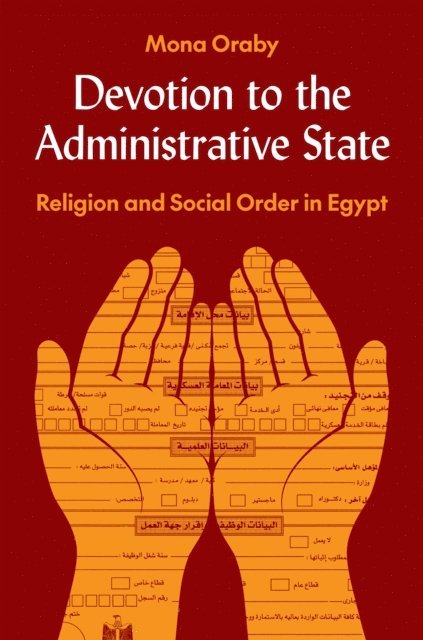
Why the pursuit of state recognition by seemingly marginal religious groups in Egypt and elsewhere is a devotional practiceOver the past decade alone, religious communities around the world have demanded state recognition, exemption, accommodation, or protection. They make these appeals both in states with a declared religious identity and in states officially neutral toward religion. In this book, Mona Oraby argues that the pursuit of official recognition by religious minorities amounts to a devotional practice. Countering the prevailing views on secularism, Oraby contends that demands by seemingly marginal groups to have their religious differences recognized by the state in fact assure communal integrity and coherence over time. Making her case, she analyzes more than fifty years of administrative judicial trends, theological discourse, and minority claims-making practices, focusing on the activities of Coptic Orthodox Christians and Baháʼí in modern and contemporary Egypt.Oraby documents the ways that devotion is expressed across a range of sites and sources, including in lawyers’ offices, administrative judicial verdicts, televised media and film, and invitation-only study sessions. She shows how Egypt’s religious minorities navigated the political and legal upheavals of the 2011 uprising and now persevere amid authoritarian repression. In a Muslim-majority state, they assert their status as Islam’s others, finding belonging by affirming their difference; and difference, Oraby argues, is the necessary foundation for collective life. Considering these activities in light of the global history of civil administration and adjudication, Oraby shows that the lengths to which these marginalized groups go to secure their status can help us to reimagine the relationship between law and religion.
797 kr
Skickas inom 7-10 vardagar
Why the pursuit of state recognition by seemingly marginal religious groups in Egypt and elsewhere is a devotional practiceOver the past decade alone, religious communities around the world have demanded state recognition, exemption, accommodation, or protection. They make these appeals both in states with a declared religious identity and in states officially neutral toward religion. In this book, Mona Oraby argues that the pursuit of official recognition by religious minorities amounts to a devotional practice. Countering the prevailing views on secularism, Oraby contends that demands by seemingly marginal groups to have their religious differences recognized by the state in fact assure communal integrity and coherence over time. Making her case, she analyzes more than fifty years of administrative judicial trends, theological discourse, and minority claims-making practices, focusing on the activities of Coptic Orthodox Christians and Baháʼí in modern and contemporary Egypt.Oraby documents the ways that devotion is expressed across a range of sites and sources, including in lawyers’ offices, administrative judicial verdicts, televised media and film, and invitation-only study sessions. She shows how Egypt’s religious minorities navigated the political and legal upheavals of the 2011 uprising and now persevere amid authoritarian repression. In a Muslim-majority state, they assert their status as Islam’s others, finding belonging by affirming their difference; and difference, Oraby argues, is the necessary foundation for collective life. Considering these activities in light of the global history of civil administration and adjudication, Oraby shows that the lengths to which these marginalized groups go to secure their status can help us to reimagine the relationship between law and religion.