Monika K. Hellwig - Böcker
Visar alla böcker från författaren Monika K. Hellwig. Handla med fri frakt och snabb leverans.
9 produkter
9 produkter
435 kr
Skickas inom 11-20 vardagar
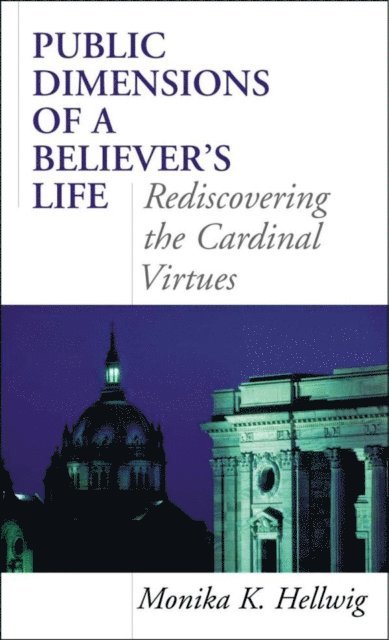
In recent American politics, the term OmoralityO has come to be used in a way almost entirely restricted to private family and sexual issues, leaving aside responsibility for immensely consequential decisions about initiating wars, oppressive policies, regressive tax structures, and disregard of the United Nations and international law. Public Dimensions of a BelieverOs Life is about human responsibility in public life and the moral and spiritual factors involved in exercising that responsibility. Monika Hellwig explores the decisions people have to make in human affairs at all levels of social organization, the values that guide these decisions, and the way those values are often apparently in conflict with one another. By looking at major moral issues in the political decisions, actions and failures to act, of the twentieth century in the light of the tradition of the cardinal virtues (prudence, justice, fortitude and temperance), HellwigOs work explores the moral implications of the political life in our own times.
2 290 kr
Skickas inom 10-15 vardagar
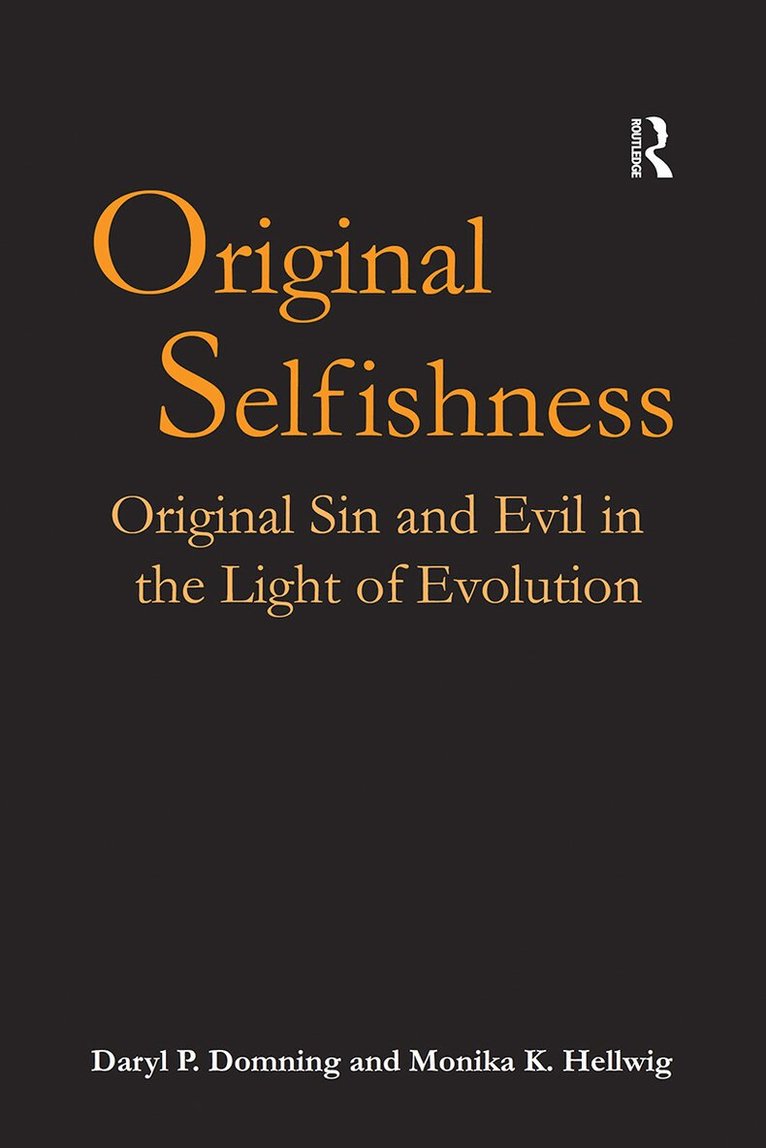
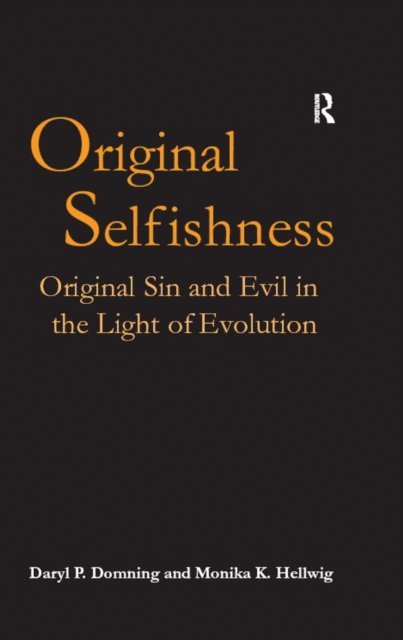
This book defends a startling idea: that the age-old theological and philosophical problems of original sin and evil, long thought intractable, have already been solved. The solution has come from the very scientific discovery that many consider the most mortal threat to traditional religion: evolution. Daryl P. Domning explains in straightforward terms the workings of modern evolutionary theory, Darwinian natural selection, and how this has brought forth life and the human mind. He counters objections to Darwinism that are raised by some believers and emphasizes that the evolutionary process necessarily enforces selfish behavior on all living things. This account of both physical and moral evil is arguably more consistent with traditional Christian teachings than are the explanations given by most contemporary "evolutionary" theologians themselves. The prominent theologian, Monika K. Hellwig, dialogues with Daryl Domning throughout the book to present a balanced reappraisal of the doctrine of original sin from both a scientist's and theologian's perspective.
165 kr
Skickas inom 3-6 vardagar
What is the difference between a good life and a redemptive life? Well-known theologian Monica Hellwig answers the question by inviting us to a greater awareness of ourselves as guests on God's earth. What does it mean to be a guest of God? How does it affect our relationship with God and our "fellow" guests? What does it mean to be a steward of the earth, steward of our own talents? How does this change our understanding of everyday life?Using meditations, psalm adaptations, and line drawings, Hellwig gently draws the reader in to reflect upon these open-ended questions, then to move to action. The work serves as a nonthreatening introduction to a more aware life; it does not assign guilt, it only promotes taking current responsibility. Short chapters followed by questions make this ideal reading whether alone or in a group.Though known for her theological works, Hellwig here opens up her thought to the widest ecumenical audience. Her book is wonderful, insightful reading for adult ed classes, RCIA programs, RENEW groups, Confirmation classes, and Lenten groups. Individual seekers will also appreciate it, as well as faith formation directors, ecologists, and social activists.†
361 kr
Skickas inom 3-6 vardagar
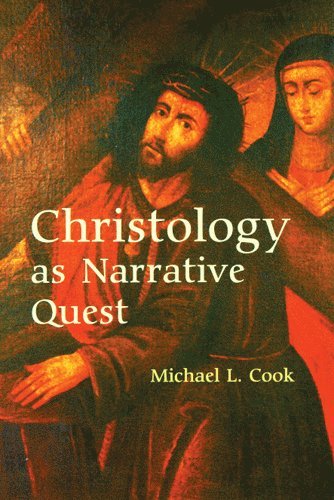
How central is narrative to Christology? To human experience?In exploring these questions Michal Cook maintains in Christology as Narrative Quest the primacy and centrality of narrative in communicating the significance of Jesus Christ, and demonstrates ways in which narrative" in four faith images has played a role in the shaping of Christology. These forms and their texts are: biblical (the Gospel of Mark); creedal (the Nicene-Constantinopolitan Creed); systematic (Aquinas' Summa theologiae); and social transformation (the "story" of Mexican-Americans.) all of these images are ways of using narrative imagery to connect idea and experience.A detailed analysis reveals that each of these forms involve what well-known ethicist Alasdair MacIntyre calls a "narrative quest." In each case an image of Jesus that is fundamental for integrating a particular form of the "narrative quest" emerges.Father Cook contends that Christology in any age is the culture-specific faith response of the community of believers/disciples (Church) to the mystery of the risen Jesus a mystery that, identified with the very life, activity, and presence of God, simply transcends any attempt we make, whether biblical, creedal, systematic, or societal, to bring it to expression.The four faith images (biblical, creedal, systematic, social transformation) and their texts broadly correspond to significant periods in the history of Christianity: the Jewish-Gentile Church, the Hellenistic-Byzantine (imperial) Church, the Latin-Western (papal) Church, and the contemporary, post-Vatican II emergence of the world-wide Church.Graduate students, academicians, and others who want a scholarly or professional reference work will appreciate this substantive look into the relationship of narrative and Christology.Chapters examine the four faith images. They are "The Centrality of Narrative in Christology," "A Biblical Image: 'The Beloved Son' in the Gospel of Mark," "A Creedal Image: 'The Pre-Existent Son' in the Nicene-Constantinopolitan Creed," "A Systematic Image: 'The Incarnate Word' in the Summa theologiae of Thomas Aquinas," and "A Social Transformation Image: 'The Rejected Prophet' in the Mexican-American Experience."Michael L. Cook, SJ, ThD, is a professor of theology at Gonzaga University. He also taught at the Jesuit School of Theology in Berkeley and was a visiting professor at the Catholic University in Santiago, Chile. He is the author of Responses to 101 Questions About Jesus.
361 kr
Skickas inom 3-6 vardagar
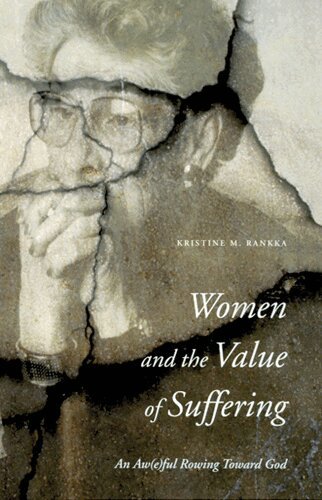
Is there a value to suffering for women? Is Christianity a religion that condones the victimization of women? Can Christians faith, who are called to hope in the midst of despair, respond to experiences of suffering in all their ambiguity and complexity? How can people proclaim the good news" in the midst of radical suffering? Women and the Value of Suffering explores these questions and offers a critical summary of recent discussions of evil and suffering from a variety of women's theological and spiritual perspectives. It incorporates the insights of feminist theory, cultural studies, biomedical research, psychology, theology, and spirituality. By exploring the complexity of suffering in our times, it reflects on how women of faith can come to terms with the enormity, diversity, and, at times, apparent senselessness of human suffering.Chapter one introduces the search for meaning in suffering. Chapter two defines the experience of pain and suffering from current and historical perspectives. Chapter three surveys how women within a Christian context have spoken about suffering and how these expressions might be similar to or differ from the ways men theologize about suffering. Chapter four considers how an incorporation of a tragic Vision of reality might enhance theological considerations on evil and radical suffering of women. Chapter five focuses on the role of Christian spirituality in responding to the experiences of women's suffering. The conclusion provides a response to the question, is there a value to suffering for women, and incorporates the poem Rowing by Anne Sexton to convey that response.Women and the Value of Suffering contemplates whether women can find value in their suffering - individually and effectively - so that they are empowered to work for change while acknowledging their need for and openness to God's activating presence in transforming their suffering. Woman and the Value of Suffering shows that through suffering and despite all expectations to the contrary, people can come to an encounter with One who knows our suffering with love, grace, and even joy.Chapters are "Attempts to Define the Experience of Pain and Suffering," "Selected Women's Experiences and Theological Reflections on Suffering," "Tragic Vision and Suffering," and "Elements of a Proposed Spiritual Response to Suffering."Kristine M. Rankka holds a bachelor of arts in religion in symbolic expression and a master of Library science from the University of Washington. She has also completed another graduate degree at the Jesuit School of Theology at Berkeley.
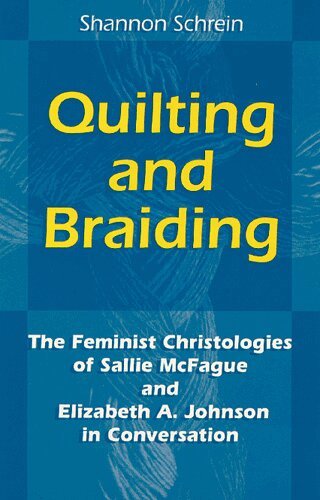
Quilting and Braiding
The Feminist Christologies of Sallie McFague and Elizabeth A. Johnson in Conversation
Häftad, Engelska, 1998
232 kr
Skickas inom 5-8 vardagar
Can a male savior save women?" In answering this profound question, and as a way of engaging women and men who seek a deeper understanding of the role of Jesus Christ in contemporary Christianity, Quilting and Braiding explores the christologies of pivotal feminist theologians - Salie McFague and Elizabeth Johnson - and examines the impact of feminist christology on the field of theology.For centuries scholars have studied, debated, and articulated their understanding of the life, message, and impact of Jesus Christ (incarnation and salvation). In Quilting and Braiding, Shannon Schrein examines critical questions arising from feminist thought that address these core Christian beliefs. She explores the constructivist Christology of McFague and the revisionist christology of Johnson and examines how each makes use of language, particularly metaphor and analogy, in addressing the christological concerns of women today.Drawing its imagery from practices that have typically been a part of women's heritage - quilting and braiding - this work forms a footbridge between tradition and contemporary concerns, bringing the study of christology into the lives of God's people.Chapters are "'Quilting': Creating the Pattern," "'Braiding': Formatting the Weave," "'Quilting': Designing One Square," "'Braiding': Weaving the Bridge," "'Quilting and Braiding' Christologies," "Constructivist and Revisionist Feminist Christology," and "Epilogue: Quilts and Braided Bridges." Shannon Schrien, OSF, PhD, is an assistant professor of religious studies at Alverno College in Milwaukee and a member of the Sisters of St. Francis of Sylvania, Ohio. She serves on the Milwaukee Archdiocesan Women's Commission, the Ecumenical and Interfaith Dialogue Commission, and is a member of the Archbishop's Theological Consultation Board."
417 kr
Skickas inom 5-8 vardagar
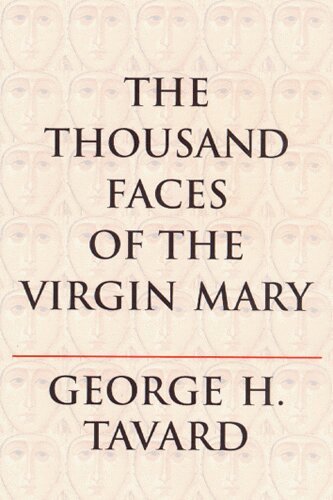
The greatest challenge to ecumenical dialogue has come not from discussions on justification by faith or papal primacy or even infallibility, but from discussions related to the Virgin Mary. This remarkable assertion is the reason behind noted theologian and ecumenist George Tavard's historical and ecumenical investigation of the image of Mary. Mary belongs not only to Christians but to Jews and Muslims as well. In a broad sense she can also be seen in relation to female symbols of the Absolute not as divinity but as divine. Time and changes in dogma have also affected the way Mary is perceived. Tavard has therefore divided his investigation into five parts. He gathers insights from Scripture (Part I), Tradition (Part II), the Reformation (Part III), the Modern Age (Part IV), and World Religions (Part V). Together these perspectives clarify and enhance the Theotokos and her ties with the people of God. George H. Tavard, a member of the Augustinians of the Assumption, professor emeritus of theology at the Methodist Theological School in Ohio, and distinguished professor of theology at Marquette University, was a peritus at Vatican Council II, where he was involved in preparing the decree on ecumenism. He has participated in several international and American ecumenical dialogues and has written extensively on theology and ecumenism.
631 kr
Skickas inom 10-15 vardagar
This book defends a startling idea: that the age-old theological and philosophical problems of original sin and evil, long thought intractable, have already been solved. The solution has come from the very scientific discovery that many consider the most mortal threat to traditional religion: evolution. Daryl P. Domning explains in straightforward terms the workings of modern evolutionary theory, Darwinian natural selection, and how this has brought forth life and the human mind. He counters objections to Darwinism that are raised by some believers and emphasizes that the evolutionary process necessarily enforces selfish behavior on all living things. This account of both physical and moral evil is arguably more consistent with traditional Christian teachings than are the explanations given by most contemporary "evolutionary" theologians themselves. The prominent theologian, Monika K. Hellwig, dialogues with Daryl Domning throughout the book to present a balanced reappraisal of the doctrine of original sin from both a scientist's and theologian's perspective.
274 kr
Skickas inom 10-15 vardagar
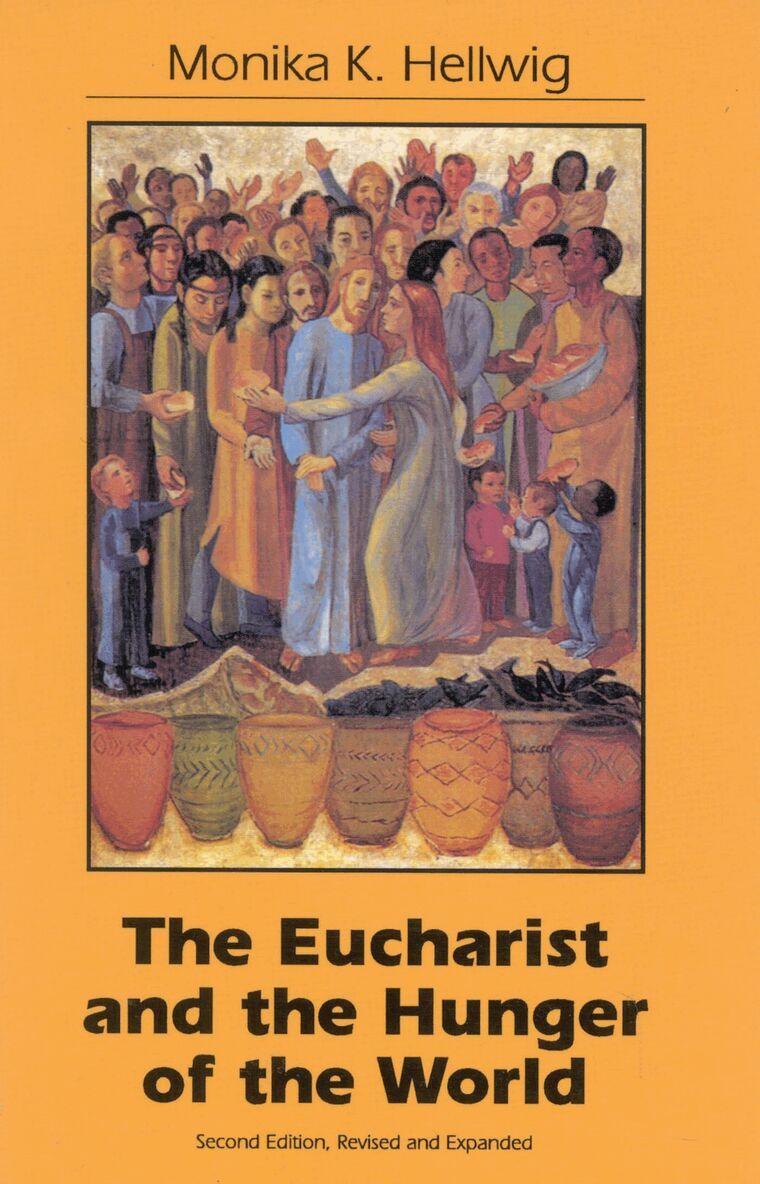
The central action of the Eucharist—sharing of food, not only eating—underscores the interdependence of all people and the sharing of resources.