Monika L McDermott - Böcker
Visar alla böcker från författaren Monika L McDermott. Handla med fri frakt och snabb leverans.
5 produkter
5 produkter
1 708 kr
Skickas inom 5-8 vardagar
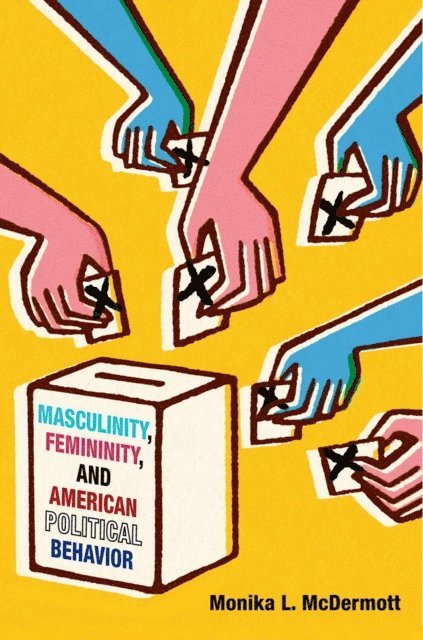
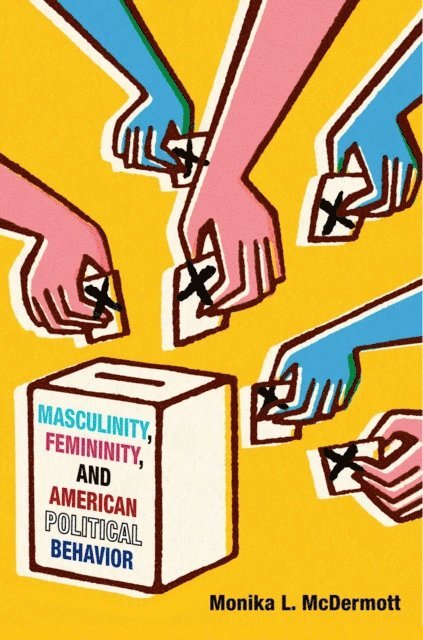
What influences political behavior more -- one's gender or one's gendered personality traits? Certain gendered traits have long been associated with particular political leanings in American politics. For example, the Democratic Party is thought to have a compassionate, feminine nature while the Republican Party is deemed to have a tougher, more masculine nature. Masculinity, Femininity, and American Political Behavior, a first-of-its-kind analysis of the effects of individuals' gendered personality traits -- masculinity and femininity -- on their political attitudes and behavior, argues that gendered personalities, and not biological sex, are what drive the political behavior of individual citizens. Drawing on a groundbreaking national survey measuring gendered personality traits and political preferences, the book shows that individuals' levels of masculine and feminine personality traits help to determine their party identification, vote choice, ideology, and political engagement. And in conjunction with biological sex, these traits also influence attitudes about sex roles. For example, the more strongly an individual identifies with "feminine" characteristics, the more strongly they identify with the Democratic Party. Likewise, the more "masculine" an individual, the more they are drawn to the GOP. The book also demonstrates that, despite conventional wisdom, biological sex does not dictate gendered personalities. As such, the personality trait approach of the book moves gender and politics research well beyond the traditional male/female dichotomy. Moreover, Masculinity, Femininity, and American Political Behavior points to new and as yet underexplored strategies for candidate campaigns, get out the vote efforts, and officeholders' governing behavior.
480 kr
Skickas inom 5-8 vardagar
What influences political behavior more -- one's gender or one's gendered personality traits? Certain gendered traits have long been associated with particular political leanings in American politics. For example, the Democratic Party is thought to have a compassionate, feminine nature while the Republican Party is deemed to have a tougher, more masculine nature. Masculinity, Femininity, and American Political Behavior, a first-of-its-kind analysis of the effects of individuals' gendered personality traits -- masculinity and femininity -- on their political attitudes and behavior, argues that gendered personalities, and not biological sex, are what drive the political behavior of individual citizens. Drawing on a groundbreaking national survey measuring gendered personality traits and political preferences, the book shows that individuals' levels of masculine and feminine personality traits help to determine their party identification, vote choice, ideology, and political engagement. And in conjunction with biological sex, these traits also influence attitudes about sex roles. For example, the more strongly an individual identifies with "feminine" characteristics, the more strongly they identify with the Democratic Party. Likewise, the more "masculine" an individual, the more they are drawn to the GOP. The book also demonstrates that, despite conventional wisdom, biological sex does not dictate gendered personalities. As such, the personality trait approach of the book moves gender and politics research well beyond the traditional male/female dichotomy. Moreover, Masculinity, Femininity, and American Political Behavior points to new and as yet underexplored strategies for candidate campaigns, get out the vote efforts, and officeholders' governing behavior.
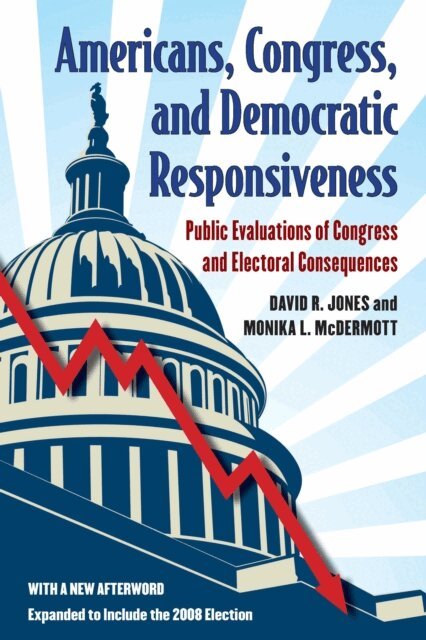
Americans, Congress, and Democratic Responsiveness
Public Evaluations of Congress and Electoral Consequences
Häftad, Engelska, 2010
304 kr
Skickas inom 7-10 vardagar
"Jones and McDermott restore meaning to democratic responsibility by finding that public evaluations affect Congress. In contrast to the popular depiction of the representatives controlling the representedrampant in the political science literature, Jones and McDermott show that the people are in control, determining not only the direction of policy in Congress, but also who stays, who retires, and who faces difficult reelection efforts. This book makes an important correction to our understanding of how Congress operates."---Sean M. Theriault, University of Texas at Austin Voters may not know the details of specific policies, but they have a general sense of how well Congress serves their own interests; and astute politicians pay attention to public approval ratings. When the majority party is unpopular, as during the 2008 election, both voters and politicians take a hand in reconfiguring the House and the Senate. Voters throw hard-line party members out of office while candidates who continue to run under the party banner distance themselves from party ideology. In this way, public approval directly affects policy shifts as well as turnovers at election time. Contrary to the common view of Congress as an insulated institution, Jones and McDermott argue that Congress is indeed responsive to the people of the United States. David R. Jones is Professor of Political Science at Baruch College, City University of New York. Monika L. McDermott is Associate Professor of Political Science at Fordham University.
1 068 kr
Skickas inom 10-15 vardagar
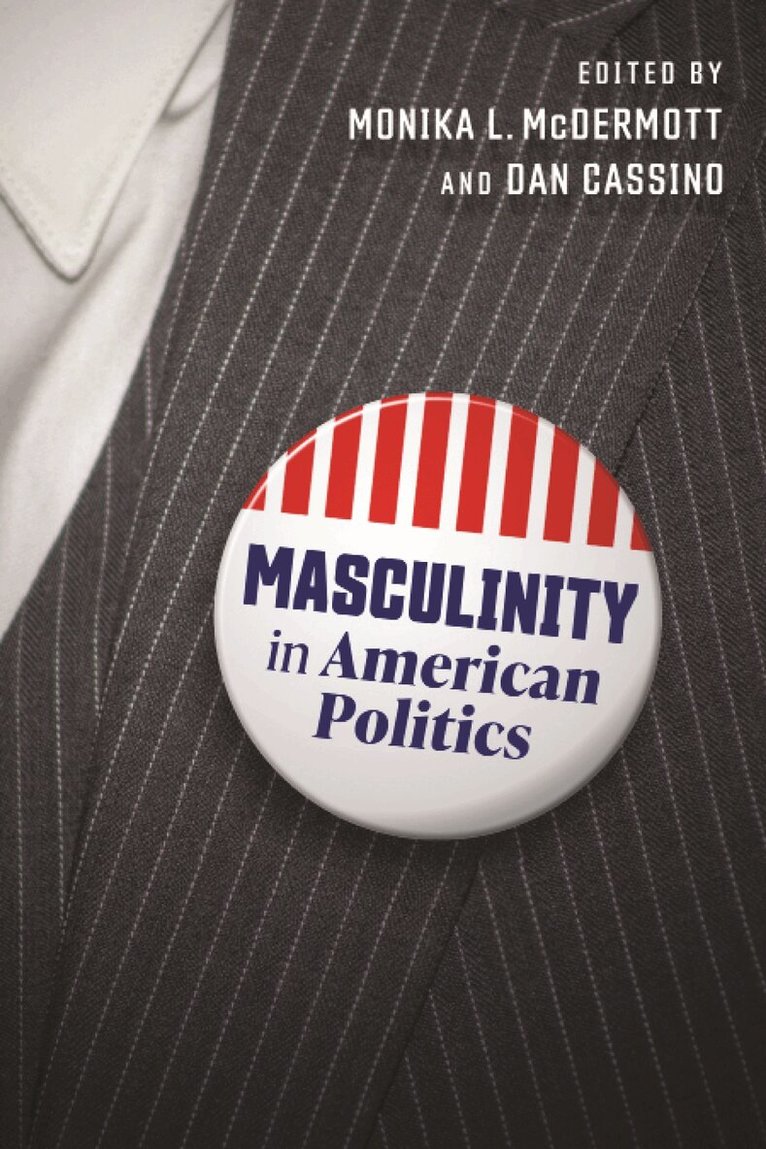
How elements of masculinity manifest themselves in all aspects of American political lifeWhile hardly a new phenomenon, masculinity—which includes elements of toughness, independence, and leadership, among others—roared onto the national political stage in America with the 2016 candidacy, election, and presidency of Donald Trump. Research into masculinity dates back over a century, but little attention has been paid to the specific role of masculinity in politics beyond the conventional wisdom that it, rather than femininity, is the dominant force. This lack of research has led to a lack of knowledge on how exactly, and how much, masculinity shapes political structures, attitudes and behaviors, from children's socialization to our masculine political world, to how a new generation views this traditional dominance.In Masculinity in American Politics, Monika L. McDermott and Dan Cassino bring together a prestigious group of interdisciplinary scholars to explore these questions and their implications for different aspects of political life. Topics include the challenge of defining and measuring masculinity, how perceptions of gender and masculinity can shape campaign messaging strategies and public opinion, and other discussions of political identity, including age, race, and ethnicity.With contributions from Melissa Deckman, Jill S. Greenlee, Amanda Bittner, and other high-profile scholars, this comprehensive volume provides insight into masculinity and its high-stakes political manifestations, particularly as Gen Z fights to redefine the contours of their own gender and sexuality. Drawing upon insights from politics, sociology, psychology, and the broader social sciences, Masculinity in American Politics pushes the field to look "beyond the binary" and illuminate this brave, new world of political conflict and possibility.
365 kr
Skickas inom 7-10 vardagar
How elements of masculinity manifest themselves in all aspects of American political lifeWhile hardly a new phenomenon, masculinity—which includes elements of toughness, independence, and leadership, among others—roared onto the national political stage in America with the 2016 candidacy, election, and presidency of Donald Trump. Research into masculinity dates back over a century, but little attention has been paid to the specific role of masculinity in politics beyond the conventional wisdom that it, rather than femininity, is the dominant force. This lack of research has led to a lack of knowledge on how exactly, and how much, masculinity shapes political structures, attitudes and behaviors, from children's socialization to our masculine political world, to how a new generation views this traditional dominance.In Masculinity in American Politics, Monika L. McDermott and Dan Cassino bring together a prestigious group of interdisciplinary scholars to explore these questions and their implications for different aspects of political life. Topics include the challenge of defining and measuring masculinity, how perceptions of gender and masculinity can shape campaign messaging strategies and public opinion, and other discussions of political identity, including age, race, and ethnicity.With contributions from Melissa Deckman, Jill S. Greenlee, Amanda Bittner, and other high-profile scholars, this comprehensive volume provides insight into masculinity and its high-stakes political manifestations, particularly as Gen Z fights to redefine the contours of their own gender and sexuality. Drawing upon insights from politics, sociology, psychology, and the broader social sciences, Masculinity in American Politics pushes the field to look "beyond the binary" and illuminate this brave, new world of political conflict and possibility.