Moriel Rothman-Zecher - Böcker
Visar alla böcker från författaren Moriel Rothman-Zecher. Handla med fri frakt och snabb leverans.
6 produkter
6 produkter
228 kr
Skickas
227 kr
Skickas inom 7-10 vardagar
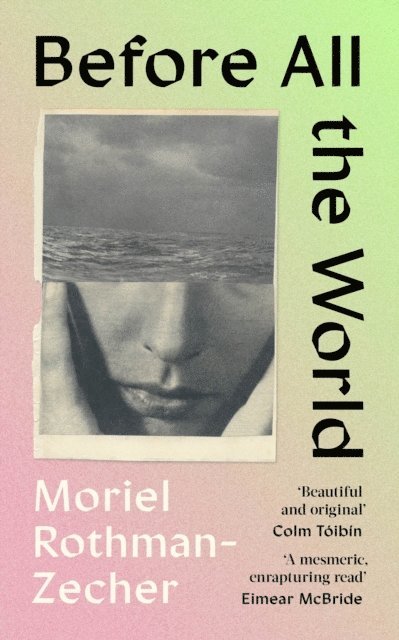
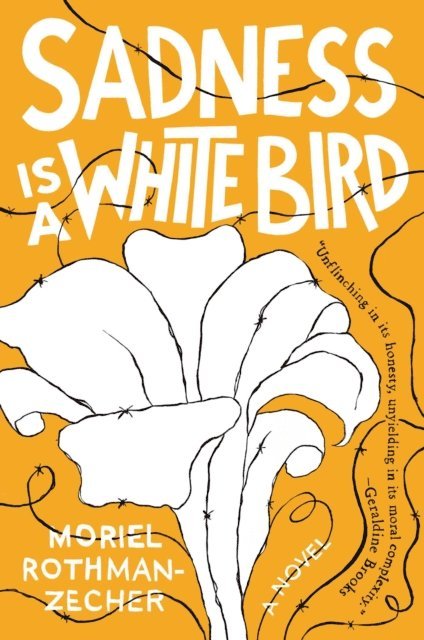
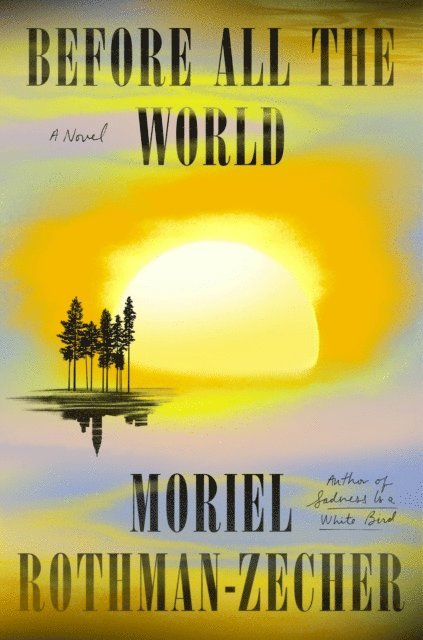
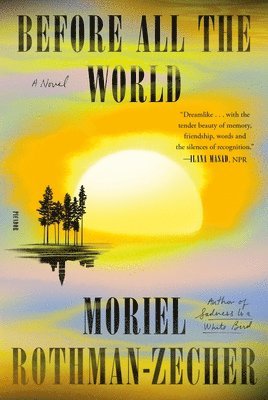
'ikh gleyb nit az di gantze velt iz kheyshekh''I do not believe that all the world is darkness'In the swirl of Philadelphia at the end of Prohibition, Leyb meets Charles. They are at a former speakeasy called Cricket's, a bar that welcomes, as Charles says in his secondhand Yiddish, feygeles. Leyb is startled; fourteen years in amerike has taught him that his native tongue is not known beyond his people. And yet here is suave Charles, fingers stained with ink, an easy manner with the barkeep, a Black man from the Seventh Ward, speaking to him in Jewish; Charles, who calls him 'Lion', and with whom he will fall in love.But Leyb is haunted by memories of life before, on another continent and the village of his birth where, one day, everyone except the ten non-Jews, a young poet named Gittl and he himself, was taken to the forest and killed.Leyb's two lifetimes come together when Gittl arrives in Philadelphia, thanks to a poem she wrote and the intervention of a shadowy character known only as the Baroness. And surrounding Gittl are malokhim, the talkative spirits of her siblings.Flowing and churning with a glorious surge of language, Before All the World lays bare the impossibility of escaping trauma, the necessity of believing in a better way ahead, and the power that comes from our responsibility to the future. It asks, in the voices of its angels, the most essential question: What do you intend to do before all the world?

181 kr
Skickas inom 7-10 vardagar
'ikh gleyb nit az di gantze velt iz kheyshekh''I do not believe that all the world is darkness'In the swirl of Philadelphia at the end of Prohibition, Leyb meets Charles. They are at a former speakeasy called Cricket's, a bar that welcomes, as Charles says in his secondhand Yiddish, feygeles. Leyb is startled; fourteen years in amerike has taught him that his native tongue is not known beyond his people. And yet here is suave Charles, fingers stained with ink, an easy manner with the barkeep, a Black man from the Seventh Ward, speaking to him in Jewish; Charles, who calls him 'Lion', and with whom he will fall in love.But Leyb is haunted by memories of life before, on another continent and the village of his birth where, one day, everyone except the ten non-Jews, a young poet named Gittl and he himself, was taken to the forest and killed.Leyb's two lifetimes come together when Gittl arrives in Philadelphia, thanks to a poem she wrote and the intervention of a shadowy character known only as the Baroness. And surrounding Gittl are malokhim, the talkative spirits of her siblings.Flowing and churning with a glorious surge of language, Before All the World lays bare the impossibility of escaping trauma, the necessity of believing in a better way ahead, and the power that comes from our responsibility to the future. It asks, in the voices of its angels, the most essential question: What do you intend to do before all the world?
123 kr
Skickas inom 7-10 vardagar
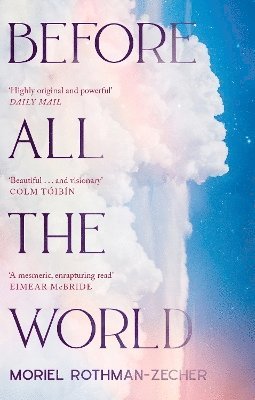
'A mesmeric, enrapturing read' Eimear McBride'Beautiful and original' Colm Tóibín'In startling language filled with the flavor of Yiddish's combination words, [Before All the World] moves forward and back and forward again in a dreamlike trance that acknowledges how the worst suffering exists side by side with the tender beauty of memory, friendship, words and the silences of recognition' Ilana Masad, NPR'Before All the World is poetry as it should be: deliberate while feeling casual, a game with words that is at once playful and deadly serious (sometimes by turns, sometimes truly simultaneously) . . . It swallowed me up, and then all at once, a word or a phrase would reach me like a bolt of lightning, charring and electrifying me all through' Jo Niederhoff, Seattle Book Review'Resembles something by Joyce or Samuel Beckett . . . A highly original and powerful tale told in defiance of the world's darkness' Stephanie Cross, The Daily Mail'Before All the World leaves you breathless . . . [Rothman-Zecher] has found a way to teach us how to find out what is most important about ourselves by losing himself in this novel of ingenious daring imagination and allowing us to accompany him on his ride. It is a masterful accomplishment that remains with the reader long after finishing this brilliant work' Elaine Margolin, Women in Judaism'An emotionally evocative exploration of the impossibility of escaping trauma, yet finding hope nevertheless when all seems destroyed' Hannah Srour-Zackon, The Canadian Jewish News'At its core, Before All the World considers one essential question: what does it mean to remember the past while still imagining the future? . . . Its most striking accomplishment is its invitation to the reader to become a part of the novel's chorus. What will you do, it asks, now that you've read this story?' Adina Applebaum, Jewish Book Council'Original, daring, experimental, moving, poignant, engaging . . . With shades of Tony Kushner and Cynthia Ozick . . . Before All the World understands how our worlds are made by words, and in the altering of the latter we may as yet redeem the former' Ed Simon, The Millions, 'Most Anticipated Books of 2022''Rich and engrossing . . . A powerful story, brilliantly told' Publishers Weekly, starred review'A one-of-a-kind creation' Kirkus Reviews'ikh gleyb nit az di gantze velt iz kheyshekh''I do not believe that all the world is darkness'In the swirl of Prohibition-era Philadelphia, Leyb meets Charles. They are at a former speakeasy called Cricket's, a bar that welcomes, as Charles says in his secondhand Yiddish, feygeles. Leyb is startled to hear his native tongue spoken by this beautiful Black man from the Seventh Ward whose life he will come to share.Leyb is haunted by memories from before he came to America, growing up in the shtetl of Zatelsk, where one day every last person - except the ten non-Jews, a young poet named Gittl, and he himself - was taken to the forest and killed. Flowing with a surge of language and synchrony, Gittl and Leyb are reunited - surrounded by the murmur of angelic voices - and together with Charles they each grapple with how to face, and sieze, whatever future lies ahead.Carried along by questions of survival and hope, Before All the World lays bare the impossibility of escaping trauma, the necessity of believing in a better way, and the power that comes from our responsibility to the future. It asks, in the voices of its angels, the most essential question: What do you intend to do before all the world?
278 kr
Skickas inom 3-6 vardagar
288 kr
Skickas inom 3-6 vardagar
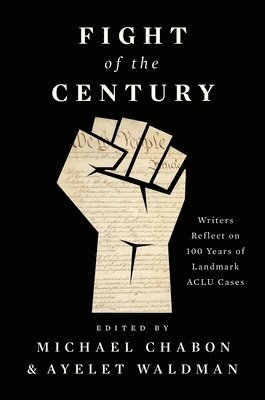
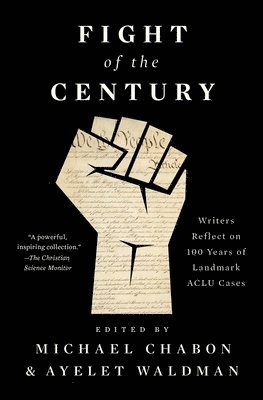
The American Civil Liberties Union partners with award-winning authors Michael Chabon and Ayelet Waldman in this “forceful, beautifully written” (Associated Press) collection that brings together many of our greatest living writers, each contributing an original piece inspired by a historic ACLU case. On January 19, 1920, a small group of idealists and visionaries, including Helen Keller, Jane Addams, Roger Baldwin, and Crystal Eastman, founded the American Civil Liberties Union. A century after its creation, the ACLU remains the nation’s premier defender of the rights and freedoms guaranteed by the Constitution. In collaboration with the ACLU, authors Michael Chabon and Ayelet Waldman have curated an anthology of essays “full of struggle, emotion, fear, resilience, hope, and triumph” (Los Angeles Review of Books) about landmark cases in the organization’s one-hundred-year history. Fight of the Century takes you inside the trials and the stories that have shaped modern life. Some of the most prominent cases that the ACLU has been involved in—Brown v. Board of Education, Roe v. Wade, Miranda v. Arizona—need little introduction. Others you may never even have heard of, yet their outcomes quietly defined the world we live in now. Familiar or little-known, each case springs to vivid life in the hands of the acclaimed writers who dive into the history, narrate their personal experiences, and debate the questions at the heart of each issue. Hector Tobar introduces us to Ernesto Miranda, the felon whose wrongful conviction inspired the now-iconic Miranda rights—which the police would later read to the man suspected of killing him. Yaa Gyasi confronts the legacy of Brown v. Board of Education, in which the ACLU submitted a friend of- the-court brief questioning why a nation that has sent men to the moon still has public schools so unequal that they may as well be on different planets. True to the ACLU’s spirit of principled dissent, Scott Turow offers a blistering critique of the ACLU’s stance on campaign finance. These powerful stories, along with essays from Neil Gaiman, Meg Wolitzer, Salman Rushdie, Ann Patchett, Viet Thanh Nguyen, Louise Erdrich, George Saunders, and many more, remind us that the issues the ACLU has engaged over the past one hundred years remain as vital as ever today, and that we can never take our liberties for granted. Chabon and Waldman are donating their advance to the ACLU and the contributors are forgoing payment.