Morten Karsdal – författare
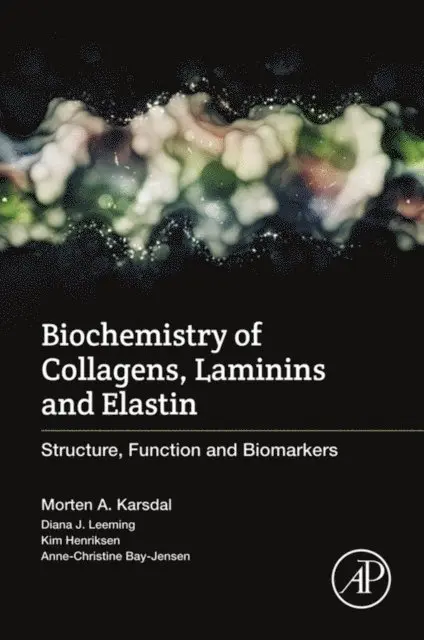
Biochemistry of Collagens, Laminins and Elastin
Structure, Function and Biomarkers
1 087 kr
Skickas inom 7-10 vardagar
Biochemistry of Collagens, Laminins, and Elastin: Structure, Function, and Biomarkers provides a comprehensive introduction to collagen and structural proteins. Type I collagen is one of the most abundant molecules in the body, playing essential roles in different tissues, particularly bone and skin. A key aspect of type I collagen is its post-translational modifications which are essential for correct synthesis and structural integrity of collagens, for tissue-specific functionality, as well as for application as biomarkers of different pathologies.
This volume summarizes current data on key structural proteins (collagens, laminins and elastin), reviews how these molecules affect pathologies, and describes selected modifications of proteins that result in altered signaling properties of the original extracellular matrix component. Further, it discusses the novel concept that an increasing number of components of the ECM harbor cryptic signaling functions that may be viewed as endocrine functions. Additionally, it highlights how this knowledge can be exploited to modulate fibrotic disease.
Provides a comprehensive introduction to collagen and structural proteins Provides insight into emerging analytical technologies that can detect biomarkers of extracellular matrix degradation Includes a chapter dedicated to the biomarkers of structural proteins Contains insights into the biochemical interactions and changes to structural composition of proteins in disease statesBiochemistry of Collagens, Laminins and Elastin
Structure, Function and Biomarkers
1 438 kr
Skickas inom 7-10 vardagar
There are 28 different collagens, with 46 unique chains, which allows for a collagen for each time and place. Some collagens are specialized for basement membrane, whereas others are the central structural component of the interstitial matrix. There are eight collagens among the 20 most abundant proteins in the body, which makes these molecules essential building blocks of tissues. In addition, lessons learned from monogenomic mutations in these proteins result in grave pathologies, exemplifying their importance in development. These molecules, and their post-translationally modified products serve as biomarkers of diseases in a range of pathologies associated with the extracellular matrix.
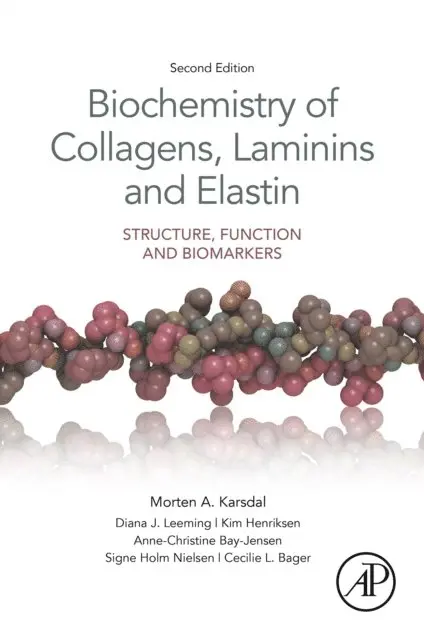
Biochemistry of Collagens, Laminins, and Elastin: Structure, Function, and Biomarkers, Second Edition provides researchers and students current data on key structural proteins (collagens, laminins, and elastin), reviews on how these molecules affect pathologies, and information on how selected modifications of proteins can result in altered signaling properties of the original extracellular matrix component. Further, it discusses the novel concept that an increasing number of components of the extracellular matrix harbor cryptic signaling functions that may be viewed as endocrine function, and it highlights how this knowledge can be exploited to modulate fibrotic disease.
Provides an updated comprehensive introduction to collagen and structural proteins Gives insight into emerging analytical technologies that can detect biomarkers of extracellular matrix degradation Includes seven new chapters, including one on how collagen biomarkers are used in clinical research to support drug development and in precision medicine Contains insights into the biochemical interactions and changes to structural composition of proteins in disease states Proves the importance of proteins for collagen assembly, function, and durabilityBiochemistry of Collagens, Laminins and Elastin
Structure, Function and Biomarkers
1 632 kr
Skickas inom 7-10 vardagar
Biochemistry of Collagens, Laminins, and Elastin: Structure, Function and Biomarkers, Third Edition provides current data on key structural proteins (collagens, laminins, and elastin), reviews on how these molecules affect pathologies, and information on how selected modifications of these proteins can result in altered signaling properties of the original extracellular matrix (ECM). Further, it discusses the novel concept that an increasing number of components of the extracellular matrix harbor cryptic signaling functions with ties to endocrine function, and how this knowledge may be used to modulate various pathologies, including fibrotic disease.
This new edition has been expanded and revised to incorporate recent research advances. Several new chapters explore a range of chronic diseases in which the ECM and collagens, laminin and elastin are central players in disease modulation, including new chapters on lung, skin and intestinal disease, as well as cancers. The new edition also considers emerging analytical technologies that can detect biomarkers of ECM degradation, with discussion of protein quantification and detecting aging of collagens.
Provides an updated, comprehensive discussion of collagen and related structural proteins Contains insights into biochemical interactions and changes to structural composition of proteins in disease states Proves the importance of proteins for collagen assembly, function and durability Examines details on how collagens play a key role in a range of chronic diseases Offers approaches for protein quantification and detection of collagen aging