Moya Cannon - Böcker
Visar alla böcker från författaren Moya Cannon. Handla med fri frakt och snabb leverans.
6 produkter
6 produkter
124 kr
Skickas
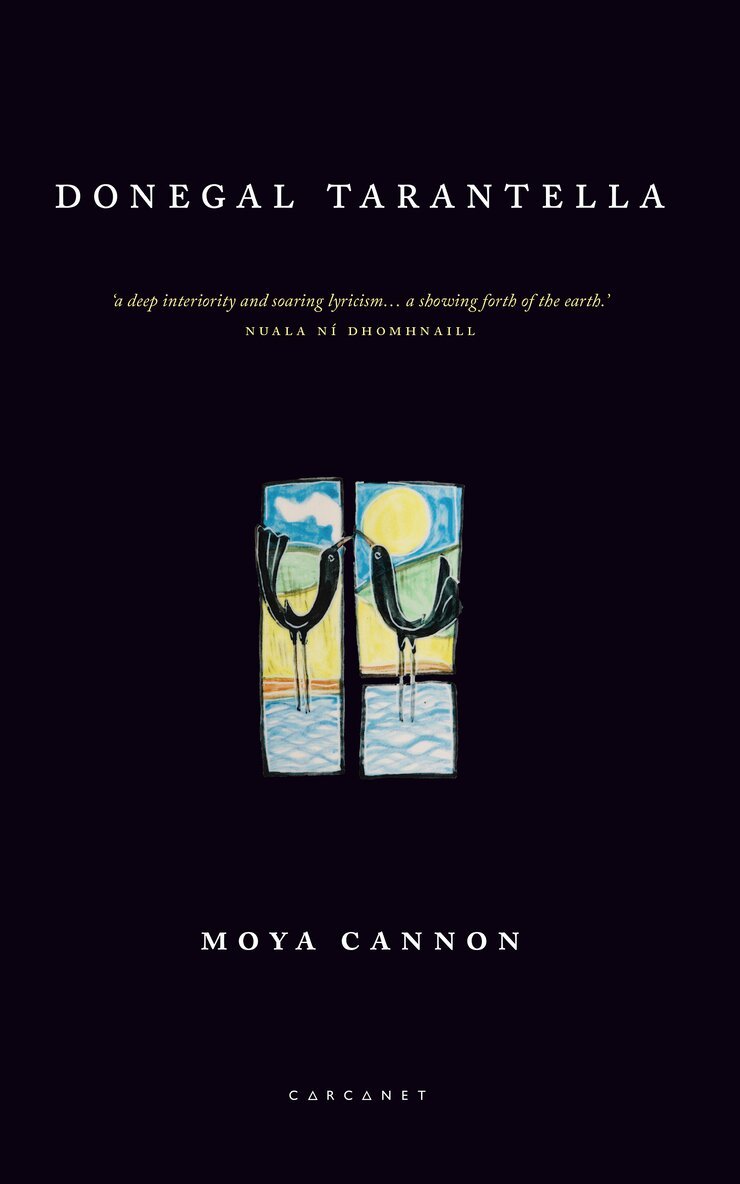
This sixth collection by one of Carcanet's most celebrated Irish poets gathers together lyric poems musing on history, on archaeology, geology and on the deep need of the human spirit to find expression in music and song.
205 kr
Skickas
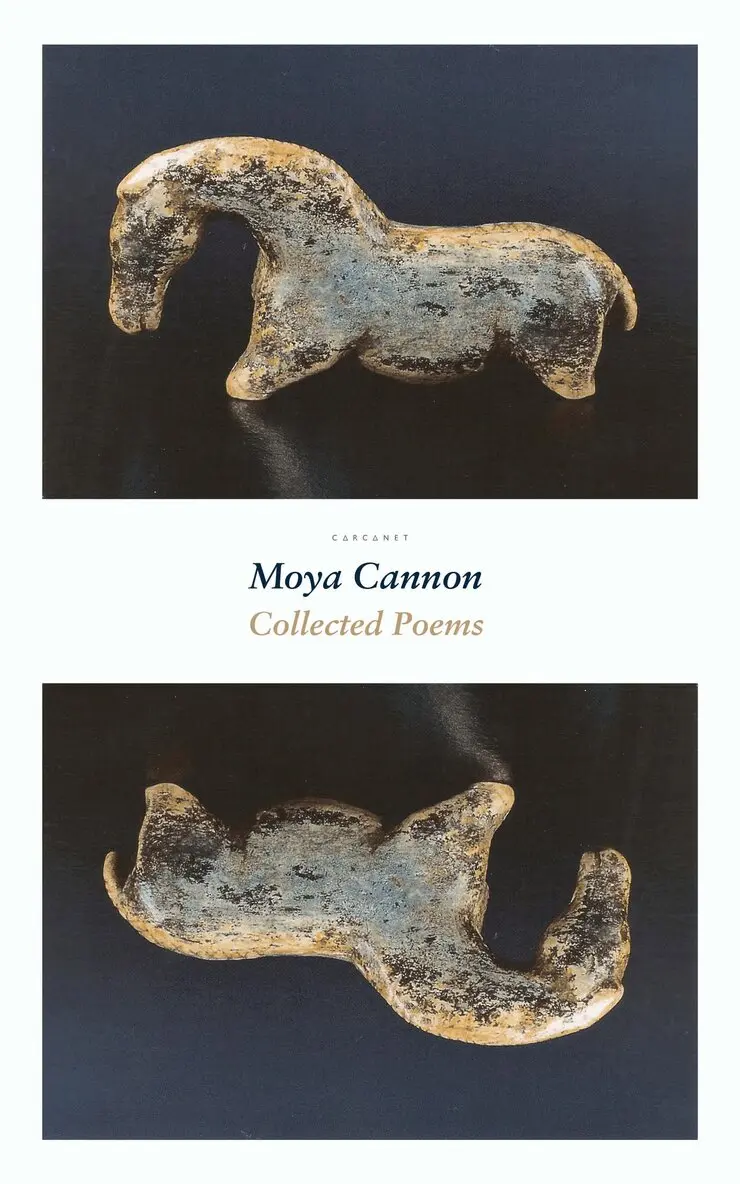
An Irish Times Best Poetry Books of 2021. In Collected Poems one of Ireland's best-loved contemporary poets brings together poems from her six principal collections, Oar (1990), The Parchment Boat (1997), Carrying the Songs (1907), Hands (2011), Keats Lives (2015) and Donegal Tarantella (2019) - more than three decades' work - a poetry of individual poems which compose a memorable, unpredictable sequence of discovery. The immediacy of our response to the beauty of our exploited planet inspire many of Moya Cannon's poems. The perfection of very early cave art she sees as testimony to the centrality of art in our evolution as humans. Geology, archaeology, history and music figure as gateways to a deeper understanding of our relationship with our past and the natural world.'Whatever inspiration is,' she quotes Wislawa Szymborska as saying, 'it is born from a continuous 'I don't know',' from the confusion of adolescence to the very different confusions of adult life. There are dark confusions and those which are luminous and filled with joy - desperation and rapture are their extremes. Each poem makes a space in which the readers share experience and discover something uniquely their own as well. She regards herself as fortunate in having developed in a culture rapidly changing, in which the poetries of the world were becoming available, in which the situation of women was radically changing. She was at once a beneficiary and an agent of change and these poems retain that enabling agency.
278 kr
Tillfälligt slut
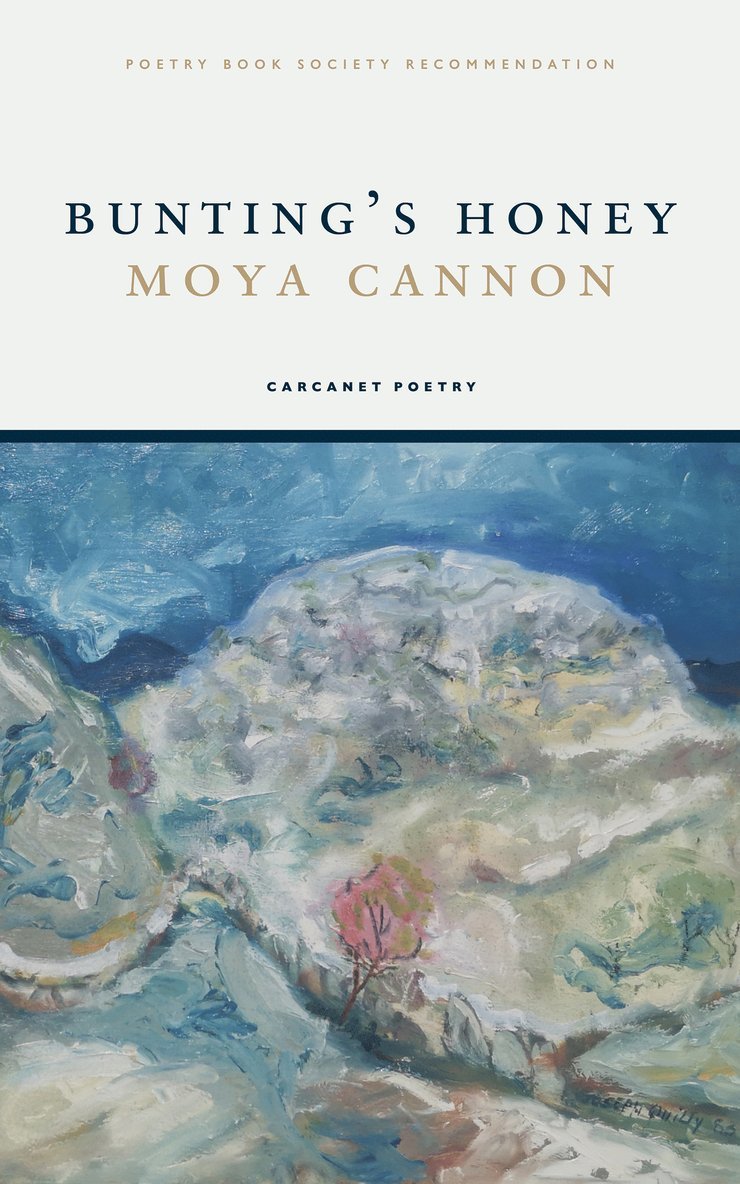
A Poetry Book Society RecommendationThis is a book of wonderings and wanderings. Many of the wanderings are on familiar territory explored on foot, the hills of Wicklow and of the Burren in Co. Clare, the shorelines of Dublin Bay, of North West Donegal, of Galway, Achill and the Aran Islands. Other poems bring us farther afield, to a French village on the banks of the Saône, to the Venetian Island of Torcello, to a sacred mountain lake in China. In these poems there is an alertness to the palimpsest of lives, human and non-human, lived in these places and the mystery of each individual life.The poems bear witness to our primal kinship with the natural world, a source of nourishment, joy and solace, but also to our disastrous, onrushing human conquest of that same earth and seas. The poem ‘Bunting’s Honey’ is a tribute not only to those who composed and played early Irish harp music but also to those who collected the music and who, long after their own deaths, made possible a most remarkable renaissance of that same musical tradition. Similarly, ‘The Glance’, a meditation on Giovanni Bellini’s astonishing painting of a Madonna in the Santa Maria Gloriosa dei Frari in Venice, is a gasp of wonder at how tenderness and trepidation can be conveyed by pigment and brush across five centuries.‘A Technology’ explores the quantum leap of literacy in allowing us, after so many millennia of human existence, to communicate details, not only of our outer lives, but also of our inner thoughts to those not immediately in our presence. ‘Girls Trained in Beautiful Writing’ considers the empowerments of literacy and the limitations imposed on that empowerment. There are other wonderings, not least the horrors of the wars of the twenty-first century, and the need to find a way to somehow set aside fear and difference and to give peace and tenderness a chance.
302 kr
Skickas
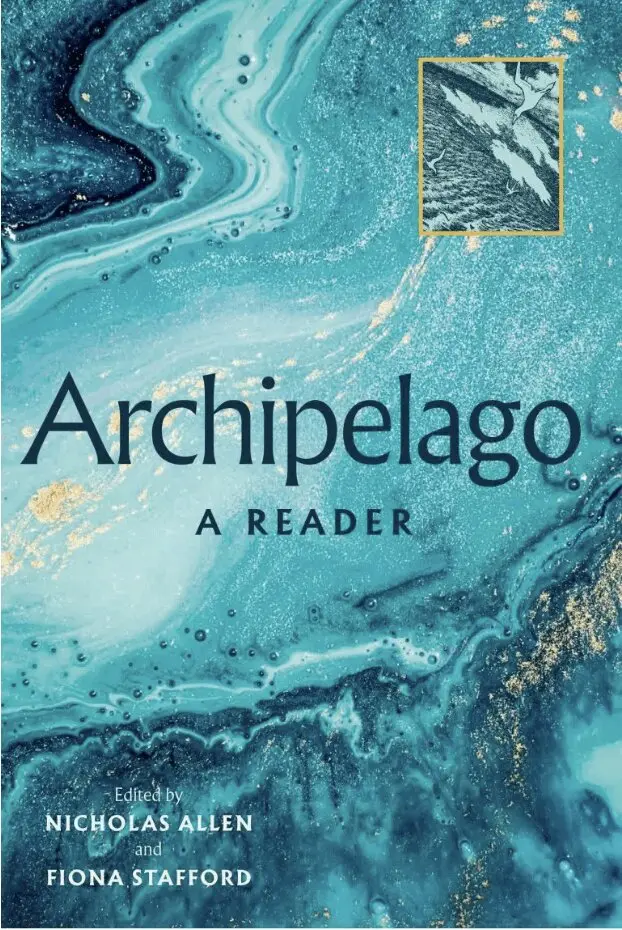
Archipelago is one of the most important and influential literary magazines of the lasttwenty years. Running to twelve editions, it was edited by Andrew McNeillie, with theassistance later of James McDonald Lockhart, and began as an attempt to reimagine therelationships between the islands of Ireland and Britain. Archipelago has brought togetherestablished and emerging artists in creative conversations that have transformed the studyof islands, coasts and waterways. It journeys from the Shetlands to Cornwall, from theAran Islands to the coast of Yorkshire, tracing the cultures of diverse zones through someof the best in contemporary writing about place and people.This collection gathers poetry, prose and visual art in clusters grouped around the Irishand British archipelago, with contributions from an array of significant artists. It includesnewly commissioned work as well as an interview between Andrew McNeillie andRobert Macfarlane on the development of Archipelago across the years.
371 kr
Skickas inom 7-10 vardagar
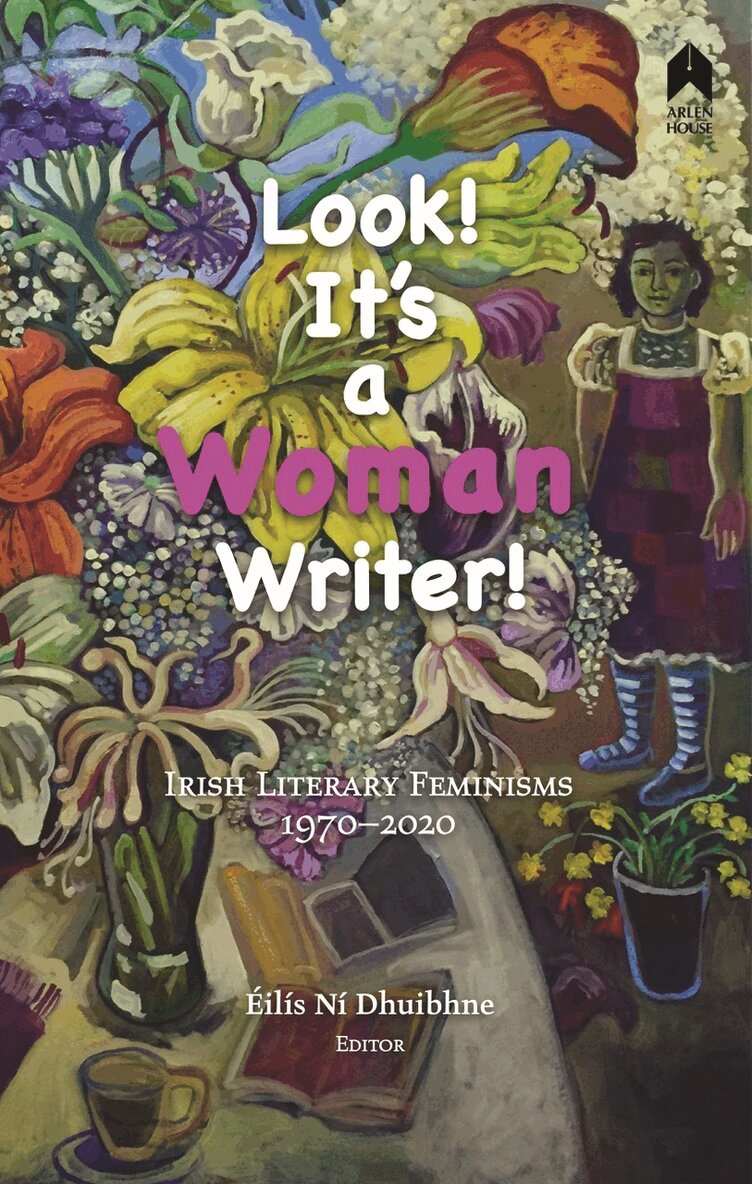
Mapping the changes that have occurred in Irish literature over the past fifty years, this volume includes twenty-one writers, poets, and playwrights from the North and South of Ireland, who tell their own stories. They are funny, tragic, angry, philosophical, but all are vivid personal accounts of their experiences as women writing during a pivotal period in the history of Ireland. With a foreword by Martina Devlin, and an introduction by Éilís Ní Dhuibhne, the anthology includes essays by Cherry Smyth, Mary Morrissy, Lia Mills, Moya Cannon, Aine Ní Ghlinn, Catherine Dunne, Éilís Ní Dhuibhne, Mary O’Donnell, Mary O’Malley, Ruth Carr, Evelyn Conlon, Anne Devlin, Ivy Bannister, Sophia Hillan, Medbh McGuckian, Mary Dorcey, Celia de Fréine, Máiríde Woods, Liz McManus, Mary Rose Callaghan, and Phyl Herbert.
294 kr
Skickas inom 7-10 vardagar
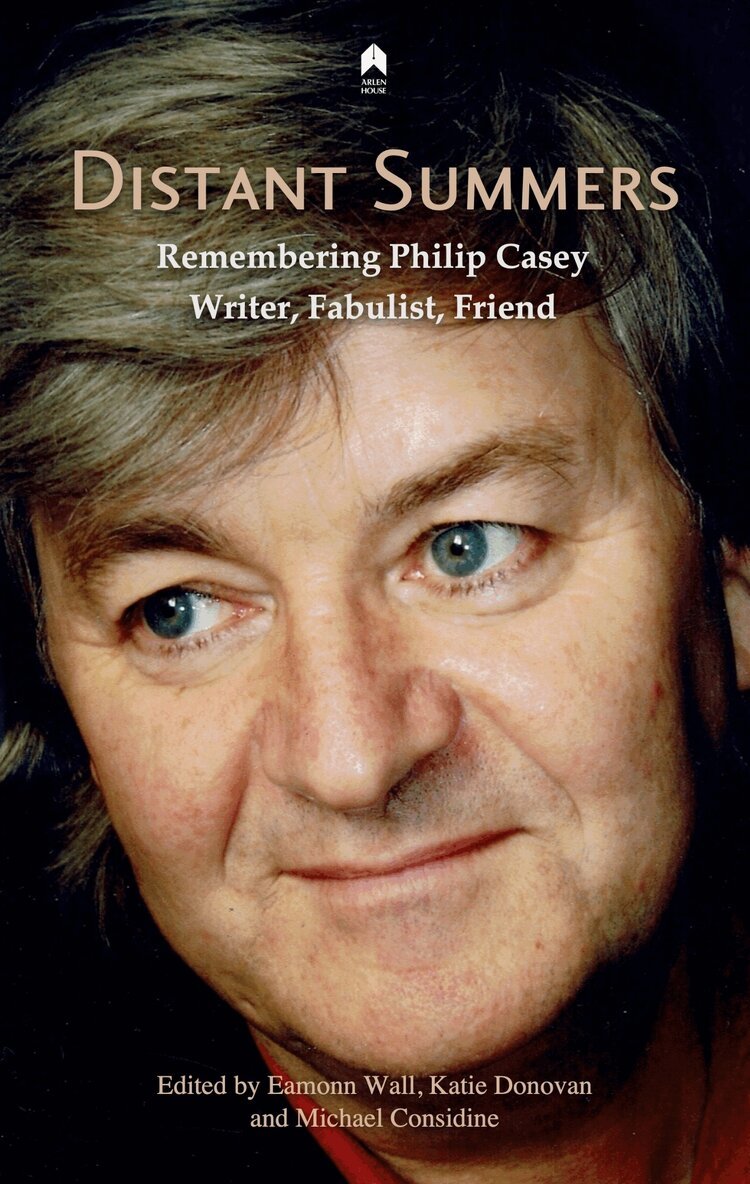
"One of our most beloved contemporary poets", is how former Ireland Professor of Poetry Paula Meehan describes Philip Casey (1950-2018). Cherished by many for his tenderness, fortitude, hope and tenacity, Philip was an award-winning novelist, admired poet and vital presence on the Irish literary scene for four decades. Philip battled repeated health challenges, stood up for causes he believed in, and relished making mischief. He was, in the words of the poet Theo Dorgan, "some man for one man". Philip believed in the idea of a community of writers, and his open-mindedness drew others towards him - whether to his Dublin home, or to his grassroots support base in his earlier home of Hollyfort, Co Wexford. His booming laugh and powerful handshake were legendary. The many contributors, including Sebastian Barry, Eilean Ni Chuilleanain, Dermot Bolger, Moya Cannon and Thomas Lynch, praise Philip Casey's gifts as a writer of poetry and fiction, as well as highlighting their admiration for him as a man.