Mukulika Banerjee - Böcker
Visar alla böcker från författaren Mukulika Banerjee. Handla med fri frakt och snabb leverans.
5 produkter
5 produkter
1 200 kr
Skickas inom 7-10 vardagar
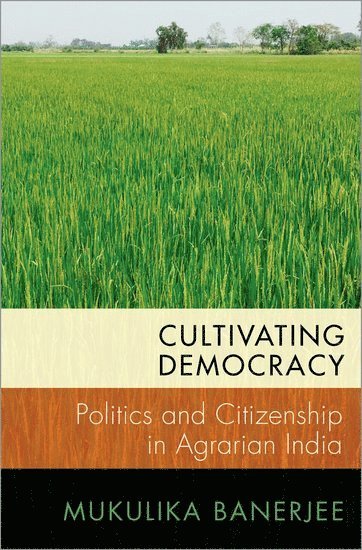
An ethnographic study of Indian democracy that shows how agrarian life creates values of citizenship and active engagement that are essential for the cultivation of democracy.Cultivating Democracy provides a compelling ethnographic analysis of the relationship between formal political institutions and everyday citizenship in rural India. Banerjee draws on deep engagement with the people and social life in two West Bengal villages from 1998-2013, during election campaigns and in the times between, to show how the micro-politics of their day-to-day life builds active engagement with the macro-politics of state and nation. Her sensitive analysis focuses on several "events" in the life of the villages shows how India's agrarian rural society helps create practices and conceptual space for these citizens to be effective participants in India's great democratic exercises. Specifically, she shows how the villagers' creative practices around their kinship, farming and religion, while navigating encounters with local communist cadres, constitute a vital and continuing cultivation of those republican virtues of cooperation, civility, solidarity and vigilance which the visionary Ambedkar considered essential for the success of Indian democracy. At a time when so much of that constitutional vision is under threat, this book provides a crucial scholarly rebuttal to all, on Right or Left, who dismiss rural citizens' political capacities and democratic values. This book will appeal to anyone interested in India's political culture and future, its rural society, or the continuing relevance of political anthropology.
347 kr
Skickas inom 5-8 vardagar
An ethnographic study of Indian democracy that shows how agrarian life creates values of citizenship and active engagement that are essential for the cultivation of democracy.Cultivating Democracy provides a compelling ethnographic analysis of the relationship between formal political institutions and everyday citizenship in rural India. Banerjee draws on deep engagement with the people and social life in two West Bengal villages from 1998-2013, during election campaigns and in the times between, to show how the micro-politics of their day-to-day life builds active engagement with the macro-politics of state and nation. Her sensitive analysis focuses on several "events" in the life of the villages shows how India's agrarian rural society helps create practices and conceptual space for these citizens to be effective participants in India's great democratic exercises. Specifically, she shows how the villagers' creative practices around their kinship, farming and religion, while navigating encounters with local communist cadres, constitute a vital and continuing cultivation of those republican virtues of cooperation, civility, solidarity and vigilance which the visionary Ambedkar considered essential for the success of Indian democracy. At a time when so much of that constitutional vision is under threat, this book provides a crucial scholarly rebuttal to all, on Right or Left, who dismiss rural citizens' political capacities and democratic values. This book will appeal to anyone interested in India's political culture and future, its rural society, or the continuing relevance of political anthropology.
266 kr
Skickas inom 5-8 vardagar
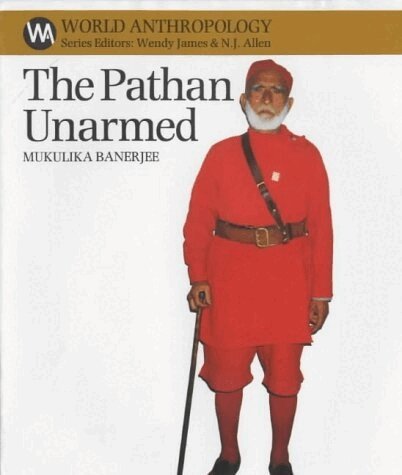
Examines the rise in the inter-war years of a Gandhian influenced non-violent movement in the North West Frontier.The Pukhtun (Pathan) of the North West Frontier are regarded as a warrior people. Yet in the inter-war years there arose a Muslim movement, the Khudai Khidmatgar (Servants of God), which adopted military forms of organizations anddress, but which also drew its inspiration from Gandhian principles of non-violent action and was dedicated to an Indian nationalism rather than communal separatism.Virtually erased from the national historiography of post-partition Pakistan, where they now reside, the ageing veterans of the movement are still highly respected by younger Pukhtun. This is an account of rank and file members of the Khudai Khidmatgar, describing why they joined, what they did, and how they perceived the ethics and aims of the movement. It attempts to answer the questions of how notoriously violent Pukhtun were converted to an ethic of non-violence. It finds the answer rooted in the transformation of older social structures, Islamic revisionism and the redefinition of the traditional code of honour.South Asia excluding India: OUPSeries Editors: Wendy James & N.J. Allen
617 kr
Skickas inom 10-15 vardagar
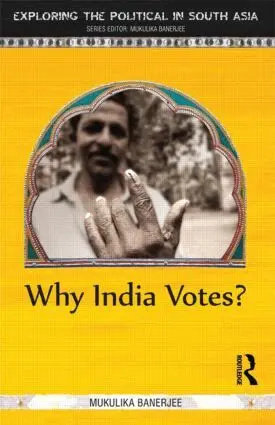
Why India Votes? offers a fascinating account of the Indian electorate through a series of comprehensive ethnographic explorations conducted across the country — Delhi, Uttar Pradesh, Bihar, West Bengal, Chhattisgarh, Madhya Pradesh, Tamil Nadu, Kerala, Maharashtra, Gujarat, and Rajasthan. It probes the motivations of ordinary voters, what they think about politicians, the electoral process, democracy and their own role within it. This book will be useful to scholars and students of political science, anthropology and sociology, those in media and politics, and those interested in elections and democracy as also the informed general reader.
2 692 kr
Skickas inom 10-15 vardagar
Why India Votes? offers a fascinating account of the Indian electorate through a series of comprehensive ethnographic explorations conducted across the country � Delhi, Uttar Pradesh, Bihar, West Bengal, Chhattisgarh, Madhya Pradesh, Tamil Nadu, Kerala, Maharashtra, Gujarat, and Rajasthan. It probes the motivations of ordinary voters, what they think about politicians, the electoral process, democracy and their own role within it. This book will be useful to scholars and students of political science, anthropology and sociology, those in media and politics, and those interested in elections and democracy as also the informed general reader.