Mushegh Asatryan – författare
Visar alla böcker från författaren . Handla med fri frakt och snabb leverans.
5 produkter
5 produkter
Inbunden, Engelska, 2016
572 kr
Skickas inom 5-8 vardagar
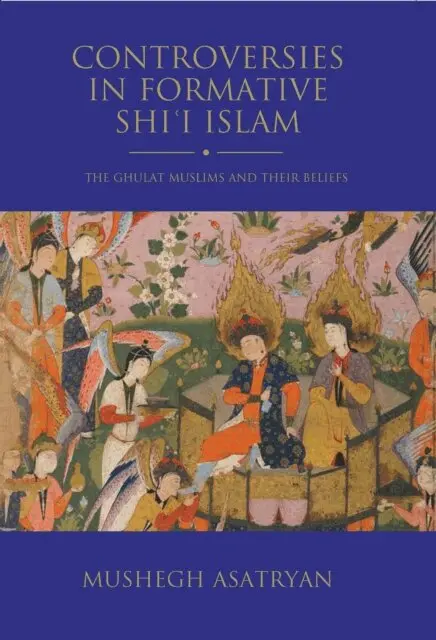
I.B.Tauris in association with the Institute of Ismaili Studies introduces this open access work.Among the various Muslim communities that were articulating their doctrinal positions in the early Islamic centuries, one in particular was known derisively as the Ghulat ('extremists'). This was owing to their specific interpretation of Islam, which included an 'extreme' devotion to the Shi'i Imams and the family of the Prophet, and controversial religious ideas, such as the transmigration of souls into other human or sub-human forms. Widely active in Iraq in the 8th and 9th centuries, the Ghulat developed a complex worldview and produced a rich religious literature. Until now, understanding of this community has mainly relied on sources produced outside of the group, which are inaccurate or polemical in nature. This book looks at newly recovered primary texts in order to study the Ghulat first hand. Mushegh Asatryan examines the development of the Ghulat writings, situating the community within a broader historical context and offering a comprehensive survey of their distinctive cosmology.Through his detailed analysis, the book offers insight into the formation of one of the earliest religious traditions in Islamic history as well as the nature of the community in which texts were produced and circulated.The ebook editions of this book are available open access under a CC BY-NC-ND 4.0 licence on bloomsburycollections.com. Open access was funded by The Institute of Ismaili Studies.
E-bok
Engelska, 2016621 kr
Läs direkt efter köp
I.B.Tauris in association with the Institute of Ismaili StudiesAmong the various Muslim communities that were articulating their doctrinal positions in the early Islamic centuries, one in particular was known derisively as the Ghulat ('extremists'). This was owing to their specific interpretation of Islam, which included an 'extreme' devotion to the Shi'i Imams and the family of the Prophet, and controversial religious ideas, such as the transmigration of souls into other human or sub-human forms. Widely active in Iraq in the 8th and 9th centuries, the Ghulat developed a complex worldview and produced a rich religious literature. Until now, understanding of this community has mainly relied on sources produced outside of the group, which are inaccurate or polemical in nature. This book looks at newly recovered primary texts in order to study the Ghulat first hand. Mushegh Asatryan examines the development of the Ghulat writings, situating the community within a broader historical context and offering a comprehensive survey of their distinctive cosmology.Through his detailed analysis, the book offers insight into the formation of one of the earliest religious traditions in Islamic history as well as the nature of the community in which texts were produced and circulated.
E-bok
PDF, Engelska, 2016621 kr
Läs direkt efter köp
I.B.Tauris in association with the Institute of Ismaili StudiesAmong the various Muslim communities that were articulating their doctrinal positions in the early Islamic centuries, one in particular was known derisively as the Ghulat ('extremists'). This was owing to their specific interpretation of Islam, which included an 'extreme' devotion to the Shi'i Imams and the family of the Prophet, and controversial religious ideas, such as the transmigration of souls into other human or sub-human forms. Widely active in Iraq in the 8th and 9th centuries, the Ghulat developed a complex worldview and produced a rich religious literature. Until now, understanding of this community has mainly relied on sources produced outside of the group, which are inaccurate or polemical in nature. This book looks at newly recovered primary texts in order to study the Ghulat first hand. Mushegh Asatryan examines the development of the Ghulat writings, situating the community within a broader historical context and offering a comprehensive survey of their distinctive cosmology.Through his detailed analysis, the book offers insight into the formation of one of the earliest religious traditions in Islamic history as well as the nature of the community in which texts were produced and circulated.
Del 2 - Studies in Islamic Intellectual History
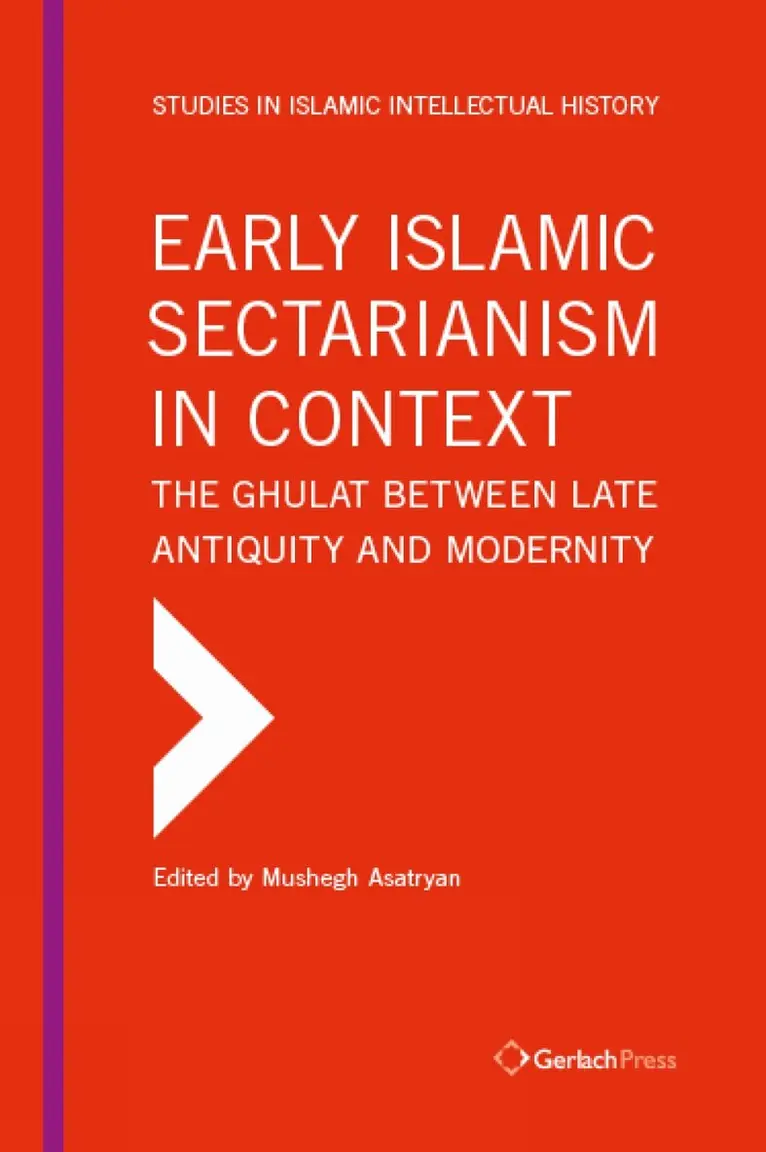
Early Islamic Sectarianism in Context
The Ghulat Between Late Antiquity and Modernity
Inbunden, Engelska, 2026
1 713 kr
Kommande
The essays in this volume open new horizons for studying the Ghulat and early Islamic sectarianism more generally. On the one hand, they eschew the polemical approaches used hitherto, by situating the Ghulat in their proper Late Antique and later contexts. On the other, they engage a number of texts written by the Ghulat themselves, which have only recently become available.In the early 700s, several men rebelled in Iraq, claiming to be acting on behalf of a God who had become incarnate in human shape. They were defeated but their beliefs – God’s taking on human flesh, reincarnation of souls, a chain of prophecy that did not end with Muhammad, etc. – lived on. For centuries after these rebellions, these religious teachings were recorded and elaborated by the followers of these men (in Iraq, Iran, and Syria), creating a rich and imaginative religious literature. Because they did not conform to later standards of Muslim orthodoxy, medieval Muslim writers painted them as heretics and derisively called them ghulāt, i.e. “extremists.” Much of modern scholarship has replicated this approach, treating the Ghulat as bizarre, un-Islamic deviants.
Del 4 - Shii Islam: Texts and Studies
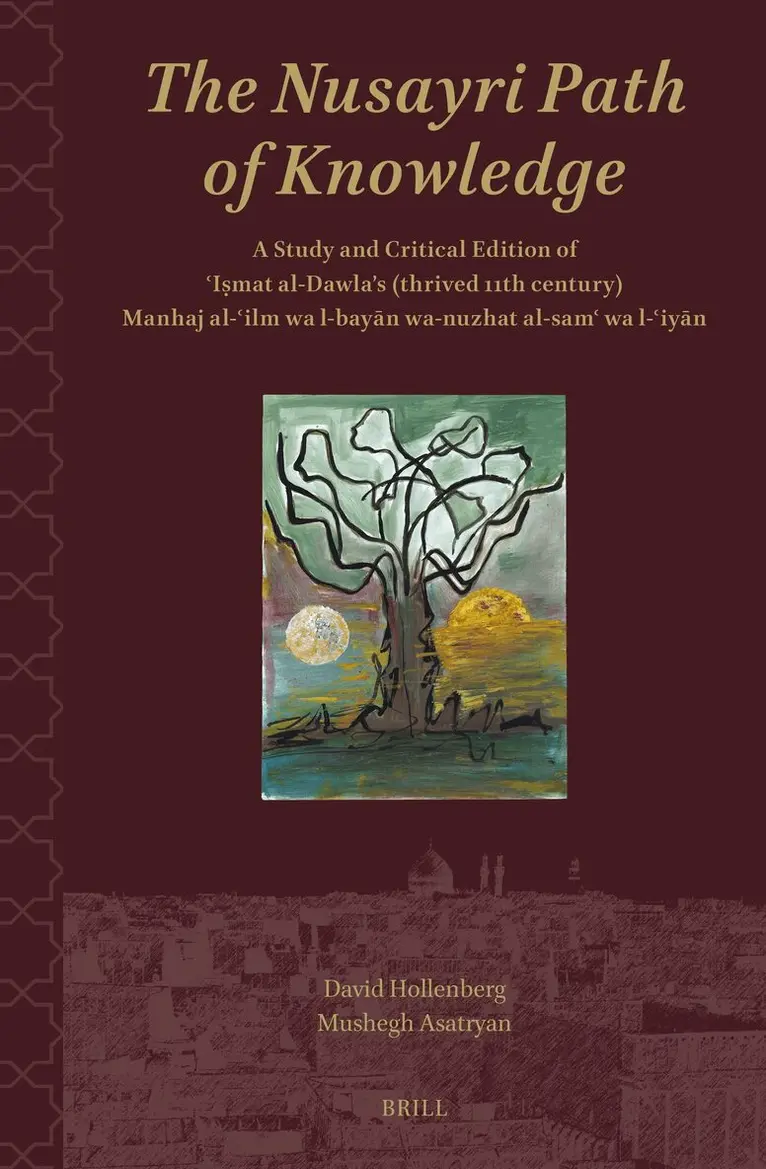
Nusayri Path of Knowledge
A Study and Critical Edition of ʿIṣmat al-Dawla’s (thrived 11th century) Manhaj al-ʿilm wa l-bayān wa-nuzhat al-samʿ wa l-ʿiyān
Inbunden, Arabiska, 2024
1 711 kr
Skickas inom 5-8 vardagar
This book is a study and edition of the Manhaj al-ʿilm wa l-bayān wa-nuzhat al-samʿ wa l-ʿiyān (The Path of Knowledge and Clarification and the Bliss of Hearing and Seeing). The Manhaj is a Nusayri doctrinal treatise composed by ʿIṣmat al-Dawla during the fifth/eleventh century. This edition makes this important source available to scholars for the first time. The Manhaj is a comprehensive compendium of knowledge for followers of the faith. It is also an autobiographic account detailing the author’s conversion and the teachings of his teacher, Abū l-Fatḥ al-Baghdādī. The Manhaj thus provides a personal, vivid account of the networks through which esoteric knowledge was sought and shared