David Hollenberg – författare
Visar alla böcker från författaren David Hollenberg. Handla med fri frakt och snabb leverans.
3 produkter
3 produkter
522 kr
Skickas inom 11-20 vardagar
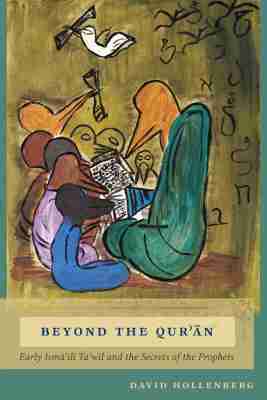
Ismailism, one of the three major branches of Shiism, is best known for ta’wil, an esoteric, allegorizing scriptural exegesis. Beyond the Qur’?n: Early Ismaili ta’wil and the Secrets of the Prophets is the first book-length study of this interpretive genre. Analyzing sources composed by tenth-century Ismaili missionaries in light of social-science theories of cognition and sectarianism, David Hollenberg argues that the missionaries used ta’wil to instill in acolytes a set of symbolic patterns, forms, and “logics.” This shared symbolic world bound the community together as it created a gulf between community members and those outside the movement. Hollenberg thus situates ta’wil socially, as an interpretive practice that sustained a community of believers.An important aspect of ta’wil is its unconventional objects of interpretation. Ismaili missionaries mixed Qur’?nic exegesis with interpretation of Torah, Gospels, Greek philosophy, and symbols such as the Christian Cross and Eucharist, as well as Jewish festivals. Previously scholars have speculated that this extra- Qur’?nic ta’wil was intended to convert Jews and Christians to Ismailism. Hollenberg, departing from this view, argues that such interpretations were, like Ismaili interpretations of the Qur’?n, intended for an Ismaili audience, many of whom converted to the movement from other branches of Shiism.Hollenberg argues that through exegesis of these unconventional sources, the missionaries demonstrated that their imam alone could strip the external husk from all manner of sources and show the initiates reality in its pure, unmediated form, an imaginal world to which they alone had access. They also fulfilled the promise that their imam would teach them the secrets behind all religions, a sign that the initial stage of the end of days had commenced.Beyond the Qur’?n contributes to our understanding of early Ismaili doctrine, Fatimid rhetoric, and, more broadly, the use of esoteric literatures in the history of religion.
2 270 kr
Skickas inom 5-8 vardagar
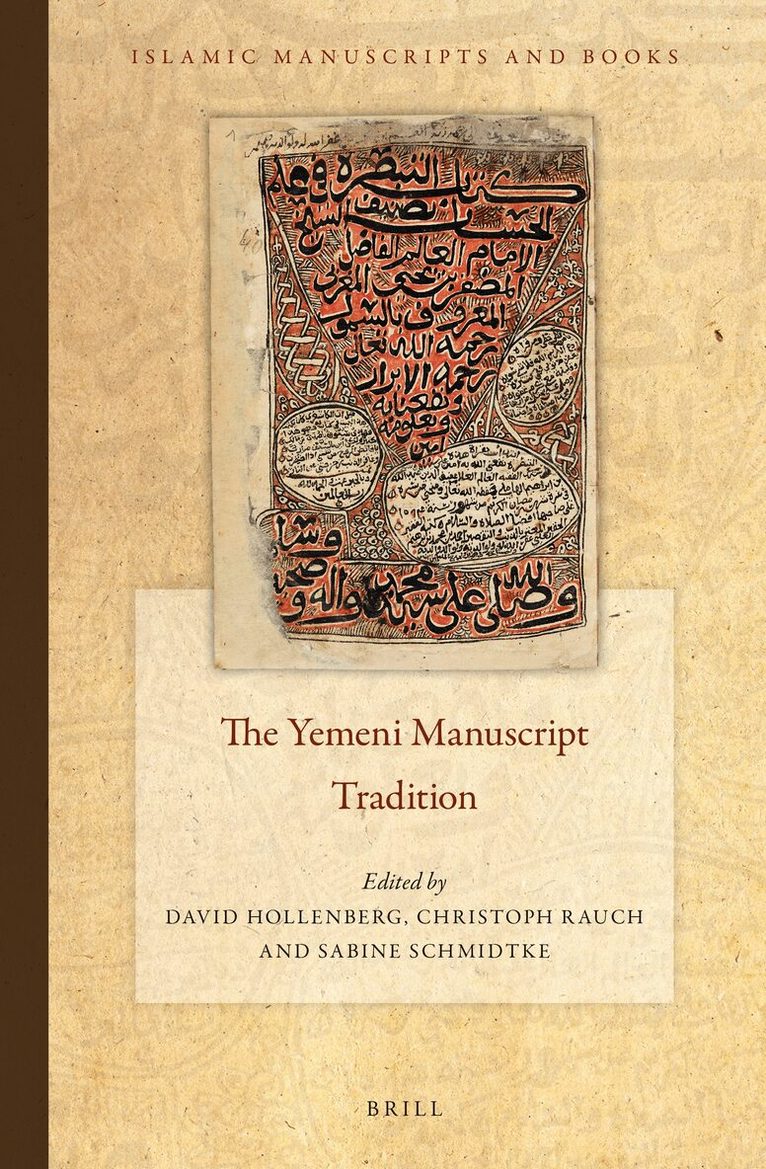
The Yemeni Manuscript Tradition contributes to the study of the manuscript codex and its role in scholastic culture in Yemen. Ranging in period from Islam’s first century to the modern period, all the articles in this volume emerge from the close scrutiny of the manuscripts of Yemen. As a group, these studies demonstrate the range and richness of scholarly methods closely tied to the material text, and the importance of cross-pollination in the fields of codicology, textual criticism, and social and intellectual history. Contributors are: Hassan Ansari, Menashe Anzi, Asma Hilali, Kerstin Hünefeld, Wilferd Madelung, Arianna D’Ottone, Christoph Rauch, Anne Regourd, Sabine Schmidtke, Gregor Schwarb and Jan Thiele.
Del 4 - Shii Islam: Texts and Studies
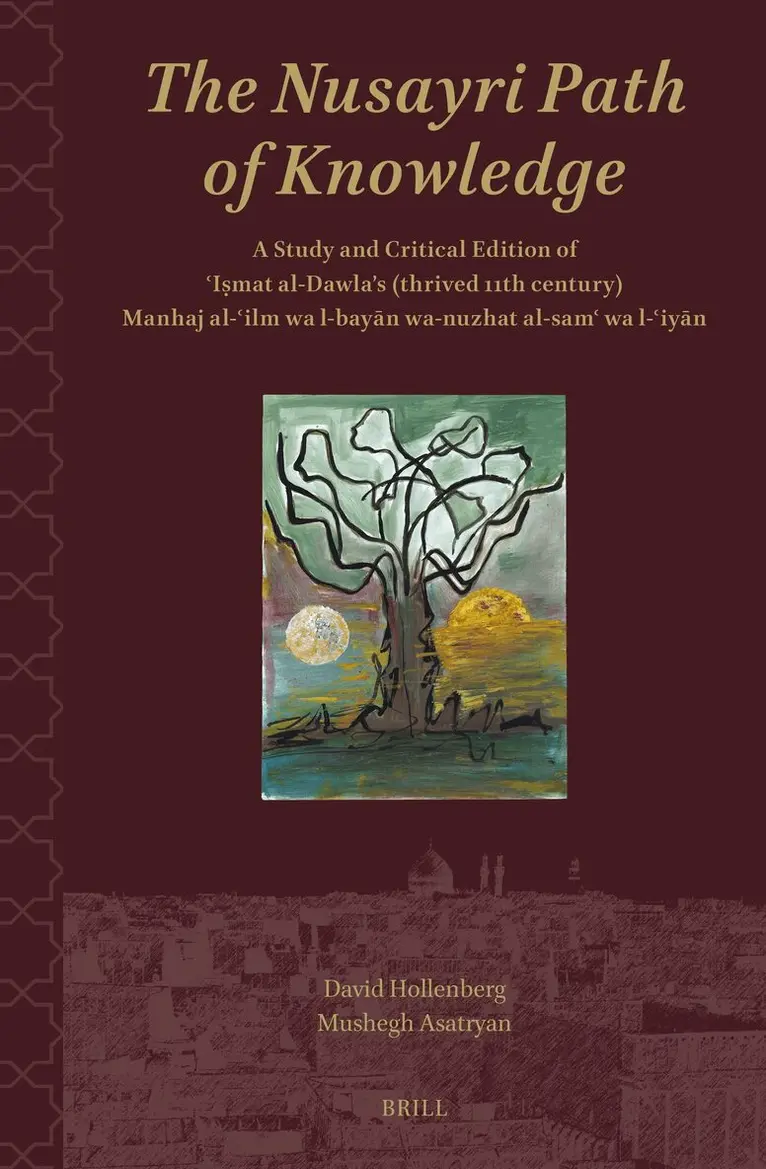
Nusayri Path of Knowledge
A Study and Critical Edition of ʿIṣmat al-Dawla’s (thrived 11th century) Manhaj al-ʿilm wa l-bayān wa-nuzhat al-samʿ wa l-ʿiyān
Inbunden, Arabiska, 2024
1 675 kr
Skickas inom 5-8 vardagar
This book is a study and edition of the Manhaj al-ʿilm wa l-bayān wa-nuzhat al-samʿ wa l-ʿiyān (The Path of Knowledge and Clarification and the Bliss of Hearing and Seeing). The Manhaj is a Nusayri doctrinal treatise composed by ʿIṣmat al-Dawla during the fifth/eleventh century. This edition makes this important source available to scholars for the first time. The Manhaj is a comprehensive compendium of knowledge for followers of the faith. It is also an autobiographic account detailing the author’s conversion and the teachings of his teacher, Abū l-Fatḥ al-Baghdādī. The Manhaj thus provides a personal, vivid account of the networks through which esoteric knowledge was sought and shared