Nancy S. Jecker - Böcker
Visar alla böcker från författaren Nancy S. Jecker. Handla med fri frakt och snabb leverans.
7 produkter
7 produkter
468 kr
Skickas inom 5-8 vardagar
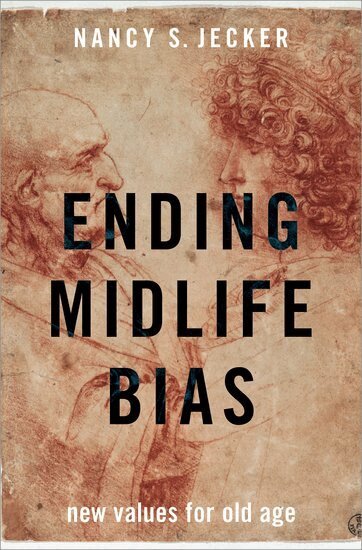
We live at a time when the human lifespan has increased like never before. As average lifespans stretch to new lengths, what impact should this have on our values? Should our values change over the course of our ever-increasing lifespans? Nancy S. Jecker coins the term, the life stage relativity of values, to capture the idea that at different stages of our lives, different ethical concerns shift to the foreground. During early life, infants and small children hold dear the value of being cared for and nurtured by someone they trust--and their vulnerability and dependency make these the right values for them. By early adulthood and continuing into midlife, the capacity for greater physical and emotional independence gives people reason to place more emphasis on autonomy and the ability to freely choose and carry out their plan of life. During old age, heightened risk for chronic disease and disability gives us a reason to shift our focus again, emphasizing safeguarding our central capabilities and keeping our dignity and self-respect intact.Despite different values becoming central at different stages of life, we often assume the standpoint of someone in midlife, who is in the midst of planning a future adulthood that stretches out before them. Jecker coins the term, midlife bias, to refer to the privileging of midlife. Midlife bias occurs when we assume that autonomy should be our central aim at all life stages and give it priority in a wide range of ethical decisions. The privileging of midlife raises fundamental problems of fairness. It also suggests the possibility of large gaps in the ethical principles and theories at hand. Ending Midlife Bias: New Values for Old Age addresses these concerns in a step-wise fashion, focusing on later life. Jecker first introduces a philosophical framework that extends moral theorizing to older adults, addressing midlife bias, the life stage relativity of values, human capabilities and dignity, time's passage, the narrative self, and justice between old and young. She then turns to policy and practice and explores ethical issues in bioethics, long term care, personal robotic assistants, care of the dying and newly dead, ageism in medical research, the allocation of healthcare, mandatory retirement, and the future of population aging.
875 kr
Skickas inom 5-8 vardagar
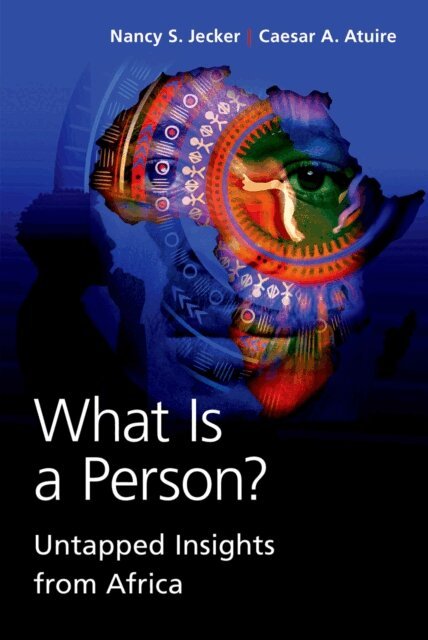
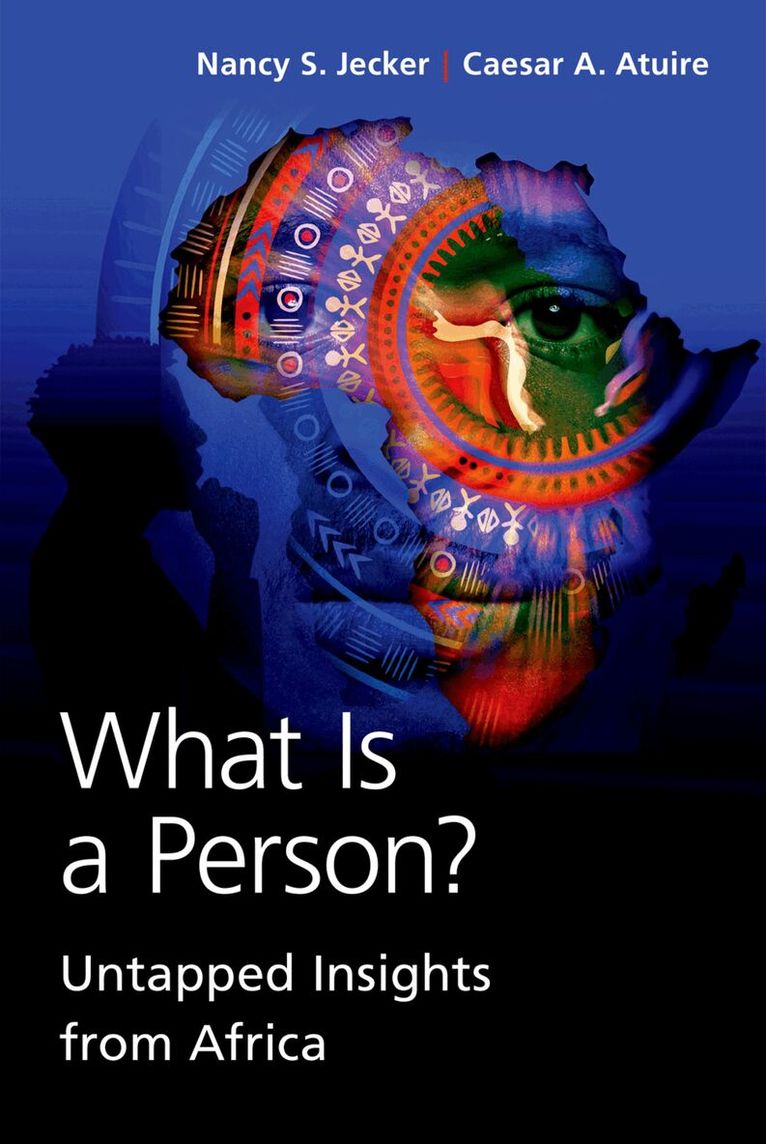
What makes us 'persons' in the moral sense, beings with a certain dignity and worth? Philosophers Nancy S. Jecker and Caesar A. Atuire explore this question by bringing African and Western philosophies into conversation. They start by characterizing the differences in the contemporary scene in Africa and the West, proposing that these differences were not always present, are hardly inevitable, and can and should be bridged. They then introduce the concept of Emergent Personhood, a new philosophy of personhood that combines insights from Africa and the West. It holds that beings with superlative worth emerge through social relational processes involving human beings, yet they are more than the sum of these relationships. Persons have an identity of their own and exhibit superlative moral worth, a remarkable feature not present at the base. Emergent Personhood justifies personhood for all human beings from birth to death. It also gives strong support to personhood for a wide range of animals, soils, rocks, and ecosystems. Focusing on human personhood, Jecker and Atuire argue that high moral status is stable across the lifespan and reaches a terminus with death's declaration, which ends the human-human associations that enable personhood to arise. They conclude with a turn to nonhuman personhood, considering personhood for artificial intelligence, animals, non-living nature, and extra-terrestrial life and lands.
759 kr
Skickas inom 3-6 vardagar
Bioethics: An Introduction to the History, Methods, and Practice, Third Edition provides readers with a modern and diverse look at bioethics while also looking back at early bioethics cases that set ethical standards in healthcare. It is well suited for advanced undergraduate and graduate students who plan to pursue careers in nursing, allied health, or medicine, as well as professionals seeking a comprehensive reference in the field. The authors retain the unique three-pronged approach, discussing the history, the methods, and the practice of bioethics. This approach provides students with a breadth of information, focusing on all sides of the issue, which will allow them to think critically about current bioethical topics. The third edition is updated throughout with new information and cases including, the latest on genetics and reproductive technology, physician-assisted suicide, as well as numerous new cases.
719 kr
Skickas inom 11-20 vardagar
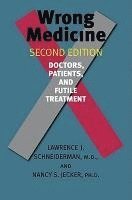
Too often, patients in American hospitals are subjected to painful, expensive, and futile treatments because of a physician's notion of medical duty or a family's demands. Lawrence J. Schneiderman and Nancy S. Jecker renew their call for common sense and realistic expectations in medicine in this revised and updated edition of Wrong Medicine. Written by a physician and a philosopher-both internationally recognized experts in medical ethics- Wrong Medicine addresses key topics that have occupied the media and the courts for the past several decades, including the wrenching Terry Schiavo case. The book combines clear descriptions of ethical principles with real clinical stories to discuss the medical, legal, and political issues that confront doctors today as they seek to provide the best medical care to critically ill patients. The authors have added two chapters that outline theoretical, legislative, judicial, and clinical developments since the first edition. Based on the latest empirical research, Wrong Medicine continues to guide a broad range of health care professionals through the challenges of providing humane end-of-life care.
336 kr
Tillfälligt slut
Too often, patients in American hospitals are subjected to painful, expensive, and futile treatments because of a physician's notion of medical duty or a family's demands. Lawrence J. Schneiderman and Nancy S. Jecker renew their call for common sense and realistic expectations in medicine in this revised and updated edition of Wrong Medicine. Written by a physician and a philosopher-both internationally recognized experts in medical ethics- Wrong Medicine addresses key topics that have occupied the media and the courts for the past several decades, including the wrenching Terry Schiavo case. The book combines clear descriptions of ethical principles with real clinical stories to discuss the medical, legal, and political issues that confront doctors today as they seek to provide the best medical care to critically ill patients. The authors have added two chapters that outline theoretical, legislative, judicial, and clinical developments since the first edition. Based on the latest empirical research, Wrong Medicine continues to guide a broad range of health care professionals through the challenges of providing humane end-of-life care.
1 096 kr
Skickas inom 10-15 vardagar
Aging and Ethics explores the many ethical issues involving the elderly, their care, and their role in society - urgent concerns that have only recently come to the forefront. There are now eight times more Americans over the age of sixty-five than at the turn of this century; their proportion to the rest of the population has almost tripled. And this trend is expected to accelerate into the next century! This aging of society has raised an increasing number of deep and troubling questions: What are our responsibilities toward aging family members? What can we reasonably expect in our own old age? What special role (if any) do older persons play in our society? How can medical resources be distributed justly between generations? How can institutions that serve the elderly preserve values such as autonomy, self-respect, and dignity? Nancy Jecker's timely new volume deals with these and other issues on four levels: the aging individual; aging and filial responsibility; distributive justice in an aging society; and philosophical reflections on aging and death.Aging and Ethics is must reading for professionals in a variety of health-related and counseling fields, as well as for the growing number of concerned laypeople who need to better understand the often compelling issues associated with aging today.
1 096 kr
Skickas inom 10-15 vardagar
Aging and Ethics explores the many ethical issues involving the elderly, their care, and their role in society - urgent concerns that have only recently come to the forefront. There are now eight times more Americans over the age of sixty-five than at the turn of this century; their proportion to the rest of the population has almost tripled. And this trend is expected to accelerate into the next century! This aging of society has raised an increasing number of deep and troubling questions: What are our responsibilities toward aging family members? What can we reasonably expect in our own old age? What special role (if any) do older persons play in our society? How can medical resources be distributed justly between generations? How can institutions that serve the elderly preserve values such as autonomy, self-respect, and dignity? Nancy Jecker's timely new volume deals with these and other issues on four levels: the aging individual; aging and filial responsibility; distributive justice in an aging society; and philosophical reflections on aging and death.Aging and Ethics is must reading for professionals in a variety of health-related and counseling fields, as well as for the growing number of concerned laypeople who need to better understand the often compelling issues associated with aging today.