Nancy S. Steinhardt - Böcker
Visar alla böcker från författaren Nancy S. Steinhardt. Handla med fri frakt och snabb leverans.
2 produkter
2 produkter
752 kr
Skickas inom 7-10 vardagar
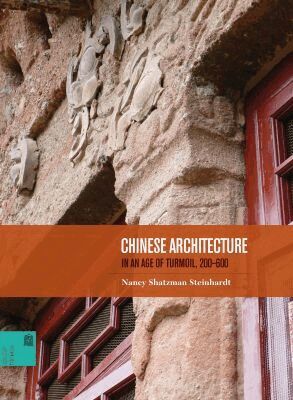
Between the fall of the Han dynasty in 220 CE and the year 600, more than thirty dynasties, kingdoms, and states rose and fell on the eastern side of the Asian continent. The founders and rulers of those polities represented the spectrum of peoples in North, East, and Central Asia. Nearly all of them built palaces, altars, temples, tombs, and cities, and almost without exception, the architecture was grounded in the building tradition of China.Illustrated with colour and black-and-white photographs, maps, and drawings, Chinese Architecture in an Age of Turmoil uses all available evidence—Chinese texts, secondary literature in six languages, excavation reports, and most important, physical remains—to present the architectural history of this tumultuous period in China’s history. Its author, Nancy Shatzman Steinhardt, arguably North America’s leading scholar of pre-modern Chinese architecture, has done field research at nearly every site mentioned, many of which were unknown twenty years ago and have never been described in a Western language.The physical remains are a handful of pagodas, dozens of cave-temples, thousands of tombs, small-scale evidence of architecture such as sarcophaguses, and countless representations of buildings in paint and relief sculpture. Together they narrate an expansive architectural history that offers the first in-depth study of the development, century-by-century, of Chinese architecture of third through the sixth centuries, plus a view of important buildings from the two hundred years before the third century and the resolution of architecture of this period in later construction. The subtext of this history is an examination of Chinese architecture that answers fundamental questions such as: What was achieved by a building system of standardized components? Why has this building tradition of perishable materials endured so long in China? Why did it have so much appeal to non-Chinese empire builders? Does contemporary architecture of Korea and Japan enhance our understanding of Chinese construction? How much of a role did Buddhism play in construction during the period under study? In answering these questions, the book focuses on the relation between cities and monuments and their heroic or powerful patrons, among them Cao Cao, Shi Hu, Empress Dowager Hu, Gao Huan, and lesser-known individuals. Specific and uniquely Chinese aspects of architecture are explained. The relevance of sweeping—and sometimes uncomfortable—concepts relevant to the Chinese architectural tradition such as colonialism, diffusionism, and the role of historical memory also resonate though the book.Published in association with Hong Kong University Press, China.
725 kr
Skickas
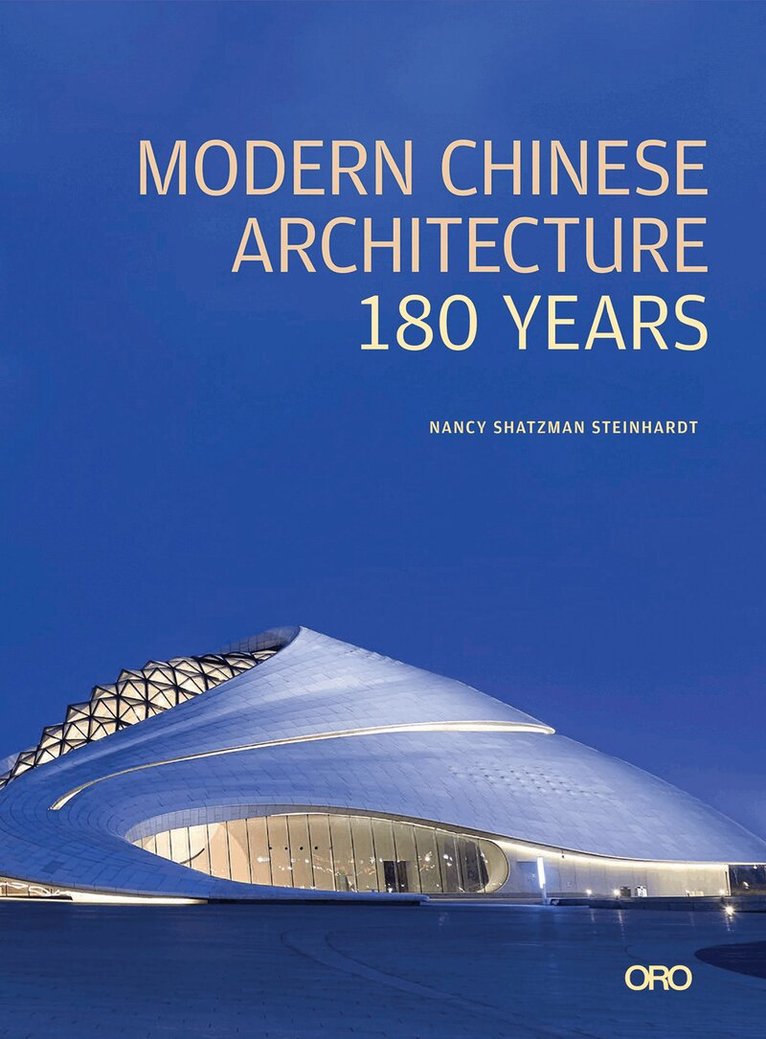
This is a clear, accurate, readable survey of the dramatic transformation of Chinese architecture from 1840 through 2020. It narrates the change from a predominantly timber-frame tradition to construction in twisted steel and ecologically sensitive local materials. The book places the buildings in historical context. Modern Chinese Architecture: 180 Years tells the dramatic story of the transformation of Chinese architecture from a predominantly modular, timber-frame, single-story building system with ceramic tile roofs of anonymous, local craftsmen to skyscrapers designed by internationally acclaimed architects, from temple markets and itinerant peddlers to megamalls, and from open air stages to auditoriums and stadiums with cutting-edge acoustics. The architectural transformation occurs as China transforms from a dynasty ruled by emperors to a republic to a people’s republic, from a country in which fewer than half the male population, and perhaps 10 percent of the female population could read to at least 97% literacy, and from a population that was fewer than 5 percent to more than 60 percent urban. The development of architecture in China is explained century-by-century through five generations of architects: foreigners, China’s first generation who study modern architecture abroad, their students who design in China during years of war with Japan, internal warfare, and the Cultural Revolution, the next generation who in the 1980s begin to study abroad again, and designers of this century from every continent who compete to transform the Chinese landscape. The buildings in this book come from every province.