Naomi Waltham-Smith - Böcker
Visar alla böcker från författaren Naomi Waltham-Smith. Handla med fri frakt och snabb leverans.
6 produkter
6 produkter
1 025 kr
Skickas inom 5-8 vardagar
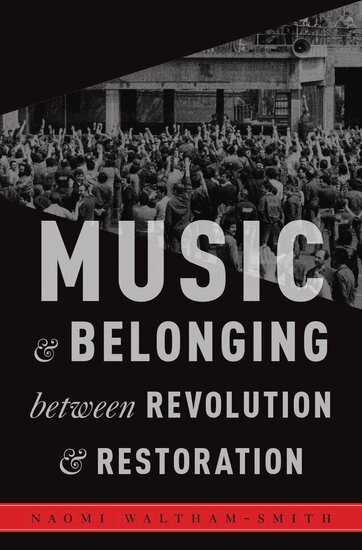
In what ways is music implicated in the politics of belonging? How is the proper at stake in listening? What role does the ear play in forming a sense of community? Music and Belonging argues that music, at the level of style and form, produces certain modes of listening that in turn reveal the conditions of belonging. Specifically, listening shows the intimacy between two senses of belonging: belonging to a community is predicated on the possession of a particular property or capacity.Somewhat counter-intuitively, Waltham-Smith suggests that this relation between belonging-as-membership and belonging-as-ownership manifests itself with particular clarity and rigor at the very heart of the Austro-German canon, in the instrumental music of Haydn, Mozart, and Beethoven. Music and Belonging provocatively brings recent European philosophy into contact with the renewed music-theoretical interest in Formenlehre, presenting close analyses to show how we might return to this much-discussed repertoire to mine it for fresh insights.The book's theoretical landscape offers a radical update to Adornian-inspired scholarship, working through debates over relationality, community, and friendship between Derrida, Nancy, Agamben, Badiou, and Malabou. Borrowing the deconstructive strategies of closely reading canonical texts to the point of their unraveling, the book teases out a new politics of listening from processes of repetition and liquidation, from harmonic suppressions and even from trills. What emerges is the enduring political significance of listening to this music in an era of heightened social exclusion under neoliberalism.
1 234 kr
Skickas inom 10-15 vardagar
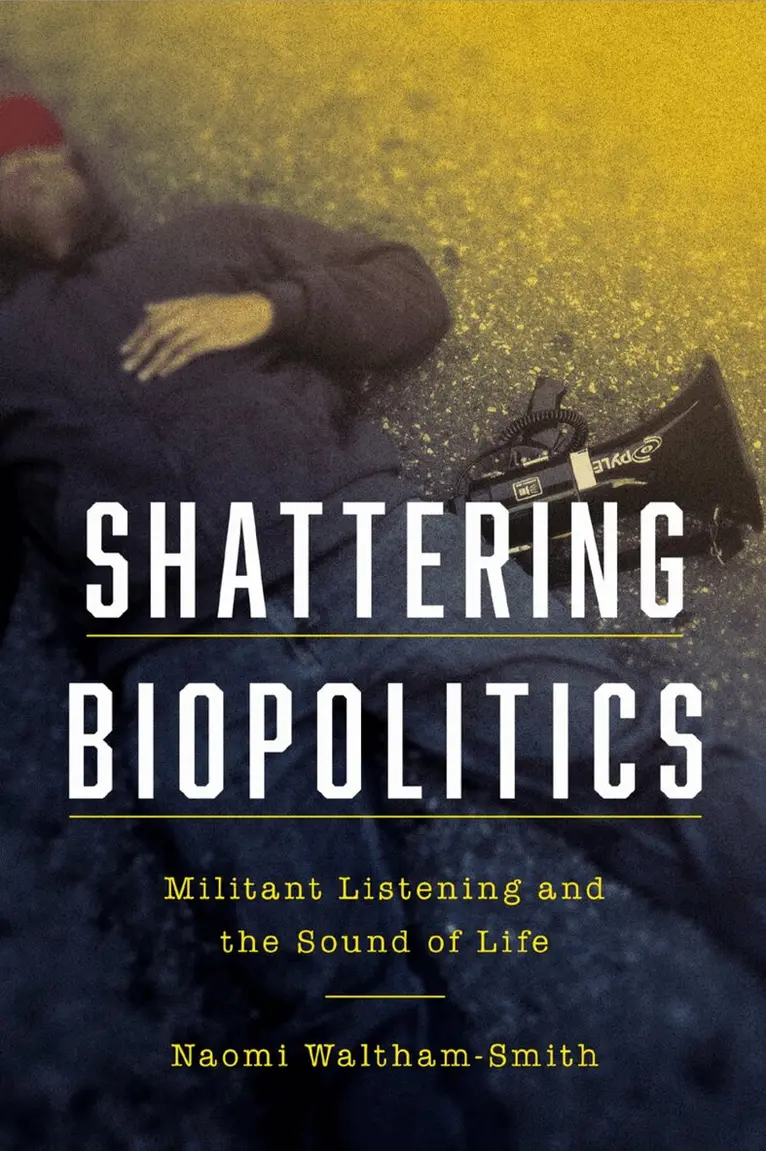
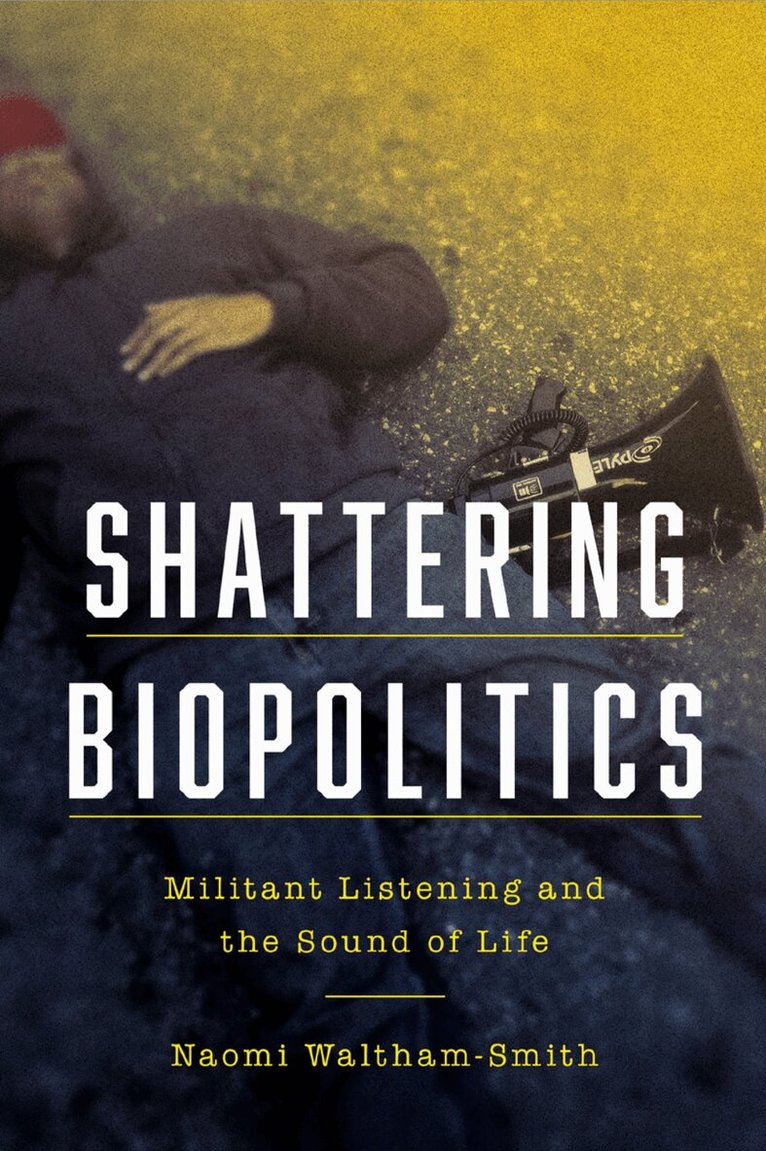
A missed phone call. A misheard word. An indiscernible noise. All these can make the difference between life and death. Failures to listen are frequently at the root of the marginalization and exclusion of certain forms of life. Audibility decides livability. Shattering Biopolitics elaborates for the first time the intimate and complex relation between life and sound in recent European philosophy, as well as the political stakes of this entanglement.Nowhere is aurality more pivotal than in the dialogue between biopolitical theory and deconstruction about the power over and of life. Closer inspection of these debates reveals that the main points of contention coalesce around figures of sound and listening: inarticulate voices, meaningless sounds, resonant echoes, syncopated rhythms, animal cries, bells, and telephone rings.Shattering Biopolitics stages a series of "over-hearings" between Jacques Derrida and Giorgio Agamben who often mishear or completely miss hearing in trying to hear too much. Notions of power and life are further diffracted as Hélène Cixous, Catherine Malabou, and Jean-Luc Nancy join in this high-stakes game of telephone. This self-destructive character of aurality is akin to the chanciness and risk of death that makes life all the more alive for its incalculability.Punctuating the book are a series of excurses on sound-art projects that interrogate aurality's subordination and resistance to biopower from racialized chokeholds and anti-migrant forensic voice analysis to politicized speech acts and activist practices of listening.Shattering Biopolitics advances the burgeoning field of sound studies with a new, theoretically sophisticated analysis of the political imbrications of its object of inquiry. Above all, it is sound's capacity to shatter sovereignty, as if it were a glass made to vibrate at its natural frequency, that allows it to amplify and disseminate a power of life that refuses to be mastered.
336 kr
Skickas inom 7-10 vardagar
A missed phone call. A misheard word. An indiscernible noise. All these can make the difference between life and death. Failures to listen are frequently at the root of the marginalization and exclusion of certain forms of life. Audibility decides livability. Shattering Biopolitics elaborates for the first time the intimate and complex relation between life and sound in recent European philosophy, as well as the political stakes of this entanglement.Nowhere is aurality more pivotal than in the dialogue between biopolitical theory and deconstruction about the power over and of life. Closer inspection of these debates reveals that the main points of contention coalesce around figures of sound and listening: inarticulate voices, meaningless sounds, resonant echoes, syncopated rhythms, animal cries, bells, and telephone rings.Shattering Biopolitics stages a series of "over-hearings" between Jacques Derrida and Giorgio Agamben who often mishear or completely miss hearing in trying to hear too much. Notions of power and life are further diffracted as Hélène Cixous, Catherine Malabou, and Jean-Luc Nancy join in this high-stakes game of telephone. This self-destructive character of aurality is akin to the chanciness and risk of death that makes life all the more alive for its incalculability.Punctuating the book are a series of excurses on sound-art projects that interrogate aurality's subordination and resistance to biopower from racialized chokeholds and anti-migrant forensic voice analysis to politicized speech acts and activist practices of listening.Shattering Biopolitics advances the burgeoning field of sound studies with a new, theoretically sophisticated analysis of the political imbrications of its object of inquiry. Above all, it is sound's capacity to shatter sovereignty, as if it were a glass made to vibrate at its natural frequency, that allows it to amplify and disseminate a power of life that refuses to be mastered.
309 kr
Skickas
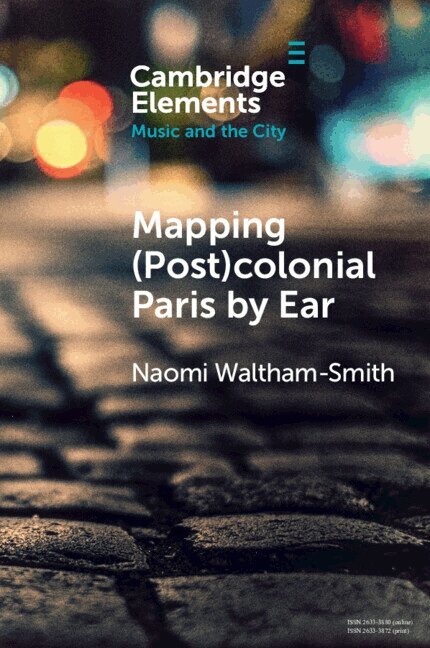
What does the urban (post)colonial condition sound like? To what extent and how is France's colonial history audible today on the streets, specifically in the Parisian quartiers populaires? Musical and sonic production has long been entangled with social movements in France and her overseas territories, and genres such as hip hop and raï have been closely associated with the urban spaces of Paris's racialized neighborhoods and with political resistance. This Element refines and extends these analyses up to contemporary antiracist and environmental struggles. Its novelty lies in telling these narratives from the perspective of the urban field recordist, reinventing the bourgeois figure of the flâneur as a feminist-decolonial activist and configuring listening as an expressly spatial practice of mapping the city. The discrete binaural microphones tucked in her ears capture everything from Franco-Maghrebi musical dissent through the sounds of police brutality and carceral capitalism to transcolonial reverberations with struggles elsewhere.
1 023 kr
Skickas inom 7-10 vardagar
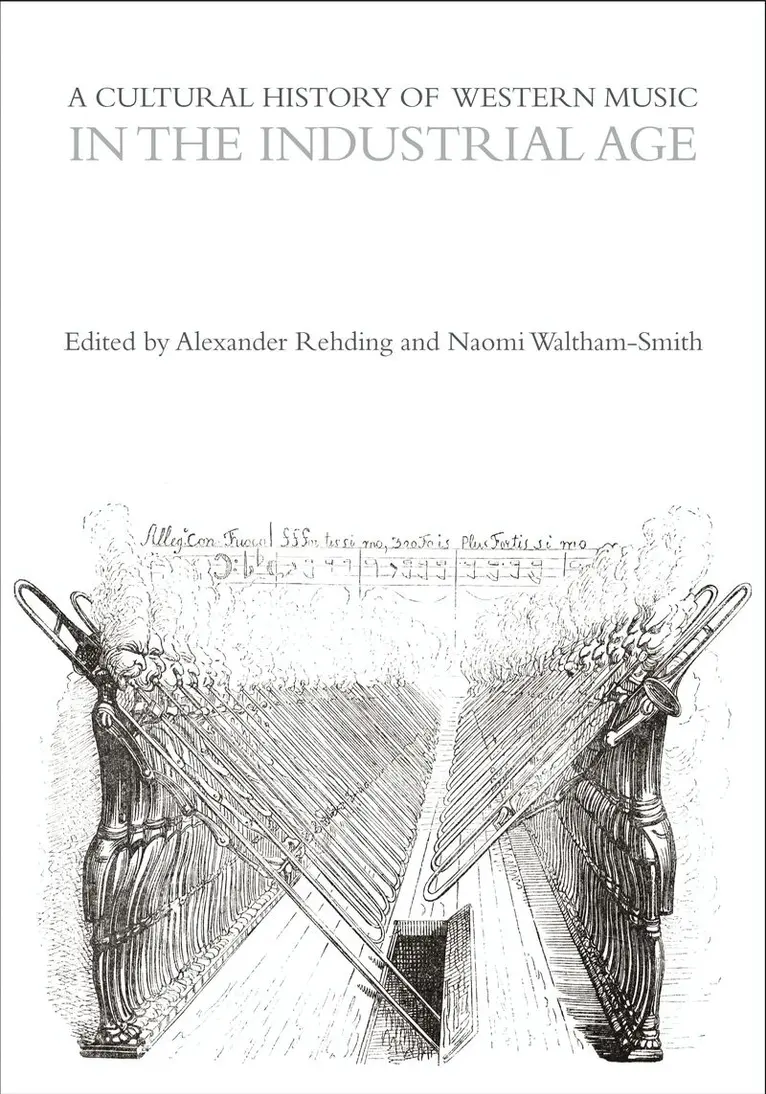
A CULTURAL HISTORY OF WESTERN MUSIC IN THE INDUSTRIAL AGEA Cultural History of Western Music in the Industrial Age covers the period from 1790 to 1920, when Western music became entangled with political, technological, and economic change on a global scale. Known as the Romantic era and renowned for its genius composers and virtuoso performers, this period charged full steam ahead, with Western audiences marveling at musics from the far reaches of the world, folksong collectors searching for the musical soul of the people, nation-states demanding national anthems, philosophers contending with the issue of slavery, and the phonograph rewriting musical memory. Besides its traditional aesthetic, ethical, and pedagogical functions, Western music became a force in an evolving landscape of work, leisure, and global economy, beating the drums of industrialization.The 6 volume set of the Cultural History of Western Music presents the first comprehensive history from classical antiquity to today, covering all forms and aspects of music and its ever-changing social context. The themes covered in each volume are society; philosophies; politics; exchange; education; popular culture; performance; and technologies.The Cultural Histories SeriesA Cultural History of Western Music is part of The Cultural Histories Series. Titles are available as hardcover sets for libraries needing just one subject or preferring a tangible reference for their shelves or as part of a fully-searchable digital library. The digital product is available to institutions by annual subscription or on perpetual access via www.bloomsburyculturalhistory.com . Individual volumes for academics and researchers interested in specific historical periods are also available in print or digitally via www.bloomsburycollections.com .
260 kr
Skickas inom 10-15 vardagar
Free Listening offers a radical reframing of seemingly intractable debates and polarized positions on free speech, academic freedom, systemic injustice, and political dissent by shifting attention from our voices to our ears. Instead of reclaiming the terrain of free speech that is increasingly ceded to conservatives, Naomi Waltham-Smith argues that progressives should assume a more radical task-to liberate listening from those frameworks that have determined what freedom looks like, who enjoys it, and at what cost. Refocusing on aural responsiveness forces a confrontation with the liberal tradition that has traditionally anchored claims for freedom of expression and inquiry. If listening is placed at the heart of public deliberation and disagreeing well, the relational, open-ended, and unpredictable character of free expression becomes a common good.In a wide-ranging critical reflection on issues from civility to criticality, righteous anger to gentle listening, and silencing to streaming platforms, Free Listening makes an ambitious contribution to sound studies and political philosophy. Weaving together deconstruction, Black political thought, and decolonial theory, Waltham-Smith argues that the retort to accusations of “cancel culture” should be a revival of abolition democracy.