Alexander Rehding – författare
Visar alla böcker från författaren Alexander Rehding. Handla med fri frakt och snabb leverans.
18 produkter
18 produkter
Inbunden, Engelska, 2017
1 175 kr
Skickas inom 5-8 vardagar
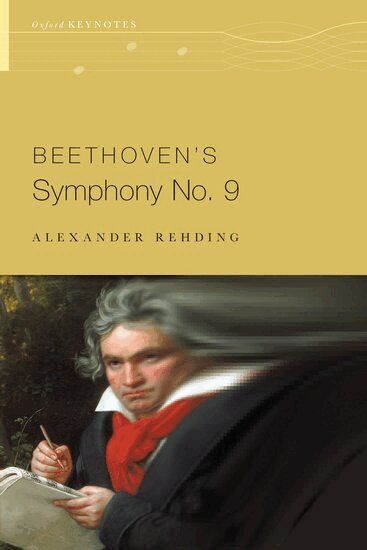
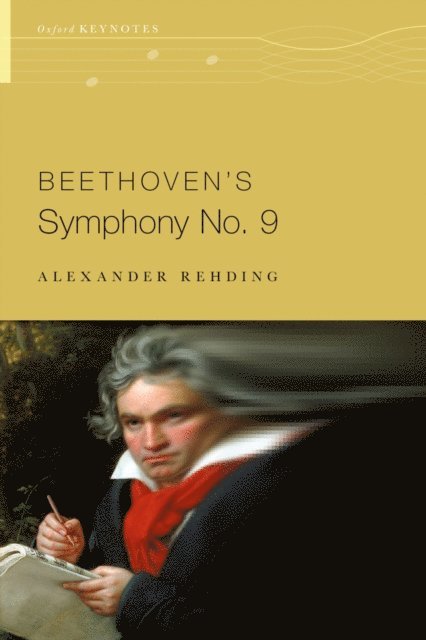
Beethoven's Ninth Symphony has held musical audiences captive for close to two centuries. Few other musical works hold such a prominent place in the collective imagination; each generation rediscovers the work for itself and makes it its own. Honing in on the significance of the symphony in contemporary culture, this book establishes a dialog between Beethoven's world and ours, marked by the earthshattering events of 1789 and of 1989. In particular, this book outlines what is special about the Ninth in millennial culture. In the present day, music is encoded not only as score but also as digital technology. We encounter Beethoven 9 flashmobs, digitally reconstructed concert halls, globally synchonized performances, and other time-bending procedures. The digital artwork 9 Beet Stretch even presents the Ninth at glacial speed over twenty-four hours, challenges our understanding of the symphony, and encourages us to confront the temporal dimension of Beethoven's music. In the digital age, the Ninth emerges as a musical work that is recomposed and reshaped-and that is robust enough to live up to such treatment-continually adapting to a changing world with changing media.
Häftad, Engelska, 2017
251 kr
Skickas inom 5-8 vardagar
Beethoven's Ninth Symphony has held musical audiences captive for close to two centuries. Few other musical works hold such a prominent place in the collective imagination; each generation rediscovers the work for itself and makes it its own. Honing in on the significance of the symphony in contemporary culture, this book establishes a dialog between Beethoven's world and ours, marked by the earthshattering events of 1789 and of 1989. In particular, this book outlines what is special about the Ninth in millennial culture. In the present day, music is encoded not only as score but also as digital technology. We encounter Beethoven 9 flashmobs, digitally reconstructed concert halls, globally synchonized performances, and other time-bending procedures. The digital artwork 9 Beet Stretch even presents the Ninth at glacial speed over twenty-four hours, challenges our understanding of the symphony, and encourages us to confront the temporal dimension of Beethoven's music. In the digital age, the Ninth emerges as a musical work that is recomposed and reshaped-and that is robust enough to live up to such treatment-continually adapting to a changing world with changing media.
Inbunden, Engelska, 2020
2 226 kr
Skickas inom 5-8 vardagar
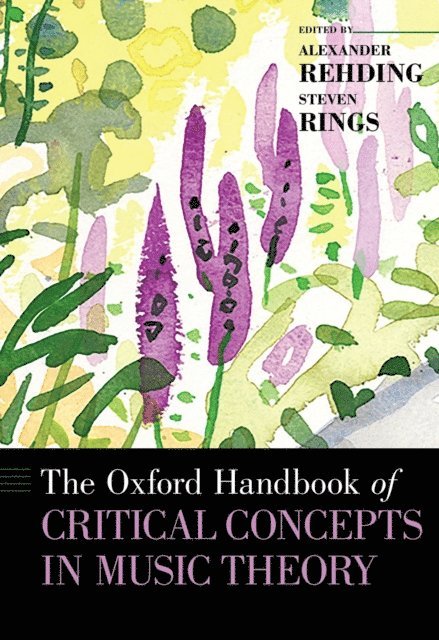
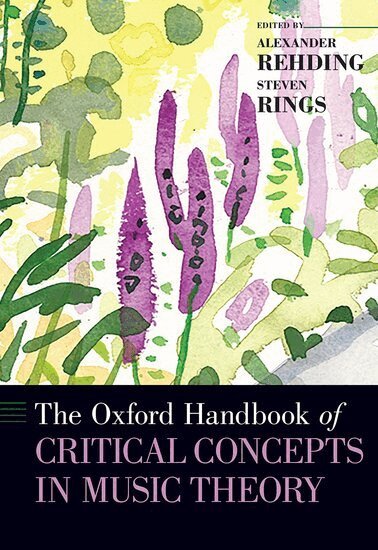
Music Theory has a lot of ground to cover. Especially in introductory classes a whole range of fundamental concepts are introduced at fast pace that can never be explored in depth or detail, as other new topics become more pressing. The short time we spend with them in the classroom belies the complexity (and, in many cases, the contradictions) underlying these concepts. This book takes the time to tarry over these complexities, probe the philosophical assumptions on which these concepts rest, and shine a light on all their iridescent facets. This book presents music-theoretical concepts as a register of key terms progressing outwards from smallest detail to discussions of the music-theoretical project on the largest scale. The approaches individual authors take range from philosophical, historical, or analytical to systematic, cognitive, and critical-theorical-covering the whole diverse spectrum of contemporary music theory. In some cases authors explore concepts that have not yet been widely added to the theorist's toolkit but deserve to be included; in other cases concepts are expanded beyond their core repertory of application. This collection does not shy away from controversy. Taken in their entirety, the essays underline that music theory is on the move, exploring new questions, new repertories, and new approaches. This collection is an invitation to take stock of music theory in the early twenty-first century, to look back and to encourage discussion about its future directions. Its chapters open up a panoramic view of the contemporary music-theoretical landscape with its expanding repertories and changing guiding questions, and offers suggestions as to where music theory is headed in years to come.
Inbunden, Engelska, 2021
1 731 kr
Skickas inom 5-8 vardagar
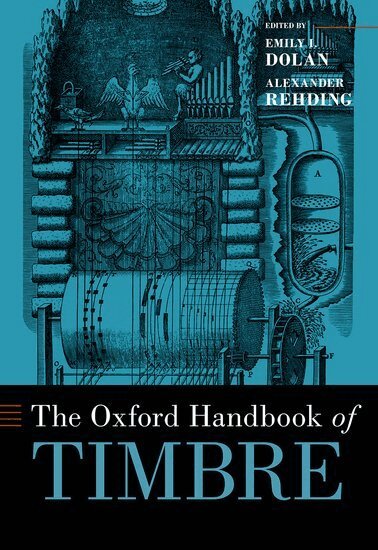
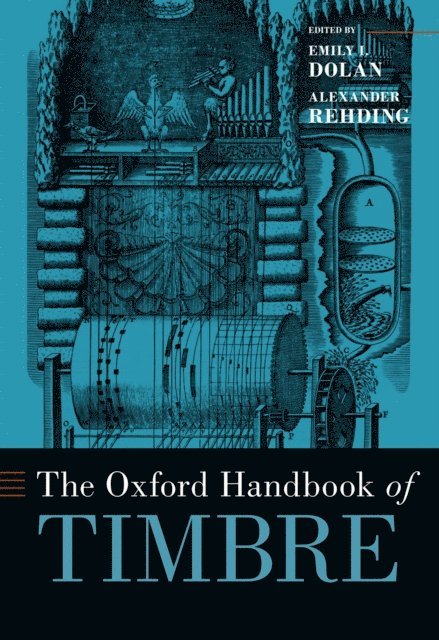
Despite its importance as a central feature of musical sounds, timbre has rarely stood in the limelight. First defined in the eighteenth century, denigrated during the nineteenth, the concept of timbre came into its own during the twentieth century and its fascination with synthesizers and electronic music-or so the story goes. But in fact, timbre cuts across all the boundaries that make up musical thought-combining scientific and artistic approaches to music, material and philosophical aspects, and historical and theoretical perspectives. Timbre challenges us to fundamentally reorganize the way we think about music.The twenty-five essays that make up this collection offer a variety of engagements with music from the perspective of timbre. The boundaries are set as broad as possible: from ancient Homeric sounds to contemporary sound installations, from birdsong to cochlear implants, from Tuvan overtone singing to the tv show The Voice, from violin mutes to Moog synthesizers. What unifies the essays across this vast diversity is the material starting point of the sounding object. This focus on the listening experience is radical departure from the musical work that has traditionally dominated musical discourse since its academic inception in late-nineteenth-century Europe.Timbre remains a slippery concept that has continuously demanded more, be it more precise vocabulary, a more systematic theory, or more rigorous analysis. Rooted in the psychology of listening, timbre consistently resists pinning complete down. This collection of essays provides an invitation for further engagement with the range of fascinating questions that timbre opens up.
Häftad, Engelska, 2017
519 kr
Skickas inom 5-8 vardagar
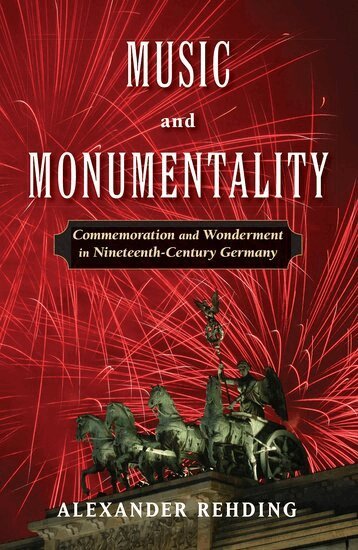
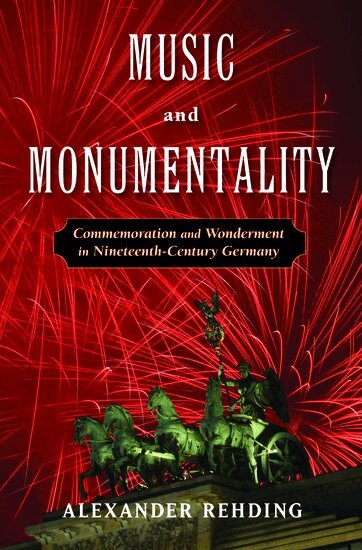
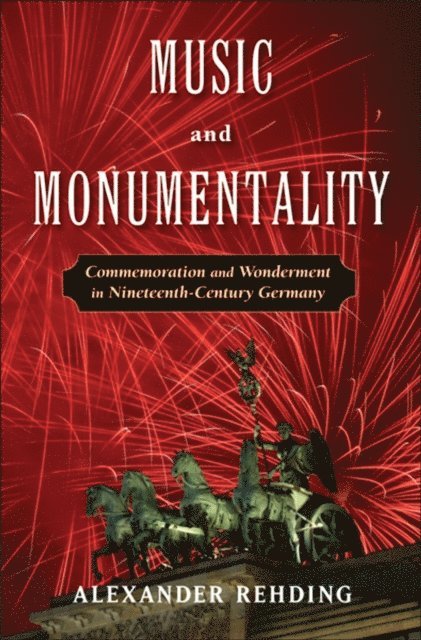
A few weeks after the reunification of Germany, Leonard Bernstein raised his baton above the ruins of the Berlin Wall and conducted a special arrangement of Beethoven's Ninth Symphony. The central statement of the work, that "all men will be brothers," captured the sentiment of those who saw a brighter future for the newly reunited nation. This now-iconic performance is a palpable example of "musical monumentality" - a significant concept that underlies our cultural and ideological understanding of Western music since the nineteenth century. Although the concept was first raised in the earliest years of musicological study in the 1930s, a satisfying exploration of the "monumental" in music has not yet been made. Alexander Rehding, one of the brightest young stars in the field takes on the task in Music and Monumentality, an elegant, thorough treatment that will serve as a foundation for all future discussion in the area.Rehding sets his focus on the main players of the period within the Austro-German repertoire - Beethoven, Liszt, Wagner, Brahms, Bruckner, and Mahler - as he unpacks a twofold definition of musical monumentality. In the conventional sense, monumentality is a stylistic property often described as 'grand,' 'uplifting,' and 'sublime,' rife with overpowering brass chorales, sparking string tremolos, triumphant fanfares, and glorious thematic returns. Yet Rehding sees the monumental in music performing a cultural task as well: it is employed in the service of establishing national identity. Through a clear theoretical lens, Rehding examines how grand sound effects are strategically employed with the view to overwhelming audiences, how supposedly immutable musical halls of fame change over time, how challenging musical works are domesticated, how the highest cultural achievements are presented in immediately consumable form - in short, how German music emerges as a unified cultural and musical brand.Music and Monumentality is an important addition to the libraries of students and scholars of Western musicology and music theory, as well as all readers and listeners interested in music theory, nationalism, and the nineteenth century.
Inbunden, Engelska, 2011
2 580 kr
Skickas inom 5-8 vardagar
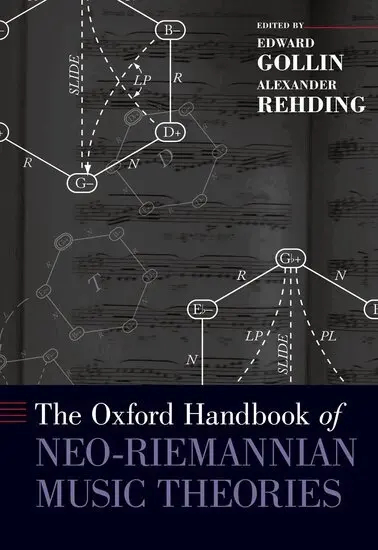
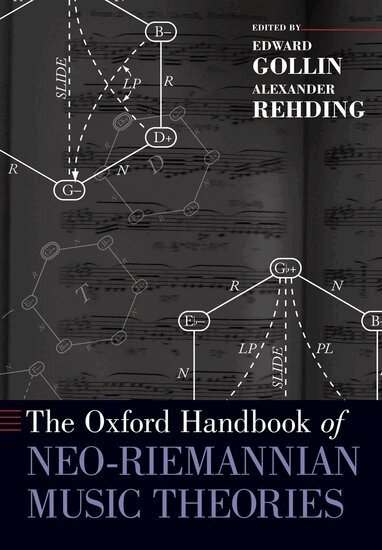
In recent years Hugo Riemann's ideas have thoroughly captured the music-theoretical imagination, both in the United States and abroad. Neo-Riemannian theory has proven particularly adept at explaining features of chromatic music where other theoretical approaches have failed, and thereby established itself as the leading theoretical approach of our time. The Oxford Handbook of Neo-Riemannian Music Theories brings together an international group of leading proponents of Riemannian and neo-Riemannian theory for a thoroughgoing exploration of the music-analytical, systematic, and historical aspects of this important new field. The volume elucidates key aspects of the field, draws connections between Riemann's original ideas and current thought, and suggests new applications and avenues for further study. A number of essays suggest connections to other fields of inquiry, such as cognitive and mathematical music theory, as well as applications in the field of metric or melodic analysis. The selection of essays is complemented by several of Hugo Riemann's key original texts, many of which appear in English translation for the first time, and is rounded off by a glossary of key concepts for easy reference.
Inbunden, Engelska, 2009
856 kr
Skickas inom 5-8 vardagar
A few weeks after the reunification of Germany, Leonard Bernstein raised his baton above the ruins of the Berlin Wall and conducted a special arrangement of Beethoven's Ninth Symphony. The central statement of the work, that "all men will be brothers," captured the sentiment of those who saw a brighter future for the newly reunited nation. This now-iconic performance is a palpable example of "musical monumentality" - a significant concept which underlies our cultural and ideological understanding of Western art music since the nineteenth-century. Although the concept was first raised in the earliest years of musicological study in the 1930s, a satisfying exploration of the "monumental" in music has not yet been made. Alexander Rehding, one of the brightest young stars in the field, takes on the task in Resounding Monumentality, an elegant, thorough treatment that will serve as a foundation for all future discussion in this area. Rehding sets his focus on the main players of the period within the Austro-German repertoire -Beethoven, Liszt, Wagner, Brahms, Bruckner and Mahler- as he unpacks a two-fold definition of "musical monumentality." In the conventional sense, monumentality is a stylistic property often described as 'grand,' 'uplifting,' and 'sublime' and rife with overpowering brass chorales, sparkling string tremolos, triumphant fanfares, and glorious thematic returns. Yet Rehding sees the monumental in music performing a cultural task as well: it is employed in the service of establishing national identity. Through a clear theoretical lens, Rehding examines how grand sound effects are strategically employed with the view to overwhelming audiences, how supposedly immutable musical halls of fame change over time, how challenging musical works are domesticated, how the highest cultural achievements are presented in immediately consumable form-in a word, how German music emerges as a unified cultural and musical brand.
Häftad, Engelska, 2014
723 kr
Skickas inom 5-8 vardagar
In recent years Hugo Riemann's ideas have thoroughly captured the music-theoretical imagination, both in the United States and abroad. Neo-Riemannian theory has proven particularly adept at explaining features of chromatic music where other theoretical approaches have failed, and in so doing has established itself as the leading theoretical approach of our time. The Oxford Handbook of Neo-Riemannian Music Theories brings together an international group of leading proponents of Riemannian and neo-Riemannian theory for a thoroughgoing exploration of the music-analytical, systematic, and historical aspects of this important new field. The volume elucidates key aspects of the field, draws connections between Riemann's original ideas and current thought, and suggests new applications and avenues for further study. A number of essays suggest connections to other fields of inquiry, such as cognitive and mathematical music theory, as well as applications in the field of metric or melodic analysis. The selection of essays is complemented by several of Hugo Riemann's key original texts, many of which appear in English translation for the first time, and is rounded off by a glossary of key concepts for easy reference.
Häftad, Engelska, 2006
595 kr
Skickas inom 7-10 vardagar
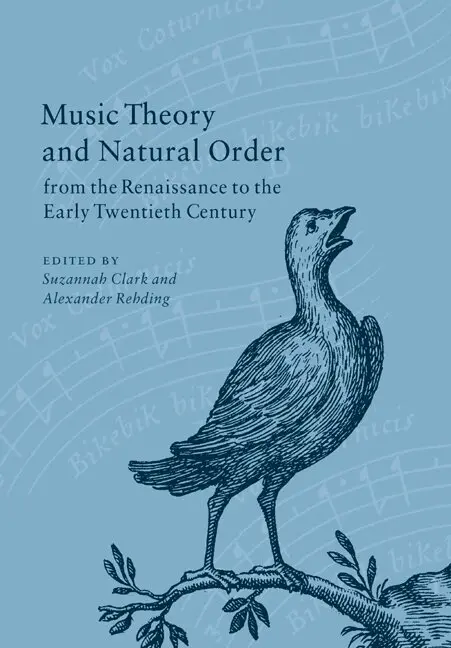
Music theory of almost all ages has relied on nature in its attempts to explain music. The understanding of what 'nature' is, however, is subject to cultural and historical differences. In exploring ways in which music theory has represented and employed natural order since the scientific revolution, this volume asks some fundamental questions not only about nature in music theory, but also the nature of music theory. In an array of different approaches, ranging from physical acoustics to theology and Lacanian psychoanalysis, these essays examine how the multifarious conceptions of nature, located variously between scientific reason and divine power, are brought to bear on music theory. They probe the changing representations and functions of nature in the service of music theory and highlight the ever-changing configurations of nature and music, as mediated by the music-theoretical discourse.
Del 11 - New Perspectives in Music History and Criticism
Hugo Riemann and the Birth of Modern Musical Thought
Häftad, Engelska, 2009
462 kr
Skickas inom 7-10 vardagar
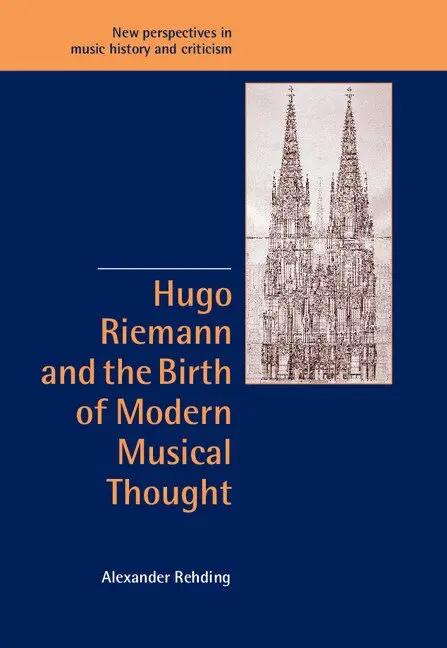
Generally acknowledged as the most important German musicologist of his age, Hugo Riemann (1849-1919) shaped the ideas of generations of music scholars, not least because his work coincided with the institutionalisation of academic musicology around the turn of the last century. This influence, however, belies the contentious idea at the heart of his musical thought, an idea he defended for most of his career - harmonic dualism. By situating Riemann's musical thought within turn-of-the-century discourses about the natural sciences, German nationhood and modern technology, this book reconstructs the cultural context in which Riemann's ideas not only 'made sense' but advanced an understanding of the tonal tradition as both natural and German. Riemann's musical thought - from his considerations of acoustical properties to his aesthetic and music-historical views - thus regains the coherence and cultural urgency that it once possessed.
Del 11 - New Perspectives in Music History and Criticism
Hugo Riemann and the Birth of Modern Musical Thought
Inbunden, Engelska, 2003
1 344 kr
Skickas inom 7-10 vardagar
Generally acknowledged as the most important German musicologist of his age, Hugo Riemann (1849-1919) shaped the ideas of generations of music scholars, not least because his work coincided with the institutionalisation of academic musicology around the turn of the last century. This influence, however, belies the contentious idea at the heart of his musical thought, an idea he defended for most of his career - harmonic dualism. By situating Riemann's musical thought within turn-of-the-century discourses about the natural sciences, German nationhood and modern technology, this book reconstructs the cultural context in which Riemann's ideas not only 'made sense' but advanced an understanding of the tonal tradition as both natural and German. Riemann's musical thought - from his considerations of acoustical properties to his aesthetic and music-historical views - thus regains the coherence and cultural urgency that it once possessed.
Häftad, Engelska, 2016
167 kr
Skickas inom 5-8 vardagar
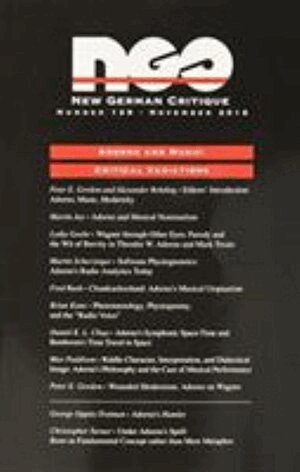
A special issue of New German CritiqueThe posthumous publication of Theodor W. Adorno’s works on music continues to reveal the special relationship between music and philosophy in his thinking. These important works have not, however, received as much scholarly attention as they deserve. Contributors to this issue seek to provide insight into some of the key themes raised in these works, including the sociology of musical genre, the historical transformation of music from the "heroic" or high-bourgeois era to late modernity, the meaning of both performance and listening in the era of mass communication, and the specific challenges or deformations of the radio on musical form, a theme that implicates many of the digital practices of our own age. There is much left to discover in these new publications, and they pose again, with renewed vigor, the question of Adorno’s AktualitÄt-his polyvalent, untranslatable term for, among other things, the intellectual relationship between the present and the past.ContributorsDaniel K. L. Chua, Lydia Goehr, Peter E. Gordon, Martin Jay, Brian Kane, Max Paddison, Alexander Rehding, Fred Rush, Martin Scherzinger
Del 9 - Isham Library Papers
Music in Time
Phenomenology, Perception, Performance
Häftad, Engelska, 2020
339 kr
Skickas inom 5-8 vardagar
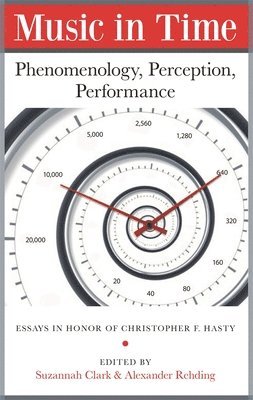
Music exists in time. All musicians know this fundamental truth—but what does it actually mean? Thirteen scholars probe the temporality of music from a great variety of perspectives, in response to challenges that Christopher F. Hasty, Walter Naumburg Professor of Music at Harvard University, laid out in his groundbreaking Meter as Rhythm.The essays included here bridge the conventional divides between theory, history, ethnomusicology, aesthetics, performance practice, cognitive psychology, and dance studies. In these investigations, music emerges as an art form that has an important lesson to teach. Not only can music be understood as sounds shaped in time but—more radically—as time shaped in sounds.
Inbunden, Engelska, 2026
1 037 kr
Skickas inom 5-8 vardagar
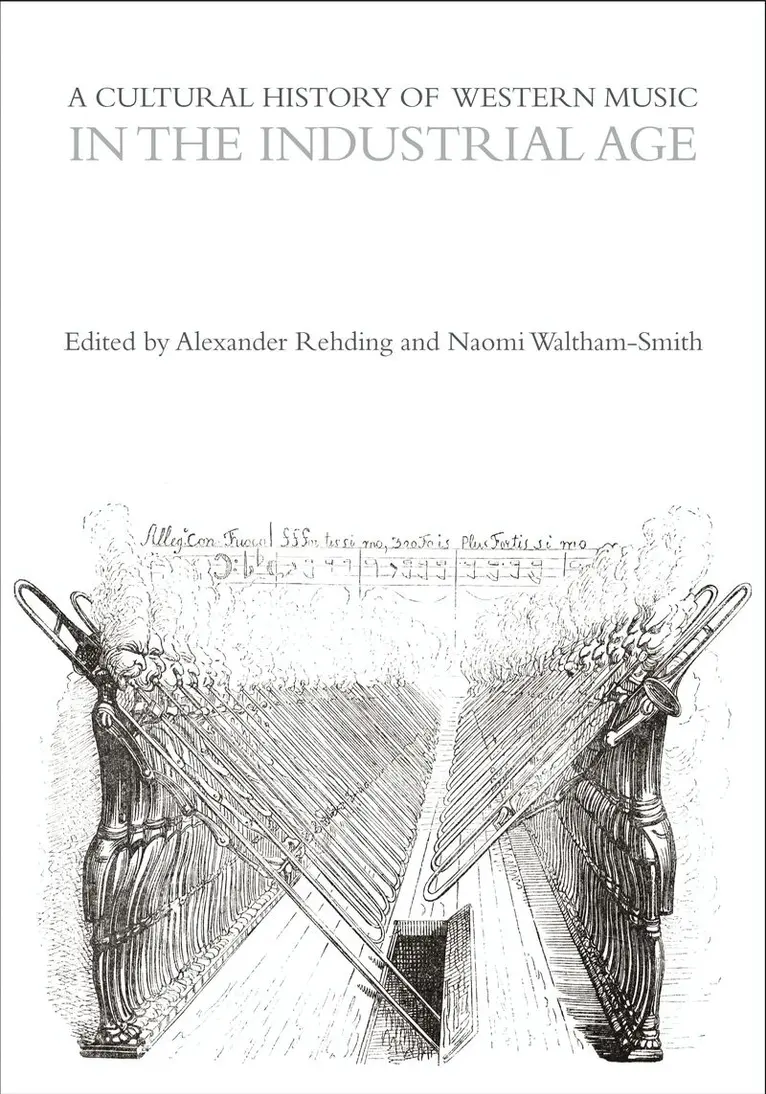
A CULTURAL HISTORY OF WESTERN MUSIC IN THE INDUSTRIAL AGEA Cultural History of Western Music in the Industrial Age covers the period from 1790 to 1920, when Western music became entangled with political, technological, and economic change on a global scale. Known as the Romantic era and renowned for its genius composers and virtuoso performers, this period charged full steam ahead, with Western audiences marveling at musics from the far reaches of the world, folksong collectors searching for the musical soul of the people, nation-states demanding national anthems, philosophers contending with the issue of slavery, and the phonograph rewriting musical memory. Besides its traditional aesthetic, ethical, and pedagogical functions, Western music became a force in an evolving landscape of work, leisure, and global economy, beating the drums of industrialization.The 6 volume set of the Cultural History of Western Music presents the first comprehensive history from classical antiquity to today, covering all forms and aspects of music and its ever-changing social context. The themes covered in each volume are society; philosophies; politics; exchange; education; popular culture; performance; and technologies.The Cultural Histories SeriesA Cultural History of Western Music is part of The Cultural Histories Series. Titles are available as hardcover sets for libraries needing just one subject or preferring a tangible reference for their shelves or as part of a fully-searchable digital library. The digital product is available to institutions by annual subscription or on perpetual access via www.bloomsburyculturalhistory.com . Individual volumes for academics and researchers interested in specific historical periods are also available in print or digitally via www.bloomsburycollections.com .
7 295 kr
Skickas inom 5-8 vardagar
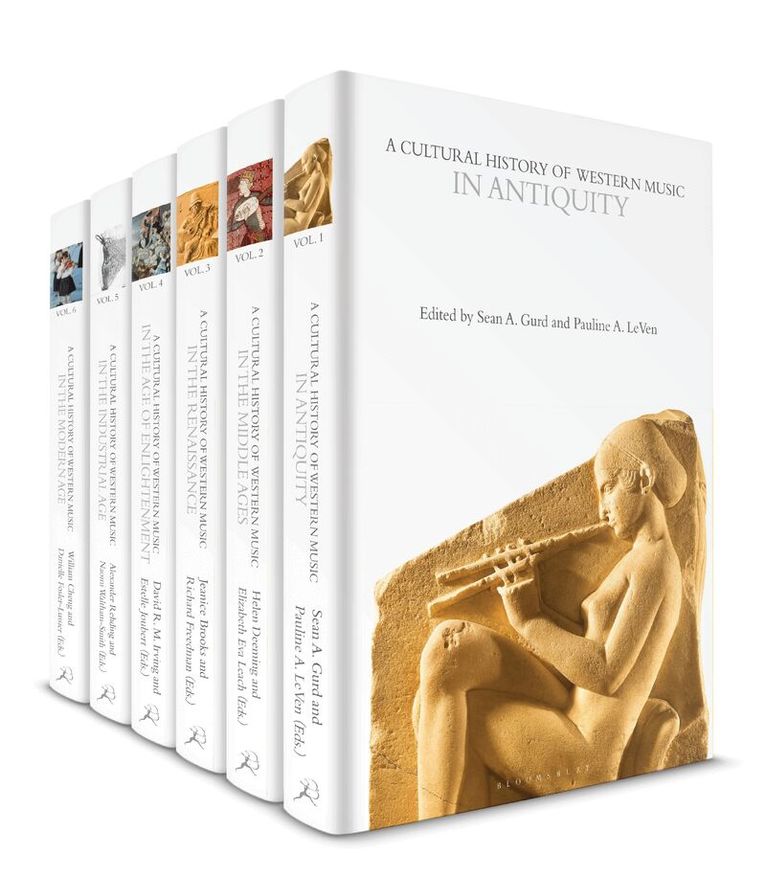
Music has been significant in social, religious, and political ritual, and in education, art, and entertainment in all human cultures from antiquity to today. A Cultural History of Western Music presents the first study of music in all its forms – ritual, classical, popular and commercial. The work is divided into 6 volumes, with each volume covering the same topics, so readers can either study a period/volume or follow a topic across history.The volumes are:1. A Cultural History of Western Music in Antiquity 2. A Cultural History of Western Music in the Middle Ages 3. A Cultural History of Western Music in the Renaissance 4. A Cultural History of Western Music in the Age of Enlightenment 5. A Cultural History of Western Music in the Industrial Age6. A Cultural History of Western Music in the Modern Age Themes (and chapter titles) are: identity, communities and society; changing philosophies and ideas about music; politics and power; musical exchange and knowledge transfer between the West and the non-West; musical education; popular culture and musical entertainment; the places, practices, and experiences of performance; and the development of music technologies and media.The page extent for the pack is approximately 1712pp. Each volume opens with notes on contributors and an introduction and concludes with notes, bibliography, and an index. The Cultural Histories SeriesA Cultural History of Western Music is part of The Cultural Histories Series. Titles are available as hardcover sets for libraries needing just one subject or preferring a tangible reference for their shelves or as part of a fully-searchable digital library. The digital product is available to institutions by annual subscription or on perpetual access via www.bloomsburyculturalhistory.com . Individual volumes for academics and researchers interested in specific historical periods are also available in print or digitally via www.bloomsburycollections.com.
Inbunden, Engelska, 2021
314 kr
Skickas inom 5-8 vardagar
Inbunden, Ryska, 2026
639 kr
Skickas inom 5-8 vardagar
Через несколько недель после объединения Германии Леонард Бернстайн продирижировал Девятую симфонию Бетховена на руинах Берлинской стены, заменив в знаменитой Оде «радость» на «свободу». Это ставшее культовым выступление — наглядный пример музыкальной монументальности, важной концепции, которая демонстрирует наше культурное и идеологическое понимание западного музыкального искусства. На материале ведущих австро-немецких композиторов XIX века — Бетховена, Листа, Вагнера, Брамса, Брукнера — Александр Рединг раскрывает двоякое определение монументальности. Это и стилистическое свойство, и культурная задача утверждения национальной идентичности. Сквозь эту теоретическую призму Рединг исследует стратегии монументальной музыки и то, как благодаря ей немецкая музыка становится единым культурным и музыкальным брендом.
Häftad, Ryska, 2026
500 kr
Skickas inom 5-8 vardagar
Через несколько недель после объединения Германии Леонард Бернстайн продирижировал Девятую симфонию Бетховена на руинах Берлинской стены, заменив в знаменитой Оде «радость» на «свободу». Это ставшее культовым выступление — наглядный пример музыкальной монументальности, важной концепции, которая демонстрирует наше культурное и идеологическое понимание западного музыкального искусства. На материале ведущих австро-немецких композиторов XIX века — Бетховена, Листа, Вагнера, Брамса, Брукнера — Александр Рединг раскрывает двоякое определение монументальности. Это и стилистическое свойство, и культурная задача утверждения национальной идентичности. Сквозь эту теоретическую призму Рединг исследует стратегии монументальной музыки и то, как благодаря ей немецкая музыка становится единым культурным и музыкальным брендом.