Nasser Hussain - Böcker
Visar alla böcker från författaren Nasser Hussain. Handla med fri frakt och snabb leverans.
9 produkter
9 produkter
371 kr
Skickas inom 7-10 vardagar
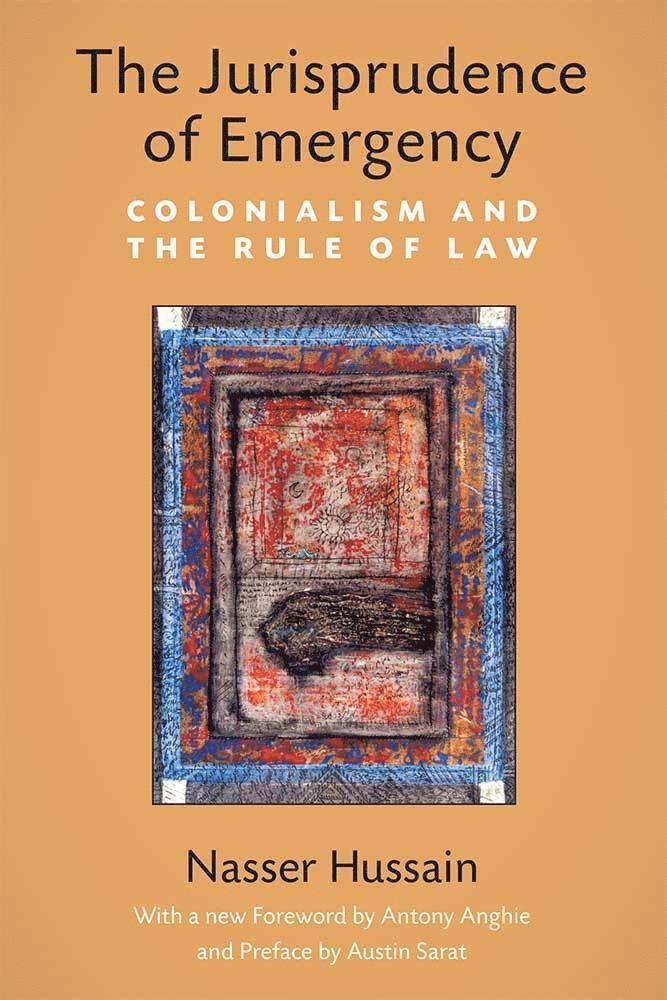
The Jurisprudence of Emergency examines British rule in India from the late eighteenth to the early twentieth century, tracing tensions between the ideology of liberty and government by law used to justify the colonizing power's insistence on a regime of conquest. Nasser Hussain argues that the interaction of these competing ideologies exemplifies a conflict central to all Western legal systems—between the universal, rational operation of law on the one hand and the absolute sovereignty of the state on the other. The author uses an impressive array of historical evidence to demonstrate how questions of law and emergency shaped colonial rule, which in turn affected the development of Western legality.The pathbreaking insights developed in The Jurisprudence of Emergency reevaluate the place of colonialism in modern law by depicting the colonies as influential agents in the interpretation of Western ideas and practices. Hussain's interdisciplinary approach and subtly shaded revelations will be of interest to historians as well as scholars of legal and political theory.
1 221 kr
Skickas inom 7-10 vardagar
Ever-more-frequent calls for the establishment of a rule of law in the developing world have been oddly paralleled by the increasing use of "exceptional" measures to deal with political crises. To untangle this apparent contradiction, The Jurisprudence of Emergency analyzes the historical uses of a range of emergency powers, such as the suspension of habeas corpus and the use of military tribunals. Nasser Hussain focuses on the relationship between "emergency" and the law to develop a subtle new theory of those moments in which the normative rule of law is suspended.The Jurisprudence of Emergency examines British colonial rule in India from the late eighteenth to the early twentieth century in order to trace tensions between the ideology of liberty and government by law, which was used to justify the British presence, and the colonizing power's concurrent insistence on a regime of conquest. Hussain argues that the interaction of these competing ideologies exemplifies a conflict central to all Western legal systems—between the universal, rational operation of law on the one hand and the absolute sovereignty of the state on the other. The author uses an impressive array of historical evidence to demonstrate how questions of law and emergency shaped colonial rule, which in turn affected the development of Western legality.The pathbreaking insights developed in The Jurisprudence of Emergency reevaluate the place of colonialism in modern law by depicting the colonies as influential agents in the interpretation and delineation of Western ideas and practices. Hussain's interdisciplinary approach and subtly shaded revelations will be of interest to historians as well as scholars of legal and political theory.
1 084 kr
Skickas inom 10-15 vardagar
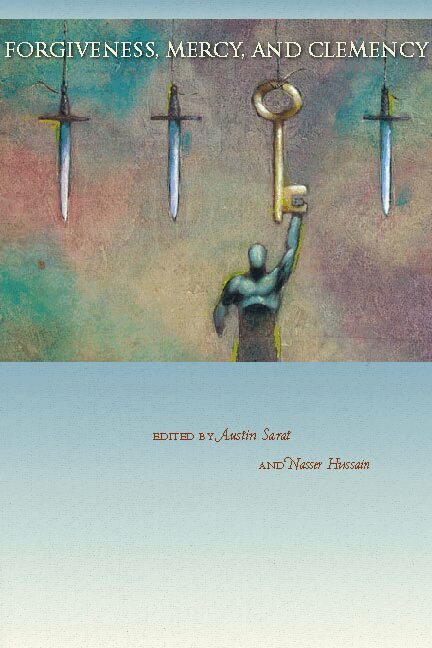
Arguments for forgiveness, mercy, and clemency abound. These arguments flourish in organized religion, fiction, philosophy, and law as well as in everyday conversations of daily life among parents and children, teachers and students, and criminals and those who judge them. As common as these arguments are, we are often left with an incomplete understanding of what we mean when we speak about them. This volume examines the registers of individual psychology, religious belief, social practice, and political power circulating in and around those who forgive, grant mercy, or pose clemency power. The authors suggest that, in many ways, necessary examinations of the questions of forgiveness and pardon and the connection between mercy and justice are only just beginning.
260 kr
Skickas inom 7-10 vardagar
Arguments for forgiveness, mercy, and clemency abound. These arguments flourish in organized religion, fiction, philosophy, and law as well as in everyday conversations of daily life among parents and children, teachers and students, and criminals and those who judge them. As common as these arguments are, we are often left with an incomplete understanding of what we mean when we speak about them. This volume examines the registers of individual psychology, religious belief, social practice, and political power circulating in and around those who forgive, grant mercy, or pose clemency power. The authors suggest that, in many ways, necessary examinations of the questions of forgiveness and pardon and the connection between mercy and justice are only just beginning.
When Governments Break the Law
The Rule of Law and the Prosecution of the Bush Administration
Häftad, Engelska, 2010
369 kr
Skickas inom 7-10 vardagar
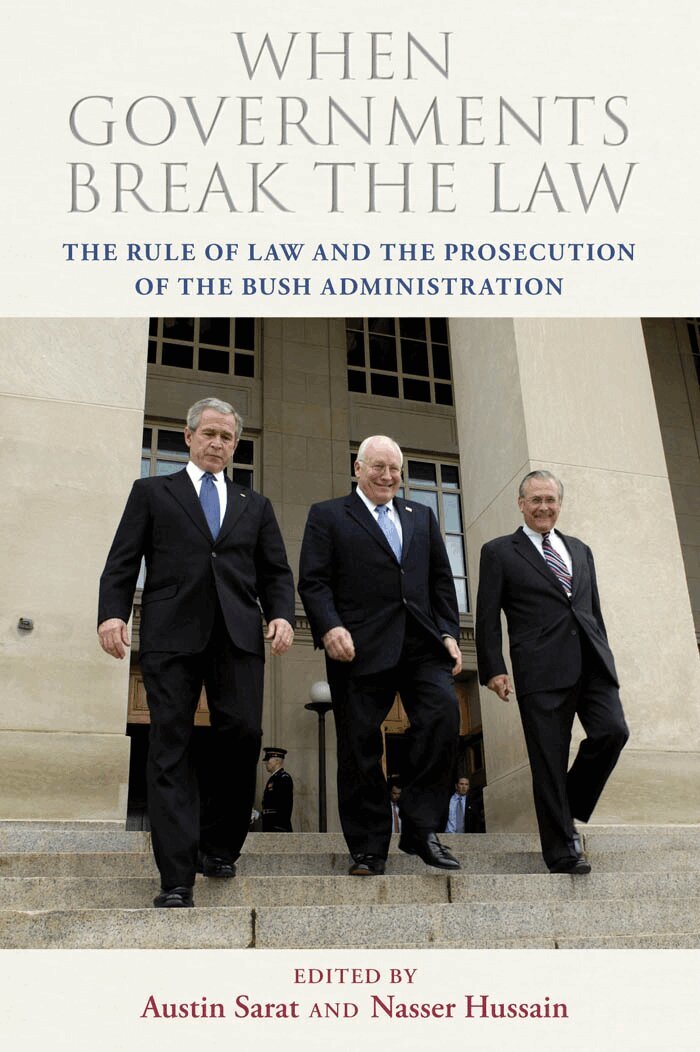
Recent controversies surrounding the war on terror and American intervention in Iraq and Afghanistan have brought rule of law rhetoric to a fevered pitch. While President Obama has repeatedly emphasized his Administration's commitment to transparency and the rule of law, nowhere has this resolve been so quickly and severely tested than with the issue of the possible prosecution of Bush Administration officials. While some worry that without legal consequences there will be no effective deterrence for the repetition of future transgressions of justice committed at the highest levels of government, others echo Obama's seemingly reluctant stance on launching an investigation into allegations of criminal wrongdoing by former President Bush, Vice President Cheney, Secretary Rumsfeld, and members of the Office of Legal Counsel. Indeed, even some of the Bush Administration's harshest critics suggest that we should avoid such confrontations, that the price of political division is too high. Measured or partisan, scholarly or journalistic, clearly the debate about accountability for the alleged crimes of the Bush Administration will continue for some time.Using this debate as its jumping off point, When Governments Break the Law takes an interdisciplinary approach to the legal challenges posed by the criminal wrongdoing of governments. But this book is not an indictment of the Bush Administration; rather, the contributors take distinct positions for and against the proposition, offering revealing reasons and illuminating alternatives. The contributors do not ask the substantive question of whether any Bush Administration officials, in fact, violated the law, but rather the procedural, legal, political, and cultural questions of what it would mean either to pursue criminal prosecutions or to refuse to do so. By presuming that officials could be prosecuted, these essays address whether they should.When Governments Break the Law provides a valuable and timely commentary on what is likely to be an ongoing process of understanding the relationship between politics and the rule of law in times of crisis.Contributors: Claire Finkelstein, Lisa Hajjar, Daniel Herwitz, Stephen Holmes, Paul Horwitz, Nasser Hussain, Austin Sarat, and Stephen I. Vladeck.
When Governments Break the Law
The Rule of Law and the Prosecution of the Bush Administration
Inbunden, Engelska, 2010
840 kr
Skickas inom 10-15 vardagar
Recent controversies surrounding the war on terror and American intervention in Iraq and Afghanistan have brought rule of law rhetoric to a fevered pitch. While President Obama has repeatedly emphasized his Administration's commitment to transparency and the rule of law, nowhere has this resolve been so quickly and severely tested than with the issue of the possible prosecution of Bush Administration officials. While some worry that without legal consequences there will be no effective deterrence for the repetition of future transgressions of justice committed at the highest levels of government, others echo Obama's seemingly reluctant stance on launching an investigation into allegations of criminal wrongdoing by former President Bush, Vice President Cheney, Secretary Rumsfeld, and members of the Office of Legal Counsel. Indeed, even some of the Bush Administration's harshest critics suggest that we should avoid such confrontations, that the price of political division is too high. Measured or partisan, scholarly or journalistic, clearly the debate about accountability for the alleged crimes of the Bush Administration will continue for some time.Using this debate as its jumping off point, When Governments Break the Law takes an interdisciplinary approach to the legal challenges posed by the criminal wrongdoing of governments. But this book is not an indictment of the Bush Administration; rather, the contributors take distinct positions for and against the proposition, offering revealing reasons and illuminating alternatives. The contributors do not ask the substantive question of whether any Bush Administration officials, in fact, violated the law, but rather the procedural, legal, political, and cultural questions of what it would mean either to pursue criminal prosecutions or to refuse to do so. By presuming that officials could be prosecuted, these essays address whether they should.When Governments Break the Law provides a valuable and timely commentary on what is likely to be an ongoing process of understanding the relationship between politics and the rule of law in times of crisis.Contributors: Claire Finkelstein, Lisa Hajjar, Daniel Herwitz, Stephen Holmes, Paul Horwitz, Nasser Hussain, Austin Sarat, and Stephen I. Vladeck.
176 kr
Skickas inom 5-8 vardagar
Every major airport has a three-letter code from the International Air Transport Association. In perhaps history's greatest-ever feat of armchair travel, Nasser Hussain has written a collection of poetry entirely from those codes. In a dazzling aeronautic feat of constraint-based writing, SKY WRI TEI NGS explores the relationship between language and place in a global context. Watch as words jet-set across the map, leaving a poetic flight path. See letters take flight (and leave their baggage behind).
176 kr
Skickas inom 5-8 vardagar
CBC BOOKS CANADIAN POETRY COLLECTIONS TO WATCH FOR IN FALL 2023In his follow-up to SKY WRI TEI NGS, Nasser Hussain tackles the absurdity of the English languageThe term “Love Language” can be read at least three ways: as an imperative, as the signoff to a letter, and as a contemporary way of talking about relationship styles. None of these would be wrong in this book. Love Language loves language. These are poems that repeat and hypnotize as English becomes more absurd: from Apple's terms and conditions to other poet's love poems, from performance reports to pop songs, Hussain skillfully and joyfully toys with everyday texts to talk about love, to think about poems, to call out racism, to remind us that words can be fun. Allow these playful poems to woo you, to let you fall in love with language again."Think of 'time as a lantern,' suggests Nasser Hussain, in these inimitable poems that take play seriously and allow seriousness to enter the room disguised as incantation. These are poems that long to dismiss the lyric’s most recent pretty mask of polite propriety and instead take us to the lyric’s ancient roots. It started way back, the poet says, 'when a cave person made a grunt,' to speak the name of a thing. Indeed. This is the lyric’s ancient pact with the world: to spin playful language into seriousness of giving things their names—what are we without this speaking, this tune? Hussain knows this and writes beautiful poems—and I, for one, am grateful." – Ilya Kaminsky, author of Deaf Republic"Hussain's humour is never complacent; it is the opposite of a defence mechanism (we are encouraged to imagine such a thing) and wryly sidesteps the bad binary of conservative withdrawal as set against algorithm-envenomed hyperassertion. He puts into words a new masculinity maturer than we deserve, that acknowledges swerves of defiance to be inseparable from underswells of doubt." – Vidyan Ravinthiran, author of The Million-Petalled Flower of Being Here
277 kr
Kommande
Missing everything but the point: visual poetry celebrating excitement!The exclamation point is much maligned. It’s bad style. It’s like laughing at your own joke. It screams, it yells, it’s hysterical, it’s maybe even embarrassingly obsequious.Nasser Hussain disagrees! What’s so bad about expressing enthusiasm? What if you really need to scream? The prescriptions of ‘style’ can feel like an artificial limit placed on our language, insisting we produce a bland monotone that trades on its appearance as rational, subdued, civilized discourse. Against this, The Point, where poetry bangs its head against this veneer of rationality. Poetry, it insists, is exciting! Is, maybe, excitement itself!The Point is composed using only exclamation marks, seeking to reclaim the dignity of the bang’s and explore its expressive possibilities. Against the well-known derision of F. Scott Fitzgerald, Elmore Leonard, and Gertrude Stein, Hussain uses the exclamation point to make a point: let’s celebrate the possibility of enthusiasm!