Natalia Berger – författare
Visar alla böcker från författaren Natalia Berger. Handla med fri frakt och snabb leverans.
5 produkter
Public Discourse and the Fashion Industry
Inbunden, 2026
2510 kr
Lägg i varukorg
This book explores what happens when fashion discourse migrates from specialised media to mainstream newspapers. Analysis of 2,263 texts across five Dutch and international case studies (animal welfare, disability, repair practices, smart wearables, and metaverse fashion) demonstrates systematic …
Public Discourse and the Fashion Industry
E-bok, 2026
856 kr
Lägg i varukorg
This book explores what happens when fashion discourse migrates from specialised media to mainstream newspapers. Analysis of 2,263 texts across five Dutch and international case studies (animal welfare, disability, repair practices, smart wearables, and metaverse fashion) demonstrates systematic …
Public Discourse and the Fashion Industry
E-bok, 2026
856 kr
Lägg i varukorg
This book explores what happens when fashion discourse migrates from specialised media to mainstream newspapers. Analysis of 2,263 texts across five Dutch and international case studies (animal welfare, disability, repair practices, smart wearables, and metaverse fashion) demonstrates systematic …
Jewish Museum
History and Memory, Identity and Art from Vienna to the Bezalel National Museum, Jerusalem
Inbunden, 2017
2909 kr
Lägg i varukorg
In The Jewish Museum: History and Memory, Identity and Art from Vienna to the Bezalel National Museum, Jerusalem Natalia Berger traces the history of the Jewish museum in its various manifestations in Central Europe, notably in Vienna, Prague and Budapest, up to the establishment of the Bezalel …
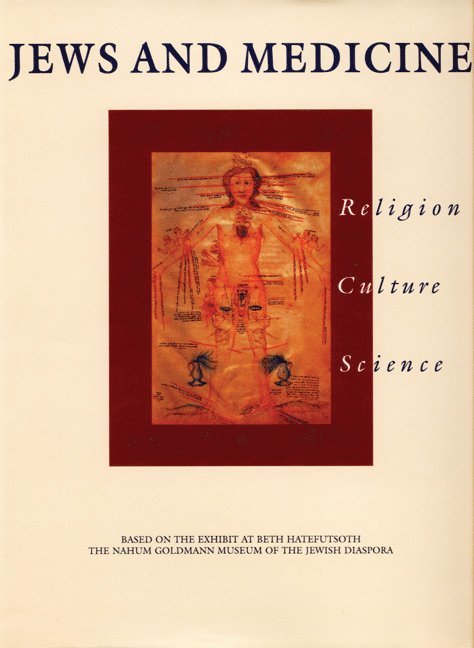
Jews and Medicine
Religion, Culture, Science
Inbunden, 1997
581 kr
Tillfälligt slut
Since the Middle Ages Jews have regarded medicine as one of the most honourable proffesions to pursue. This book examines their special relationship, following chronological lines tracing the most significant points of encounter between the history of Jews and the history of medicine. The book is …