Nayantara Sheoran Appleton – Författare
Visar alla böcker från författaren Nayantara Sheoran Appleton. Handla med fri frakt och snabb leverans.
6 produkter
6 produkter
1 873 kr
Skickas inom 7-10 vardagar
Provides fresh perspectives on the past, present and future-facing contributions of the anthropology of reproduction. A Companion to the Anthropology of Reproductive Medicine and Technology provides a timely and comprehensive overview of the anthropological study of reproductive practices, technologies, and interventions in a global context. Exploring the medical and technological management of human reproduction through a sociocultural lens, this groundbreaking volume reviews past and current research, discusses contemporary debates and recent theoretical developments, introduces key themes and trends, examines ongoing issues of equity, inclusivity, and reproductive justice around the world, and more. The Companion brings together essays by multidisciplinary scholars in fields including sociocultural anthropology, medical anthropology, reproductive health, global public health, Science and Technology Studies (STS), gender and sexuality studies, critical race studies, and environmental studies, to list but a few. Five thematically organized sections address reproductive practitioners and paradigms, global reproductive health and interventions, reproductive justice, the life-course approach to the study of reproductive health, and the future of reproductive technology and medicine. Using clear, jargon-free language, the authors investigate pregnancy and childbirth; fertility treatments; birth control, contraception and abortion; COVID-19 and reproduction; reproductive cancers; epigenetics; social discrimination; gender and sexualities and reproduction for LGBTQIA+ communities; race and reproduction; migration and reproduction; reproduction and war; reproductive health financing; reproduction and disabilities, reproduction and the environment; and other important contemporary topics. A cutting-edge guide to the modern study of reproduction, this groundbreaking volume: Provides an overview of the links between anthropological study and progressive work in medicine, healthcare, and technologyAddresses both the challenges and opportunities facing researchers in the fieldIdentifies gaps in current scholarship and offers recommendations for future research topics and methodologiesHighlights the importance of ethnographic research combined with critical engagements with other disciplines for the anthropology of reproductionExplores the impact of socioeconomic conditions, environmental challenges, public policy, and legislation on reproductive health outcomesTraces the history of the field and demonstrates how anthropologists have engaged with issues of reproductive justicePart of the acclaimed Wiley Blackwell Companions to Anthropology series, A Companion to the Anthropology of Reproductive Medicine and Technology is an essential resource for undergraduate and graduate students, researchers, and scholars in medical anthropology, science technology and society, cultural anthropology, ethnology, and gender studies, as well as medical practitioners, policymakers, and activists involved in global and public health and reproductive justice.
537 kr
Kommande
Provides fresh perspectives on the past, present and future-facing contributions of the anthropology of reproduction. A Companion to the Anthropology of Reproductive Medicine and Technology provides a timely and comprehensive overview of the anthropological study of reproductive practices, technologies, and interventions in a global context. Exploring the medical and technological management of human reproduction through a sociocultural lens, this groundbreaking volume reviews past and current research, discusses contemporary debates and recent theoretical developments, introduces key themes and trends, examines ongoing issues of equity, inclusivity, and reproductive justice around the world, and more. The Companion brings together essays by multidisciplinary scholars in fields including sociocultural anthropology, medical anthropology, reproductive health, global public health, Science and Technology Studies (STS), gender and sexuality studies, critical race studies, and environmental studies, to list but a few. Five thematically organized sections address reproductive practitioners and paradigms, global reproductive health and interventions, reproductive justice, the life-course approach to the study of reproductive health, and the future of reproductive technology and medicine. Using clear, jargon-free language, the authors investigate pregnancy and childbirth; fertility treatments; birth control, contraception and abortion; COVID-19 and reproduction; reproductive cancers; epigenetics; social discrimination; gender and sexualities and reproduction for LGBTQIA+ communities; race and reproduction; migration and reproduction; reproduction and war; reproductive health financing; reproduction and disabilities, reproduction and the environment; and other important contemporary topics. A cutting-edge guide to the modern study of reproduction, this groundbreaking volume: Provides an overview of the links between anthropological study and progressive work in medicine, healthcare, and technologyAddresses both the challenges and opportunities facing researchers in the fieldIdentifies gaps in current scholarship and offers recommendations for future research topics and methodologiesHighlights the importance of ethnographic research combined with critical engagements with other disciplines for the anthropology of reproductionExplores the impact of socioeconomic conditions, environmental challenges, public policy, and legislation on reproductive health outcomesTraces the history of the field and demonstrates how anthropologists have engaged with issues of reproductive justicePart of the acclaimed Wiley Blackwell Companions to Anthropology series, A Companion to the Anthropology of Reproductive Medicine and Technology is an essential resource for undergraduate and graduate students, researchers, and scholars in medical anthropology, science technology and society, cultural anthropology, ethnology, and gender studies, as well as medical practitioners, policymakers, and activists involved in global and public health and reproductive justice.
434 kr
Skickas inom 10-15 vardagar
Asia is changing. Socio-political shifts in the world economy, technological advances of monumental scales, movements of people and ideas, alongside ongoing post-colonization projects across the region have created an emerging Asia – one confident and assertive of its place in the contemporary geopolitical sphere. As political and economic powers reassert Asian sovereignty in opposition to perceived Northern dominance, and dramatic and rapid development in the region shift the relationship between the centre and the periphery, new renderings and imaginations of hierarchies of identity and power come to the fore. This changing environment leads to emerging challenges for anthropologists working in the region: both those who have been working there for years, and new scholars entering the field.This volume considers these changes, and the implications of this on our practice. By focusing on Asia as a site of enquiry, the contributors to this book discuss tensions and opportunities arising in their ethnographic fieldwork in light of a changing Asia. Drawing on personal reflections on Asia’s global positioning in this contemporary moment, the contributors consider how fieldwork is being negotiated within the changing dynamics of anthropology in the region. This book then, is a discussion on the shifting landscape of field sites and the resultant emerging research methodologies, and is aimed at those who are already deeply immersed in fieldwork as well as those who are seeking ways to undertake it.
1 142 kr
Skickas inom 10-15 vardagar
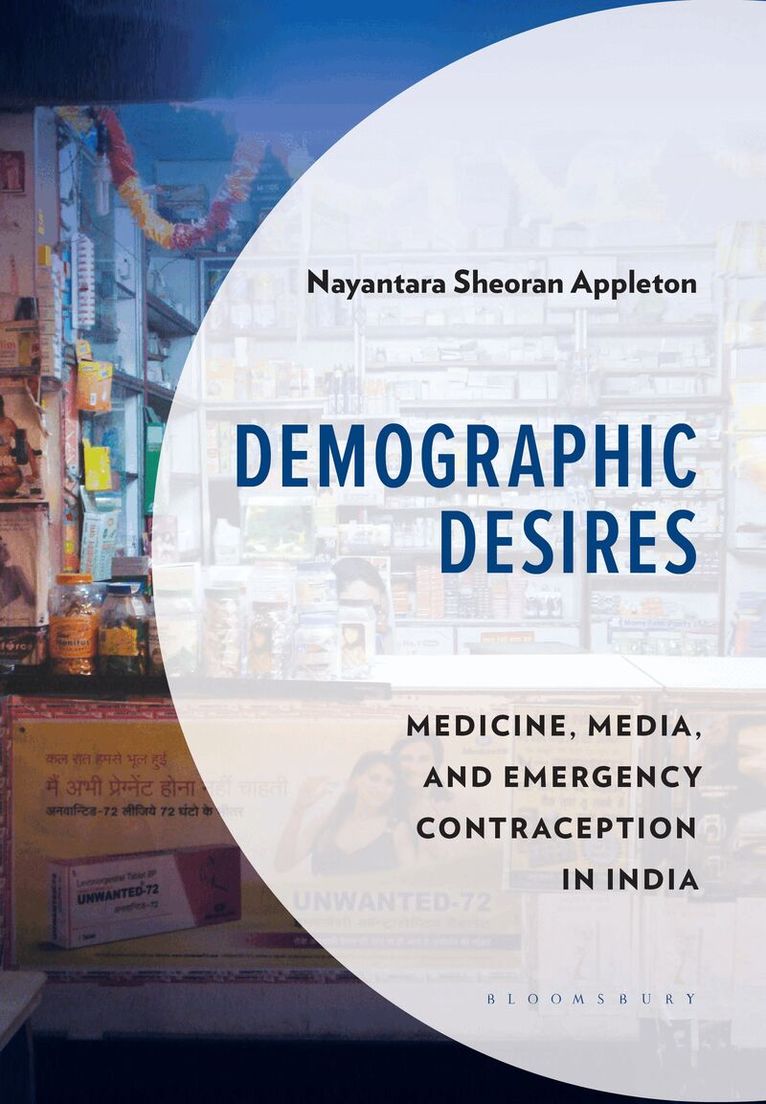
Exploring the intertwined histories of hormonal contraception and population anxiety, in Demographic Desires: Medicine, Media, and Emergency Contraception in India, Appleton shows how historic discourses and practices of ‘family planning’ remerge as desires of the Indian state and Indian women. In examining the relationship(s) between demographic desires of a nation, reproductive justice on the ground, and women’s everyday material conditions, in this book, Appleton posits that under neoliberal regimes of ‘empowered consumerism’ Emergency Contraceptive Pills (ECPs) introduced as non-prescription pills in 2005 bring histories of demographic control projects and demographic anxieties into the present.The book highlights nuances of demographic realities which are co-constituted through historical and contemporary narratives, media images, public policy, and medical discourse. Addressing recurring questions about demography, women’s reproductive justice, and the visual manifestations of neoliberal aspirations of Indians, this book contributes to conversations that provide an ‘alter-narrative’ to demographic anxieties. Appleton proposes that demographic desires exist not in opposition to demographic anxiety, but rather as vital adjacent project.Demographic Desires brings together debates in medical anthropology, media and cultural studies, and a feminist engagement on the medical, scientific, and cultural to showcase the myriad ways emergency contraception in India offers new opportunities for complicating the relationship between contraception, mediated medicine, and demography.
1 476 kr
Skickas inom 10-15 vardagar
Asia is changing. Socio-political shifts in the world economy, technological advances of monumental scales, movements of people and ideas, alongside ongoing post-colonization projects across the region have created an emerging Asia – one confident and assertive of its place in the contemporary geopolitical sphere. As political and economic powers reassert Asian sovereignty in opposition to perceived Northern dominance, and dramatic and rapid development in the region shift the relationship between the centre and the periphery, new renderings and imaginations of hierarchies of identity and power come to the fore. This changing environment leads to emerging challenges for anthropologists working in the region: both those who have been working there for years, and new scholars entering the field.This volume considers these changes, and the implications of this on our practice. By focusing on Asia as a site of enquiry, the contributors to this book discuss tensions and opportunities arising in their ethnographic fieldwork in light of a changing Asia. Drawing on personal reflections on Asia’s global positioning in this contemporary moment, the contributors consider how fieldwork is being negotiated within the changing dynamics of anthropology in the region. This book then, is a discussion on the shifting landscape of field sites and the resultant emerging research methodologies, and is aimed at those who are already deeply immersed in fieldwork as well as those who are seeking ways to undertake it.
664 kr
Kommande