Neal Zaslaw – författare
Visar alla böcker från författaren Neal Zaslaw. Handla med fri frakt och snabb leverans.
7 produkter
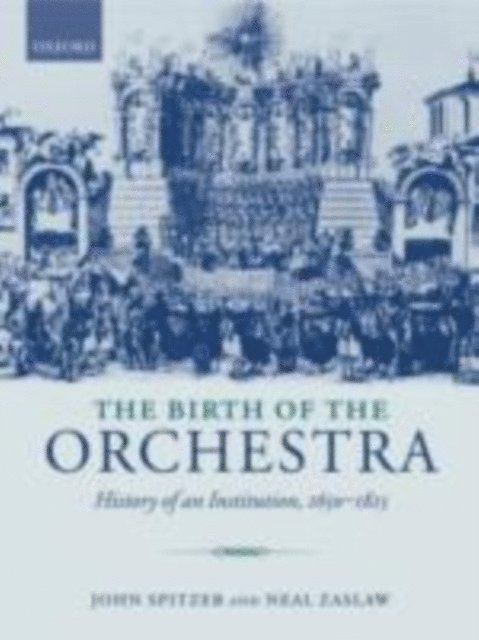
The Birth of the Orchestra
History of an Institution, 1650-1815
Inbunden, 2004
6510 kr
Lägg i varukorg
This book traces the emergence of the orchestra from 16th-century string bands to the 'classical' orchestra of Haydn, Mozart, Beethoven, and their contemporaries. Ensembles of bowed stringed instruments, several players per part plus continuo and wind instruments, were organized in France in the …
Birth of the Orchestra
History of an Institution, 1650-1815
E-bok, 2004
963 kr
Lägg i varukorg
This book traces the emergence of the orchestra from 16th-century string bands to the ''classical'' orchestra of Haydn, Mozart, Beethoven, and their contemporaries. Ensembles of bowed stringed instruments, several players per part plus continuo and wind instruments, were organized in France in the …
The Birth of the Orchestra
History of an Institution 1650 - 1815
Häftad, 2005
1285 kr
Lägg i varukorg
This is the story of the orchestra, from 16th-century string bands to the 'classical' orchestra of Haydn, Mozart, and Beethoven. Spitzer and Zaslaw document orchestral organization, instrumentation, social roles, repertoires, and performance practices in Europe and the American colonies, concluding …
Mozart's Symphonies
Context, Performance Practice, Reception
Av Neal Zaslaw
Häftad, 1991
2375 kr
Lägg i varukorg
First published in hardback, in 1989, Mozart's Symphonies is the first serious attempt in any language to survey the entire panorama of Mozart's symphonic works. Accounting for every symphony associated with Mozart involved the identification and evaluation of nearly a hundred symphonies. Professor …
Birth of the Orchestra
History of an Institution, 1650-1815
E-bok, 2005
1024 kr
Lägg i varukorg
This book traces the emergence of the orchestra from 16th-century string bands to the "classical" orchestra of Haydn, Mozart, Beethoven, and their contemporaries. Ensembles of bowed stringed instruments, several players per part plus continuo and wind instruments, were organized in France in the …
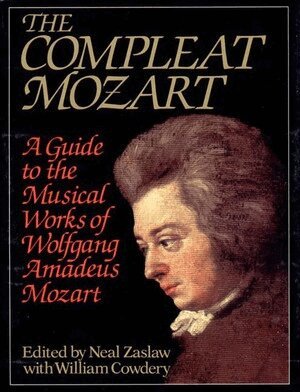
Compleat Mozart
A Guide to the Musical Works of Wolfgang Amadeus Mozart
Av William Cowdery, Neal Zaslaw
Inbunden, 1991
345 kr
Lägg i varukorg
Published to coincide with the 200th anniversary of Mozart's death in 1791, this book is designed to be a guide to the composer's works and is aimed at the music-lover who wishes to read something informative about any particular piece. Although there are many books which deal with the handful of …
Mozart's Piano Concertos
Text, Context, Interpretation
Av Neal Zaslaw
Inbunden, 1997
1867 kr
Lägg i varukorg
Like the symphonies of Beethoven, Mozart's piano concertos constitute an extraordinary body of work that will never disappear from our culture. Yet despite widespread recognition of their importance, they still present many interpretive problems. In 1989, the Michigan MozartFest brought expert …