John Spitzer – författare
Visar alla böcker från författaren John Spitzer. Handla med fri frakt och snabb leverans.
7 produkter
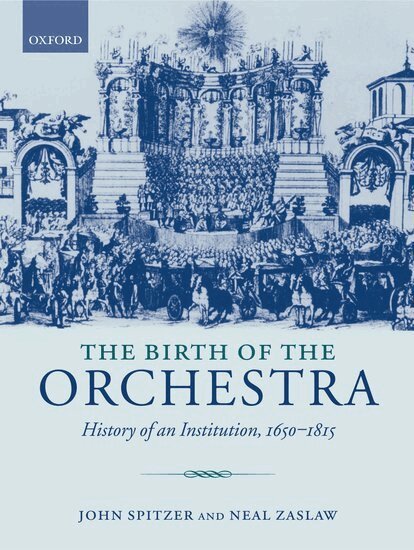
The Birth of the Orchestra
History of an Institution, 1650-1815
Inbunden, 2004
6510 kr
Lägg i varukorg
This book traces the emergence of the orchestra from 16th-century string bands to the 'classical' orchestra of Haydn, Mozart, Beethoven, and their contemporaries. Ensembles of bowed stringed instruments, several players per part plus continuo and wind instruments, were organized in France in the …
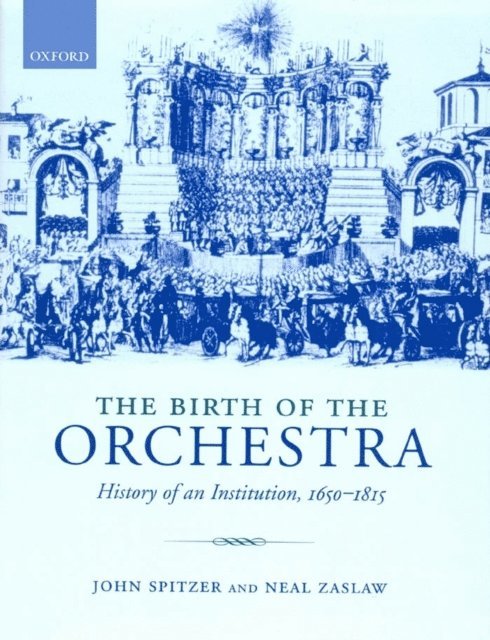
Birth of the Orchestra
History of an Institution, 1650-1815
E-bok, 2004
963 kr
Lägg i varukorg
This book traces the emergence of the orchestra from 16th-century string bands to the ''classical'' orchestra of Haydn, Mozart, Beethoven, and their contemporaries. Ensembles of bowed stringed instruments, several players per part plus continuo and wind instruments, were organized in France in the …
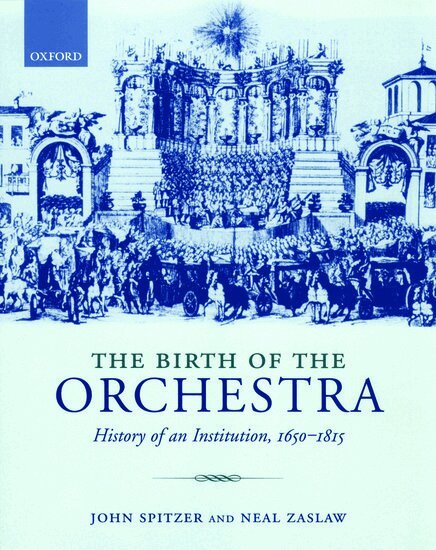
The Birth of the Orchestra
History of an Institution 1650 - 1815
Häftad, 2005
1285 kr
Lägg i varukorg
This is the story of the orchestra, from 16th-century string bands to the 'classical' orchestra of Haydn, Mozart, and Beethoven. Spitzer and Zaslaw document orchestral organization, instrumentation, social roles, repertoires, and performance practices in Europe and the American colonies, concluding …
Birth of the Orchestra
History of an Institution, 1650-1815
E-bok, 2005
1024 kr
Lägg i varukorg
This book traces the emergence of the orchestra from 16th-century string bands to the "classical" orchestra of Haydn, Mozart, Beethoven, and their contemporaries. Ensembles of bowed stringed instruments, several players per part plus continuo and wind instruments, were organized in France in the …
American Orchestras in the Nineteenth Century
Av John Spitzer
Häftad, 2020
489 kr
Lägg i varukorg
Studies of concert life in nineteenth-century America have generally been limited to large orchestras and the programs we are familiar with today. But as this book reveals, audiences of that era enjoyed far more diverse musical experiences than this focus would suggest. To hear an orchestra, people …
American Orchestras in the Nineteenth Century
Av John Spitzer
E-bok, 2012
1045 kr
Lägg i varukorg
Studies of concert life in nineteenth-century America have generally been limited to large orchestras and the programs we are familiar with today. But as this book reveals, audiences of that era enjoyed far more diverse musical experiences than this focus would suggest. To hear an orchestra, people …
American Orchestras in the Nineteenth Century
Av John Spitzer
Inbunden, 2012
4,0 utav 5 stjärnor. Totalt antal röster: (1)
655 kr
Tillfälligt slut
Studies of concert life in nineteenth-century America have generally been limited to large orchestras and the programs we are familiar with today. But as this book reveals, audiences of that era enjoyed far more diverse musical experiences than such focus would suggest. To hear an orchestra, people …