Neeladri Bhattacharya - Böcker
Visar alla böcker från författaren Neeladri Bhattacharya. Handla med fri frakt och snabb leverans.
3 produkter
3 produkter
1 259 kr
Skickas inom 5-8 vardagar
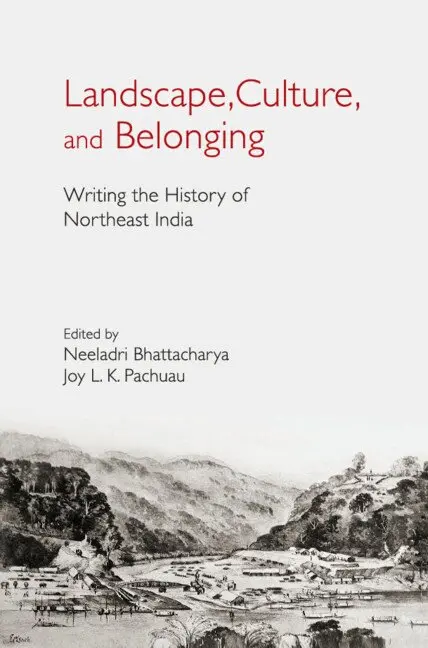
This collection of essays is an important contribution to the new literature on frontier studies and the historiography of Northeast India. Moving away from an exclusive dependence on colonial ethnographies, the authors build their arguments on a varied range of sources: from buranjis to revenue records, survey maps to explorers' diaries, and missionary papers to police files. They question the givennes of the categories through which the region is usually described, and contest the stereotypes by which the people of the region are primitivized. They explore the historical processes whereby the region was surveyed, mapped, understood, represented, politically governed, economically refigured, and historically constituted during the colonial period. Though focused on the experience of Northeast India, the volume also raises substantive questions about the idea of the frontier and the border, the primitive and the modern, and the tribal and the settled, the local and the trans-local.
1 150 kr
Tillfälligt slut
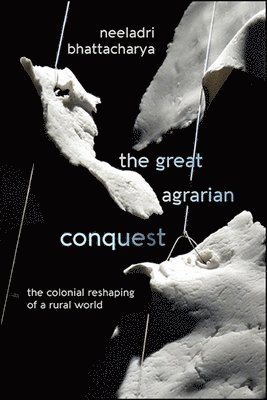
Groundbreaking analysis of how colonialism created new conceptual categories and spatial forms that reshaped rural societies.This book examines how, over colonial times, the diverse practices and customs of an existing rural universe-with its many forms of livelihood-were reshaped to create a new agrarian world of settled farming. While focusing on Punjab, India, this pathbreaking analysis offers a broad argument about the workings of colonial power: the fantasy of imperialism, it says, is to make the universe afresh.Such radical change, Neeladri Bhattacharya shows, is as much conceptual as material. Agrarian colonization was a process of creating spaces that conformed to the demands of colonial rule. It entailed establishing a regime of categories-tenancies, tenures, properties, habitations-and a framework of laws that made the change possible. Agrarian colonization was in this sense a deep conquest.Colonialism, the book suggests, has the power to revisualize and reorder social relations and bonds of community. It alters the world radically, even when it seeks to preserve elements of the old. The changes it brings about are simultaneously cultural, discursive, legal, linguistic, spatial, social, and economic. Moving from intent to action, concepts to practices, legal enactments to court battles, official discourses to folklore, this book explores the conflicted and dialogic nature of a transformative process.By analyzing this great conquest, and the often silent ways in which it unfolds, the book asks every historian to rethink the practice of writing agrarian history and reflect on the larger issues of doing history.
654 kr
Skickas inom 3-6 vardagar
Groundbreaking analysis of how colonialism created new conceptual categories and spatial forms that reshaped rural societies.This book examines how, over colonial times, the diverse practices and customs of an existing rural universe-with its many forms of livelihood-were reshaped to create a new agrarian world of settled farming. While focusing on Punjab, India, this pathbreaking analysis offers a broad argument about the workings of colonial power: the fantasy of imperialism, it says, is to make the universe afresh.Such radical change, Neeladri Bhattacharya shows, is as much conceptual as material. Agrarian colonization was a process of creating spaces that conformed to the demands of colonial rule. It entailed establishing a regime of categories-tenancies, tenures, properties, habitations-and a framework of laws that made the change possible. Agrarian colonization was in this sense a deep conquest.Colonialism, the book suggests, has the power to revisualize and reorder social relations and bonds of community. It alters the world radically, even when it seeks to preserve elements of the old. The changes it brings about are simultaneously cultural, discursive, legal, linguistic, spatial, social, and economic. Moving from intent to action, concepts to practices, legal enactments to court battles, official discourses to folklore, this book explores the conflicted and dialogic nature of a transformative process.By analyzing this great conquest, and the often silent ways in which it unfolds, the book asks every historian to rethink the practice of writing agrarian history and reflect on the larger issues of doing history.