Neil Krishan Aggarwal – författare
Visar alla böcker från författaren Neil Krishan Aggarwal. Handla med fri frakt och snabb leverans.
5 produkter
5 produkter
780 kr
Skickas inom 5-8 vardagar
This book profiles 12 militant leaders responsible for violence in Indian-administered Kashmir to identify effective deradicalization and counterterrorist interventions for global impact. Building off decades of research in cultural psychiatry, political psychology, social psychology, and South Asian Studies, multilingual cultural psychiatrist and psychological researcher Neil Krishan Aggarwal develops a method for analyzing militant leaders by examining their personality traits, motivations, skills and abilities, and significant life events to ask what propels them into violence. He presents person-centered psychological case studies based on primary sources in Arabic, Hindi, Punjabi, and Urdu to illustrate how leaders frame violence in their own words to recruit others.By comparing and contrasting individual, group, and organizational factors of violence, this book proposes evidence-based deradicalization and counterterrorism interventions, bringing the study of political violence in Indian-administered Kashmir into conversation with research trends in Europe and North America. By developing a method for analyzing militant leadership through state-of-the-art scholarship, the book's insights can inform the development of case studies for scholars, policymakers, and practitioners across geographic regions and disciplines.
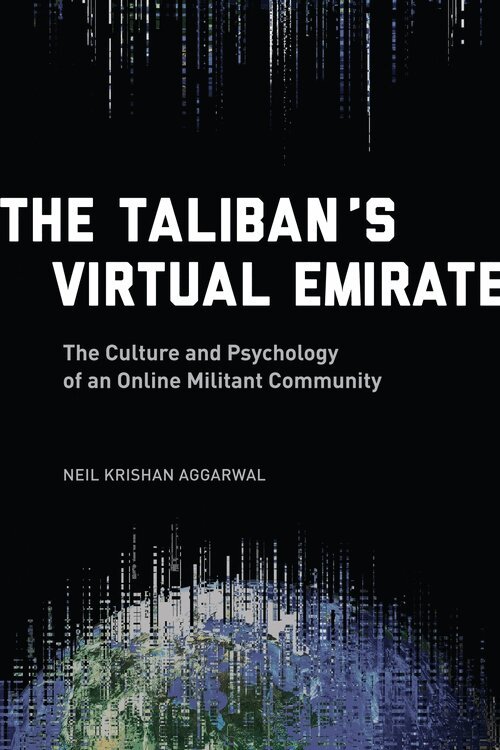
Taliban's Virtual Emirate
The Culture and Psychology of an Online Militant Community
Inbunden, Engelska, 2016
521 kr
Skickas inom 7-10 vardagar
Applying cutting-edge psychiatric theories to an analysis of online Taliban literature in four languages, Neil Krishan Aggarwal constructs a game-changing narrative of the organization's broad appeal and worldview. Aggarwal, a cultural psychiatrist, focuses on the Taliban's creation of culture, evoking religion in Arabic and English writings, nationalism in Dari sources, and regionalism in Urdu texts. The group also promotes a specific form of argumentation, citing religious scriptures in Arabic works, canonical poets in Dari and Urdu writings, and scholars and journalists in English publications. Aggarwal shows how the Taliban categorize all Muslims as members and all non-Muslims as outsiders; how they convince Muslims of the need for violence; and how they apply the insider/outsider dichotomy to foreign policy. By understanding these themes, Aggarwal argues, we can craft better countermessaging strategies.
583 kr
Skickas inom 7-10 vardagar
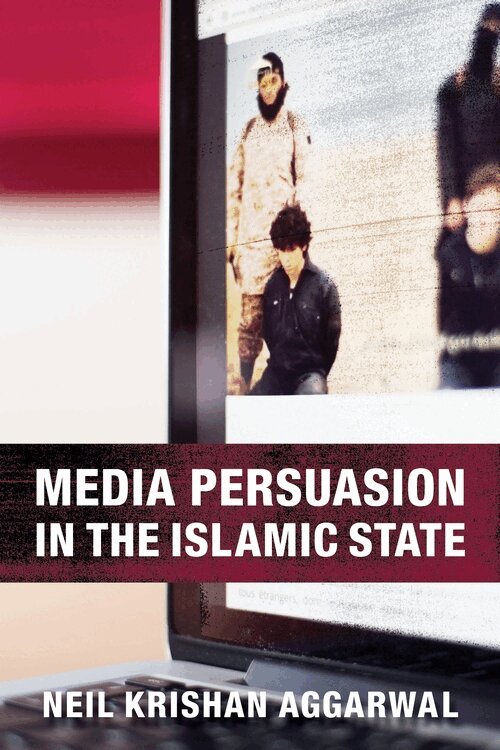
Since the declaration of the War on Terror in 2001, militant groups such as al-Qaeda and the Islamic State have used the internet to disseminate their message and persuade people to commit violence. While many books have studied their operational strategies and battlefield tactics, Media Persuasion in the Islamic State is the first to analyze the culture and psychology of militant persuasion.Drawing upon decades of research in cultural psychiatry, cultural psychology, and psychiatric anthropology, Neil Krishan Aggarwal investigates how the Islamic State has convinced people to engage in violence since its founding in 2003. Through analysis of hundreds of articles, speeches, videos, songs, and bureaucratic documents in English and Arabic, the book traces how the jihadist Abu Musab al-Zarqawi created a new culture and psychology, one that would pit Sunni Muslims against all others after the U.S.-led invasion of Iraq. Aggarwal tracks how Osama bin Laden and al-Zarqawi disagreed over the goal of militancy in jihad before reaching a détente in 2004 and how al-Qaeda in Iraq merged with five other groups to diffuse its militant cultural identity in 2006 before taking advantage of the Syrian civil war to emerge as the Islamic State. Aggarwal offers a definitive analysis of how culture is created, debated, and disseminated within militant organizations like the Islamic State. Psychiatrists, psychologists, and area-studies experts will find a comprehensive, systematic method for analyzing culture and psychology so they can partner with political scientists, policy makers, and counterterrorism experts in crafting counter-messaging strategies against militants.
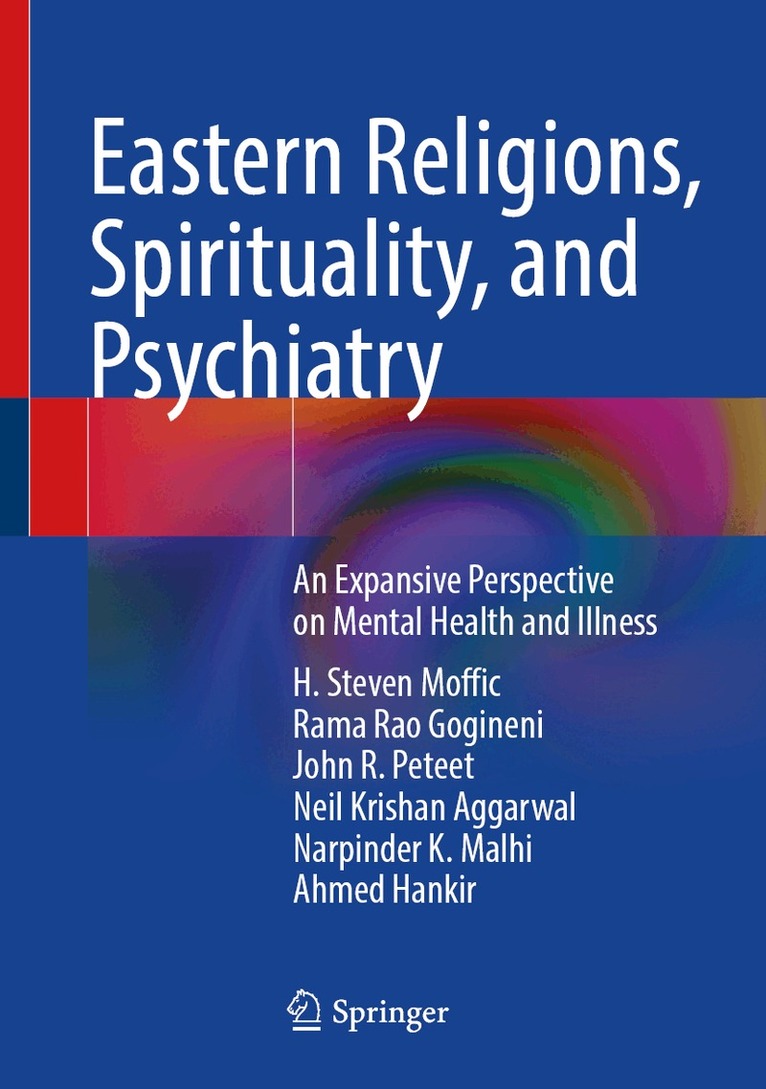
Eastern Religions, Spirituality, and Psychiatry
An Expansive Perspective on Mental Health and Illness
Inbunden, Engelska, 2024
1 477 kr
Skickas inom 7-10 vardagar
This book provides a thorough, comprehensive, and accessible reference for all the major Eastern faith traditions and their intersection with psychiatry. Understanding Eastern religion is of paramount value to all mental health professionals, as there is a growing emphasis on religion and spirituality as a part of clinical cultural competence interventions, predominantly in North America and Europe. Additionally, there is rising membership in Eastern, Asian, and non-Semitic faith traditions in North America and Europe. Hence, more patients and clinicians belong to these non-Western faiths than ever before.The volume is divided into five parts. Part 1 covers general issues, including principles of culture, religion, and spirituality in psychiatry, spirituality across the lifespan, child rearing, practice and faith, and how death and dying is approached in these Eastern traditions. Part 2 covers specific Eastern religions and spiritual traditions, including basic principles and research-based clinical aspects of Hinduism, Buddhism, Sikhism, Taoism, Zoroastrianism, Jainism, as well as Confucian philosophical ideas. Part 3 attempts to apply the importance of cultural humility to perspectives on the Eastern Traditions from Western Psychiatry. These include Christian, Muslim, and Jewish perspectives, not of expertise, but of explorations in learning. Part 4 covers specific social psychiatric perspectives, including the psychiatric harm that can come from caste divisions and cults posing as religions, but closes with a perspective on the Eastern connections to the relatively unknown, but unifying, Omnist perspective.All mental health professionals seeking to expand their understanding of the essential belief systems of various Eastern religions and their connection with mental health will find Eastern Religions, Spirituality, and Psychiatry an invaluable resource.
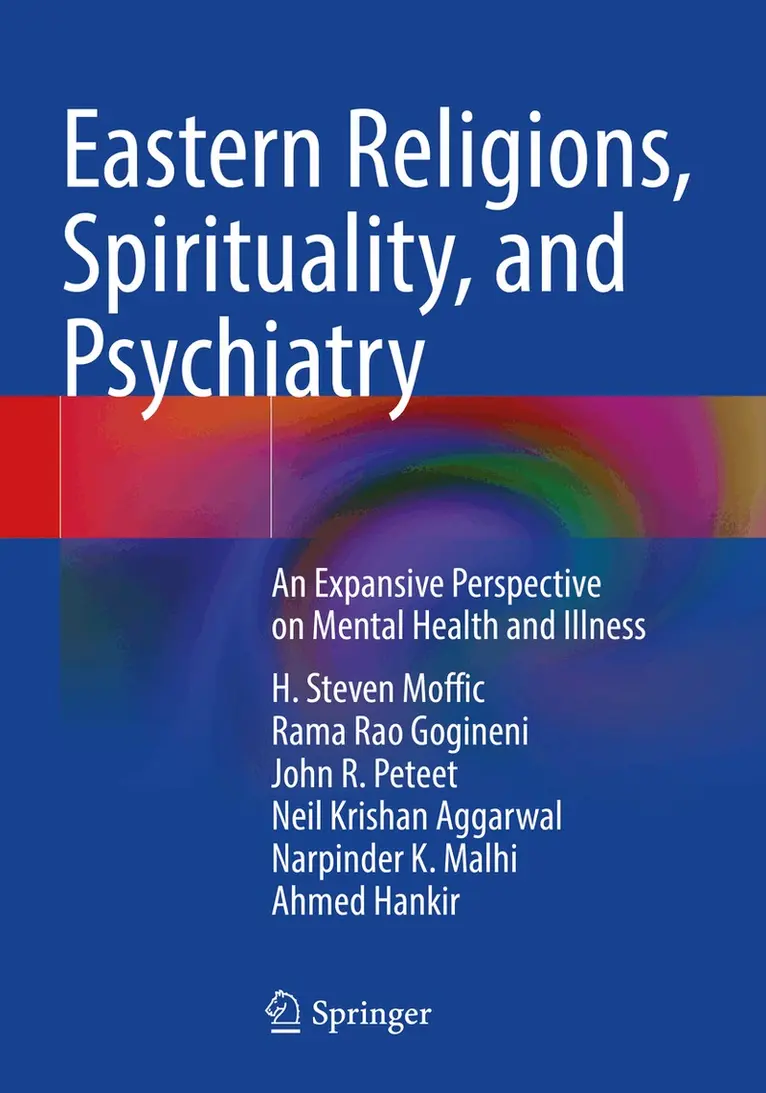
Eastern Religions, Spirituality, and Psychiatry
An Expansive Perspective on Mental Health and Illness
Häftad, Engelska, 2025
1 088 kr
Skickas inom 7-10 vardagar
This book provides a thorough, comprehensive, and accessible reference for all the major Eastern faith traditions and their intersection with psychiatry. Understanding Eastern religion is of paramount value to all mental health professionals, as there is a growing emphasis on religion and spirituality as a part of clinical cultural competence interventions, predominantly in North America and Europe. Additionally, there is rising membership in Eastern, Asian, and non-Semitic faith traditions in North America and Europe. Hence, more patients and clinicians belong to these non-Western faiths than ever before.The volume is divided into five parts. Part 1 covers general issues, including principles of culture, religion, and spirituality in psychiatry, spirituality across the lifespan, child rearing, practice and faith, and how death and dying is approached in these Eastern traditions. Part 2 covers specific Eastern religions and spiritual traditions, including basic principles and research-based clinical aspects of Hinduism, Buddhism, Sikhism, Taoism, Zoroastrianism, Jainism, as well as Confucian philosophical ideas. Part 3 attempts to apply the importance of cultural humility to perspectives on the Eastern Traditions from Western Psychiatry. These include Christian, Muslim, and Jewish perspectives, not of expertise, but of explorations in learning. Part 4 covers specific social psychiatric perspectives, including the psychiatric harm that can come from caste divisions and cults posing as religions, but closes with a perspective on the Eastern connections to the relatively unknown, but unifying, Omnist perspective.All mental health professionals seeking to expand their understanding of the essential belief systems of various Eastern religions and their connection with mental health will find Eastern Religions, Spirituality, and Psychiatry an invaluable resource.