Neil W. Blackstone - Böcker
Visar alla böcker från författaren Neil W. Blackstone. Handla med fri frakt och snabb leverans.
3 produkter
3 produkter
1 481 kr
Skickas inom 7-10 vardagar
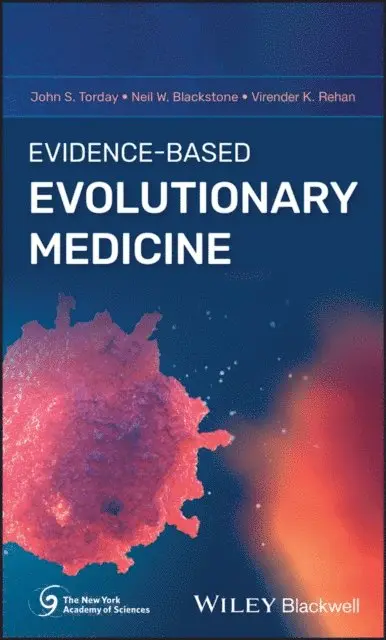
A groundbreaking, evidence-based text to the growing field of evolutionary medicineEvidence-Based Evolutionary Medicine offers a comprehensive review of the burgeoning field of evolutionary medicine and explores vital topics such as evolution, ecology, and aging as they relate to mainstream medicine. The text integrates Darwinian principles and evidence-based medicine in order to offer a clear picture of the underlying principles that reflect how and why organisms have evolved on a cellular level.The authors—noted authorities in their respective fields—address evolutionary medicine from a developmental cell-molecular perspective. They explore the first principles of physiology that explain the generation of existing tissues, organs, and organ systems. The text offers an understanding of the overall biology as a vertically integrated whole, from unicellular to multicellular organisms. In addition, it addresses clinical diagnostic and therapeutic approaches, both traditional and cell-homeostatic. This groundbreaking text: Offers a much-needed, logical, and fundamental approach to biology and medicineProvides a clear explanation of complex physiology and pathophysiologyIntegrates topics like evolution, ecology and aging into mainstream medicine, making them more relevantContains the first evidence-based text on evolutionary medicineWritten for medical and graduate students in biology, physiology, anatomy, endocrinology, reproductive biology, medicine, pathology, systems biology, this vital resource offers a unique text of both biology as an integrated whole with universal properties; and of medicine seeing the individual as a whole, not an inventory of parts and diseases.
1 517 kr
Skickas inom 10-15 vardagar
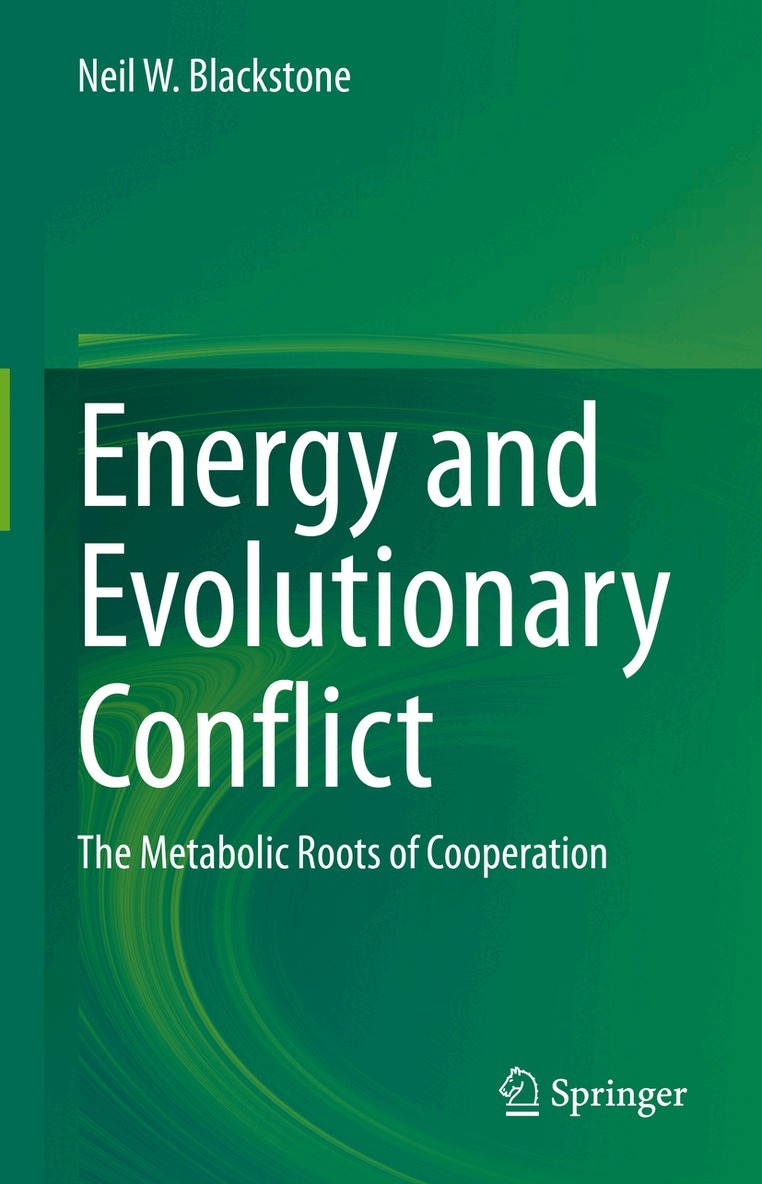
In the mid- to late-twentieth century, large scientific conflicts flared in two seemingly distinct fields of scientific inquiry. In bioenergetics, which examines how organisms obtain and utilize energy, the chemiosmotic hypothesis of Mitchell suggested a novel mechanism for energy conversion. In evolutionary biology, meanwhile, Wynne Edwards strongly articulated the view that organisms may act for the “good of the group.” This work crystalized a long history of imprecise thinking about the evolution of cooperation. While both controversies have received ample attention, no one has ever suggested that one might inform the other, i.e., that energy metabolism in general and chemiosmosis in particular might be relevant to the evolution of cooperation. The central idea is nevertheless remarkably simple. Chemiosmosis rapidly converts energy, and once storage capacity is exceeded, an overabundance of product has various negative consequences. While to some extent chemiosmotic processes can be modulated, under certain circumstances it is also possible to simply disperse the products into the environment.This book argues that these two heretofore distinct scientific disciplines are connected, thereby suggesting that a ubiquitous process of energy conversion may underlie the evolution of cooperation and link major transitions in the history of life that have been regarded as mechanistically unrelated.
1 517 kr
Skickas inom 10-15 vardagar
In the mid- to late-twentieth century, large scientific conflicts flared in two seemingly distinct fields of scientific inquiry. In bioenergetics, which examines how organisms obtain and utilize energy, the chemiosmotic hypothesis of Mitchell suggested a novel mechanism for energy conversion. In evolutionary biology, meanwhile, Wynne Edwards strongly articulated the view that organisms may act for the “good of the group.” This work crystalized a long history of imprecise thinking about the evolution of cooperation. While both controversies have received ample attention, no one has ever suggested that one might inform the other, i.e., that energy metabolism in general and chemiosmosis in particular might be relevant to the evolution of cooperation. The central idea is nevertheless remarkably simple. Chemiosmosis rapidly converts energy, and once storage capacity is exceeded, an overabundance of product has various negative consequences. While to some extent chemiosmotic processes can be modulated, under certain circumstances it is also possible to simply disperse the products into the environment.This book argues that these two heretofore distinct scientific disciplines are connected, thereby suggesting that a ubiquitous process of energy conversion may underlie the evolution of cooperation and link major transitions in the history of life that have been regarded as mechanistically unrelated.