Niall Rudd – författare
Visar alla böcker från författaren Niall Rudd. Handla med fri frakt och snabb leverans.
11 produkter
Odes and Epodes
Av Horace, Niall Rudd
Inbunden, 2004
359 kr
Lägg i varukorg
Monumental verse.The poetry of Horace (born 65 BC) is richly varied, its focus moving between public and private concerns, urban and rural settings, Stoic and Epicurean thought. The Loeb Classical Library edition of the great Roman poet’s Odes and Epodes boasts a faithful and fluid translation and …
Commentary on Horace: Odes Book III
Av Niall Rudd, R. G. M. Nisbet
E-bok, 2004
1068 kr
Lägg i varukorg
This book is a successor to the commentaries by Nisbet and Hubbard on Odes I and II, but it takes critical note of the abundant recent writing on Horace. It starts from the precise interpretation of the Latin; attention is paid to the nuances implied by the word-order; parallel passages are quoted, …
A Commentary on Horace: Odes Book III
Av R. G. M. Nisbet, Niall Rudd
Inbunden, 2004
6499 kr
Lägg i varukorg
This book is a successor to the commentaries by Nisbet and Hubbard on Odes I and II, but it takes critical note of the abundant recent writing on Horace. It starts from the precise interpretation of the Latin; attention is paid to the nuances implied by the word-order; parallel passages are quoted, …
A Commentary on Horace: Odes Book III
Av R. G. M. Nisbet, Niall Rudd
Häftad, 2007
1633 kr
Lägg i varukorg
This book is a successor to the commentaries by Nisbet and Hubbard on Odes I and II, but it takes critical note of the abundant recent writing on Horace. It starts from the precise interpretation of the Latin; attention is paid to the nuances implied by the word-order; parallel passages are quoted, …
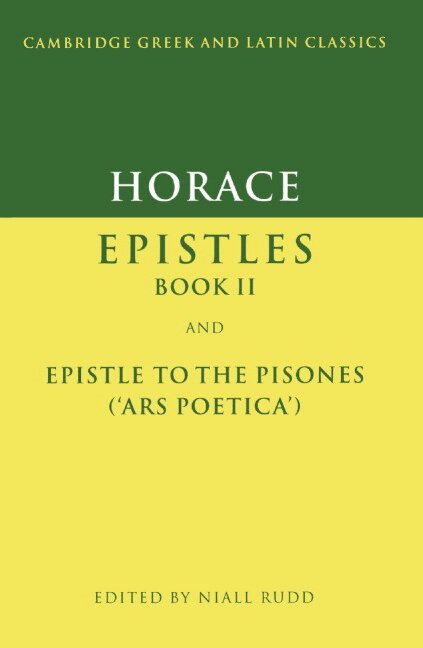
Horace: Epistles Book II and Ars Poetica
Av Horace, Niall Rudd
Häftad, 1989
617 kr
Lägg i varukorg
This commentary fulfils the need for a student edition of Horace's literary epistles, which have recently been the subject of renewed scholarly interest. Professor Rudd provides a clear introduction to each of the three poems: the Epistles to Augustus, to Florus, and to the Pisones (the so-called …
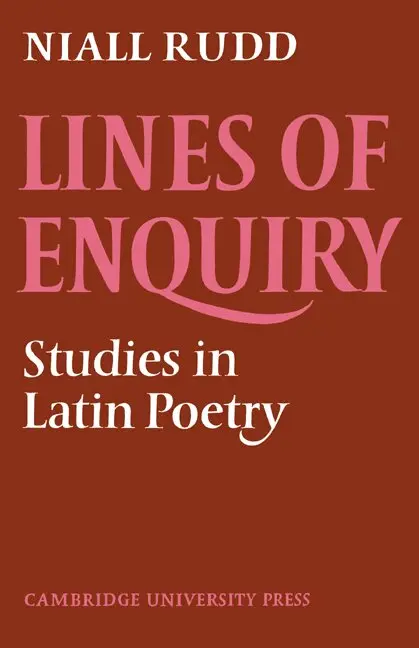
Lines of Enquiry
Studies in Latin Poetry
Av Niall Rudd
Häftad, 2005
640 kr
Lägg i varukorg
In these studies of Latin poetry Niall Rudd demonstrates a variety of critical methods and approaches. He shows how it can be fruitful at different times to consider the historical background of a poem, its language or structure, its place in a literary tradition, the role of critical paradigms, …
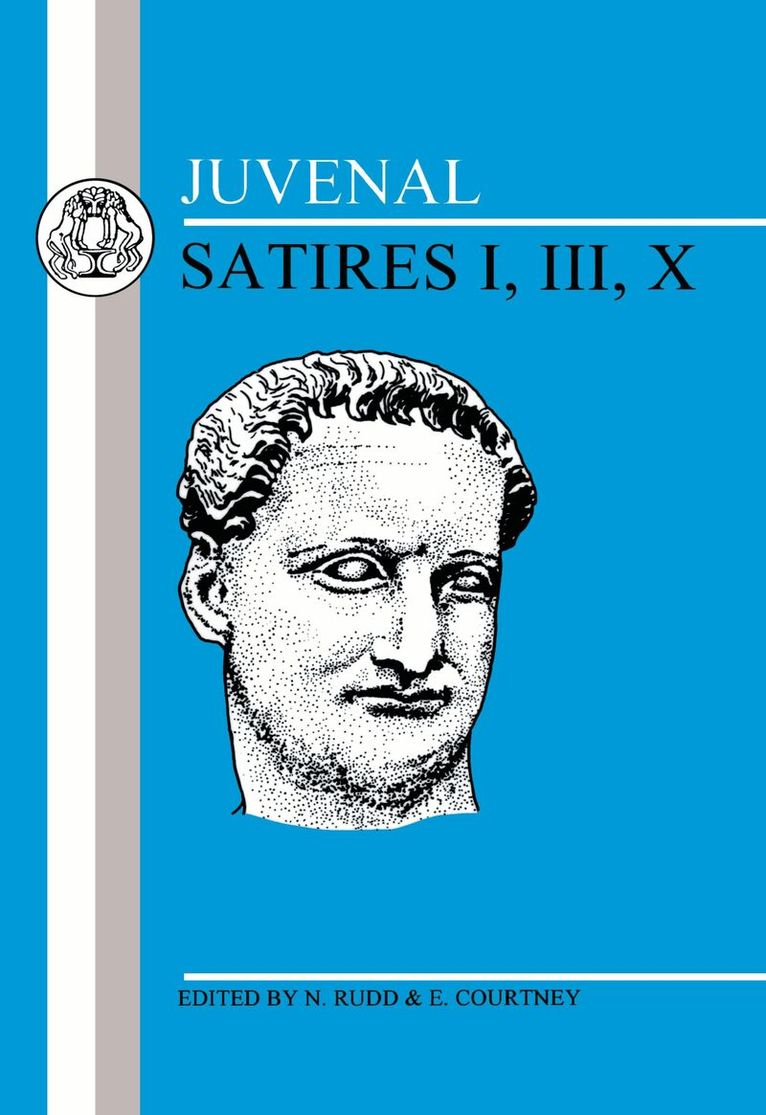
Juvenal: Satires I, III, X
Av Juvenal, Niall Rudd m. fl.
Häftad, 1991
398 kr
Lägg i varukorg
This introduction to three of Juvenal's satires aims to help intermediate high school or college readers understand the meaning of Juvenal's Latin. Satire I is Juvenal's explanation of why he writes poetry and satire. Satire III discusses why life in Rome has become intolerable. Satire X concerns …
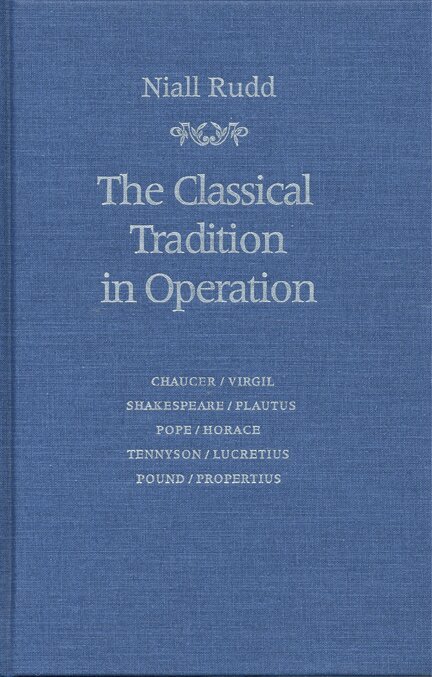
Classical Tradition in Operation
Av Niall Rudd
E-bok, 1994
1229 kr
Lägg i varukorg
In these five essays Niall Rudd presents an eclectic set of comparisons between certain ancient authors and later English writers ranging from Chaucer to Pound. He shows how five English writers consciously used and adapted classical works, and in so doing he illuminates both the classical authors …
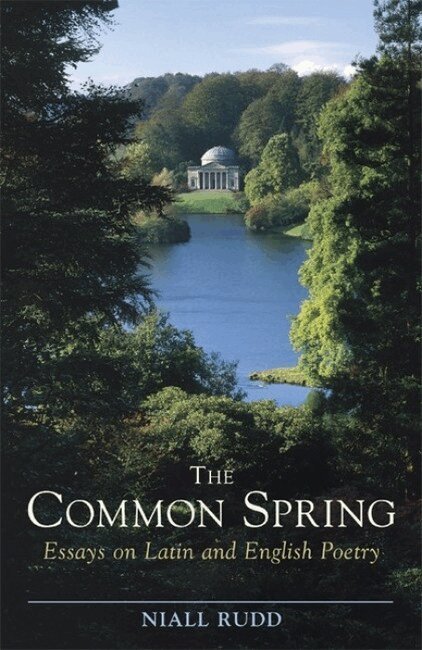
The Common Spring
Essays on Latin and English Poetry
Av Niall Rudd
Inbunden, 2005
3037 kr
Lägg i varukorg
This collection aims to bring out the continuity between major poets in Latin and English, presenting to a wider audience papers previously published only in academic periodicals along with a number of unpublished pieces. It contains essays on Virgil, Horace, Ovid and Juvenal, which are intended …
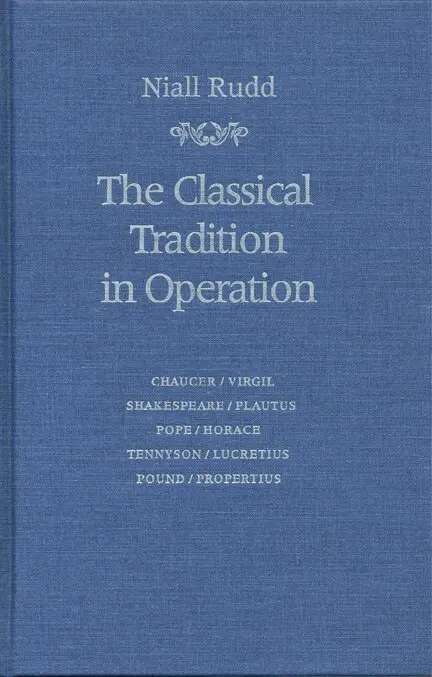
Classical Tradition in Operation
Av Niall Rudd
Inbunden, 1994
925 kr
Tillfälligt slut
In these five essays Niall Rudd presents an eclectic set of comparisons between certain ancient authors and later English writers ranging from Chaucer to Pound. He shows how five English writers consciously used and adapted classical works, and in so doing he illuminates both the classical authors …