Nico Krisch - Böcker
Visar alla böcker från författaren Nico Krisch. Handla med fri frakt och snabb leverans.
7 produkter
7 produkter
1 440 kr
Skickas inom 5-8 vardagar
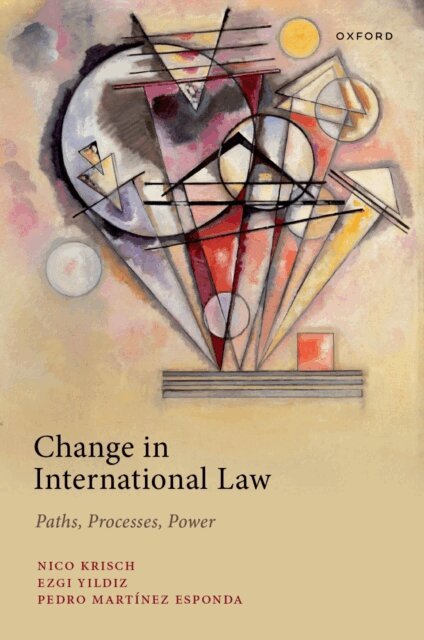
How does international law change? How does it adapt to meet global challenges in a volatile social and political context? The Many Paths of Change in International Law offers fresh, theoretically informed, and empirically rich answers to these questions. It traces drivers, conditions, and consequences of change across the different fields of international law and paints a complex and varied picture very much in contrast with the relatively static imagery prevalent in many accounts today.Drawing on inspirations from international law, international relations, sociology, and legal theory, this book explores how international law changes through means other than treaty-making. Highlighting the social dynamics through which different areas and institutional contexts have generated their own pathways, it presents a theoretical framework for tracing change processes and the conditions that affect their success. Based on this framework, each contribution illuminates the paths of change we observe in contemporary international law. The explorations centre on strategies, forms, forces, and social contexts and draw on primary source material and in-depth case studies. Overall, the volume offers a fascinating account of an international legal order in flux-with a dynamic not captured through traditional doctrinal lenses-and helps situate change processes and their varied implications in international law and politics. A relevant book for everyone wanting to understand change and its consequences in international law.This is an open access title. It is made available under a Creative Commons Attribution-Non Commercial-No Derivatives 4.0 International licence. It is available to read and download as a PDF version on the Oxford Academic platform.
1 316 kr
Kommande
How does international law change? How does it adapt to new contexts and meet new challenges? The typical answer to these questions makes international law appear rather static, due to high hurdles for change and formal rules that require widespread agreement among states. In reality, however, change is far more common: new legal norms and understandings are generated constantly through the practices of legal actors. This book explores these actual, often gradual processes of international legal change. Combining qualitative analysis and statistical examination of data derived from twenty-five cases across eight subfields, the book offers the most systematic study to date of international legal change in practice beyond treaty-making. It approaches international law as a discursive process characterized by distinctive, socially constructed communities and authorities, and identifies five distinct paths through which legal change occurs. These paths shape who can act, how change is framed, and whether and under what conditions it gains traction, and they - and their relative weight - vary heavily across the different areas of international law. On these paths, change comes about in ways which defy common expectations of a state-centric international law: the analysis presented in the book shows that the success of change attempts depends less on broad state support or even the support of major powers, but to a greater extent on support from authorities and institutions in the respective fields. The result is an international law that may not be dynamic enough to cope with the speed of change in today's accelerated world, but one that is significantly more dynamic than is usually assumed.
190 kr
Skickas inom 5-8 vardagar
Under pressure from globalisation, the classical distinction between domestic and international law has become increasingly blurred, spurring demand for new paradigms to construe the emerging postnational legal order. The typical response of constitutional and international lawyers as well as political theorists has been to extend domestic concepts - especially constitutionalism - beyond the state. Yet as this book argues, proposals for postnational constitutionalism not only fail to provide a plausible account of the changing shape of postnational law but also fall short as a normative vision. They either dilute constitutionalism's origins and appeal to 'fit' the postnational space; or they create tensions with the radical diversity of postnational society.This book explores an alternative, pluralist vision of postnational law. Pluralism does not rely on an overarching legal framework but is characterised by the heterarchical interaction of various suborders of different levels - an interaction that is governed by a multiplicity of conflict rules whose mutual relationship remains legally open. A pluralist model can account for the fragmented structure of the European and global legal orders and it reflects the competing (and often equally legitimate) claims for control of postnational politics. However, it typically provokes concerns about stability, power and the rule of law. This book analyses the promise and problems of pluralism through a theoretical enquiry and empirical research on major global governance regimes, including the European human rights regime, the contestation around UN sanctions and human rights, and the structure of global risk regulation. The empirical research reveals how prevalent pluralist structures are in postnational law and what advantages they possess over constitutionalist models. Despite the problems it also reveals, the analysis suggests cautious optimism about the possibility of stable and fair cooperation in pluralist settings.
728 kr
Skickas inom 7-10 vardagar
Under pressure from globalization, the classical distinction between domestic and international law has become increasingly blurred, spurring demand for new paradigms to construe the emerging postnational legal order. The typical response of constitutional and international lawyers as well as political theorists has been to extend domestic concepts - especially constitutionalism - beyond the state. Yet as this book argues, proposals for postnational constitutionalism not only fail to provide a plausible account of the changing shape of postnational law but also fall short as a normative vision. They either dilute constitutionalism's origins and appeal to 'fit' the postnational space; or they create tensions with the radical diversity of postnational society.This book explores an alternative, pluralist vision of postnational law. Pluralism does not rely on an overarching legal framework but is characterized by the heterarchical interaction of various suborders of different levels - an interaction that is governed by a multiplicity of conflict rules whose mutual relationship remains legally open. A pluralist model can account for the fragmented structure of the European and global legal orders and it reflects the competing (and often equally legitimate) claims for control of postnational politics. However, it typically provokes concerns about stability, power, and the rule of law.This book analyses the promise and problems of pluralism through a theoretical enquiry and empirical research on major global governance regimes, including the European human rights regime, the contestation around UN sanctions and human rights, and the structure of global risk regulation. The empirical research reveals how prevalent pluralist structures are in postnational law and what advantages they possess over constitutionalist models. Despite the problems it also reveals, the analysis suggests cautious optimism about the possibility of stable and fair cooperation in pluralist settings.
447 kr
Skickas inom 7-10 vardagar
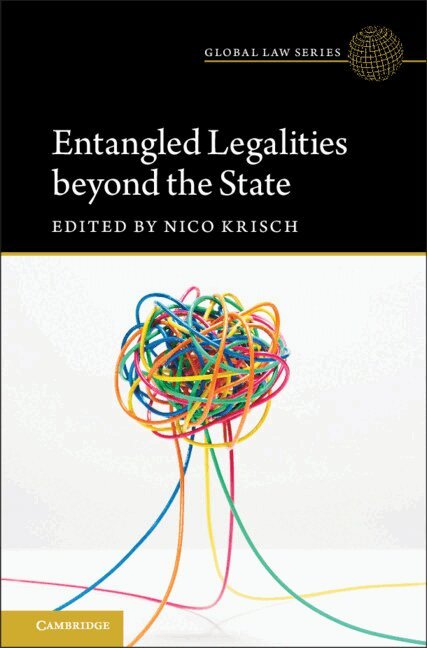
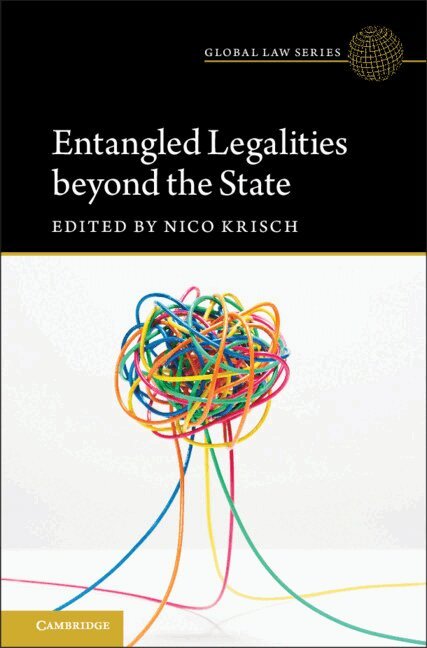
Law is usually understood as an orderly, coherent system, but this volume shows that it is often better understood as an entangled web. Bringing together eminent contributors from law, political science, sociology, anthropology, history and political theory, it also suggests that entanglement has been characteristic of law for much of its history. The book shifts the focus to the ways in which actors create connections and distance between different legalities in domestic, transnational and international law. It examines a wide range of issue areas, from the relationship of state and indigenous orders to the regulation of global financial markets, from corporate social responsibility to struggles over human rights. The book uses these empirical insights to inform new theoretical approaches to law, and by placing the entanglements between norms from different origins at the centre of the study of law, it opens up new avenues for future legal research. This title is also available as Open Access.
1 340 kr
Skickas inom 7-10 vardagar
Law is usually understood as an orderly, coherent system, but this volume shows that it is often better understood as an entangled web. Bringing together eminent contributors from law, political science, sociology, anthropology, history and political theory, it also suggests that entanglement has been characteristic of law for much of its history. The book shifts the focus to the ways in which actors create connections and distance between different legalities in domestic, transnational and international law. It examines a wide range of issue areas, from the relationship of state and indigenous orders to the regulation of global financial markets, from corporate social responsibility to struggles over human rights. The book uses these empirical insights to inform new theoretical approaches to law, and by placing the entanglements between norms from different origins at the centre of the study of law, it opens up new avenues for future legal research. This title is also available as Open Access.
785 kr
Skickas inom 10-15 vardagar
Selbstverteidigung und kollektive Sicherheit repräsentieren gegenläufige Ordnungsmodelle der internationalen Beziehungen und des Völkerrechts - eine an den Einzelstaaten orientierte Ordnung steht einer Konzeption gegenüber, die primär auf staatengemeinschaftlichen Institutionen basiert. Die daraus notwendigerweise resultierende Spannung ist von Art. 51 UN-Charta nicht eindeutig gelöst worden. Die in dem Buch unternommene Analyse von Charta und Staatenpraxis zeigt jedoch, daß das gegenwärtige Völkerrecht dem kollektiven System grundsätzlich Vorrang einräumt. Der UN-Sicherheitsrat kann das Selbstverteidigungsrecht der Staaten weitgehend einschränken; dies selbst dann, wenn dadurch Staaten in existentielle Gefahr geraten können. Dieses Ergebnis spiegelt die stark fortgeschrittene Konstitutionalisierung des Völkerrechts wider, es legt aber auch eine Revision der Grundlagen des Völkerrechts nahe.